
Verwandte Artikel zu Afield: A Chef's Guide to Preparing and Cooking...
Inhaltsangabe
2012 IPPY Bronze Award in the Cookbook category (Independent Publisher Book Awards)
ForeWord Reviews 2012 Book of the Year Award Finalist (TBA)
2013 James Beard Foundation Book Awards, Nominee Finalist
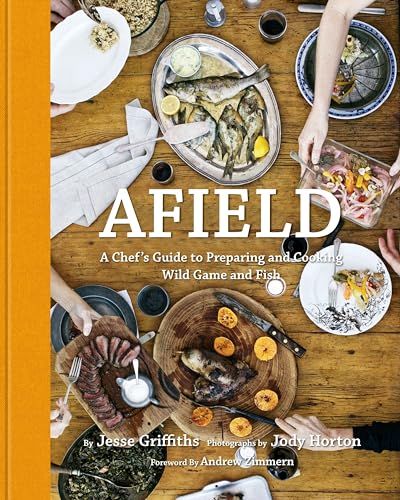
Born from the principles of the local food movement, a growing number of people are returning to hunting and preparing fish and game for their home tables. Afield: A Chef's Guide to Preparing and Cooking Wild Game and Fish is at once a manifesto for this movement and a manual packed with everything the new hunter needs to know. Wild foods, when managed responsibly, are sustainable, ethical, and delicious, and author Jesse Griffiths combines traditional methods of hunting, butchering, and preparing fish and game with 85 mouthwatering recipes.
Afield throws open the doors of field dressing for novice and experienced hunters alike, supplying the know-how for the next logical step in the local, sustainable food movement. Stemming from a commitment to locally grown vegetables and nose-to-tail cooking, Griffiths is an expert guide on this tour of tradition and taste, offering a combination of hunting lessons, butchery methods, recipes, including how to scale, clean, stuff, fillet, skin, braise, fry and more. Fellow hunting enthusiast and food photographer Jody Horton takes you into the field, follows Griffiths step-by-step along the way and then provides you with exquisite plate photograph of the finished feasts. Filled with descriptive stories and photographs, Afield takes the reader along for the hunt, from duck and dove to deer and wild hog.
Game and fish include:
Doves, Deer, Hogs, Squirrel, Rabbits, Ducks, Geese, Turkey, Flounder, White Bass, Crabs, Catfish, and more.
Die Inhaltsangabe kann sich auf eine andere Ausgabe dieses Titels beziehen.
Über die Autorin bzw. den Autor
Chef JESSE GRIFFITHS embodies the forefront of the new hunting-cooking movement. He has gained national praise for his strictly local butcher shop and supper clubs (Bon Appetit, Food & Wine, Country Living, Garden & Gun) and his series of practical hunting schools are the first of their kind. In less than a year, they have drawn students from around the country and have gained attention from The New York Times, Texas Monthly, and others. Jesse was nominated as Food & Wine's The People's Best New Chef in 2011, and is the owner and chef of Dai Due with his life/work partner, Tamara Mayfield. The couple received Austin's Local Hero award in 2010.
JODY HORTON is an Austin-based food and lifestyle photographer. His work has appeared in Garden & Gun, Esquire, Food & Wine, Southern Living, Texas Monthly, and the New York Times. He is a frequent contributor to Texas Monthly, Garden & Gun, Edible Austin, and Southern Living. Find more of his work at www.jodyhorton.com.
ANDREW ZIMMERN, regarded as one of the most versatile and knowledgeable personalities in the food world, is a James Beard Award-winning TV personality, chef, food writer, and teacher. He is the co-creator, host, and consulting producer of the Travel Channel's hit series Bizarre Foods with Andrew Zimmern.
Auszug. © Genehmigter Nachdruck. Alle Rechte vorbehalten.
Foreword - Andrew Zimmern
Introduction by Jesse Griffiths
--
Foreword - Andrew Zimmern
For thousands of years a man was measured in simple terms. Honor and hard work gave him the respect of his peers and status in his community. Over the last century, we have seen that change. Impermanence of lifestyles, class privilege determined solely on wealth, the cultish narcissism of the age of celebrity, and the diminished returns on achievement—these societal woes have all contributed to a cultural standard that our grandparents, who knew that the reward was in the doing, wouldn’t recognize. Good or bad, it’s a fact. In an age where the world is changing so quickly, in our disposable culture, the ability to pause and put some space between what we think we want and what we decide to do is one of our greatest necessities. Which is why I sought out Jesse Griffiths one day a few years back on a trip to Austin, Texas.
Here was a man living a life that is supremely of the moment, his professional code of conduct couldn’t be more fitting with everything that is right about food in America. And more importantly his “way of doing” provides thought leadership and actionable pursuits.
Instinctively we realize that we live in an age where we no longer just want to see recipes with bacon in it, we want to know how to cure the bacon ourselves. So here was a chef who not only was providing us with those answers, he was educating us about lifestyle choices that go beyond the gold standard.
Jesse leads by example. We can talk all we want about sustainability, traditional food arts, great cooking, locally sourced foods, and every other neutered catch phrase of the modern food world, but we need heroes who are willing to show us by doing, not by talking. Jesse is that kind of guy, and trust me they are rare and precious. He is a tireless worker, who hunts and fishes, appreciates our great outdoors, understands the importance of what we need to preserve in our cultural heritage, and translates it for the modern age—is there anything more important? That he chooses to do it in the food space is just the icing on the cake for someone like me.
Nothing is more important, or timely, in the search for a solution to the breakdown to our global systemic food system than the thorough study, reimagining, and ongoing education of Americans on the subject of hunting, fishing, and cooking as an inseparable triptych. If some of our modernist ideas are failing, if production and mechanization compromise our health and well being, if you are curious at all about pursuing solutions instead of tilting at windmills, then you will want to understand fully a food system that is economically, culturally, and environmentally sustainable. Jesse understands at a grassroots level what it takes to live truthfully, in a meaningful way that is deeply felt and personal. He doesn’t speak in sound bites or create lifestyle choices with a publicist. He lives and works in accordance with his own principles and that is what I admire about him the most. The benefit we all have is that we can learn from inspiring leaders like Jesse, and act locally while thinking globally. For me the appeal of his book is that it is approachable and engaging for us all.
For those committed to big ideas, or simply for a way to have more fun in the field and in the kitchen, this is a must read. The outdoors-person’s approach to food has worked…does work…and will always work, and within its ideology are practical ways that anyone interested in changing their world one delicious plate at a time will want to learn about. Slowing down the food systems we sped up, solving our food-health issues, and preserving the best practices of our lost generations are all attainable by living the hunting-cooking lifestyle.
At the end of the day, this is an inspiring collection of stories from the field, replete with 85 recipes that are as delicious as they are fascinating to page through. Anyone who loves food will enjoy this book. The magic, and why I think Afield is a special work, is that it fully portrays a way of living and thinking that allows us to return to a more simple way to be measured and respected. And it does so without lecturing or pandering. It reminds me that by living a more principled life, I can make my world a better place and I can use food and cooking to do it. This book is a beautiful piece of work, and after you read it, and cook from it, please get outside and get dirty with it. Wherever you are, the great outdoors is waiting for you, afield.
---
Introduction by Jesse Griffiths
I once described hunting to my antihunting mother as the same as planting, growing, and harvesting a carrot, just compressed into a few exciting moments. There is the preparation, the commitment, the anticipation, and the payoff—the sad and final moment when the food comes to hand, dead or soon-to-be. A carrot’s journey between seed and plate takes about four months, give or take. The span of time between a stick bobber disappearing into a murky creek and a fat crappie flopping onto the bank, or a mourning dove being hit and spiraling down into mesquite thicket is about ten seconds, give or take.
In hunting and fishing, the moment the animal is brought to hand is not the end, but rather the middle of the story. There is still much more work to be done— scaling, skinning, packaging, braising, frying—and the final result is far more rewarding. A gorgeous justcaught fall pompano, gutted and rubbed with olive oil, or a tray full of fresh sausages are the real reasons we spend time afield.
I grew up fishing with my father and only came to hunting in the last few years, which has doubled the time I spend outdoors and pretty much keeps me helplessly distracted year-round. Under the tutelage of many generous people, I have been able to forge a relationship between fish and game and my passion for cooking. This book is not written from the perspective of an expert hunter or fisherman, but from an obsessed one who spends a lot of time preparing and sharing what he catches. Some of the best times I’ve ever had were with friends on the bank of a river, drinking a little beer and frying up that evening’s batch of redbreast sunfish. Or maybe sautéing a fresh venison liver with some bacon and onions after a long, cold day in the woods, knowing that we will have good, ostensibly organic, free-range, grass-fed meat in our freezer for the rest of the year.
Over the past few generations, we’ve collectively lost the skills that our ancestors possessed to live off the land. Perhaps this is because the need is no longer there, with the proliferation and ubiquity of mass-produced food. Game meats and fresh fish are truly the healthiest proteins you can get your hands on, and, yes, they do taste different than farmed animals. This is because they’ve fed on wild grasses or minnows or croton seeds, and reflect the beautiful and austere surroundings from which they were gathered. In many cultures, this is perceived as an advantage—a boon to the lucky eater.
This book means not only to explore the world of direct sourcing—that is, being wholly involved in sustaining oneself —but to enlighten and encourage more responsibility and thrift in preparing, cooking, and sharing food from the wild. Hunting and fishing for your dinner gives you a distinct sense of ownership and connection to your own food sources—as well as the responsibilities that come with that, like stewardship, conservation, and a deep respect for life and death.
I don’t remember exactly how this project started. I was...
„Über diesen Titel“ kann sich auf eine andere Ausgabe dieses Titels beziehen.
Suchergebnisse für Afield: A Chef's Guide to Preparing and Cooking...

Beispielbild für diese ISBN
Afield: A Chef's Guide to Preparing and Cooking Wild Game and Fish
Anbieter: Blindpig Books, Salt lake city, UT, USA
Verkäuferbewertung 5 von 5 Sternen

hardcover. Zustand: Good. As pictured. Light wear. Good copy. Bestandsnummer des Verkäufers 26-04-03-sv-148-jm
Gebraucht kaufen
EUR 9,21
EUR 3,56 Versand
Versand innerhalb von USA
Versand innerhalb von USA
Anzahl: 1 verfügbar
Beispielbild für diese ISBN
Afield: A Chef's Guide to Preparing and Cooking Wild Game and Fish
Verlag:
Rizzoli International Publications, 2012
ISBN 10: 1599621142
ISBN 13: 9781599621142
Gebraucht
Hardcover
Anbieter: World of Books (was SecondSale), Montgomery, IL, USA
Verkäuferbewertung 5 von 5 Sternen
Hardback. Zustand: Fair. 2012 IPPY Bronze Award in the Cookbook category (Independent Publisher Book Awards)ForeWord Reviews 2012 Book of the Year Award Finalist (TBA)2013 James Beard Foundation Book Awards, Nominee FinalistBorn from the principles of the local food movement, a growing number of people are returning to hunting and preparing fish and game for their home tables. Afield: A Chef's Guide to Preparing and Cooking Wild Game and Fish is at once a manifesto for this movement and a manual packed with everything the new hunter needs to know. Wild foods, when managed responsibly, are sustainable, ethical, and delicious, and author Jesse Griffiths combines traditional methods of hunting, butchering, and preparing fish and game with 85 mouthwatering recipes.Afield throws open the doors of field dressing for novice and experienced hunters alike, supplying the know-how for the next logical step in the local, sustainable food movement. Stemming from a commitment to locally grown vegetables and nose-to-tail cooking, Griffiths is an expert guide on this tour of tradition and taste, offering a combination of hunting lessons, butchery methods, recipes, including how to scale, clean, stuff, fillet, skin, braise, fry and more. Fellow hunting enthusiast and food photographer Jody Horton takes you into the field, follows Griffiths step-by-step along the way and then provides you with exquisite plate photograph of the finished feasts. Filled with descriptive stories and photographs, Afield takes the reader along for the hunt, from duck and dove to deer and wild hog. Game and fish include:Doves, Deer, Hogs, Squirrel, Rabbits, Ducks, Geese, Turkey, Flounder, White Bass, Crabs, Catfish, and more. Bestandsnummer des Verkäufers 00103995457
Gebraucht kaufen
EUR 12,96
Versand gratis
Versand innerhalb von USA
Versand innerhalb von USA
Anzahl: 2 verfügbar
Beispielbild für diese ISBN
Afield: A Chef's Guide to Preparing and Cooking Wild Game and Fish
Verlag:
Rizzoli International Publications, 2012
ISBN 10: 1599621142
ISBN 13: 9781599621142
Gebraucht
Hardcover
Anbieter: World of Books (was SecondSale), Montgomery, IL, USA
Verkäuferbewertung 5 von 5 Sternen
Hardback. Zustand: Good. 2012 IPPY Bronze Award in the Cookbook category (Independent Publisher Book Awards)ForeWord Reviews 2012 Book of the Year Award Finalist (TBA)2013 James Beard Foundation Book Awards, Nominee FinalistBorn from the principles of the local food movement, a growing number of people are returning to hunting and preparing fish and game for their home tables. Afield: A Chef's Guide to Preparing and Cooking Wild Game and Fish is at once a manifesto for this movement and a manual packed with everything the new hunter needs to know. Wild foods, when managed responsibly, are sustainable, ethical, and delicious, and author Jesse Griffiths combines traditional methods of hunting, butchering, and preparing fish and game with 85 mouthwatering recipes.Afield throws open the doors of field dressing for novice and experienced hunters alike, supplying the know-how for the next logical step in the local, sustainable food movement. Stemming from a commitment to locally grown vegetables and nose-to-tail cooking, Griffiths is an expert guide on this tour of tradition and taste, offering a combination of hunting lessons, butchery methods, recipes, including how to scale, clean, stuff, fillet, skin, braise, fry and more. Fellow hunting enthusiast and food photographer Jody Horton takes you into the field, follows Griffiths step-by-step along the way and then provides you with exquisite plate photograph of the finished feasts. Filled with descriptive stories and photographs, Afield takes the reader along for the hunt, from duck and dove to deer and wild hog. Game and fish include:Doves, Deer, Hogs, Squirrel, Rabbits, Ducks, Geese, Turkey, Flounder, White Bass, Crabs, Catfish, and more. Bestandsnummer des Verkäufers 00110820342
Gebraucht kaufen
EUR 12,96
Versand gratis
Versand innerhalb von USA
Versand innerhalb von USA
Anzahl: 1 verfügbar
Beispielbild für diese ISBN
Afield : A Chef's Guide to Preparing and Cooking Wild Game and Fish
Verlag:
Rizzoli International Publications, Incorporated, 2012
ISBN 10: 1599621142
ISBN 13: 9781599621142
Gebraucht
Hardcover
Anbieter: Better World Books, Mishawaka, IN, USA
Verkäuferbewertung 5 von 5 Sternen
Zustand: Good. Former library copy. Pages intact with minimal writing/highlighting. The binding may be loose and creased. Dust jackets/supplements are not included. Includes library markings. Stock photo provided. Product includes identifying sticker. Better World Books: Buy Books. Do Good. Bestandsnummer des Verkäufers 5158144-6
Gebraucht kaufen
EUR 12,97
Versand gratis
Versand innerhalb von USA
Versand innerhalb von USA
Anzahl: 1 verfügbar
Beispielbild für diese ISBN
Afield : A Chef's Guide to Preparing and Cooking Wild Game and Fish
Verlag:
Rizzoli International Publications, Incorporated, 2012
ISBN 10: 1599621142
ISBN 13: 9781599621142
Gebraucht
Hardcover
Anbieter: Better World Books, Mishawaka, IN, USA
Verkäuferbewertung 5 von 5 Sternen
Zustand: Good. Pages intact with minimal writing/highlighting. The binding may be loose and creased. Dust jackets/supplements are not included. Stock photo provided. Product includes identifying sticker. Better World Books: Buy Books. Do Good. Bestandsnummer des Verkäufers 5953259-6
Gebraucht kaufen
EUR 12,97
Versand gratis
Versand innerhalb von USA
Versand innerhalb von USA
Anzahl: 1 verfügbar
Beispielbild für diese ISBN
Afield : A Chef's Guide to Preparing and Cooking Wild Game and Fish
Verlag:
Rizzoli International Publications, Incorporated, 2012
ISBN 10: 1599621142
ISBN 13: 9781599621142
Gebraucht
Hardcover
Anbieter: Better World Books, Mishawaka, IN, USA
Verkäuferbewertung 5 von 5 Sternen
Zustand: Very Good. Former library copy. Pages intact with possible writing/highlighting. Binding strong with minor wear. Dust jackets/supplements may not be included. Includes library markings. Stock photo provided. Product includes identifying sticker. Better World Books: Buy Books. Do Good. Bestandsnummer des Verkäufers 5975694-6
Gebraucht kaufen
EUR 12,97
Versand gratis
Versand innerhalb von USA
Versand innerhalb von USA
Anzahl: 1 verfügbar
Beispielbild für diese ISBN
Afield: A Chef's Guide to Preparing and Cooking Wild Game and Fish
Anbieter: HPB-Red, Dallas, TX, USA
Verkäuferbewertung 5 von 5 Sternen
hardcover. Zustand: Good. Connecting readers with great books since 1972! Used textbooks may not include companion materials such as access codes, etc. May have some wear or writing/highlighting. We ship orders daily and Customer Service is our top priority! Bestandsnummer des Verkäufers S_483173110
Gebraucht kaufen
EUR 9,80
EUR 3,34 Versand
Versand innerhalb von USA
Versand innerhalb von USA
Anzahl: 1 verfügbar
Foto des Verkäufers
Afield: A Chef's Guide to Preparing and Cooking Wild Game and Fish
Anbieter: Goodwill of Central and Coastal Virginia, Richmond, VA, USA
Verkäuferbewertung 4 von 5 Sternen

Zustand: acceptable. Bestandsnummer des Verkäufers CCVV.1599621142.A
Gebraucht kaufen
EUR 9,05
EUR 5,12 Versand
Versand innerhalb von USA
Versand innerhalb von USA
Anzahl: 1 verfügbar
Beispielbild für diese ISBN
Afield: A Chef's Guide to Preparing and Cooking Wild Game and Fish
Verlag:
Rizzoli International Publications, 2012
ISBN 10: 1599621142
ISBN 13: 9781599621142
Gebraucht
Hardcover
Anbieter: World of Books Inc, Montgomery, IL, USA
Verkäuferbewertung 4 von 5 Sternen
Hardback. Zustand: Fair. 2012 IPPY Bronze Award in the Cookbook category (Independent Publisher Book Awards)ForeWord Reviews 2012 Book of the Year Award Finalist (TBA)2013 James Beard Foundation Book Awards, Nominee FinalistBorn from the principles of the local food movement, a growing number of people are returning to hunting and preparing fish and game for their home tables. Afield: A Chef's Guide to Preparing and Cooking Wild Game and Fish is at once a manifesto for this movement and a manual packed with everything the new hunter needs to know. Wild foods, when managed responsibly, are sustainable, ethical, and delicious, and author Jesse Griffiths combines traditional methods of hunting, butchering, and preparing fish and game with 85 mouthwatering recipes.Afield throws open the doors of field dressing for novice and experienced hunters alike, supplying the know-how for the next logical step in the local, sustainable food movement. Stemming from a commitment to locally grown vegetables and nose-to-tail cooking, Griffiths is an expert guide on this tour of tradition and taste, offering a combination of hunting lessons, butchery methods, recipes, including how to scale, clean, stuff, fillet, skin, braise, fry and more. Fellow hunting enthusiast and food photographer Jody Horton takes you into the field, follows Griffiths step-by-step along the way and then provides you with exquisite plate photograph of the finished feasts. Filled with descriptive stories and photographs, Afield takes the reader along for the hunt, from duck and dove to deer and wild hog. Game and fish include:Doves, Deer, Hogs, Squirrel, Rabbits, Ducks, Geese, Turkey, Flounder, White Bass, Crabs, Catfish, and more. Bestandsnummer des Verkäufers CIN1599621142A
Gebraucht kaufen
EUR 14,79
Versand gratis
Versand innerhalb von USA
Versand innerhalb von USA
Anzahl: 2 verfügbar
Beispielbild für diese ISBN
Afield: A Chef's Guide to Preparing and Cooking Wild Game and Fish
Verlag:
Rizzoli International Publications, 2012
ISBN 10: 1599621142
ISBN 13: 9781599621142
Gebraucht
Hardcover
Anbieter: World of Books Inc, Montgomery, IL, USA
Verkäuferbewertung 4 von 5 Sternen
Hardback. Zustand: Good. 2012 IPPY Bronze Award in the Cookbook category (Independent Publisher Book Awards)ForeWord Reviews 2012 Book of the Year Award Finalist (TBA)2013 James Beard Foundation Book Awards, Nominee FinalistBorn from the principles of the local food movement, a growing number of people are returning to hunting and preparing fish and game for their home tables. Afield: A Chef's Guide to Preparing and Cooking Wild Game and Fish is at once a manifesto for this movement and a manual packed with everything the new hunter needs to know. Wild foods, when managed responsibly, are sustainable, ethical, and delicious, and author Jesse Griffiths combines traditional methods of hunting, butchering, and preparing fish and game with 85 mouthwatering recipes.Afield throws open the doors of field dressing for novice and experienced hunters alike, supplying the know-how for the next logical step in the local, sustainable food movement. Stemming from a commitment to locally grown vegetables and nose-to-tail cooking, Griffiths is an expert guide on this tour of tradition and taste, offering a combination of hunting lessons, butchery methods, recipes, including how to scale, clean, stuff, fillet, skin, braise, fry and more. Fellow hunting enthusiast and food photographer Jody Horton takes you into the field, follows Griffiths step-by-step along the way and then provides you with exquisite plate photograph of the finished feasts. Filled with descriptive stories and photographs, Afield takes the reader along for the hunt, from duck and dove to deer and wild hog. Game and fish include:Doves, Deer, Hogs, Squirrel, Rabbits, Ducks, Geese, Turkey, Flounder, White Bass, Crabs, Catfish, and more. Bestandsnummer des Verkäufers CIN1599621142G
Gebraucht kaufen
EUR 14,79
Versand gratis
Versand innerhalb von USA
Versand innerhalb von USA
Anzahl: 1 verfügbar