
Verwandte Artikel zu J.R.: My Life as the Most Outspoken, Fearless, and...
Inhaltsangabe
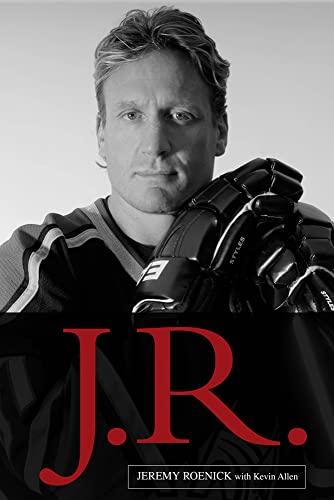
Jeremy Roenick, one of the premier hockey players of his generation and one of the greatest American stars the NHL has ever known, shares his life story in this frank and unflinching autobiography. After making his debut as an 18-year-old with the Chicago Blackhawks, Roenick thrilled fans with his flashy style, take-no-prisoners approach, and jaw-dropping skills. A native of Boston, Roenick went on to play for four more franchises—including the Philadelphia Flyers and Los Angeles Kings—during his incredible 18-season career. By the time he was through, Roenick had racked up 513 goals—the second most of any American-born player—and 703 assists. Now a tells-it-like-it-is commentator for NBC and the NHL, Roenick takes readers on a behind-the-scenes, warts-and-all tour through his illustrious career, both on and off the ice.
Die Inhaltsangabe kann sich auf eine andere Ausgabe dieses Titels beziehen.
Über die Autorin bzw. den Autor
Jeremy Roenick is a member of the U.S. Hockey Hall of Fame and one of only four American-born players to score 500 or more career NHL goals. He is currently a hockey analyst for NBC. Kevin Allen is the author or coauthor of more than a dozen sports books, including Brett: His Own Story, Star-Spangled Hockey: Celebrating 75 Years of USA Hockey, and Without Fear: Hockey’s 50 Greatest Goaltenders. He lives in Ypsilanti, Michigan.
Auszug. © Genehmigter Nachdruck. Alle Rechte vorbehalten.
J. R.
My Life as the Most Outspoken, Fearless, and Hard-Hitting Man in Hockey
By Jeremy Roenick, Kevin AllenTriumph Books
Copyright © 2012 Jeremy Roenick
All rights reserved.
ISBN: 978-1-60078-654-9All rights reserved.
Contents
Introduction,
1. Please Come to Boston,
2. Weighing My Odds,
3. Knowing My Creator,
4. Finding My Bluster in the Windy City,
5. Showing Me the Door,
6. Selling Ice in the Desert,
7. Guts,
8. Payback Was a Bitch,
9. Not All Rainbows and Butterflies,
10. Exit Strategy,
11. Hitch in My Giddy-Up,
12. The Gambler,
13. Born in the USA,
14. Death in the Family,
15. The Bomb,
16. All in My Head,
17. Dancing with Probert,
18. To Live and Die in L.A.,
19. Wayne's World,
20. Reprieve,
21. When the Cheering Stops,
22. Friends and Enemies,
23. Who I Am,
Acknowledgements,
Photo Gallery 1,
Photo Gallery 2,
Photo Gallery 3,
CHAPTER 1
Please Come to Boston
When I was an 11-year-old playing peewee hockey in the Washington, D.C., area, I remember backing down from an encounter with an opponent and hearing a voice from the crowd yell, "Get off the ice, you pussy."
Looking into the stands, I realized it was my mother.
In the 1980s, the Roenicks were not like the model American families depicted on a television situation comedy. We were not like Leave It to Beaver, The Cosby Show or Family Ties. There was nothing typical about our American family. The Roenicks would have been a better fit for one of today's reality shows. We could have produced the level of swearing, screaming, angst, drama and unusual storylines necessary to bring viewers back every week. They would have tuned in just to see how many miles we were driving, or how many mountains the Roenicks would be willing to move, to make sure I could play in a good hockey game.
If we were on reality television, directors could have built an entire episode around the time my father, Wally, booted me out of the car and made me walk three miles home in winter conditions because my effort wasn't as strong as it should have been in a hockey game. My family's overzealous pursuit of hockey success for their oldest son probably would have had viewers shaking their heads about the nutty lifestyle we lived to support my ability to play elite-level hockey. We were such a hockey family that my dad tells the story of driving away from our house in Connecticut after it was sold and realizing that one side of the house was black from pucks striking it over and over and over again.
Certainly, there were people around us who considered it bizarre, or maybe even insane, that my mom and dad built their lives around my sports activities. At age 13, I was living in Fairfax, Virginia, and commuting 250 miles each way on weekends to play for a hockey team in Totowa, New Jersey. Every Friday during the hockey season, I had a 3 p.m. reservation on People Express Airlines to fly from Dulles Airport in Virginia to Newark for the weekend. Even with People Express's special fares of $79 or $99 one way, my dad estimated that it cost about $25,000 in total for me to play for the New Jersey Rockets that season. He always joked that my NHL travel schedule was like a walk in the park compared to the miles we logged in my youth hockey days.
"Tough travel is when you are 14 and you get home from a road trip at five in the morning," my dad said. But, as he points out, at least I was able to fly to New Jersey. "The idiots had to drive," he said.
He was referring, of course, to himself and my mother, Jo, who would drive from Virginia to New Jersey. At the time, my dad was an executive for Mobil Oil and he travelled around the country for his work. It was standard procedure for him to land in Virginia after a lengthy work trip and then jump into a car for a drive to New Jersey. Sometimes he would take a red-eye flight directly from the west coast to Newark. As busy as my dad was, he usually found a way to attend my games.
To get an invitation to play for the New Jersey Rockets was an honour for a bantam-age hockey player in that era. The Rockets organization has been around since the 1970s. Joey Mullen, the first American player to reach 500 goals at the NHL level, played for the Rockets. They prided themselves on bringing together the best players from Long Island, New Jersey, Connecticut and the Washington, D.C., area. They recruited me after I had scored 203 goals and produced 485 points for the Washington Metros in my final season of peewee hockey. If it is possible for an 11-year-old to have a hockey reputation, I had one. The NHL is full of players whose first international notice came from the Quebec peewee tournament. I was one of those guys. In one tournament game, I netted eight goals. The tournament record was nine goals, set by some kid named Wayne Gretzky.
The Rockets also recruited my Metros linemate Matt Mallgrave. When my family moved us to Northern Virginia when I was 10, all I heard was that Mallgrave was the best player in the area. I don't know who I was expecting to meet, but I sure didn't expect to meet a player sporting a Mohawk haircut. I remember thinking, "This freak is the best player in the area?" Meanwhile, he told me later that he kept hearing I was going to come into Washington and be the new best player. He was unimpressed when he saw me in street clothes and realized that I weighed 15 pounds less than everyone else. He told me later he was thinking, "This little shit is the guy everyone is talking about?"
Despite our first impressions, we ended up becoming lifelong buddies. Although I didn't recall this, Matt remembers that he was matched up against me in our first scrimmage and I scored six goals against him. He said he knew then that the hockey in Washington, D.C., wasn't quite as strong as the hockey we were playing on the east coast. But Matt was unquestionably a quality player, netting more than 100 goals for the Metros one season. He was also one of the top players for the Rockets.
When Mallgrave decided to play for the Rockets, his father secured a townhouse in New Jersey. The Mallgraves would pick me up at the airport when I landed there on Friday afternoons. My dad would join us later when he drove in from home, or flew in from his latest business trip.
In my youth hockey days, my dad was heavily invested in my career. My playing style in those days came from the many talks I had with him about how the game should be played. He believed in teamwork, and if he thought I was selfish on the ice, he would holler at me on the car ride home.
The impression that everyone had in those days was that my dad was more intense than I was. Most of my teammates considered me laid-back. What everyone also remembers about my dad was that he was a chain smoker. When he coached my peewee team, the kids thought it was hilarious when smoke would come out of his mouth when he was barking instructions at us.
In looking back at our weekends in New Jersey, Mallgrave always recalls my dad with a cigarette in his hand. "Over a weekend, I swear he must have smoked 170 cigarettes," Mallgrave recalls.
The Rockets won back-to-back U.S. national bantam championships when Matt and I played for them in 1983 and 1984. In my first season with the Rockets, the only team we couldn't beat consistently was the Chicago Young Americans, a team that boasted Justin Duberman, who ended up playing college hockey at North Dakota, plus a few games for the Pittsburgh Penguins; Joe...
„Über diesen Titel“ kann sich auf eine andere Ausgabe dieses Titels beziehen.
Suchergebnisse für J.R.: My Life as the Most Outspoken, Fearless, and...

Beispielbild für diese ISBN
J.R.: My Life as the Most Outspoken, Fearless, and Hard-Hitting Man in Hockey
Anbieter: World of Books (was SecondSale), Montgomery, IL, USA
Verkäuferbewertung 5 von 5 Sternen

Zustand: Good. Item in good condition. Textbooks may not include supplemental items i.e. CDs, access codes etc. Bestandsnummer des Verkäufers 00098259773
Gebraucht kaufen
EUR 3,82
Versand gratis
Versand innerhalb von USA
Versand innerhalb von USA
Anzahl: 3 verfügbar
Foto des Verkäufers
J.R.: My Life as the Most Outspoken, Fearless, and Hard-Hitting Man in Hockey
Anbieter: Dream Books Co., Denver, CO, USA
Verkäuferbewertung 5 von 5 Sternen
Zustand: good. Gently used with minimal wear on the corners and cover. A few pages may contain light highlighting or writing, but the text remains fully legible. Dust jacket may be missing, and supplemental materials like CDs or codes may not be included. May be ex-library with library markings. Ships promptly! Bestandsnummer des Verkäufers DBV.1600786545.G
Gebraucht kaufen
EUR 3,83
Versand gratis
Versand innerhalb von USA
Versand innerhalb von USA
Anzahl: 1 verfügbar
Beispielbild für diese ISBN
J.R.: My Life as the Most Outspoken, Fearless, and Hard-Hitting Man in Hockey
Verlag:
Triumph Books (edition 9/25/12), 2012
ISBN 10: 1600786545
ISBN 13: 9781600786549
Gebraucht
Hardcover
Anbieter: BooksRun, Philadelphia, PA, USA
Verkäuferbewertung 5 von 5 Sternen
Hardcover. Zustand: Very Good. 9/25/12. With dust jacket. It's a well-cared-for item that has seen limited use. The item may show minor signs of wear. All the text is legible, with all pages included. It may have slight markings and/or highlighting. Bestandsnummer des Verkäufers 1600786545-11-1-29
Gebraucht kaufen
EUR 4,98
Versand gratis
Versand innerhalb von USA
Versand innerhalb von USA
Anzahl: 1 verfügbar
Foto des Verkäufers
J.R.: My Life as the Most Outspoken, Fearless, and Hard-Hitting Man in Hockey
Anbieter: Greenworld Books, Arlington, TX, USA
Verkäuferbewertung 5 von 5 Sternen
Zustand: good. Fast Free Shipping â" Good condition. It may show normal signs of use, such as light writing, highlighting, or library markings, but all pages are intact and the book is fully readable. A solid, complete copy that's ready to enjoy. Bestandsnummer des Verkäufers GWV.1600786545.G
Gebraucht kaufen
EUR 5,28
Versand gratis
Versand innerhalb von USA
Versand innerhalb von USA
Anzahl: 1 verfügbar
Foto des Verkäufers
J.R.: My Life as the Most Outspoken, Fearless, and Hard-Hitting Man in Hockey
Anbieter: Greenworld Books, Arlington, TX, USA
Verkäuferbewertung 5 von 5 Sternen
Zustand: very_good. Fast Free Shipping â" Very Good condition book with a firm cover and clean pages. Shows normal use and some light wear or limited notes markings. A solid, nice copy to enjoy. Bestandsnummer des Verkäufers GWV.1600786545.VG
Gebraucht kaufen
EUR 5,37
Versand gratis
Versand innerhalb von USA
Versand innerhalb von USA
Anzahl: 1 verfügbar
Foto des Verkäufers
J.R.: My Life as the Most Outspoken, Fearless, and Hard-Hitting Man in Hockey
Anbieter: Off The Shelf, Antonia, MO, USA
Verkäuferbewertung 5 von 5 Sternen
Zustand: good. The item shows wear from consistent use, but it remains in good condition and works perfectly. All pages and cover are intact including the dust cover, if applicable . Spine may show signs of wear. Pages may include limited notes and highlighting. May NOT include discs, access code or other supplemental materials. Bestandsnummer des Verkäufers 4WILKM00M1ER
Gebraucht kaufen
EUR 1,33
EUR 4,30 Versand
Versand innerhalb von USA
Versand innerhalb von USA
Anzahl: 1 verfügbar
Beispielbild für diese ISBN
J.R.: My Life as the Most Outspoken, Fearless, and Hard-Hitting Man in Hockey
Anbieter: ThriftBooks-Dallas, Dallas, TX, USA
Verkäuferbewertung 5 von 5 Sternen
Hardcover. Zustand: Very Good. No Jacket. Missing dust jacket; May have limited writing in cover pages. Pages are unmarked. ~ ThriftBooks: Read More, Spend Less. Bestandsnummer des Verkäufers G1600786545I4N01
Gebraucht kaufen
EUR 5,75
Versand gratis
Versand innerhalb von USA
Versand innerhalb von USA
Anzahl: 1 verfügbar
Beispielbild für diese ISBN
J.R.: My Life as the Most Outspoken, Fearless, and Hard-Hitting Man in Hockey
Anbieter: ThriftBooks-Atlanta, AUSTELL, GA, USA
Verkäuferbewertung 5 von 5 Sternen
Hardcover. Zustand: As New. No Jacket. Pages are clean and are not marred by notes or folds of any kind. ~ ThriftBooks: Read More, Spend Less. Bestandsnummer des Verkäufers G1600786545I2N00
Gebraucht kaufen
EUR 5,75
Versand gratis
Versand innerhalb von USA
Versand innerhalb von USA
Anzahl: 1 verfügbar
Beispielbild für diese ISBN
J.R.: My Life as the Most Outspoken, Fearless, and Hard-Hitting Man in Hockey
Anbieter: ThriftBooks-Dallas, Dallas, TX, USA
Verkäuferbewertung 5 von 5 Sternen
Hardcover. Zustand: Good. No Jacket. Former library book; Pages can have notes/highlighting. Spine may show signs of wear. ~ ThriftBooks: Read More, Spend Less. Bestandsnummer des Verkäufers G1600786545I3N10
Gebraucht kaufen
EUR 5,75
Versand gratis
Versand innerhalb von USA
Versand innerhalb von USA
Anzahl: 1 verfügbar
Beispielbild für diese ISBN
J.R.: My Life as the Most Outspoken, Fearless, and Hard-Hitting Man in Hockey
Anbieter: ThriftBooks-Atlanta, AUSTELL, GA, USA
Verkäuferbewertung 5 von 5 Sternen
Hardcover. Zustand: Good. No Jacket. Former library book; Pages can have notes/highlighting. Spine may show signs of wear. ~ ThriftBooks: Read More, Spend Less. Bestandsnummer des Verkäufers G1600786545I3N10
Gebraucht kaufen
EUR 5,75
Versand gratis
Versand innerhalb von USA
Versand innerhalb von USA
Anzahl: 1 verfügbar