
Verwandte Artikel zu If God Is Good: Faith in the Midst of Suffering and...
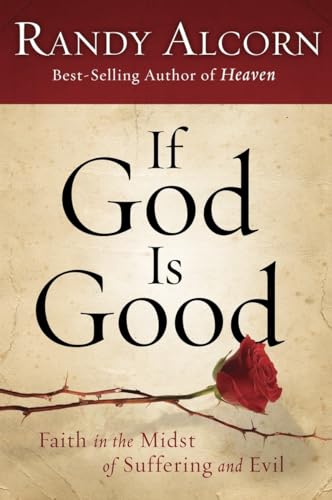
Inhaltsangabe
Suffering is, in the end, God’s invitation to trust him.
“As he did in his best-selling book, Heaven, Randy Alcorn delves deep into a profound subject, and through compelling stories, provocative questions and answers, and keen biblical understanding, he brings assurance and hope to all.” –Publishers WeeklyEvery one of us will experience suffering. You may be in such a time now. We see the presence of evil in the headlines every day.
It all raises questions about God—Why would an all-good and all-powerful God create a world full of evil and suffering? How can there be a God if suffering and evil exist?
Atheists such as Richard Dawkins and even former believers like Bart Ehrman answer the question simply: The existence of suffering and evil proves there is no God.
But in this illuminating book, best-selling author Randy Alcorn challenges the logic of disbelief, and brings a fresh, hopeful, and thoroughly biblical insight to the issues these important questions raise.
Alcorn offers insights from his conversations with men and women whose lives have been torn apart by suffering, and yet whose faith in God burns brighter than ever. He reveals the big picture of who God is and what God is doing in the world—now and forever. And he shows the beauty of God’s sovereignty—how it ultimately triumphs over suffering and evil in our lives and the world around us.
Die Inhaltsangabe kann sich auf eine andere Ausgabe dieses Titels beziehen.
Über die Autorin bzw. den Autor
Randy Alcorn is the founder and director of Eternal Perspective Ministries and a best-selling author. His novels include Deadline, Dominion, Deception, Edge of Eternity, The Ishbane Conspiracy, and the Gold Medallion winner, Safely Home. He has written twenty-six nonfiction books as well, including Heaven, The Treasure Principle, The Purity Principle, and The Grace and Truth Paradox. Randy and his wife, Nanci, live in Oregon and have two married daughters and five grandsons.
Auszug. © Genehmigter Nachdruck. Alle Rechte vorbehalten.
Why Is the Problem of Evil
and Suffering So Important?
The problem of evil and suffering moves from the philosophical to the personal in a moment of time.
During my research I read all sorts of books–philosophical, theological, practical, and personal. It’s one thing to talk about evil and suffering philosophically; it’s another to live with it. Philosophy professor Peter van Inwagen wrote,
Angels may weep because the world is filled with suffering. A human being weeps because his daughter, she and not another, has died of leukemia this very night, or because her village, the only world she knows, is burning and the mutilated bodies of her husband and her son lie at her feet.1
Three weeks after his thirty-three-year-old son, Christopher, died in a car crash, pastor and evangelist Greg Laurie addressed a crowd of twenty-nine thousand at Angel Stadium in Anaheim, California. “I’ve talked about Heaven my whole life,” Laurie said, “and I’ve given many messages on life after death. I’ve counseled many people who have lost a loved one, and I thought I knew a little bit about it. But I have to say that when it happens to you, it’s a whole new world.” The day his son died, he told the crowd, was “the hardest day of my life.”2
When I spoke with Greg ten months later, his faith was strong, but his profound sense of loss remained. Pain is always local. It has a face and a name. And sometimes, for now, it doesn’t go away.
The American response to the terrorist attacks on September 11, 2001, demonstrated that large-scale evil and suffering usually remain distant from us.
In Sudan, millions, including children, have been murdered, raped, and enslaved. The 2004 Asian tsunami killed more than 280,000 people. Malaria causes more than two million fatalities annually, the majority of them African children. Around the world, some 26,500 children die every day; eighteen every minute.
The loss of American lives in the terrorist attacks of September 11, 2001, numbered 2,973–horrible indeed, yet a small fraction of the terror and loss of life faced daily around the world. The death toll in the 1994 Rwandan genocide, for example, amounted to more than two World Trade Center disasters every day for one hundred days straight. Americans discovered in one day what much of the world already knew–violent death comes quickly, hits hard, and can be unspeakably dreadful.
If we open our eyes, we’ll see the problem of evil and suffering even when it doesn’t touch us directly.
A friend of ours spoke at a Christian gathering. On her way back to her car, someone raped her. She became pregnant and gave birth to her first child. Because racial differences would have made it clear her husband hadn’t fathered the baby, the couple placed the infant for adoption. Since then, they’ve been unable to conceive another child. Her lifelong dream of raising children remains unfulfilled.
I once had to tell a wife, son, and daughter that their husband and father had died on a hunting trip. I still remember the anguished face of the little girl, then hearing her wail, “Not Daddy, no, not Daddy!”
Years ago I had to tell my mother that her only brother had been murdered with a meat cleaver.
A Christian woman tipped over on her riding lawn mower and fell into a pond. The machine landed on top of her, pinning her to the bottom and drowning her. Such a bizarre death prompted some to ask, “Why, God?” and “Why like this?”
After his wife died, in great pain C. S. Lewis realized, “If I had really cared, as I thought I did, about the sorrows of the world, I should not have been so overwhelmed when my own sorrow came.”3
Our own suffering is often our wake-up call. But even if you aren’t now facing it, look around and you’ll see many who are.
Why Talk About the Problem?
More people point to the problem of evil and suffering as their reason for not believing in God than any other–it is not merely a problem, it is the problem.
A Barna poll asked, “If you could ask God only one question and you knew he would give you an answer, what would you ask?” The most common response was, “Why is there pain and suffering in the world?”4
John Stott says,
The fact of suffering undoubtedly constitutes the single greatest challenge to the Christian faith, and has been in every generation. Its distribution and degree appear to be entirely random and therefore unfair. Sensitive spirits ask if it can possibly be reconciled with God’s justice and love.5
Richard Swinburne, writing in the Oxford Companion to Philosophy, says the problem of evil is “the most powerful objection to traditional theism.” 6
Ronald Nash writes, “Objections to theism come and go.… But every philosopher I know believes that the most serious challenge to theism was, is, and will continue to be the problem of evil.”7
You will not get far in a conversation with someone who rejects the Christian faith before the problem of evil is raised. Pulled out like the ultimate trump card, it’s supposed to silence believers and prove that the all-good and all-powerful God of the Bible doesn’t exist.
The problem of evil is atheism’s cornerstone.
German playwright Georg Büchner (1813—37) called the problem of evil “the rock of atheism.” Atheists point to the problem of evil as proof that the God of the Bible doesn’t exist. Every day the ancient argument gets raised in college philosophy classes, coffee shops, dinner discussions, e-mail exchanges, blogs, talk
shows, and best-selling books.
Atheists write page after page about evil and suffering. The problem of evil never strays far from their view; it intrudes upon chapters with vastly different subjects. It’s one of the central reasons Sam Harris writes, “Atheism is not a philosophy; it is not even a view of the world; it is simply an admission of the obvious.”
8 Harris then scolds Christians, saying about intelligent people (such as himself ), “We stand dumbstruck by you–by your denial of tangible reality, by the suffering you create in service to your religious myths, and by your attachment to an imaginary God.”9 (At least we know what he’s thinking!)
Many suppose that scientific evidence is the cornerstone of atheism. But the famous one-time champion of atheism, Britain’s Anthony Flew, renounced his atheism due to the complexity of the universe and his belief in the overwhelming evidence for intelligent design. After examining Richard Dawkins’s reasoning in The God Delusion–that the origin of life can be attributed to a “lucky chance”– Flew said, “If that’s the best argument you have, then the game is over.” However, although he abandoned his atheism, Flew did not convert to the Christian faith, but to deism. Why? Flew could not get past the problem of evil. He believes that God must have created the universe, then abandoned it.
A faith that leaves us unprepared for suffering is a false faith that
deserves to be lost.
A lot of bad theology inevitably surfaces when we face suffering. John Piper writes, “Wimpy worldviews make wimpy Christians. And wimpy Christians won’t survive the days ahead.”10
Auschwitz survivor Viktor Frankl wrote, “Just as the small fire is extinguished by the storm whereas a large fire is enhanced by it, likewise a weak faith is weakened by predicaments and catastrophes...
„Über diesen Titel“ kann sich auf eine andere Ausgabe dieses Titels beziehen.
Suchergebnisse für If God Is Good: Faith in the Midst of Suffering and...

Beispielbild für diese ISBN
If God is Good: Faith in the Midst of Suffering and Evil
Anbieter: World of Books (was SecondSale), Montgomery, IL, USA
Verkäuferbewertung 5 von 5 Sternen

Paperback. Zustand: Very Good. Suffering is, in the end, God's invitation to trust him. "As he did in his best-selling book, Heaven, Randy Alcorn delves deep into a profound subject, and through compelling stories, provocative questions and answers, and keen biblical understanding, he brings assurance and hope to all." -Publishers Weekly Every one of us will experience suffering. You may be in such a time now. We see the presence of evil in the headlines every day. It all raises questions about God-Why would an all-good and all-powerful God create a world full of evil and suffering? How can there be a God if suffering and evil exist? Atheists such as Richard Dawkins and even former believers like Bart Ehrman answer the question simply: The existence of suffering and evil proves there is no God. But in this illuminating book, best-selling author Randy Alcorn challenges the logic of disbelief, and brings a fresh, hopeful, and thoroughly biblical insight to the issues these important questions raise. Alcorn offers insights from his conversations with men and women whose lives have been torn apart by suffering, and yet whose faith in God burns brighter than ever. He reveals the big picture of who God is and what God is doing in the world-now and forever. And he shows the beauty of God's sovereignty-how it ultimately triumphs over suffering and evil in our lives and the world around us. Bestandsnummer des Verkäufers 00109136566
Gebraucht kaufen
EUR 4,56
Versand gratis
Versand innerhalb von USA
Versand innerhalb von USA
Anzahl: 2 verfügbar
Beispielbild für diese ISBN
If God is Good: Faith in the Midst of Suffering and Evil
Anbieter: World of Books (was SecondSale), Montgomery, IL, USA
Verkäuferbewertung 5 von 5 Sternen
Paperback. Zustand: Fair. Suffering is, in the end, God's invitation to trust him. "As he did in his best-selling book, Heaven, Randy Alcorn delves deep into a profound subject, and through compelling stories, provocative questions and answers, and keen biblical understanding, he brings assurance and hope to all." -Publishers Weekly Every one of us will experience suffering. You may be in such a time now. We see the presence of evil in the headlines every day. It all raises questions about God-Why would an all-good and all-powerful God create a world full of evil and suffering? How can there be a God if suffering and evil exist? Atheists such as Richard Dawkins and even former believers like Bart Ehrman answer the question simply: The existence of suffering and evil proves there is no God. But in this illuminating book, best-selling author Randy Alcorn challenges the logic of disbelief, and brings a fresh, hopeful, and thoroughly biblical insight to the issues these important questions raise. Alcorn offers insights from his conversations with men and women whose lives have been torn apart by suffering, and yet whose faith in God burns brighter than ever. He reveals the big picture of who God is and what God is doing in the world-now and forever. And he shows the beauty of God's sovereignty-how it ultimately triumphs over suffering and evil in our lives and the world around us. Bestandsnummer des Verkäufers 00107318475
Gebraucht kaufen
EUR 4,56
Versand gratis
Versand innerhalb von USA
Versand innerhalb von USA
Anzahl: 1 verfügbar
Beispielbild für diese ISBN
If God is Good: Faith in the Midst of Suffering and Evil
Anbieter: World of Books (was SecondSale), Montgomery, IL, USA
Verkäuferbewertung 5 von 5 Sternen
Paperback. Zustand: Good. Suffering is, in the end, God's invitation to trust him. "As he did in his best-selling book, Heaven, Randy Alcorn delves deep into a profound subject, and through compelling stories, provocative questions and answers, and keen biblical understanding, he brings assurance and hope to all." -Publishers Weekly Every one of us will experience suffering. You may be in such a time now. We see the presence of evil in the headlines every day. It all raises questions about God-Why would an all-good and all-powerful God create a world full of evil and suffering? How can there be a God if suffering and evil exist? Atheists such as Richard Dawkins and even former believers like Bart Ehrman answer the question simply: The existence of suffering and evil proves there is no God. But in this illuminating book, best-selling author Randy Alcorn challenges the logic of disbelief, and brings a fresh, hopeful, and thoroughly biblical insight to the issues these important questions raise. Alcorn offers insights from his conversations with men and women whose lives have been torn apart by suffering, and yet whose faith in God burns brighter than ever. He reveals the big picture of who God is and what God is doing in the world-now and forever. And he shows the beauty of God's sovereignty-how it ultimately triumphs over suffering and evil in our lives and the world around us. Bestandsnummer des Verkäufers 00104517191
Gebraucht kaufen
EUR 4,56
Versand gratis
Versand innerhalb von USA
Versand innerhalb von USA
Anzahl: 6 verfügbar
Foto des Verkäufers
If God Is Good: Faith in the Midst of Suffering and Evil
Anbieter: Zoom Books Company, Lynden, WA, USA
Verkäuferbewertung 5 von 5 Sternen
Zustand: very_good. Book is in very good condition and may include minimal underlining highlighting. The book can also include "From the library of" labels. May not contain miscellaneous items toys, dvds, etc. . We offer 100% money back guarantee and 24 7 customer service. Bestandsnummer des Verkäufers ZBV.1601425791.VG
Gebraucht kaufen
EUR 4,56
Versand gratis
Versand innerhalb von USA
Versand innerhalb von USA
Anzahl: 1 verfügbar
Foto des Verkäufers
If God Is Good: Faith in the Midst of Suffering and Evil
Anbieter: Shakespeare Book House, Rockford, IL, USA
Verkäuferbewertung 5 von 5 Sternen
Zustand: good. Used book that is clean, average condition without any missing pages. Bestandsnummer des Verkäufers EBBV.1601425791.G
Gebraucht kaufen
EUR 2,83
EUR 3,50 Versand
Versand innerhalb von USA
Versand innerhalb von USA
Anzahl: 1 verfügbar
Beispielbild für diese ISBN
If God is Good: Faith in the Midst of Suffering and Evil
Anbieter: World of Books Inc, Montgomery, IL, USA
Verkäuferbewertung 4 von 5 Sternen

Paperback. Zustand: Good. Suffering is, in the end, God's invitation to trust him. "As he did in his best-selling book, Heaven, Randy Alcorn delves deep into a profound subject, and through compelling stories, provocative questions and answers, and keen biblical understanding, he brings assurance and hope to all." -Publishers Weekly Every one of us will experience suffering. You may be in such a time now. We see the presence of evil in the headlines every day. It all raises questions about God-Why would an all-good and all-powerful God create a world full of evil and suffering? How can there be a God if suffering and evil exist? Atheists such as Richard Dawkins and even former believers like Bart Ehrman answer the question simply: The existence of suffering and evil proves there is no God. But in this illuminating book, best-selling author Randy Alcorn challenges the logic of disbelief, and brings a fresh, hopeful, and thoroughly biblical insight to the issues these important questions raise. Alcorn offers insights from his conversations with men and women whose lives have been torn apart by suffering, and yet whose faith in God burns brighter than ever. He reveals the big picture of who God is and what God is doing in the world-now and forever. And he shows the beauty of God's sovereignty-how it ultimately triumphs over suffering and evil in our lives and the world around us. Bestandsnummer des Verkäufers CIN1601425791G
Gebraucht kaufen
EUR 6,36
Versand gratis
Versand innerhalb von USA
Versand innerhalb von USA
Anzahl: 6 verfügbar
Beispielbild für diese ISBN
If God is Good: Faith in the Midst of Suffering and Evil
Anbieter: World of Books Inc, Montgomery, IL, USA
Verkäuferbewertung 4 von 5 Sternen
Paperback. Zustand: Very Good. Suffering is, in the end, God's invitation to trust him. "As he did in his best-selling book, Heaven, Randy Alcorn delves deep into a profound subject, and through compelling stories, provocative questions and answers, and keen biblical understanding, he brings assurance and hope to all." -Publishers Weekly Every one of us will experience suffering. You may be in such a time now. We see the presence of evil in the headlines every day. It all raises questions about God-Why would an all-good and all-powerful God create a world full of evil and suffering? How can there be a God if suffering and evil exist? Atheists such as Richard Dawkins and even former believers like Bart Ehrman answer the question simply: The existence of suffering and evil proves there is no God. But in this illuminating book, best-selling author Randy Alcorn challenges the logic of disbelief, and brings a fresh, hopeful, and thoroughly biblical insight to the issues these important questions raise. Alcorn offers insights from his conversations with men and women whose lives have been torn apart by suffering, and yet whose faith in God burns brighter than ever. He reveals the big picture of who God is and what God is doing in the world-now and forever. And he shows the beauty of God's sovereignty-how it ultimately triumphs over suffering and evil in our lives and the world around us. Bestandsnummer des Verkäufers CIN1601425791VG
Gebraucht kaufen
EUR 6,36
Versand gratis
Versand innerhalb von USA
Versand innerhalb von USA
Anzahl: 2 verfügbar
Beispielbild für diese ISBN
If God Is Good: Faith in the Midst of Suffering and Evil
Anbieter: ThriftBooks-Phoenix, Phoenix, AZ, USA
Verkäuferbewertung 5 von 5 Sternen
Paperback. Zustand: Good. No Jacket. Pages can have notes/highlighting. Spine may show signs of wear. ~ ThriftBooks: Read More, Spend Less. Bestandsnummer des Verkäufers G1601425791I3N00
Gebraucht kaufen
EUR 6,40
Versand gratis
Versand innerhalb von USA
Versand innerhalb von USA
Anzahl: 1 verfügbar
Beispielbild für diese ISBN
If God Is Good: Faith in the Midst of Suffering and Evil
Anbieter: ThriftBooks-Reno, Reno, NV, USA
Verkäuferbewertung 5 von 5 Sternen
Paperback. Zustand: Fair. No Jacket. Readable copy. Pages may have considerable notes/highlighting. ~ ThriftBooks: Read More, Spend Less. Bestandsnummer des Verkäufers G1601425791I5N00
Gebraucht kaufen
EUR 6,40
Versand gratis
Versand innerhalb von USA
Versand innerhalb von USA
Anzahl: 1 verfügbar
Beispielbild für diese ISBN
If God Is Good: Faith in the Midst of Suffering and Evil
Anbieter: ThriftBooks-Phoenix, Phoenix, AZ, USA
Verkäuferbewertung 5 von 5 Sternen
Paperback. Zustand: Fair. No Jacket. Readable copy. Pages may have considerable notes/highlighting. ~ ThriftBooks: Read More, Spend Less. Bestandsnummer des Verkäufers G1601425791I5N00
Gebraucht kaufen
EUR 6,40
Versand gratis
Versand innerhalb von USA
Versand innerhalb von USA
Anzahl: 1 verfügbar