
Verwandte Artikel zu Possible: A Blueprint for Changing How We Change the...
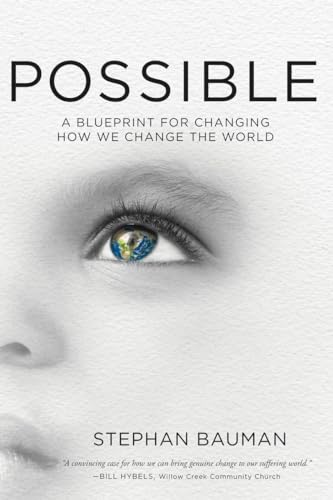
Possible: A Blueprint for Changing How We Change the World: Your Blueprint for Saving the World - Hardcover
Inhaltsangabe
We need a better vision for saving the world.
Across the world, people like you are rising up to fight poverty, oppression, and injustice—not just professionals, but bloggers, musicians, entrepreneurs, artists, and advocates. People who refuse to accept the world as it is, who dare to believe change is possible.
But we face a crisis of vision. We sense what needs to be done, but often we don’t know how to do it. Without a better blueprint for doing good well, our moment in history will slip away.
Stephan Bauman, president of World Relief believes true change begins in the hearts and actions of ordinary people. In Possible, he presents clear and biblical thinking, powerful stories, and practical tools for sustainably impacting our workplaces, neighborhoods, villages, and cities.
Possible is an eloquent and personal call to reconsider what it means to change ourselves so that we can change the world.
Die Inhaltsangabe kann sich auf eine andere Ausgabe dieses Titels beziehen.
Über die Autorin bzw. den Autor
Stephan Bauman is president and CEO of World Relief, a leading international relief and development organization. He is also a poet, ordained minister, and strategist who considers his African friends his most important teachers. Stephan and his wife, Belinda, live near Washington, D.C. with their sons, Joshua and Caleb.
Auszug. © Genehmigter Nachdruck. Alle Rechte vorbehalten.
Recovering Our Call
do we dare disturb the universe?
Do you want to do something beautiful for God? . . . This is your chance. —Mother Teresa
During an otherwise normal worship service near Washington, DC, I received a text message I couldn’t ignore. A rebel militia was wreaking havoc in the Democratic Republic of Congo, one of the world’s most Christian countries yet also one of its poorest and most violent, especially for women and children. My wife, Belinda, was receiving similar messages on Facebook. Gunshots and mortar fire threatened the lives of people we loved.
I sat down to exchange a flurry of texts. Belinda sat down to cry. She was thinking about her friends in Congo. Only a few months before, Belinda knelt with Esperance, a victim of sexual violence, on the dusty concrete floor of a rural church, where they laughed and cried. “You remind me I am still human,” Esperance said.
When you and I hear stories about violence, war, stolen girls, boy soldiers, or hungry children, we feel helpless, exasperated, sometimes even physically ill. When we learn about senseless poverty, brutal racism, mind-boggling violence, or preventable disease, we feel overwhelmed. We pray. Sometimes we give. But we struggle to do more.
Why?
Because we cannot change the world.
Or so we think.
A handful of years ago a friend from Indiana, Joe Johns, began to ask hard questions about conflict, faith, and peace in Congo. He and a Congolese pastor named Marcel began to help people see how local militias were turning neighbors against one another. Tensions between churches, they realized, mirrored tensions between tribes. So Marcel convened a group of fellow pastors to help them see where they were wrong. Some shed tears as they forgave one another. Others knelt and prayed together. All committed to developing a better future, making peace a priority, and mobilizing their communities to help people become peacemakers.
And mobilize they did.
Meanwhile, back home, Joe inspired his church to take on the impossible—saving Congo. His friends began to recruit their friends to help. Others gathered resources. Hundreds ran in their local half marathon to raise awareness. One group even rode bicycles across the country in a race to end Congo’s suffering.
Across the country a rapper-poet and friend to Joe began to speak out on how tungsten, tin, and tantalum—all components in our cell phones and other electronics—help fuel the war in Congo, exploiting tribes and perpetuating violence against women. A few people from Bend, Oregon, also took the risk to talk about Congo, the impossible situation no one wanted to tackle. But they did anyway, their voices joining together to become a megaphone, a collective shout too loud to ignore.
A group of women from across the United States heard their appeal and traveled to Congo to meet those most affected by the conflict. Belinda joined their cause. They met ten women, including Esperance. All ten had been victims of violence and had overcome incredible odds to start businesses, provide for their children, and even forgive their perpetrators. They asked Belinda and the others to tell their stories so the world would know about “the vilest scramble for loot that ever disfigured the history of human conscience.”1 So one began to tell the world through art, another through digital portraits, and others through blogging.
And they haven’t stopped since.
When Belinda learned Esperance had escaped the warring militias, she cried tears of joy. Esperance and her sisters found strength in each other, their communities, and their new friends across the world. Now they are helping other women—their “sisters”—some as young as fifteen, to heal from rape and rebuild their lives. Some are also working to mitigate future violence.
Today thousands of peacemakers are changing Congo, and their numbers continue to swell. With their friends from across the United States, they are waging peace to save Congo one village at a time.2
A poet and a blogger, a few warrior moms, two tenacious pastors, and a crew of volunteers offered their gifts, their strengths, their vulnerability, and their grit to inspire a sea of Congolese women, heroes on the front lines of suffering, to change their forgotten corner of the world in the Democratic Republic of Congo.
Can we change the world? I believe people like you will do extraordinary things when given the chance, turning some of the most entrenched, seemingly intractable situations of our day into something hopeful, something . . .
Possible.
I’ve seen it firsthand: students who took the time to help a child in Ghana learn how to overcome a life-threatening disease. A young couple who helped a woman they’d just met to escape a war in Sierra Leone. The gutsy, over¬worked doctor who helped a frightened mother deliver a baby girl only hours after an earthquake hit Haiti.
I believe “there are no ordinary people,”3 only people who are bold enough to think they can save a life, or some corner of the world, and fierce enough to try.
seismic shift
I am convinced the world’s suffering lingers not because people aren’t willing to help. Faith, compassion, and justice stir the souls of many. They are bloggers, technicians, musicians, entrepreneurs, artists, writers, nurses, electricians, rappers, moms, politicians, PhDs, lawyers, students, researchers, and doctors. They are you, and people like you—a groundswell of individuals who simply refuse to accept the world as it is. They want to give their lives to something more, something greater—something possible.
But we cannot change the world the way we used to. The vision of the past is insufficient to carry us into the future. While we honor those who have given their lives before us—their sacrifice, their ingenuity, and their perseverance—we are on the cusp of a seismic shift in how we bring change, moving from an era of a few extraordinary heroes to an era where tens of thousands, even millions, will effect change.
We face a crisis of vision, not will. I meet people every day who long to be part of meaningful change but experience disappointment instead. You may feel this way too. You may wonder if you can really make a difference, if you can genuinely impact the world. You understand the urgency, the gravity—real people, real lives, a billion hungry, twenty-seven million slaves4—and why we must do something. You may even understand what can be done.
But you may not know how.
Unfortunately the idea of changing the world has become rhetorical, superficial, and sometimes even cliché. What we call “change” may ring hollow or prove false. Efforts may be short-lived, paternalistic, or even harmful.
Many would-be activists succumb unwittingly to cynicism. A well-intentioned vision is oversold or gets reduced to a marketing slogan:
Overcome poverty by sponsoring a child.
Buy something “red” and eradicate AIDS.
Tweet “abolition” to end modern-day slavery.
We want to believe the world can be fixed that easily. But we know the challenges are far too complicated for easy solutions. And not only do quick solutions fall short, but they are also costly. Sometimes we do injustice to the very people we seek to help. We dabble with one issue, then shift our attention to another, or lose interest altogether, leaving our relationships shallow. We pursue versions of human progress void of local ownership, creativity, and perseverance....
„Über diesen Titel“ kann sich auf eine andere Ausgabe dieses Titels beziehen.
Suchergebnisse für Possible: A Blueprint for Changing How We Change the...

Beispielbild für diese ISBN
Possible: A Blueprint for Changing How We Change the World
Anbieter: World of Books (was SecondSale), Montgomery, IL, USA
Verkäuferbewertung 5 von 5 Sternen

Zustand: Very Good. Item in good condition. Textbooks may not include supplemental items i.e. CDs, access codes etc. Bestandsnummer des Verkäufers 00071951215
Gebraucht kaufen
EUR 4,52
Versand gratis
Versand innerhalb von USA
Versand innerhalb von USA
Anzahl: 2 verfügbar
Beispielbild für diese ISBN
Possible: A Blueprint for Changing How We Change the World
Anbieter: World of Books (was SecondSale), Montgomery, IL, USA
Verkäuferbewertung 5 von 5 Sternen
Zustand: Good. Item in good condition. Textbooks may not include supplemental items i.e. CDs, access codes etc. Bestandsnummer des Verkäufers 00108849914
Gebraucht kaufen
EUR 4,52
Versand gratis
Versand innerhalb von USA
Versand innerhalb von USA
Anzahl: 1 verfügbar
Beispielbild für diese ISBN
Possible: A Blueprint for Changing How We Change the World
Anbieter: BooksRun, Philadelphia, PA, USA
Verkäuferbewertung 5 von 5 Sternen
Hardcover. Zustand: Very Good. With dust jacket. It's a well-cared-for item that has seen limited use. The item may show minor signs of wear. All the text is legible, with all pages included. It may have slight markings and/or highlighting. Bestandsnummer des Verkäufers 1601425821-11-18-29
Gebraucht kaufen
EUR 5,21
Versand gratis
Versand innerhalb von USA
Versand innerhalb von USA
Anzahl: 1 verfügbar
Beispielbild für diese ISBN
Possible: A Blueprint for Changing How We Change the World
Anbieter: BooksRun, Philadelphia, PA, USA
Verkäuferbewertung 5 von 5 Sternen
Hardcover. Zustand: Very Good. It's a well-cared-for item that has seen limited use. The item may show minor signs of wear. All the text is legible, with all pages included. It may have slight markings and/or highlighting. Bestandsnummer des Verkäufers 1601425821-8-1
Gebraucht kaufen
EUR 5,22
Versand gratis
Versand innerhalb von USA
Versand innerhalb von USA
Anzahl: 1 verfügbar
Beispielbild für diese ISBN
Possible: A Blueprint for Changing How We Change the World
Anbieter: BooksRun, Philadelphia, PA, USA
Verkäuferbewertung 5 von 5 Sternen
Hardcover. Zustand: Very Good. It's a well-cared-for item that has seen limited use. The item may show minor signs of wear. All the text is legible, with all pages included. It may have slight markings and/or highlighting. Bestandsnummer des Verkäufers 1601425821-11-1
Gebraucht kaufen
EUR 5,47
Versand gratis
Versand innerhalb von USA
Versand innerhalb von USA
Anzahl: 1 verfügbar
Beispielbild für diese ISBN
Possible: A Blueprint for Changing How We Change the World
Anbieter: Once Upon A Time Books, Siloam Springs, AR, USA
Verkäuferbewertung 4 von 5 Sternen

hardcover. Zustand: Good. This is a used book in good condition and may show some signs of use or wear . This is a used book in good condition and may show some signs of use or wear . Bestandsnummer des Verkäufers mon0001089893
Gebraucht kaufen
EUR 2,04
EUR 3,47 Versand
Versand innerhalb von USA
Versand innerhalb von USA
Anzahl: 1 verfügbar
Beispielbild für diese ISBN
Possible : A Blueprint for Changing How We Change the World
Verlag:
Crown Publishing Group, The, 2015
ISBN 10: 1601425821
ISBN 13: 9781601425829
Gebraucht
Hardcover
Anbieter: Better World Books: West, Reno, NV, USA
Verkäuferbewertung 5 von 5 Sternen
Zustand: Good. Former library copy. Pages intact with minimal writing/highlighting. The binding may be loose and creased. Dust jackets/supplements are not included. Includes library markings. Stock photo provided. Product includes identifying sticker. Better World Books: Buy Books. Do Good. Bestandsnummer des Verkäufers 12763349-75
Gebraucht kaufen
EUR 6,09
Versand gratis
Versand innerhalb von USA
Versand innerhalb von USA
Anzahl: 1 verfügbar
Beispielbild für diese ISBN
Possible : A Blueprint for Changing How We Change the World
Verlag:
Crown Publishing Group, The, 2015
ISBN 10: 1601425821
ISBN 13: 9781601425829
Gebraucht
Hardcover
Anbieter: Better World Books, Mishawaka, IN, USA
Verkäuferbewertung 5 von 5 Sternen
Zustand: Very Good. Pages intact with possible writing/highlighting. Binding strong with minor wear. Dust jackets/supplements may not be included. Stock photo provided. Product includes identifying sticker. Better World Books: Buy Books. Do Good. Bestandsnummer des Verkäufers 4611509-6
Gebraucht kaufen
EUR 6,09
Versand gratis
Versand innerhalb von USA
Versand innerhalb von USA
Anzahl: 1 verfügbar
Beispielbild für diese ISBN
Possible: Your Blueprint for Saving the World
Anbieter: World of Books Inc, Montgomery, IL, USA
Verkäuferbewertung 2 von 5 Sternen

Hardback. Zustand: Very Good. We need a better vision for saving the world. Across the world, people like you are rising up to fight poverty, oppression, and injustice--not just professionals, but bloggers, musicians, entrepreneurs, artists, and advocates. People who refuse to accept the world as it is, who dare to believe change is possible. But we face a crisis of vision. We sense what needs to be done, but often we don't know how to do it. Without a better blueprint for doing good well, our moment in history will slip away. Stephan Bauman, president of World Relief believes true change begins in the hearts and actions of ordinary people. In Possible, he presents clear and biblical thinking, powerful stories, and practical tools for sustainably impacting our workplaces, neighborhoods, villages, and cities. Possible is an eloquent and personal call to reconsider what it means to change ourselves so that we can change the world. Bestandsnummer des Verkäufers CIN1601425821VG
Gebraucht kaufen
EUR 6,33
Versand gratis
Versand innerhalb von USA
Versand innerhalb von USA
Anzahl: 4 verfügbar
Beispielbild für diese ISBN
Possible: A Blueprint for Changing How We Change the World
Anbieter: Wonder Book, Frederick, MD, USA
Verkäuferbewertung 5 von 5 Sternen
Zustand: Very Good. Very Good condition. Good dust jacket. A copy that may have a few cosmetic defects. May also contain light spine creasing or a few markings such as an owner's name, short gifter's inscription or light stamp. Bestandsnummer des Verkäufers H17L-00193
Gebraucht kaufen
EUR 6,33
Versand gratis
Versand innerhalb von USA
Versand innerhalb von USA
Anzahl: 1 verfügbar