
Verwandte Artikel zu Portugal: The Impossible Revolution?
Inhaltsangabe
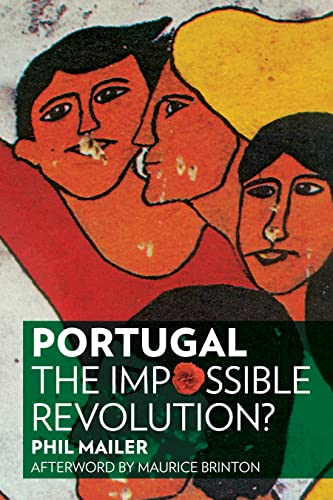
This is the story of the political revolution in Portugal between April 25, 1974, and November 25, 1975, as seen and felt by a deeply committed participant. After the military coup in Portugal on April 25, 1974, the overthrow of almost 50 years of fascist rule, and the end of three colonial wars, there followed a year and a half of intense, democratic social transformation that challenged every aspect of Portuguese society. What started as a military coup turned into a profound attempt at social change from the bottom up and became headlines on a daily basis in the world media. This personal history depicts the hopes, the tremendous enthusiasm, boundless energy, total commitment, released power, and revolutionary innocence of thousands of ordinary people taking a hand in the remolding of their lives. It does so against the background of an economic and social reality that placed limits on what could be done.
Die Inhaltsangabe kann sich auf eine andere Ausgabe dieses Titels beziehen.
Über die Autorin bzw. den Autor
Phil Mailer is a political activist and the former editor of Combate. He lives in Lisbon, Portugal. Maurice Brinton was the pen name under which Chris Pallis wrote and translated for the British libertarian socialist group, Solidarity.
Auszug. © Genehmigter Nachdruck. Alle Rechte vorbehalten.
Portugal
The Impossible Revolution?
By Phil MailerPM Press
Copyright © 2012 PM Press
All rights reserved.
ISBN: 978-1-60486-336-9All rights reserved.
Contents
INTRODUCTION,
GLOSSARY,
I THE FIRST WEEK,
II THE FIRST THREE MONTHS,
III THE FIRST SIX MONTHS,
IV THE UPSURGE,
V THE AGRARIAN STRUGGLES,
VI THE POLITICAL CHESSBOARD,
VII THE MFA,
VIII URBAN STRUGGLES,
IX BEYOND THE ELECTIONS AND POLITICAL PARTIES,
X THE GREAT NONPARTY,
XI CRISIS LOOMING,
XII THE SITUATION IN THE CLASS,
XIII DE-SOCIALISATION,
XIV NOVEMBER 25,
XV A BALANCE SHEET,
CHAPTER 1
THE FIRST WEEK
DAY 1: THURSDAY, APRIL 25, 1974
The 25th is a cold morning for April. At 7:45 a.m., the following radio announcement stuns hundreds of thousands of Portuguese into a realisation that a new phase in their history has begun:
The Portuguese Armed Forces appeal to all the inhabitants of Lisbon to stay at home and to remain as calm as possible. We sincerely hope that the seriousness of the hour will not be saddened by personal injuries. We therefore appeal to the good sense of all military commanders to avoid any confrontation with the Armed Forces. Apart from being unnecessary, such action would only create or aggravate serious divisions between Portuguese people, which must be avoided at all costs. It is because of our concern to spare Portuguese blood that we are appealing for a civic spirit. All medical personnel, especially those in hospitals, should hold themselves ready to give help, though it is hoped this will not be needed. To all political and military forces, the Command advises maximum caution to avoid any action which may be dangerous. It is not our intention to shed blood unnecessarily, but if we meet provocation we shall deal with it.
It goes on to advise to
Go back to your quarters, and wait for orders which will be given by the Movement of the Armed Forces. Commanders will be held responsible for any attempt, in any form whatsoever, to lead their subordinates into conflict with the Armed Forces We appeal to the forces of the GNR (National Guard) and PSP (Police) — and even to the DGS (Political Police) and Portuguese Legion — who may have been recruited under false pretences to remember their civic duty of maintaining public order. In the present situation this can only be achieved if there is no reaction against the Armed Forces. Attention, all military and police units. Since the Armed Forces have decided to take your place in the present situation any opposition to the troops which surround the city will be dealt with drastically. By not obeying this advice you could provoke a senseless bloodbath, whose responsibility will be yours alone.
8:15 a.m. My neighbour wakes me; there's crazy look in her eyes as she stands there in her pyjamas. She tells me not to go to school today: all schools are closed, the Army have taken over, shooting, everyone to stay at home. She speaks in broken Portuguese to help me understand, firing her fingers into the air.
I close the door thinking she's mad, turn on the radio and return to bed. Nothing: the usual ads. I can't believe it. I can't sleep though I need to. I try other stations. Marching music on the National Radio. Could she be right?
9:10 a.m. Already late, I arrive at school. No buses outside. I meet R, a teacher who is bursting with the news. D, the school fascist, is also there. We ask if it's from the Right or from the Left, or even from which forces on the Right: the generals or Spínola. The question remains unanswered all morning. No one knows.
10 a.m. Breakfast with R, a kind and good-hearted person, dying to find out but afraid to go into the centre of the city. Coffee. The radio is playing Zeca Afonso, a left-wing singer. Could it be true? An announcement:
It has been reported to the Command of the Armed Forces that the civilian population is not respecting the appeal to remain at home, an appeal which we have already made many times. Although the situation may seem almost under control, since the ex-Minister of the Army has abandoned the Ministry and is in contact with the commanding officers of our Movement, we ask the population, once again, to stay at home and not endanger themselves. A communiqué will be broadcast shortly, to clarify the situation.
I explain what I know of Spínola: his Nazi sympathies, his support for Franco during the Spanish Civil War, his decorations as a "war-hero" in the Portuguese colonies. His interview with the magazine Vida Mundial, some weeks earlier, had outlined what he's written in his book Portugal and the Future, and for these views he's been sacked by Caetano. His book called for an end to the search for a military solution to the war and for change within Portugal, along "democratic" lines. We talk about the revolt in March, when troops had marched from Caldas da Rainha, in the North, in what had seemed a farcical attempt at revolt at the time. Or was it a putsch by certain right-wing generals, dissatisfied with the "liberal" policies of Caetano, and wanting a return to a purer form of Salazarism? No one knows. Either way, it seemed the coup could only be from the Right.
At 10:45 a.m. I phone João, the son of Mário Soares. The phone is busy. I phone R, a worker in a bloodbank. She's on a twenty-four-hour call. Troops are on the streets outside. It's impossible to enter Lisbon except through Praça da Espanha. She knows nothing of what it's all about. I decide to go into Lisbon to see for myself, driving along the Marginal, which follows the river Tagus. The greatness of sixteenth-century history is far from my thoughts. I arrive at Infante Santo and am diverted by traffic police. Something is definitely on. I accelerate, arrive at the centre, and park the car. I can see nothing out of the ordinary except that all the banks are closed. I walk towards the lower part of the city. Troops and tanks in the Chiado, soldiers everywhere. The tanks look gigantic in the narrow streets, the machine guns threatening. It is impossible to enter. The troops are cautious but friendly. The crowds have a mixture of fear and hope in their eyes. Everyone is asking the same questions: "Who is it?" "What do they stand for?" It's 11:30 a.m. I've promised to lunch with C, at noon. She may have heard more. In C's house we listen to short-wave radio and pick up the walkie-talkies of the Forces. From her next-door neighbour, an old and already saddened Salazarist, we hear the news that Caetano and Tomás have sought refuge in Belém (the Presidential Palace) and the Quartel do Carmo (the National Republican Guard Headquarters) respectively.
Someone phones to say that his car has been requisitioned, as a barricade. He is laughing on the telephone. There is a great feeling: the fascist dictatorship is crumbling. For the moment few can think further.
We go again into the city. There is still nothing definite. We go to San Sebastião and see the troops. Large groups are talking to the soldiers. The troops have already become "forces of liberation." No one is yet specifically asking who is going to be "liberated." And from what? The confusion is immense. Can an antifascist coup really have taken place? Led by a fascist? We search for precedents, and discover already how new the features are of what we are witnessing.
We buy the newspapers. The headlines are startling: "Golpe Militar," "Amplo Movimento das Forças Armadas." Their accounts fill in some details. At...
„Über diesen Titel“ kann sich auf eine andere Ausgabe dieses Titels beziehen.
Suchergebnisse für Portugal: The Impossible Revolution?

Foto des Verkäufers
Portugal: The Impossible Revolution?
Anbieter: Goodwill Southern California, Los Angeles, CA, USA
Verkäuferbewertung 5 von 5 Sternen

Zustand: good. Paperback Book. Bestandsnummer des Verkäufers LACV.1604863366.G
Gebraucht kaufen
EUR 9,66
EUR 2,68 Versand
Versand innerhalb von USA
Versand innerhalb von USA
Anzahl: 1 verfügbar
Beispielbild für diese ISBN
Portugal: The Impossible Revolution?
Anbieter: HPB-Ruby, Dallas, TX, USA
Verkäuferbewertung 5 von 5 Sternen
paperback. Zustand: Very Good. Connecting readers with great books since 1972! Used books may not include companion materials, and may have some shelf wear or limited writing. We ship orders daily and Customer Service is our top priority! Bestandsnummer des Verkäufers S_478531294
Gebraucht kaufen
EUR 9,79
EUR 3,35 Versand
Versand innerhalb von USA
Versand innerhalb von USA
Anzahl: 1 verfügbar
Beispielbild für diese ISBN
Portugal: The Impossible Revolution? [Paperback] Mailer, Phil and Brinton, Maurice
Anbieter: Lakeside Books, Benton Harbor, MI, USA
Verkäuferbewertung 5 von 5 Sternen
Zustand: New. Brand New! Not Overstocks or Low Quality Book Club Editions! Direct From the Publisher! We're not a giant, faceless warehouse organization! We're a small town bookstore that loves books and loves it's customers! Buy from Lakeside Books! Bestandsnummer des Verkäufers OTF-S-9781604863369
Neu kaufen
EUR 18,58
EUR 3,56 Versand
Versand innerhalb von USA
Versand innerhalb von USA
Anzahl: Mehr als 20 verfügbar
Beispielbild für diese ISBN
Portugal: The Impossible Revolution?
Anbieter: Books From California, Simi Valley, CA, USA
Verkäuferbewertung 4 von 5 Sternen

paperback. Zustand: Very Good. Bestandsnummer des Verkäufers mon0004162623
Gebraucht kaufen
EUR 17,71
EUR 4,45 Versand
Versand innerhalb von USA
Versand innerhalb von USA
Anzahl: 1 verfügbar
Beispielbild für diese ISBN
Portugal : The Impossible Revolution?
Anbieter: GreatBookPrices, Columbia, MD, USA
Verkäuferbewertung 5 von 5 Sternen
Zustand: New. Bestandsnummer des Verkäufers 16008875-n
Neu kaufen
EUR 19,81
EUR 2,36 Versand
Versand innerhalb von USA
Versand innerhalb von USA
Anzahl: Mehr als 20 verfügbar
Foto des Verkäufers
Portugal: The Impossible Revolution? (Paperback or Softback)
Verlag:
PM Press 1/25/2012, 2012
ISBN 10: 1604863366
ISBN 13: 9781604863369
Neu
Paperback or Softback
Anbieter: BargainBookStores, Grand Rapids, MI, USA
Verkäuferbewertung 5 von 5 Sternen
Paperback or Softback. Zustand: New. Portugal: The Impossible Revolution? Book. Bestandsnummer des Verkäufers BBS-9781604863369
Beispielbild für diese ISBN
Portugal: The Impossible Revolution?
Anbieter: Jackson Street Booksellers, Omaha, NE, USA
Verkäuferbewertung 5 von 5 Sternen
Soft cover. Zustand: Fine. 2nd Edition. Fine copy in softcover. Green spine with white titles. Bestandsnummer des Verkäufers 043749
Gebraucht kaufen
EUR 18,39
EUR 5,80 Versand
Versand innerhalb von USA
Versand innerhalb von USA
Anzahl: 1 verfügbar
Foto des Verkäufers
Portugal
Anbieter: Rarewaves USA, HEBRON, KY, USA
Verkäuferbewertung 5 von 5 Sternen
Paperback. Zustand: New. Bestandsnummer des Verkäufers LU-9781604863369
Neu kaufen
EUR 24,98
Versand gratis
Versand innerhalb von USA
Versand innerhalb von USA
Anzahl: Mehr als 20 verfügbar
Beispielbild für diese ISBN
Portugal : The Impossible Revolution?
Anbieter: GreatBookPrices, Columbia, MD, USA
Verkäuferbewertung 5 von 5 Sternen
Zustand: As New. Unread book in perfect condition. Bestandsnummer des Verkäufers 16008875
Gebraucht kaufen
EUR 22,65
EUR 2,36 Versand
Versand innerhalb von USA
Versand innerhalb von USA
Anzahl: Mehr als 20 verfügbar
Beispielbild für diese ISBN
Portugal: The Impossible Revolution?
Anbieter: Earthlight Books, Walla Walla, WA, USA
Verkäuferbewertung 4 von 5 Sternen
Paperback. Zustand: New. After the military coup in Portugal on April 25th, 1974, the overthrow of almost fifty years of Fascist rule, and the end of three colonial wars, there followed eighteen months of intense, democratic social transformation which challenged every aspect of Portuguese society. What started as a military coup turned into a profound attempt at social change from the bottom up and became headlines on a daily basis in the world media. This was due to the intensity of the struggle as well as the fact that in 1974?75 the right-wing moribund Francoist regime was still in power in neighboring Spain and there was huge uncertainty as to how these struggles might affect Spain and Europe at large. This is the story of what happened in Portugal between April 25, 1974, and November 25, 1975, as seen and felt by a deeply committed participant. It depicts the hopes, the tremendous enthusiasm, the boundless energy, the total commitment, the released power, even the revolutionary innocence of thousands of ordinary people taking a hand in the remolding of their lives. And it does so against the background of an economic and social reality which placed limits on what could be done. Bestandsnummer des Verkäufers SKU1006775
Neu kaufen
EUR 22,94
EUR 4,24 Versand
Versand innerhalb von USA
Versand innerhalb von USA
Anzahl: 1 verfügbar