
Verwandte Artikel zu Earth at Risk: Building a Resistance Movement to Save...
Inhaltsangabe
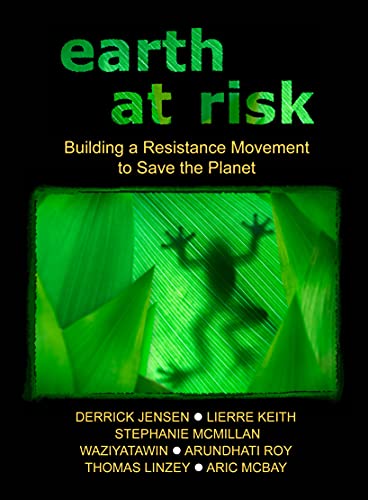
The annual conference Earth at Risk: Building a Resistance Movement to Save the Planet features environmental thinkers and activists who are willing to ask the hardest questions about the seriousness of the planet’s situation, and this book presents an impassioned critique of the dominant culture from every angle. Speakers from the conference are featured in this volume and include William Catton, who explains ecological overshoot; Thomas Linzey, who gives a fiery call for community sovereignty; Jane Caputi, who exposes patriarchy's mythic dismemberment of the goddess; Aric McBay, who discusses historically effective resistance strategies; and Stephanie McMillan, who takes down capitalism. One by one, they build an unassailable case that the rich should be deprived of their ability to steal from the poor and the powerful of their ability to destroy the planet. These speakers offer their ideas on what can be done to build a real resistance movement: one that includes all levels of direct action that can actually match the scale of the problem. Also included are the speakers Derrick Jensen, Arundhati Roy, Rikki Ott, Gail Dines, Waziyatawin, Lierre Keith, and Nora Barrows-Friedman.
Die Inhaltsangabe kann sich auf eine andere Ausgabe dieses Titels beziehen.
Über die Autorin bzw. den Autor
Derrick Jensen is hailed as the philosopher poet of the ecological movement and is the acclaimed author of Endgame, How Shall I Live My Life?, A Language Older Than Words, and Songs of the Dead, among many other books. He lives in Crescent City, California. Lierre Keith is a radical feminist activist, the author of The Vegetarian Myth: Food, Justice, and Sustainability, and a coauthor of Deep Green Resistance: Strategy to Save the Planet. She lives in Arcata, California.
Auszug. © Genehmigter Nachdruck. Alle Rechte vorbehalten.
Earth at Risk
Building a Resistance Movement to Save the Planet
By Derrick Jensen, Lierre KeithPM Press
Copyright © 2013 Derrick Jensen Lierre Keith
All rights reserved.
ISBN: 978-1-60486-674-2All rights reserved.
Contents
Derrick Jensen,
William Catton Jr.,
Jane Caputi,
Riki Ott,
Nora Barrows-Friedman,
Gail Dines,
Thomas Linzey,
Waziyatawin,
Lierre Keith,
Stephanie McMillan,
Aric McBay,
Arundhati Roy,
Q&A with Arundhati Roy and Derrick Jensen,
About the Participants,
CHAPTER 1
Introduction by Derrick Jensen
"This collection of discussions is about the shift in strategy and tactics that has to happen if we want to build an effective resistance. It is about putting our bodies and our lives between the industrial system and life on the planet. It is about fighting back."
The dominant culture is killing the planet. It is long past time that those of us who care about life on earth begin to take the actions necessary to stop civilization from destroying every living being.
By now we all know the statistics and trends: 90 percent of the large fish in the oceans are gone, 97 percent of native forests have been destroyed, as have 98 percent of native grasslands. There is ten times as much plastic as phytoplankton in the oceans. Amphibian populations are collapsing, migratory songbird populations are collapsing, mollusk populations are collapsing, fish populations are collapsing, and so on. Have you noticed that you don't have to clean your windshield nearly as often as you used to? Even insect populations are collapsing. Two hundred species are driven extinct each and every day.
This culture destroys landbases. That's what it does. Iraq used to have cedar forests so thick that sunlight never touched the ground. One of the first written myths of this culture is about Gilgamesh deforesting the hills and valleys of Iraq to build a great city. The Arabian Peninsula used to be oak savannah. The Near East was heavily forested. We've all heard of the cedars of Lebanon. Greece was heavily forested. North Africa was heavily forested. This culture destroys landbases, and it won't stop doing so because we ask nicely. We don't live in a democracy. Think about it: do governments better serve corporations or living beings? Do judicial systems hold CEOs accountable for their destructive, often murderous acts?
Here are a couple of riddles that aren't very funny. Question: What do you get when you cross a long drug habit, a quick temper, and a gun? Answer: Two life terms for murder, earliest release date 2026. Question: What do you get when you cross two nation states, a large corporation, forty tons of poison, and at least eight thousand dead human beings? Answer: Retirement with full pay and benefits. That's what happened to Warren Anderson, CEO of Union Carbide, which caused the mass murder at Bhopal.
Here's another way to say this: What do you call someone who conspires to put poison in the subways of Tokyo? You call him a terrorist and you put him in prison for life. What do you call someone who conspires to put poison in the groundwater of the United States? You call him Dick Cheney. Or oil and gas man, or fracker. Do the rich face the same judicial system as you or I? Does life on earth have as much standing in a court as does a corporation? We all know the answers to those questions. And we know in our bones, if not always our heads, that this culture won't undergo any sort of voluntary transformation to a sane and sustainable way of living.
If you care about life on the planet and if you believe the culture won't voluntarily cease to destroy it, how does that belief affect your methods of resistance? Most of us don't know because most of us don't talk about it.
At the Earth at Risk conferences of 2011 and 2012, leading environmental activists and thinkers gathered to talk about it. This collection of discussions from those days is about the shift in strategy and tactics that has to happen if we want to build an effective resistance. It is about putting our bodies and our lives between the industrial system and life on the planet. It is about fighting back.
* * *
Those who inherit whatever is left of the world once this culture has been stopped, whether through peak oil, economic collapse, ecological collapse, or the efforts of brave women and men resisting in alliance with the natural world, are going to judge us by the health of the landbase, by what we leave behind. They're not going to care how you or I lived our lives, how hard we tried, or whether we were nice people. They're not going to care whether we were violent or nonviolent. They're not going to care whether we grieve the murder of the planet. They're not going to care whether we were enlightened or not enlightened.
They're not going to care what sort of excuses we had to not act. I'm too stressed to think about it. It's too big and scary. I'm too busy. Those in power will kill me if I act against them. If I fight back, I run the risk of becoming like they are. But I recycled. You can substitute any of a thousand other excuses we've all heard too many times.
Those who come after us are not going to care how simply we lived. They're not going to care how pure we were in thought or action. They're not going to care whether we voted Democrat, Republican, Green, Libertarian, or not at all. They're not going to care if we wrote really big books. They're not going to care whether we had compassion for the CEOs and politicians running the deathly economy. They're going to care whether they can breathe the air and drink the water.
Every new study reveals that global warming is happening far more quickly than was previously anticipated. Scientists are now suggesting the real possibility of billions of human beings being killed off by what some are calling a "climate Holocaust." A recently released study suggests an increase in temperature of 16 degrees Celsius, or about 30 degrees Fahrenheit, by the year 2100. We're not talking about this culture killing the planet sometime in the far distant future. This is the future that children born today will see and suffer in their lifetimes. Is this culture worth more than the lives of your own children?
In The Nazi Doctors, Robert Jay Lifton explored how it was that men who had taken the Hippocratic oath could lend their skills to prisons where inmates were worked to death or killed in assembly lines. He found that many of the doctors honestly cared for their charges and did everything within their power, which meant pathetically little, to make life better for the inmates. If an inmate got sick, they might give the inmate an aspirin to lick. They might put the inmate to bed for a day or two, but not for too long, or the inmate might be selected for murder. They might kill patients with contagious diseases to keep the diseases from spreading. All this made sense within the confines of Auschwitz. The doctors did everything they could to help the inmates, except for the most important thing of all: they never questioned the existence of Auschwitz itself. They never questioned working the inmates to death. They never questioned starving them to death. They never questioned imprisoning them. They never questioned torturing them. They never questioned poisoning them. They never questioned the existence of a culture that would lead to those atrocities. They never questioned the logic that leads inevitably to the electrified fences, the gas chambers, the bullets in the brain.
We as...
„Über diesen Titel“ kann sich auf eine andere Ausgabe dieses Titels beziehen.
Suchergebnisse für Earth at Risk: Building a Resistance Movement to Save...

Beispielbild für diese ISBN
Earth at Risk: Building a Resistance Movement to Save the Planet (Flashpoint)
Anbieter: HPB-Emerald, Dallas, TX, USA
Verkäuferbewertung 5 von 5 Sternen

paperback. Zustand: Very Good. Connecting readers with great books since 1972! Used books may not include companion materials, and may have some shelf wear or limited writing. We ship orders daily and Customer Service is our top priority! Bestandsnummer des Verkäufers S_460465456
Gebraucht kaufen
EUR 5,48
EUR 3,33 Versand
Versand innerhalb von USA
Versand innerhalb von USA
Anzahl: 1 verfügbar
Beispielbild für diese ISBN
Earth at Risk: Building a Resistance Movement to Save the Planet
Anbieter: ThriftBooks-Atlanta, AUSTELL, GA, USA
Verkäuferbewertung 5 von 5 Sternen
Paperback. Zustand: Very Good. No Jacket. May have limited writing in cover pages. Pages are unmarked. ~ ThriftBooks: Read More, Spend Less. Bestandsnummer des Verkäufers G1604866748I4N00
Gebraucht kaufen
EUR 9,14
Versand gratis
Versand innerhalb von USA
Versand innerhalb von USA
Anzahl: 1 verfügbar
Beispielbild für diese ISBN
Earth at Risk: Building a Resistance Movement to Save the Planet
Anbieter: ThriftBooks-Atlanta, AUSTELL, GA, USA
Verkäuferbewertung 5 von 5 Sternen
Paperback. Zustand: Good. No Jacket. Pages can have notes/highlighting. Spine may show signs of wear. ~ ThriftBooks: Read More, Spend Less. Bestandsnummer des Verkäufers G1604866748I3N00
Gebraucht kaufen
EUR 9,14
Versand gratis
Versand innerhalb von USA
Versand innerhalb von USA
Anzahl: 1 verfügbar
Beispielbild für diese ISBN
Earth at Risk: Building a Resistance Movement to Save the Planet (Flashpoint)
Anbieter: HPB-Diamond, Dallas, TX, USA
Verkäuferbewertung 5 von 5 Sternen
paperback. Zustand: Very Good. Connecting readers with great books since 1972! Used books may not include companion materials, and may have some shelf wear or limited writing. We ship orders daily and Customer Service is our top priority! Bestandsnummer des Verkäufers S_482798976
Gebraucht kaufen
EUR 9,14
EUR 3,33 Versand
Versand innerhalb von USA
Versand innerhalb von USA
Anzahl: 1 verfügbar
Beispielbild für diese ISBN
Earth at Risk: Building a Resistance Movement to Save the Planet
Verlag:
Flashpoint Press August 2012, 2012
ISBN 10: 1604866748
ISBN 13: 9781604866742
Gebraucht
Paper Back
Anbieter: Isle of Books, Bozeman, MT, USA
Verkäuferbewertung 4 von 5 Sternen

Paper Back. Zustand: Very Good. Bestandsnummer des Verkäufers 640820
Gebraucht kaufen
EUR 15,56
Versand gratis
Versand innerhalb von USA
Versand innerhalb von USA
Anzahl: 1 verfügbar
Beispielbild für diese ISBN
Earth at Risk Format: Paperback
Anbieter: INDOO, Avenel, NJ, USA
Verkäuferbewertung 5 von 5 Sternen
Zustand: As New. Unread copy in mint condition. Bestandsnummer des Verkäufers PG9781604866742
Gebraucht kaufen
EUR 16,24
Versand gratis
Versand innerhalb von USA
Versand innerhalb von USA
Anzahl: 12 verfügbar
Beispielbild für diese ISBN
Earth at Risk Format: Paperback
Anbieter: INDOO, Avenel, NJ, USA
Verkäuferbewertung 5 von 5 Sternen
Zustand: New. Brand New. Bestandsnummer des Verkäufers 9781604866742
Foto des Verkäufers
Earth At Risk : Building a Resistance Movement to Save the Planet
Anbieter: GreatBookPrices, Columbia, MD, USA
Verkäuferbewertung 5 von 5 Sternen
Zustand: New. Bestandsnummer des Verkäufers 18239730-n
Neu kaufen
EUR 15,59
EUR 2,35 Versand
Versand innerhalb von USA
Versand innerhalb von USA
Anzahl: 4 verfügbar
Foto des Verkäufers
Earth at Risk
Anbieter: Rarewaves USA, HEBRON, KY, USA
Verkäuferbewertung 5 von 5 Sternen
Paperback. Zustand: New. The planet is under serious threat from industrial civilisation, yet until now environmentalists have not considered strategies that might actually prevent the looming biotic collapse the Earth is facing. Earth at Risk is a vital and timely discussion of the world's environmental issues, featuring thinkers and activists who are willing to ask the hardest questions about the seriousness of the current global crisis. Each contributor in the volume presents an impassioned critique of the dominant culture and aims to change the way people think about saving our planet. Bestandsnummer des Verkäufers LU-9781604866742
Foto des Verkäufers
Earth At Risk : Building a Resistance Movement to Save the Planet
Anbieter: GreatBookPrices, Columbia, MD, USA
Verkäuferbewertung 5 von 5 Sternen
Zustand: As New. Unread book in perfect condition. Bestandsnummer des Verkäufers 18239730
Gebraucht kaufen
EUR 18,23
EUR 2,35 Versand
Versand innerhalb von USA
Versand innerhalb von USA
Anzahl: 4 verfügbar