
Verwandte Artikel zu Rodent Models of Stroke (Neuromethods, 47, Band 47)
Inhaltsangabe
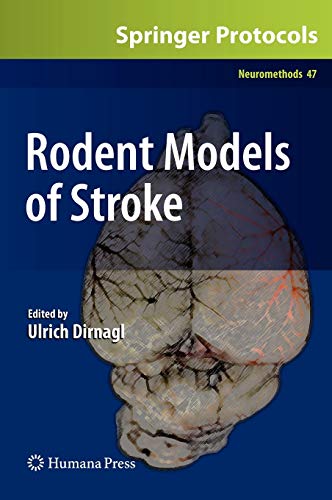
In view of the numerous failures of clinical trials aimed at improving stroke therapy, the role and potential benefit of experimentally modeling focal cerebral ischemia in rodents has been debated. When methods of systematic review and metaanalyis are applied, however, it turns out that experimental models actually faithfully predicted the negative outcomes of clinical trials. In addition, thrombolysis and neuroprotection by hypothermia, first described in animal models, are key examples of treatment modalities that have made it successfully into clinical practice. In Rodent Models of Stroke, an international consortium of authors aims at critically addressing the issues on a very practical level, from choosing the model and outcome measures, designing the experiment, conducting and analyzing it, to reporting it in a scientific publication. The structure and content of the book reflect both the authors’ longstanding expertise in experimental and clinical stroke research and their roles in training the scientific community in the tools of the trade. As a volume in the successful Neuromethods series, the chapters provide authoritative reviews of the most commonly used, well-honed approaches in the field today. Stimulating and easy-to-use, Rodent Models of Stroke will help its readers understand the limitations and the opportunities of modeling stroke in rodents and enable them to conduct experiments which will not only improve our understanding of the pathophysiology of this devastating disorder but also serve as the basis for developing new highly effective treatments.
Die Inhaltsangabe kann sich auf eine andere Ausgabe dieses Titels beziehen.
Von der hinteren Coverseite
In view of the numerous failures of clinical trials aimed at improving stroke therapy, the role and potential benefit of experimentally modeling focal cerebral ischemia in rodents has been debated. When methods of systematic review and metaanalyis are applied, however, it turns out that experimental models actually faithfully predicted the negative outcomes of clinical trials. In addition, thrombolysis and neuroprotection by hypothermia, first described in animal models, are key examples of treatment modalities that have made it successfully into clinical practice. In Rodent Models of Stroke, an international consortium of authors aims at critically addressing the issues on a very practical level, from choosing the model and outcome measures, designing the experiment, conducting and analyzing it, to reporting it in a scientific publication. The structure and content of the book reflect both the authors’ longstanding expertise in experimental and clinical stroke research and their roles in training the scientific community in the tools of the trade. As a volume in the successful Neuromethods series, the chapters provide authoritative reviews of the most commonly used, well-honed approaches in the field today. Stimulating and easy-to-use, Rodent Models of Stroke will help its readers understand the limitations and the opportunities of modeling stroke in rodents and enable them to conduct experiments which will not only improve our understanding of the pathophysiology of this devastating disorder but also serve as the basis for developing new highly effective treatments.
„Über diesen Titel“ kann sich auf eine andere Ausgabe dieses Titels beziehen.
Suchergebnisse für Rodent Models of Stroke (Neuromethods, 47, Band 47)

Beispielbild für diese ISBN
Rodent Models of Stroke.
Anbieter: Research Ink, Takoma Park, MD, USA
Verkäuferbewertung 5 von 5 Sternen

Hardback. Zustand: VERY GOOD. xii + 286 pp. Neuromethods, 47. Rubber-stamped on front free endpaper. book. Bestandsnummer des Verkäufers 25925
Gebraucht kaufen
EUR 66,11
EUR 3,57 Versand
Versand innerhalb von USA
Versand innerhalb von USA
Anzahl: 1 verfügbar
Beispielbild für diese ISBN
Rodent Models of Stroke (eng)
Print-on-DemandAnbieter: Brook Bookstore On Demand, Napoli, NA, Italien
Verkäuferbewertung 5 von 5 Sternen
Zustand: new. Questo è un articolo print on demand. Bestandsnummer des Verkäufers 03c0f4c530a0eef78665a3e1aa59c098
Neu kaufen
EUR 86,24
EUR 6,80 Versand
Versand von Italien nach USA
Versand von Italien nach USA
Anzahl: Mehr als 20 verfügbar
Foto des Verkäufers
Rodent Models of Stroke
Anbieter: GreatBookPrices, Columbia, MD, USA
Verkäuferbewertung 5 von 5 Sternen
Zustand: As New. Unread book in perfect condition. Bestandsnummer des Verkäufers 9580075
Gebraucht kaufen
EUR 127,11
EUR 2,35 Versand
Versand innerhalb von USA
Versand innerhalb von USA
Anzahl: Mehr als 20 verfügbar
Foto des Verkäufers
Rodent Models of Stroke
Print-on-DemandAnbieter: BuchWeltWeit Ludwig Meier e.K., Bergisch Gladbach, Deutschland
Verkäuferbewertung 5 von 5 Sternen
Buch. Zustand: Neu. This item is printed on demand - it takes 3-4 days longer - Neuware -In view of the numerous failures of clinical trials aimed at improving stroke therapy, the role and potential benefit of experimentally modeling focal cerebral ischemia in rodents has been debated. When methods of systematic review and metaanalyis are applied, however, it turns out that experimental models actually faithfully predicted the negative outcomes of clinical trials. In addition, thrombolysis and neuroprotection by hypothermia, first described in animal models, are key examples of treatment modalities that have made it successfully into clinical practice. In Rodent Models of Stroke, an international consortium of authors aims at critically addressing the issues on a very practical level, from choosing the model and outcome measures, designing the experiment, conducting and analyzing it, to reporting it in a scientific publication. The structure and content of the book reflect both the authors' longstanding expertise in experimental and clinical stroke research and their roles in training the scientific community in the tools of the trade. As a volume in the successful Neuromethods series, the chapters provide authoritative reviews of the most commonly used, well-honed approaches in the field today.Stimulating and easy-to-use, Rodent Models of Stroke will help its readers understand the limitations and the opportunities of modeling stroke in rodents and enable them to conduct experiments which will not only improve our understanding of the pathophysiology of this devastating disorder but also serve as the basis for developing new highly effective treatments. 286 pp. Englisch. Bestandsnummer des Verkäufers 9781607617495
Neu kaufen
EUR 106,99
EUR 23,00 Versand
Versand von Deutschland nach USA
Versand von Deutschland nach USA
Anzahl: 2 verfügbar
Foto des Verkäufers
Rodent Models of Stroke
Anbieter: GreatBookPrices, Columbia, MD, USA
Verkäuferbewertung 5 von 5 Sternen
Zustand: New. Bestandsnummer des Verkäufers 9580075-n
Neu kaufen
EUR 134,76
EUR 2,35 Versand
Versand innerhalb von USA
Versand innerhalb von USA
Anzahl: Mehr als 20 verfügbar
Foto des Verkäufers
Rodent Models of Stroke
Print-on-DemandAnbieter: moluna, Greven, Deutschland
Verkäuferbewertung 5 von 5 Sternen
Zustand: New. Dieser Artikel ist ein Print on Demand Artikel und wird nach Ihrer Bestellung fuer Sie gedruckt. Provides hands-on guidance to most relevant stroke models in rodentsComprehensive guide to non-invasive imaging in rodent stroke research (MRI, optical, nuclear medicine)Covers all relevant techniques to document outcome, including the little documented top. Bestandsnummer des Verkäufers 4240390
Neu kaufen
EUR 93,00
EUR 48,99 Versand
Versand von Deutschland nach USA
Versand von Deutschland nach USA
Anzahl: Mehr als 20 verfügbar
Beispielbild für diese ISBN
Rodent Models of Stroke
Anbieter: GreatBookPricesUK, Woodford Green, Vereinigtes Königreich
Verkäuferbewertung 5 von 5 Sternen
Zustand: New. Bestandsnummer des Verkäufers 9580075-n
Neu kaufen
EUR 124,18
EUR 17,89 Versand
Versand von Vereinigtes Königreich nach USA
Versand von Vereinigtes Königreich nach USA
Anzahl: Mehr als 20 verfügbar
Beispielbild für diese ISBN
Rodent Models of Stroke (Neuromethods, 47)
Anbieter: Ria Christie Collections, Uxbridge, Vereinigtes Königreich
Verkäuferbewertung 5 von 5 Sternen
Zustand: New. In English. Bestandsnummer des Verkäufers ria9781607617495_new
Neu kaufen
EUR 131,08
EUR 13,46 Versand
Versand von Vereinigtes Königreich nach USA
Versand von Vereinigtes Königreich nach USA
Anzahl: Mehr als 20 verfügbar
Beispielbild für diese ISBN
Rodent Models of Stroke
Anbieter: Kennys Bookshop and Art Galleries Ltd., Galway, GY, Irland
Verkäuferbewertung 5 von 5 Sternen
Zustand: New. Helps readers understand the limitations and the opportunities of modeling stroke in rodents and enable them to conduct experiments which can not only improve our understanding of the pathophysiology of this devastating disorder but also serve as the basis for developing new highly effective treatments. Editor(s): Dirnagl, Ulrich. Series: Neuromethods. Num Pages: 286 pages, 9 black & white tables, biography. BIC Classification: MMQ. Category: (P) Professional & Vocational. Dimension: 254 x 178 x 17. Weight in Grams: 1630. . 2010. Hardback. . . . . Bestandsnummer des Verkäufers V9781607617495
Neu kaufen
EUR 136,45
EUR 9,50 Versand
Versand von Irland nach USA
Versand von Irland nach USA
Anzahl: 15 verfügbar
Foto des Verkäufers
Rodent Models of Stroke
Anbieter: GreatBookPricesUK, Woodford Green, Vereinigtes Königreich
Verkäuferbewertung 5 von 5 Sternen
Zustand: As New. Unread book in perfect condition. Bestandsnummer des Verkäufers 9580075
Gebraucht kaufen
EUR 132,59
EUR 17,89 Versand
Versand von Vereinigtes Königreich nach USA
Versand von Vereinigtes Königreich nach USA
Anzahl: Mehr als 20 verfügbar