
Verwandte Artikel zu Jeff Herman's Guide to Book Publishers, Editors...
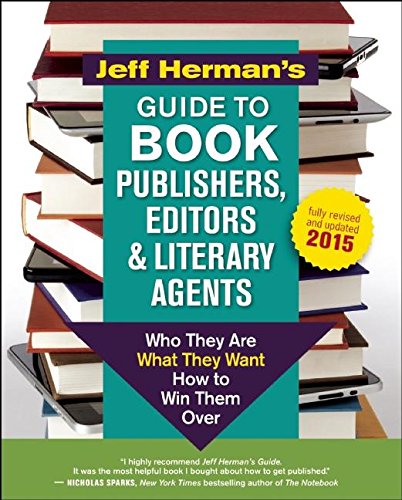
Jeff Herman's Guide to Book Publishers, Editors and Literary Agents: Who They Are, What They Want, How to Win Them Over - Softcover
Inhaltsangabe
If you want to get published, read this book!
Jeff Herman’s Guide unmasks nonsense, clears confusion, and unlocks secret doorways to success for new and veteran writers! This highly respected resource is used by publishing insiders everywhere and has been read by millions all over the world.
Jeff Herman’s Guide is the writer’s best friend. It reveals the names, interests, and contact information of thousands of agents and editors. It presents invaluable information about more than 350 publishers and imprints (including Canadian and university presses), lists independent book editors who can help you make your work more publisher-friendly, and helps you spot scams.
Countless writers have achieved their highest aspirations by following Herman’s outside-the-box strategies. If you want to reach the top of your game and transform rejections into contracts, you need this book! Jeff Herman’s Guide will educate you, inspire you, and become your virtual entourage at every step along the exhilarating journey to publication. Ask anyone in the book business, and they will refer you to Jeff Herman’s Guide.
NEW for 2015: Comprehensive index listing dozens of subjects and categories to help you find the perfect publisher or agent.
Jeff Herman’s Guide unmasks nonsense, clears confusion, and unlocks secret doorways to success for new and veteran writers! This highly respected resource is used by publishing insiders everywhere and has been read by millions all over the world.
Jeff Herman’s Guide is the writer’s best friend. It reveals the names, interests, and contact information of thousands of agents and editors. It presents invaluable information about more than 350 publishers and imprints (including Canadian and university presses), lists independent book editors who can help you make your work more publisher-friendly, and helps you spot scams.
Countless writers have achieved their highest aspirations by following Herman’s outside-the-box strategies. If you want to reach the top of your game and transform rejections into contracts, you need this book! Jeff Herman’s Guide will educate you, inspire you, and become your virtual entourage at every step along the exhilarating journey to publication. Ask anyone in the book business, and they will refer you to Jeff Herman’s Guide.
NEW for 2015: Comprehensive index listing dozens of subjects and categories to help you find the perfect publisher or agent.
Die Inhaltsangabe kann sich auf eine andere Ausgabe dieses Titels beziehen.
Über die Autorin bzw. den Autor
Jeff Herman, a successful literary agent, has sold more than a thousand books to dozens of publishers and, since 1990, mentored millions of writers through this guidebook
Auszug. © Genehmigter Nachdruck. Alle Rechte vorbehalten.
Guide to Book Publishers, Editors & Literary Agents
Who they Are, What They Want. How to Win Them Over
By Jeff HermanNew World Library
Copyright © 2014 Jeff Herman
All rights reserved.
ISBN: 978-1-60868-309-3All rights reserved.
Contents
Introduction | Jeff Herman,
Part 1. Advice for Writers,
Part 2. Publishing Conglomerates,
Part 3. Independent Presses (US),
Part 4. University Presses (US),
Part 5. Canadian Book Publishers,
Part 6. Literary Agents,
Part 7. Independent Editors,
Acknowledgments,
Glossary,
Index,
Advice for Writers,
Publishers and Imprints,
Agents and Agencies,
Independent Editors,
Publishers, Imprints, and Agents by Subject,
About the Author,
CHAPTER 1
Part 1
ADVICE FOR WRITERS
What You (Might) Need to Know about Publishing, Even If It (Not You) Is Boring and Stupid
INTRODUCTION
PERFECTLY IMPERFECT ADVICE AND RANDOM THOUGHTS
Jeff Herman
Except for a few hiatuses, I have been in the book publishing business since the early 1980s, when I was in my early twenties. I entered the business without any forethought. I wasn't an avid book lover or English major. My primary mission was to be respectfully employed in a Manhattan skyscraper where people wore jackets and ties and performed seemingly important tasks. That was my projection for post-college success, and I imagined it as glamorous and exotic. Reality was a hard, slow grind compared to the glorious images painted by youthful endorphins and innocence, and getting what we wish for tends to be easier than wearing the shoes day in and day out.
I answered countless blind ads in the employment section of the New York Times for entry-level office jobs. One day, someone with a harried, high-pitched voice called to schedule an interview. I showered and showed up on time in a decent suit. I said little and tried to smile and nod on cue. The only question I recall was if I could start work the following Monday (it was a Friday) for $200 a week (1981) as a "publicity assistant." It was a small independent book publishing company with a compelling list and history. I was second-in-command of the firm's two-person publicity department, which entitled me to do the filing, phone answering, and typing — none of which I knew how to do before doing it. I knew nothing about publishing or what the job entailed. My most important attributes may have been a calm persona of sanity and an apparent willingness to follow orders. Or maybe it was just my sincere promise to show up. In a nutshell, that explains how I "chose" the business I am in.
I tell this vignette because people often ask how I got into the business. But there's also a larger reason why I share this. I didn't have much of a plan or fixed direction, but yet I arrived somewhere and along the way made decisions (good or otherwise), grew, and helped make constructive things happen for myself and others. Maybe it's okay to not know what we want or where we are going in order to accomplish what we should. When I was young, a wise man told me that "man plans, god laughs," and I have subsequently heard that phrase many times. Frankly, I had to grow into understanding what that meant, and I frequently question it all over again. Perhaps writers shouldn't overplan what they write or will write. For sure, they can't fully control what happens to their work after they write it, short of destroying it.
Because it can be useful to consider what others say about what you do and wish to achieve, I have generated this section of the book. Read what you will with absolute discernment. Not all of it is for you, and all of it is imperfect — same as you and me. The only perfection is that you and I are here now together.
LITERARY AGENTS: WHAT THEY ARE AND WHAT THEY DO
Jeff Herman
Think of a venture capitalist: those people who invest their resources in other people's talents and dreams in exchange for a piece of the glory. The capitalist's skill is the ability to choose wisely and help manifest the endeavor. Literary agents are conceptually similar. For an industry-standard 15 percent commission ("ownership"), we invest considerable measures of time, expertise, and faith in the writers we choose to represent. Our professional credibility is on the line with each pitch we make. We don't directly provide the cash; part of our job is to get the publisher to put its money on the line. If you stick with the trajectory of information that follows, the reasons why most writers elect to have an agent will be made clear.
Publishers Overtly Discourage Unagented/Unsolicited Submissions
A typical publisher's in-house functions include product acquisition and management, back-office administrative tasks, editing, production, distribution, sales and marketing, accounting, and numerous other indispensable aspects related to publishing a book and running a business. However, all editorial content is outsourced and managed from the inside — that is, unlike magazines and newspapers, books are rarely written by in-house staff, which means that they are entirely dependent on "freelance" writers, including you.
If people stopped writing new books, publishers wouldn't have anything new to publish. So it might seem counterintuitive and ironic that most traditional publishers make it difficult, if not impossible, for writers to submit their work for consideration. But from the publisher's perspective, it's about being functional. For every book that gets published at a given moment, there are at least 1,000 manuscripts vying for the same opportunity at the same time. Imagine George Clooney or your favorite heartthrob standing in Times Square and announcing that he's looking for a wife. It would be a chaotic situation, and it's possible he and others would be trampled to death. This illustrates why publishers feel the need to barricade themselves against writers even though they can't exist without them. Not only do publishers lack in-house writers; they also lack an infrastructure for screening and filtering unagented/unsolicited works.
How Do Publishers Find Books to Publish?
Solicitation. Proactive editors sometimes have their own book ideas and will seek people to write them. They might read various literary publications in which virgin content is often debuted, and then contact the writers who impress them. Editors might also scan the news for interesting events and discoveries and then reach out to the people involved. Whenever the editor commences the conversation and offers someone the opportunity to be published, it is solicitation (not the illegal kind).
Agency representation. Editors rely on agents to do hardcore screening and to only represent writers and works that merit publication. Editors don't have time to screen hundreds of works in order to discover one they can publish; they don't have to, because the agents do it for them. When an editor receives a submission from a trusted agent, he or she immediately assumes that the work is professionally qualified and merits quality attention.
Having an agent equals access to editors. Not having an agent usually means the opposite, no matter how good the work might be.
Who Do Agents Work For?
The majority of literary agents are self-employed small-business people. They work for neither the publisher nor the writer but are indispensable to both for different reasons. The agent's constant interest is...
„Über diesen Titel“ kann sich auf eine andere Ausgabe dieses Titels beziehen.
Suchergebnisse für Jeff Herman's Guide to Book Publishers, Editors...

Beispielbild für diese ISBN
Jeff Herman's Guide to Book Publishers, Editors and Literary Agents: Who They Are, What They Want, How to Win Them Over
Anbieter: World of Books (was SecondSale), Montgomery, IL, USA
Verkäuferbewertung 5 von 5 Sternen

Zustand: Good. Item in good condition. Textbooks may not include supplemental items i.e. CDs, access codes etc. Bestandsnummer des Verkäufers 00101022069
Gebraucht kaufen
EUR 6,06
Versand gratis
Versand innerhalb von USA
Versand innerhalb von USA
Anzahl: 2 verfügbar
Beispielbild für diese ISBN
Jeff Herman's Guide to Book Publishers, Editors and Literary Agents: Who They Are, What They Want, How to Win Them Over
Anbieter: ThriftBooks-Atlanta, AUSTELL, GA, USA
Verkäuferbewertung 5 von 5 Sternen
Paperback. Zustand: Good. No Jacket. Pages can have notes/highlighting. Spine may show signs of wear. ~ ThriftBooks: Read More, Spend Less. Bestandsnummer des Verkäufers G1608683095I3N00
Gebraucht kaufen
EUR 6,07
Versand gratis
Versand innerhalb von USA
Versand innerhalb von USA
Anzahl: 1 verfügbar
Beispielbild für diese ISBN
Jeff Herman's Guide to Book Publishers, Editors and Literary Agents: Who They Are, What They Want, How to Win Them Over
Anbieter: ThriftBooks-Dallas, Dallas, TX, USA
Verkäuferbewertung 5 von 5 Sternen
Paperback. Zustand: Very Good. No Jacket. May have limited writing in cover pages. Pages are unmarked. ~ ThriftBooks: Read More, Spend Less. Bestandsnummer des Verkäufers G1608683095I4N00
Gebraucht kaufen
EUR 6,07
Versand gratis
Versand innerhalb von USA
Versand innerhalb von USA
Anzahl: 1 verfügbar
Beispielbild für diese ISBN
Jeff Herman's Guide to Book Publishers, Editors and Literary Agents: Who They Are, What They Want, How to Win Them Over
Anbieter: ThriftBooks-Dallas, Dallas, TX, USA
Verkäuferbewertung 5 von 5 Sternen
Paperback. Zustand: Good. No Jacket. Pages can have notes/highlighting. Spine may show signs of wear. ~ ThriftBooks: Read More, Spend Less. Bestandsnummer des Verkäufers G1608683095I3N00
Gebraucht kaufen
EUR 6,07
Versand gratis
Versand innerhalb von USA
Versand innerhalb von USA
Anzahl: 1 verfügbar
Beispielbild für diese ISBN
Jeff Herman's Guide to Book Publishers, Editors and Literary Agents : Who They Are, What They Want, How to Win Them Over
Anbieter: Better World Books, Mishawaka, IN, USA
Verkäuferbewertung 5 von 5 Sternen
Zustand: Good. Revised, Updated. Pages intact with minimal writing/highlighting. The binding may be loose and creased. Dust jackets/supplements are not included. Stock photo provided. Product includes identifying sticker. Better World Books: Buy Books. Do Good. Bestandsnummer des Verkäufers 9518606-6
Gebraucht kaufen
EUR 6,68
Versand gratis
Versand innerhalb von USA
Versand innerhalb von USA
Anzahl: 1 verfügbar
Beispielbild für diese ISBN
Jeff Herman's Guide to Book Publishers, Editors and Literary Agents: Who They are, What They Want, How to Win Them Over
Anbieter: World of Books Inc, Montgomery, IL, USA
Verkäuferbewertung 4 von 5 Sternen

Paperback. Zustand: Good. If you want to get published, read this book! Jeff Herman's Guide unmasks nonsense, clears confusion, and unlocks secret doorways to success for new and veteran writers! This highly respected resource is used by publishing insiders everywhere and has been read by millions all over the world. Jeff Herman's Guide is the writer's best friend. It reveals the names, interests, and contact information of thousands of agents and editors. It presents invaluable information about more than 350 publishers and imprints (including Canadian and university presses), lists independent book editors who can help you make your work more publisher-friendly, and helps you spot scams. Countless writers have achieved their highest aspirations by following Herman's outside-the-box strategies. If you want to reach the top of your game and transform rejections into contracts, you need this book! Jeff Herman's Guide will educate you, inspire you, and become your virtual entourage at every step along the exhilarating journey to publication. Ask anyone in the book business, and they will refer you to Jeff Herman's Guide. NEW for 2015: Comprehensive index listing dozens of subjects and categories to help you find the perfect publisher or agent. Bestandsnummer des Verkäufers CIN1608683095G
Gebraucht kaufen
EUR 7,90
Versand gratis
Versand innerhalb von USA
Versand innerhalb von USA
Anzahl: 2 verfügbar
Beispielbild für diese ISBN
Jeff Herman's Guide to Book Publishers, Editors and Literary Agents: Who They Are, What They Want, How to Win Them Over
Anbieter: Half Price Books Inc., Dallas, TX, USA
Verkäuferbewertung 5 von 5 Sternen
Paperback. Zustand: Very Good. Connecting readers with great books since 1972! Used books may not include companion materials, and may have some shelf wear or limited writing. We ship orders daily and Customer Service is our top priority! Bestandsnummer des Verkäufers S_477515990
Gebraucht kaufen
EUR 6,89
EUR 3,34 Versand
Versand innerhalb von USA
Versand innerhalb von USA
Anzahl: 1 verfügbar
Beispielbild für diese ISBN
Jeff Herman's Guide to Book Publishers, Editors and.
Anbieter: Books Puddle, Woodside, NY, USA
Verkäuferbewertung 4 von 5 Sternen
Zustand: New. Bestandsnummer des Verkäufers 26134470522
Neu kaufen
EUR 43,11
EUR 3,56 Versand
Versand innerhalb von USA
Versand innerhalb von USA
Anzahl: 1 verfügbar
Beispielbild für diese ISBN
Jeff Herman's Guide to Book Publishers, Editors and.
Anbieter: Majestic Books, Hounslow, Vereinigtes Königreich
Verkäuferbewertung 4 von 5 Sternen
Zustand: New. Bestandsnummer des Verkäufers 141845669
Neu kaufen
EUR 45,73
EUR 7,69 Versand
Versand von Vereinigtes Königreich nach USA
Versand von Vereinigtes Königreich nach USA
Anzahl: 1 verfügbar