
Verwandte Artikel zu The Carb Sensitivity Program: Discover Which Carbs...
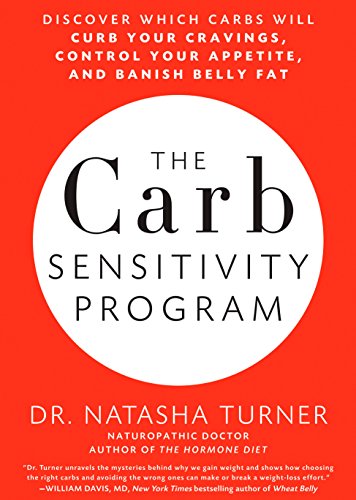
The Carb Sensitivity Program: Discover Which Carbs Will Curb Your Cravings, Control Your Appetite, and Banish Belly Fat - Hardcover
Inhaltsangabe
You've heard about "good" carbs and "bad" carbs—but what you may not realize is that even good carbs are not good for everyone. Healthy foods such as carrots, black beans, and quinoa could be making you fat. Through research and hundreds of patient trials, renowned health expert and naturopathic doctor Natasha Turner, ND has discovered that the vast majority of us have different degrees of sensitivity to carbohydrates without realizing it. Her ground-breaking program helps you uncover the right types of carbs for you, allowing you to curb cravings, control appetite and beat belly fat in just six weeks.
Your body's response to different carbohydrates (such as bread, grains, vegetables, fruit, and beans) determines the size of your waistline. This explains why some people fail to lose weight, get stuck on a plateau or even gain despite following a perfectly balanced diet. Knowing your sensitivity to foods like chickpeas or butternut squash could be the key to dropping pounds and keeping them off.
The Carb Sensitivity Program (CSP) gives you a personalized plan that sheds body fat, increases energy and optimizes health. More than just a diet, the CSP is a carb rehab plan that actually repairs your metabolism and helps you reintroduce carbs without rebound weight gain, cravings, bloating or mood swings. Now you can finally achieve your best body—for life.
Die Inhaltsangabe kann sich auf eine andere Ausgabe dieses Titels beziehen.
Über die Autorin bzw. den Autor
Dr. Natasha Turner is a leading naturopathic doctor, the founder of the integrative wellness clinic Clear Medicine, and the author of the international bestseller The Hormone Diet. She lives in Toronto with her husband.
Auszug. © Genehmigter Nachdruck. Alle Rechte vorbehalten.
CHAPTER 1
CONFESSIONS OF A CARBOHOLIC CULTURE
You are never too old to set another goal or to dream a new dream.
C. S. LEWIS
We live in a carb-fueled world. Turn on the television any time of the day, and you will be bombarded by tantalizing images of everything from high- carb cereals and breakfast sandwiches to fast-food lunches and microwavable dinners. And there's a reason for it. As a society, we love our carbs. We eat them to celebrate, to ease the pain of heartbreak, to dampen frustration, to comfort our sorrows or to indulge in a moment of connection. Just recently I saw someone wearing a T-shirt that read, "I love carbs." Carbs are everywhere: They even have their own clothing line.
This love affair with carbs has been building for a while--about 30 years or more. Pick up the most recent edition of the dietary guidelines for Americans and even here you will find a significant reliance on grains and starches--up to six recommended servings a day! For my age, the recommendation is to have six grain products, three cups of dairy, one and a half cups of fruits and two cups of vegetables, and two protein sources a day. While there was a 1600-calorie count included, I can tell you that if I put patients on that diet they could potentially gain a pound a day and have diabetes by the end of a month! An exaggeration? Perhaps. Nonetheless, as you are about to learn, these government guidelines are not only painfully outdated but also potentially harmful. For decades now, prominent organizations such as the American Diabetes Association have been recommending a low-fat, high-carbohydrate diet as a treatment for diabetes. Based on my years of research and clinical experience as a preventive health specialist, I will tell you that this approach cannot and does not work.
If we were to rewind a few centuries--to a time before our taste buds knew of doughnuts, bagels, fortified cereals and the like--we would discover that there were significantly fewer cases of diabetes, and that obesity was a condition of the few, rather than the many. In fact, one could argue that our current obsession with dieting is a direct consequence of this carb addiction that has developed over several generations.
Unfortunately, it seems as if the more we try to fix the problem, the further we get from a real, lasting solution. We frantically try fad diet after fad diet, only to creep back up to our previous weight (or higher!) thanks to cravings, improper sleep habits, daily stresses and our on-the- run lifestyles.
When we examine those diets, it's clear that carbs have replaced fat as the main taboo over the last 10 to 20 years. I cannot count the number of times I have heard someone say, "But I don't eat carbs; I don't know why I'm still overweight." While we have come to understand that carb consumption is linked with weight gain, the majority of us do not realize the many ways that carbs can quietly slip into our diet. Coupled with this confusion is a lack of knowledge regarding the total amount of carbs we can or should consume. Some of us may wonder if we should eat them at all.
So, what's a health-conscious eater to do? Should we join the procarb movement or the anticarb revolution? Surprisingly, the answer has little to do with your taste buds and everything to do with the hormone insulin and, more specifically, how your body reacts to the carbohydrates that you do consume. The kicker? Each and every body has its own unique response to carbs.
In my previous book The Hormone Diet, I presented the following equation for fat loss:
Lasting Fat Loss = Hormonal Balance + (Calories In - Calories Burned)
That equation still works, but what if I told you that I've made an important discovery within the scope of "calories in"--a discovery that can help you break through even the most stubborn weight-loss plateau, not to mention banish your risk of diabetes, Alzheimer's, stroke, heart disease and other ailments? Even if you satisfy your cravings with only low- glycemic carbs or religiously follow the latest fitness magazine diet that promises to keep your blood sugar low, you need to remember this: All carbs = sugar. In other words, when we look at the calories we are consuming, we must take into account that all carbs trigger the release of insulin--a powerful fat-storing hormone.
Insulin is released by the pancreas in proportion to the amount of sugar in the bloodstream (i.e., more sugar = more insulin). While insulin is necessary for the proper functioning of our cells, excess insulin can, over time, predispose you to a condition called insulin resistance, which can eventually lead to diabetes and a whole host of health concerns. Sadly, the majority of us have some degree of insulin resistance--and we don't even know it.
In the pages that follow, I will walk you through the ins and outs of insulin, and explain how an excess of this hormone can impact your ability to lose weight and keep it off. But the most important point I want you to absorb--and the reason I wrote this book--is that the consequences of an insulin imbalance are much more dire than the number on your scale or the fit of your clothes. Excess insulin literally causes the slow destruction of bodily tissues and organs, including our bones, muscles, skin, blood vessels, brain, liver and more. And this far-reaching, devastating imbalance is spurred by one basic factor: the frequency, amount and type of carbohydrates we consistently consume over time, and our body's individual ability to process them. When our cells become resistant to insulin, we become more sensitive to carbs. The more insulin we have, the fewer carbs we can safely process. And the more carb sensitive we are, the greater the degree of insulin resistance. It's a vicious circle!
Consider this example: Imagine eating a meal consisting of a low-glycemic grain such as quinoa or a sweet potato with your protein and essential fats. Sounds healthy, right? But what if your body dealt with that carbohydrate as though it were a big bowl of chocolate ice cream? No wonder it's so hard to lose weight! If you're having an aha moment right now, read on: The Carb Sensitivity Program (CSP) will reboot your metabolism and fix any faulty communications within your cells so that a good carb, becomes, well, a good carb again. I have discovered that even healthy, low-glycemic index carbs such as beans and sweet potatoes can cause a blood sugar spike and subsequent insulin surge in certain patients--factors that lead to cravings, weight gain and an excessive appetite. In all cases, the carbs that you are sensitive to are the same carbs that spike your insulin. And your metabolic makeup--or degree of insulin resistance--is the determining factor. In the end, it doesn't matter whether the carbs you are consuming are "good" or "bad." What matters is your particular carb sensitivity.
Diabesity: A Modern Plague
Is it really possible that heart disease, stroke, diabetes, osteoporosis, cancer, Alzheimer's disease, inflammatory conditions, muscle tissue loss and disease-causing vitamin and mineral deficiencies may all have one root factor? Or that the early-warning signs of these conditions, such as an expanding waistline, high cholesterol and high blood pressure, can also be traced to the same single underlying cause? The latest scientific research clearly demonstrates that these conditions not only share the same underlying cause--excess insulin--but also require the same treatment. The good news? Many of these issues are 100 percent preventable and, in some cases, entirely reversible.
So how prevalent is this insulin imbalance? Dr. Francine Kaufman, a California-based pediatric endocrinologist, has coined the term diabesity (diabetes + obesity) to describe a metabolic dysfunction related to insulin imbalance that ranges from mild blood sugar...
„Über diesen Titel“ kann sich auf eine andere Ausgabe dieses Titels beziehen.
Suchergebnisse für The Carb Sensitivity Program: Discover Which Carbs...

Beispielbild für diese ISBN
The Carb Sensitivity Program: Discover Which Carbs Will Curb Your Cravings, Control Your Appetite, and Banish Belly Fat
Anbieter: World of Books (was SecondSale), Montgomery, IL, USA
Verkäuferbewertung 5 von 5 Sternen

Hardback. Zustand: Good. Introduces the concept of carbohydrate sensitivity, which causes a person to respond abnormally to glucose intake, overproduce insulin, and consequently store excess fat. This book presents a six-week program that allows readers to test their own responses to several categories of carbohydrates. Bestandsnummer des Verkäufers CIN1609613295G
Gebraucht kaufen
EUR 6,91
Versand gratis
Versand innerhalb von USA
Versand innerhalb von USA
Anzahl: 1 verfügbar
Beispielbild für diese ISBN
The Carb Sensitivity Program: Discover Which Carbs Will Curb Your Cravings, Control Your Appetite, and Banish Belly Fat
Anbieter: World of Books (was SecondSale), Montgomery, IL, USA
Verkäuferbewertung 5 von 5 Sternen
Hardback. Zustand: Very Good. Introduces the concept of carbohydrate sensitivity, which causes a person to respond abnormally to glucose intake, overproduce insulin, and consequently store excess fat. This book presents a six-week program that allows readers to test their own responses to several categories of carbohydrates. Bestandsnummer des Verkäufers 00095232463
Gebraucht kaufen
EUR 6,91
Versand gratis
Versand innerhalb von USA
Versand innerhalb von USA
Anzahl: 1 verfügbar
Beispielbild für diese ISBN
The Carb Sensitivity Program : Discover Which Carbs Will Curb Your Cravings, Control Your Appetite, and Banish Belly Fat
Verlag:
Potter/Ten Speed/Harmony/Rodale, 2012
ISBN 10: 1609613295
ISBN 13: 9781609613297
Gebraucht
Hardcover
Erstausgabe
Anbieter: Better World Books, Mishawaka, IN, USA
Verkäuferbewertung 5 von 5 Sternen
Zustand: Very Good. 1st Edition. Former library copy. Pages intact with possible writing/highlighting. Binding strong with minor wear. Dust jackets/supplements may not be included. Includes library markings. Stock photo provided. Product includes identifying sticker. Better World Books: Buy Books. Do Good. Bestandsnummer des Verkäufers 4876305-75
Gebraucht kaufen
EUR 6,92
Versand gratis
Versand innerhalb von USA
Versand innerhalb von USA
Anzahl: 1 verfügbar
Beispielbild für diese ISBN
The Carb Sensitivity Program : Discover Which Carbs Will Curb Your Cravings, Control Your Appetite, and Banish Belly Fat
Verlag:
Potter/Ten Speed/Harmony/Rodale, 2012
ISBN 10: 1609613295
ISBN 13: 9781609613297
Gebraucht
Hardcover
Erstausgabe
Anbieter: Better World Books, Mishawaka, IN, USA
Verkäuferbewertung 5 von 5 Sternen
Zustand: Good. 1st Edition. Pages intact with minimal writing/highlighting. The binding may be loose and creased. Dust jackets/supplements are not included. Stock photo provided. Product includes identifying sticker. Better World Books: Buy Books. Do Good. Bestandsnummer des Verkäufers GRP102622697
Gebraucht kaufen
EUR 6,92
Versand gratis
Versand innerhalb von USA
Versand innerhalb von USA
Anzahl: 1 verfügbar
Beispielbild für diese ISBN
The Carb Sensitivity Program: Discover Which Carbs Will Curb Your Cravings, Control Your Appetite, and Banish Belly Fat
Anbieter: World of Books Inc, Montgomery, IL, USA
Verkäuferbewertung 4 von 5 Sternen

Hardback. Zustand: Very Good. Introduces the concept of carbohydrate sensitivity, which causes a person to respond abnormally to glucose intake, overproduce insulin, and consequently store excess fat. This book presents a six-week program that allows readers to test their own responses to several categories of carbohydrates. Bestandsnummer des Verkäufers CIN1609613295VG
Gebraucht kaufen
EUR 8,74
Versand gratis
Versand innerhalb von USA
Versand innerhalb von USA
Anzahl: 1 verfügbar
Beispielbild für diese ISBN
The Carb Sensitivity Program: Discover Which Carbs Will Curb Your Cravings, Control Your Appetite, and Banish Belly Fat
Anbieter: World of Books Inc, Montgomery, IL, USA
Verkäuferbewertung 4 von 5 Sternen
Hardback. Zustand: Good. Introduces the concept of carbohydrate sensitivity, which causes a person to respond abnormally to glucose intake, overproduce insulin, and consequently store excess fat. This book presents a six-week program that allows readers to test their own responses to several categories of carbohydrates. Bestandsnummer des Verkäufers CIN1609613295G
Gebraucht kaufen
EUR 8,74
Versand gratis
Versand innerhalb von USA
Versand innerhalb von USA
Anzahl: 1 verfügbar
Beispielbild für diese ISBN
Carb Sensitivity Program, The
Anbieter: AwesomeBooks, Wallingford, Vereinigtes Königreich
Verkäuferbewertung 5 von 5 Sternen
Hardcover. Zustand: Very Good. Carb Sensitivity Program, The This book is in very good condition and will be shipped within 24 hours of ordering. The cover may have some limited signs of wear but the pages are clean, intact and the spine remains undamaged. This book has clearly been well maintained and looked after thus far. Money back guarantee if you are not satisfied. See all our books here, order more than 1 book and get discounted shipping. Bestandsnummer des Verkäufers 7719-9781609613297
Gebraucht kaufen
EUR 4,04
EUR 4,92 Versand
Versand von Vereinigtes Königreich nach USA
Versand von Vereinigtes Königreich nach USA
Anzahl: 2 verfügbar
Beispielbild für diese ISBN
The Carb Sensitivity Program: Discover Which Carbs Will Curb Your Cravings, Control Your Appetite, and Banish Belly Fat
Verlag:
Rodale Books, 2012
ISBN 10: 1609613295
ISBN 13: 9781609613297
Gebraucht
Hardcover
Erstausgabe
Anbieter: Paper Garden Books, Millersville, MD, USA
Verkäuferbewertung 5 von 5 Sternen
hardcover. Zustand: Used-Very Good. Zustand des Schutzumschlags: Very Good. First Edition. pp480; Hardcopy with paper dust jacket in very good condition; Clean pages; No Edgewear; No Bends/Creases; red board with gold title on white spine; Book photos may be Stock Images & shouldn't be relied upon as a basis for condition. Bestandsnummer des Verkäufers PGB0003090
Gebraucht kaufen
EUR 3,22
EUR 6,35 Versand
Versand innerhalb von USA
Versand innerhalb von USA
Anzahl: 1 verfügbar
Beispielbild für diese ISBN
Carb Sensitivity Program, The
Anbieter: Bahamut Media, Reading, Vereinigtes Königreich
Verkäuferbewertung 4 von 5 Sternen
Hardcover. Zustand: Very Good. This book is in very good condition and will be shipped within 24 hours of ordering. The cover may have some limited signs of wear but the pages are clean, intact and the spine remains undamaged. This book has clearly been well maintained and looked after thus far. Money back guarantee if you are not satisfied. See all our books here, order more than 1 book and get discounted shipping. Bestandsnummer des Verkäufers 6545-9781609613297
Gebraucht kaufen
EUR 4,41
EUR 8,34 Versand
Versand von Vereinigtes Königreich nach USA
Versand von Vereinigtes Königreich nach USA
Anzahl: 2 verfügbar
Beispielbild für diese ISBN
Carb Sensitivity Program, The: Discover Which Carbs Will Curb Your Cravings, Control Your Appetite, and Banish Belly Fat
Anbieter: Greener Books, London, Vereinigtes Königreich
Verkäuferbewertung 4 von 5 Sternen
Hardcover. Zustand: Used; Very Good. **SHIPPED FROM UK** We believe you will be completely satisfied with our quick and reliable service. All orders are dispatched as swiftly as possible! Buy with confidence! Greener Books. Bestandsnummer des Verkäufers 5118134
Gebraucht kaufen
EUR 4,63
EUR 23,89 Versand
Versand von Vereinigtes Königreich nach USA
Versand von Vereinigtes Königreich nach USA
Anzahl: 1 verfügbar