
Verwandte Artikel zu The Code for Global Ethics: Ten Humanist Principles
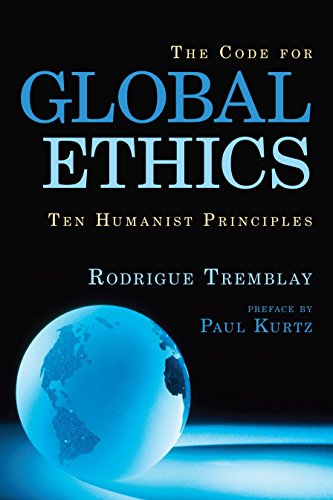
Inhaltsangabe
Humanists have long contended that morality is a strictly human concern and should be independent of religious creeds and dogma. This principle was clearly articulated in the two Humanist Manifestos issued in the mid-twentieth century and in Humanist Manifesto 2000, which appeared at the beginning of the twenty-first century. Now this code for global ethics further elaborates ten humanist principles designed for a world community that is growing ever closer together.
In the face of the obvious challenges to international stability—from nuclear proliferation, environmental degradation, economic turmoil, and reactionary and sometimes violent religious movements—a code based on the "natural dignity and inherent worth of all human beings" is needed more than ever. In separate chapters the author delves into the issues surrounding these ten humanist principles: preserving individual dignity and equality, respecting life and property, tolerance, sharing, preventing domination of others, eliminating superstition, conserving the natural environment, resolving differences cooperatively without resort to violence or war, political and economic democracy, and providing for universal education.
This forward-looking, optimistic, and eminently reasonable discussion of humanist ideals makes an important contribution to laying the foundations for a just and peaceable global community.
Die Inhaltsangabe kann sich auf eine andere Ausgabe dieses Titels beziehen.
Über die Autorin bzw. den Autor
Rodrigue Tremblay (Montreal, Quebec, Canada) is a prominent Canadian-born economist with a PhD from Stanford University. He is a former Woodrow Wilson fellow and a Ford International Fellow. He is now professor emeritus at the University of Montreal, after having occupied the positions of full professor of economics at the University of Montreal, president of the North American Economics and Finance Association, president of the Canadian Economics Society, and advisor to numerous organizations. From 1976 to 1979, he was minister of Industry and Commerce in the Quebec government. He is presently vice-president of the International Association of French-speaking Economists. Professor Tremblay has written thirty books dealing with economics and finance, some also tackling moral and political issues.
Auszug. © Genehmigter Nachdruck. Alle Rechte vorbehalten.
The Code for GLOBAL ETHICS
Ten Humanist PrinciplesBy Rodrigue TremblayPrometheus Books
Copyright © 2010 Rodrigue TremblayAll right reserved.
ISBN: 978-1-61614-172-1
Contents
Acknowledgments...............................................................15Preface: Toward a New Planetary Humanism Dr. Paul Kurtz......................17Introduction: The Ethical Infrastructure of Every Society.....................23One. Dignity and Equality.....................................................33Two. Respect Life and Property................................................45Three. Tolerance: The Empathy Principle.......................................65Four. Sharing.................................................................71Five. No Domination, No Exploitation..........................................79Six. No Superstition..........................................................85Seven. Conservation...........................................................119Eight. Violence, War, and Peace...............................................135Nine. Democracy...............................................................163Ten. Education................................................................193Eleven. Morality in Everday Life..............................................199Conclusion: For a Better and More Moral Future................................205Annex: Comparative Moral Commandments.........................................210Notes.........................................................................213Appendix: Main Humanist and Ethical Organizations.............................249Books Cited or Recommended....................................................253Index.........................................................................285About The Author..............................................................299
Chapter One
Dignity and EqualityFirst Humanist Principle: Proclaim the Natural Dignity and Inherent Equality Of All Human Beings.
Equal and exact justice to all men, of whatever state or persuasion, religious or political; peace, commerce, and honest friendship with all nations- ... freedom of religion; freedom of the press; freedom of person under the protection of the habeas corpus; and trial by juries impartially selected-these principles form the bright constellation which has gone before us and guided our steps through an age of revolution and reformation. -Thomas Jefferson (1743-1826), third US president However little it may often appear to be true, the social world is governed in the long run by certain moral principles on which the people at large believe. The only moral principle which has ever made the growth of an advanced civilization possible was the principle of individual freedom, which means that the individual is guided in his decisions by rules of just conduct and not by specific commands. -Friedrich A. Hayek (1899-1992) I think that on balance the moral influence of religion has been awful. With or without religion, good people can behave well and bad people can do evil; but for good people to do evil-that takes religion. -Steven Weinberg, Nobel laureate, physics
The first humanist rule deals with basic human dignity. It is the most important; all the other rules are derived from this first one. Respect for human dignity is the fundamental principle that should govern relations between individuals and among nations. Every human being, irrespective of culture, nationality, birth, property, race, sex, or creed, has a natural right to personal dignity, including the right to be free of ill treatment, brutality, and cruelty. As French statesman Lazare Carnot (1753-1823) once advanced, we should strive to "elevate to human dignity all members of humankind."
In practice, this means we should treat every human being with dignity, as we as individuals would like to be treated with dignity by others. This also means that we should never treat human beings as tools, objects, or instruments, but always as autonomous entities endowed with inalienable and inherent rights. This need to treat all human beings with dignity is analogous to the famous "golden rule" of universal morality. According to the fundamental reciprocity principle, each one of us should attempt to treat others as we would have others treat us. The corollary is also true: we should not treat others as we would not like to be treated by them.
Humanist Morality
Morality is about what is and is not acceptable in social and individual behavior. One's morality is heavily influenced by one's perception of future uncertainty and the desire to remove as much of this uncertainty as possible. Morality is a social necessity. In a world of anarchy and moral decay, no individual's life, family, and property are secure. Social disintegration and economic regression follow. In these circumstances, what is socially wrong is what hurts the common good. What is socially right is what enhances the common good. For practical, ethical decision making, what is individually wrong is what diminishes the common good, and what is individually right is what enhances the common good. Because we are social animals, human morality is about how we treat others. Pretending to be moral while treating others badly is sheer hypocrisy.
Most religions have a core moral code that teaches kindness toward other human beings, along with the promise of eternal life. The problem comes from the fact that religions rarely extend this goodness to people who oppose their faith-based certainties. Moreover, they usually have two or three sets of contradictory moral principles to choose from, depending upon their immediate interests and circumstances.
How can we aspire to a nonsuperstitious and nonmystical guide to moral living? The answer lies in a global, rational, and modern humanism that emphasizes the intrinsic value of human life and establishes human morality outside of a religious framework. Such a morality rejects the supernatural, mystical, and transcendental claims made by traditional religions in favor of rational and scientific explanations of the laws of the Universe and of the meaning of life. Humanist morality establishes a set of ethical rules of conduct that are designed to promote the greatest individual good and the greatest social good for the advancement and progress of humanity as a whole, with no reference at all to supernatural entities.
How to give purpose to one's life, how to treat others, and how to live in a civilized society are questions that assume a moral content, which implies that a few essential principles of what is right and what is wrong are needed to guide personal and social behavior.
There are of course some universal principles that belong to common sense. For example, it is wrong to kill other persons or to steal from them. But what does equality between people mean in practice? What is the meaning of solidarity among humans? What does it mean to have personal freedom? Can public morality-that is the morality of persons in power-be different from ordinary morality? Does the moral code change for a person who attains social or political power?
The Humanist Principle of Equality Between Men and Women
In many cultures, women do not have the same individual, social, and economic rights as...
„Über diesen Titel“ kann sich auf eine andere Ausgabe dieses Titels beziehen.
Suchergebnisse für The Code for Global Ethics: Ten Humanist Principles

Foto des Verkäufers
Code for Global Ethics: Ten Humanist Principles
Anbieter: Bay State Book Company, North Smithfield, RI, USA
Verkäuferbewertung 5 von 5 Sternen

Zustand: very_good. Bestandsnummer des Verkäufers BSM.15O6Y
Gebraucht kaufen
EUR 5,14
Versand gratis
Versand innerhalb von USA
Versand innerhalb von USA
Anzahl: 1 verfügbar
Beispielbild für diese ISBN
The Code for Global Ethics Ten
Anbieter: World of Books (was SecondSale), Montgomery, IL, USA
Verkäuferbewertung 5 von 5 Sternen
Zustand: Good. Item in good condition. Textbooks may not include supplemental items i.e. CDs, access codes etc. Bestandsnummer des Verkäufers 00104612873
Gebraucht kaufen
EUR 5,23
Versand gratis
Versand innerhalb von USA
Versand innerhalb von USA
Anzahl: 1 verfügbar
Beispielbild für diese ISBN
The Code for Global Ethics: Ten Humanist Principles
Anbieter: ThriftBooks-Dallas, Dallas, TX, USA
Verkäuferbewertung 5 von 5 Sternen
Hardcover. Zustand: Very Good. No Jacket. Former library book; May have limited writing in cover pages. Pages are unmarked. ~ ThriftBooks: Read More, Spend Less. Bestandsnummer des Verkäufers G1616141727I4N10
Gebraucht kaufen
EUR 6,69
Versand gratis
Versand innerhalb von USA
Versand innerhalb von USA
Anzahl: 1 verfügbar
Beispielbild für diese ISBN
Code for Global Ethics: Ten Humanist Principles
Anbieter: HPB-Ruby, Dallas, TX, USA
Verkäuferbewertung 5 von 5 Sternen
hardcover. Zustand: Very Good. Connecting readers with great books since 1972! Used books may not include companion materials, and may have some shelf wear or limited writing. We ship orders daily and Customer Service is our top priority! Bestandsnummer des Verkäufers S_467104671
Gebraucht kaufen
EUR 5,95
EUR 3,21 Versand
Versand innerhalb von USA
Versand innerhalb von USA
Anzahl: 1 verfügbar
Beispielbild für diese ISBN
The Code for Global Ethics: Ten Humanist Principles
Anbieter: Affordable Collectibles, Columbia, MO, USA
Verkäuferbewertung 5 von 5 Sternen
Hardcover. Zustand: Very Good. Top front corners bumped. Otherwise about new with no marks. Bestandsnummer des Verkäufers 030155
Gebraucht kaufen
EUR 10,55
EUR 3,43 Versand
Versand innerhalb von USA
Versand innerhalb von USA
Anzahl: 1 verfügbar
Beispielbild für diese ISBN
Code for Global Ethics
Anbieter: Pearlydewdrops, Streat, Vereinigtes Königreich
Verkäuferbewertung 5 von 5 Sternen
Hardcover. Zustand: Fine. New & unread, however may have light shelf wear to cover face, edges or corners. Shipped from the UK within 2 business days of order being placed. Bestandsnummer des Verkäufers mon0000300617
Gebraucht kaufen
EUR 23,67
EUR 25,71 Versand
Versand von Vereinigtes Königreich nach USA
Versand von Vereinigtes Königreich nach USA
Anzahl: 1 verfügbar
Beispielbild für diese ISBN
Code for Global Ethics: Ten Humanist Principles
Anbieter: YESIBOOKSTORE, MIAMI, FL, USA
Verkäuferbewertung 3 von 5 Sternen

hardcover. Zustand: As New. Bestandsnummer des Verkäufers 1616141727-VB
Gebraucht kaufen
EUR 65,34
Versand gratis
Versand innerhalb von USA
Versand innerhalb von USA
Anzahl: 1 verfügbar