
Verwandte Artikel zu Destination Mars: New Explorations of the Red Planet
Inhaltsangabe
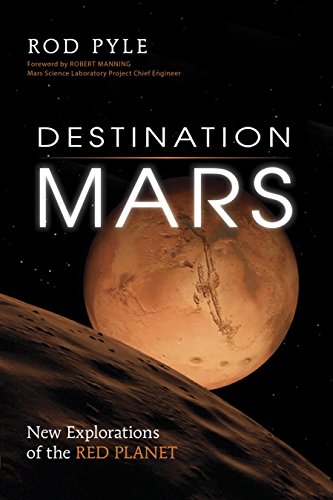
In the next decade, NASA, by itself and in collaboration with the European Space Agency, is planning a minimum of four separate missions to Mars. Clearly, exciting times are ahead for Mars exploration. This is an insider’s look into the amazing projects now being developed here and abroad to visit the legendary red planet. Drawing on his contacts at NASA and the Jet Propulsion Laboratory, the author provides stunning insights into the history of Mars exploration and the difficulties and dangers of traveling there.
After an entertaining survey of the human fascination with Mars over the centuries, the author offers an introduction to the geography, geology, and water processes of the planet. He then briefly describes the many successful missions by NASA and others to that distant world. But failure and frustration also get their due. As the author makes clear, going to Mars is not, and never will be, easy. Later in the book, he describes in detail what each upcoming mission will involve.
In the second half of the book, he offers the reader a glimpse inside the world of Earth-based "Mars analogs," places on Earth where scientists are conducting research in hostile environments that are eerily "Martian." Finally, he constructs a probable scenario of a crewed expedition to Mars, so that readers can see how earlier robotic missions and human Earth simulations will fit together.
All this is punctuated by numerous firsthand interviews with some of the finest Mars explorers of our day, including Stephen Squyres (Mars Exploration Rover), Bruce Murray (former director of the Jet Propulsion Laboratory), and Peter Smith (chief of the Mars Phoenix Lander and the upcoming OSIRIS-REx missions). These stellar individuals give us an insider’s view of the difficulties and rewards of roaming the red planet.
The author’s infectious enthusiasm and firsthand knowledge of the international space industry combine to make a uniquely appealing and accessible book about Mars.
Die Inhaltsangabe kann sich auf eine andere Ausgabe dieses Titels beziehen.
Über die Autorin bzw. den Autor
Rod Pyle is the author of the widely praised books Destination Moon and Missions to the Moon, as well as the popular audiobook In Their Own Words: The Space Race. He has written and produced numerous documentaries for the History Channel and Discovery Communications, including the acclaimed Modern Marvels: Apollo 11 and Mars: 100 Years of Discovery. Pyle has been an assistant professor at the University of La Verne, California, and frequently lectures at NASA’s Johnson Space Center in Houston.
Auszug. © Genehmigter Nachdruck. Alle Rechte vorbehalten.
DESTINATION MARS
New Explorations of the RED PLANETBy ROD PYLEPrometheus Books
Copyright © 2012 Rod PyleAll right reserved.
ISBN: 978-1-61614-589-7
Contents
Foreword by Robert Manning........................................................................9Acknowledgments...................................................................................131. The First Martian..............................................................................172. MARS 101.......................................................................................273. In the Beginning: A Shining Red Eye............................................................374. The End of an Empire: Mariner 4................................................................515. Dr. Robert Leighton: The Eyes of Mariner 4.....................................................576. Continuing Travels to Dark and Scary Places: Mariners 6 and 7..................................617. Dr. Bruce Murray: It's All about the Image.....................................................678. Aeolian Armageddon: Mariner 9..................................................................739. Dr. Laurence Soderblom: The Eyes of Mariner 9..................................................7910. Viking's Search for Life: Where Are the Microbes?.............................................8311. Dr. Norman Horowitz: Looking for Life.........................................................9912. Return to Mars: Mars Global Surveyor..........................................................10713. Robert Brooks: It Takes a Team, Mars Global Surveyor..........................................11514. Roving Mars: Sojourner, the Pathfinder........................................................12315. Robert Manning, Mars Pathfinder: Bouncing to Mars.............................................13316. Mars Express: On the Fast Track...............................................................14317. A Laugh in the Darkness: The Great Galactic Ghoul.............................................14718. 2001: A Mars Odyssey..........................................................................15719. Dr. Jeffrey Plaut: Follow the Water...........................................................16520. Twins of Mars: Spirit and Opportunity.........................................................17121. Dr. Steve Squyres and the Mars Exploration Rovers: Dreams of Ice and Sand.....................18922. Mars in HD: Mars Reconnaissance Orbiter.......................................................19523. Dr. Richard Zurek, MRO: I Can See Clearly Now ................................................20924. Twins of Mars: Spirit and Opportunity, Part 2.................................................21325. From the Ashes, Like a Phoenix................................................................22926. Peter Smith: Polar Explorer...................................................................24327. Mars Science Laboratory: Bigger Is Better.....................................................25328. Dr. Joy Crisp, Mars Science Laboratory: Dig This..............................................26129. JPL 2020: The Once and Future Mars............................................................26730. Mars on Earth.................................................................................27131. The New Martians..............................................................................28132. The Road Ahead................................................................................289Notes.............................................................................................297Bibliography of Print Sources.....................................................................313Bibliography of Internet Sources..................................................................315Index.............................................................................................319
Chapter One
THE FIRST MARTIAN
July 20, 1976: The Viking 1 orbiter instructed its lander to begin the separation sequence to start the long journey to the Martian surface. It was just after midnight at the Jet Propulsion Laboratory (JPL) in Pasadena, but as the probe was automated, no commands had been exchanged for some time. The onboard computer initiated a final round of systems checks. The explosives that joined the lander to the orbiter were armed ...
Anxious flight controllers, largely powerless at this distance, could only watch the time-delayed data as the onboard computers made their own decisions. At 00:00 onboard computers fired the pyrotechnics, separating the Viking lander, which soon fired its own braking thrusters to begin the slow fall out of Martian orbit. In the dusky skies above, the orbiter from which it had recently separated continued on its mission. Below spread the ruddy expanse of Mars: dusty, cold, unexplored ... and in about three and a half increasingly turbulent hours, home.
The Viking 1 lander, at ten feet wide by seven feet tall, was part of the largest and most expensive US unmanned mission to date. The orbiter, eight feet wide and ten tall, with a solar-panel span of thirty-two feet, shared the distinction. In a few weeks, Viking 2, a virtual twin, would arrive on Mars on an identical mission, but within a different landing zone on the opposite side of the planet.
The people who had sent Viking to this dangerous rendezvous waited out the landing confirmation signal in tense quiet. Only the most necessary words were spoken. There was an eighteen-minute delay between Earth and Mars at this distance; whatever happened to Viking now would be of its own doing. Many scientists on this program estimated a 50-50 chance of success, even with two landers. It was, in essence, a blind landing on a rocky, undulating landscape.
The Viking 1 lander was, for the first time in its short life, completely alone.
The tiny craft plummeted into the thin Martian atmosphere at 10,000 mph, still firing its braking thrusters. These rockets were models of simplicity. The fuel was a monopropellant and needed no ignition source and no other chemical mixed with it to explode into thrust. Further, instead of using complex pumps to feed the engine, the propellants were pressurized by stored helium gas. There was little to go wrong once they fired.
The lander was encased by a heat-resistant aeroshell, a dish-shaped structure that protected it from the heat of entry but also placed more demands upon its small digital brain. For as it plummeted through the upper reaches of the tenuous Martian atmosphere, Viking's computer was focused not just on a successful landing but also on conducting research in this wispy environment. Nothing is wasted in space exploration, and this early descent phase was no exception. As the computer labored to steer the craft, data began flowing in from sensors mounted on the aeroshell, providing data about charged particles surrounding the descending craft. Within the parade of arcane obsessions in the mind of the planetary scientist, understanding how the solar wind—high-energy particles streaming forth from the sun—interacts with the upper reaches of the Martian atmosphere is a thrill. The measurements now being recorded on the onboard tape drives should shed some light on this question. But Viking cared not; it simply stored the data for eventual delivery to Earth. Recording data was its raison d'être, and to this task it applied itself from its first moments.
At about 180 miles in altitude, another instrument switched on: the mass...
„Über diesen Titel“ kann sich auf eine andere Ausgabe dieses Titels beziehen.
Suchergebnisse für Destination Mars: New Explorations of the Red Planet

Beispielbild für diese ISBN
Destination Mars: New Explorations of the Red Planet
Anbieter: BooksRun, Philadelphia, PA, USA
Verkäuferbewertung 5 von 5 Sternen

Paperback. Zustand: Very Good. It's a well-cared-for item that has seen limited use. The item may show minor signs of wear. All the text is legible, with all pages included. It may have slight markings and/or highlighting. Bestandsnummer des Verkäufers 1616145897-8-1
Gebraucht kaufen
EUR 5,82
Versand gratis
Versand innerhalb von USA
Versand innerhalb von USA
Anzahl: 1 verfügbar
Beispielbild für diese ISBN
Destination Mars: New Explorations of the Red Planet
Anbieter: Wonder Book, Frederick, MD, USA
Verkäuferbewertung 5 von 5 Sternen
Zustand: Good. Good condition. A copy that has been read but remains intact. May contain markings such as bookplates, stamps, limited notes and highlighting, or a few light stains. Bestandsnummer des Verkäufers E15N-02565
Gebraucht kaufen
EUR 6,33
Versand gratis
Versand innerhalb von USA
Versand innerhalb von USA
Anzahl: 2 verfügbar
Beispielbild für diese ISBN
Destination Mars: New Explorations of the Red Planet
Anbieter: Bellwetherbooks, McKeesport, PA, USA
Verkäuferbewertung 4 von 5 Sternen

paperback. Zustand: Good. Bruise/tear to cover. Bestandsnummer des Verkäufers mon0000042515
Gebraucht kaufen
EUR 3,03
EUR 3,47 Versand
Versand innerhalb von USA
Versand innerhalb von USA
Anzahl: 1 verfügbar
Beispielbild für diese ISBN
Destination Mars: New Explorations of the Red Planet
Anbieter: ThriftBooks-Atlanta, AUSTELL, GA, USA
Verkäuferbewertung 5 von 5 Sternen
Paperback. Zustand: Very Good. No Jacket. May have limited writing in cover pages. Pages are unmarked. ~ ThriftBooks: Read More, Spend Less. Bestandsnummer des Verkäufers G1616145897I4N00
Gebraucht kaufen
EUR 6,77
Versand gratis
Versand innerhalb von USA
Versand innerhalb von USA
Anzahl: 1 verfügbar
Beispielbild für diese ISBN
Destination Mars: New Explorations of the Red Planet
Anbieter: HPB-Diamond, Dallas, TX, USA
Verkäuferbewertung 5 von 5 Sternen
paperback. Zustand: Very Good. Connecting readers with great books since 1972! Used books may not include companion materials, and may have some shelf wear or limited writing. We ship orders daily and Customer Service is our top priority! Bestandsnummer des Verkäufers S_395758076
Gebraucht kaufen
EUR 3,62
EUR 3,29 Versand
Versand innerhalb von USA
Versand innerhalb von USA
Anzahl: 1 verfügbar
Beispielbild für diese ISBN
Destination Mars: New Explorations of the Red Planet
Anbieter: Half Price Books Inc., Dallas, TX, USA
Verkäuferbewertung 5 von 5 Sternen
Paperback. Zustand: Very Good. Connecting readers with great books since 1972! Used books may not include companion materials, and may have some shelf wear or limited writing. We ship orders daily and Customer Service is our top priority! Bestandsnummer des Verkäufers S_386044539
Gebraucht kaufen
EUR 3,62
EUR 3,29 Versand
Versand innerhalb von USA
Versand innerhalb von USA
Anzahl: 1 verfügbar
Beispielbild für diese ISBN
Destination Mars: New Explorations of the Red Planet
Anbieter: The Maryland Book Bank, Baltimore, MD, USA
Verkäuferbewertung 5 von 5 Sternen
paperback. Zustand: Very Good. Used - Very Good. Bestandsnummer des Verkäufers 3-AA-1-0300
Gebraucht kaufen
EUR 3,15
EUR 4,12 Versand
Versand innerhalb von USA
Versand innerhalb von USA
Anzahl: 1 verfügbar
Beispielbild für diese ISBN
Destination Mars : New Explorations of the Red Planet
Verlag:
Prometheus Books, Publishers, 2012
ISBN 10: 1616145897
ISBN 13: 9781616145897
Gebraucht
Softcover
Anbieter: Better World Books: West, Reno, NV, USA
Verkäuferbewertung 5 von 5 Sternen
Zustand: Good. Former library copy. Pages intact with minimal writing/highlighting. The binding may be loose and creased. Dust jackets/supplements are not included. Includes library markings. Stock photo provided. Product includes identifying sticker. Better World Books: Buy Books. Do Good. Bestandsnummer des Verkäufers 4197472-75
Gebraucht kaufen
EUR 8,43
Versand gratis
Versand innerhalb von USA
Versand innerhalb von USA
Anzahl: 1 verfügbar
Beispielbild für diese ISBN
Destination Mars : New Explorations of the Red Planet
Verlag:
Prometheus Books, Publishers, 2012
ISBN 10: 1616145897
ISBN 13: 9781616145897
Gebraucht
Softcover
Anbieter: Better World Books: West, Reno, NV, USA
Verkäuferbewertung 5 von 5 Sternen
Zustand: Very Good. Former library copy. Pages intact with possible writing/highlighting. Binding strong with minor wear. Dust jackets/supplements may not be included. Includes library markings. Stock photo provided. Product includes identifying sticker. Better World Books: Buy Books. Do Good. Bestandsnummer des Verkäufers 2734021-6
Gebraucht kaufen
EUR 8,43
Versand gratis
Versand innerhalb von USA
Versand innerhalb von USA
Anzahl: 1 verfügbar
Beispielbild für diese ISBN
Destination Mars: New Explorations of the Red Planet
Anbieter: WorldofBooks, Goring-By-Sea, WS, Vereinigtes Königreich
Verkäuferbewertung 5 von 5 Sternen
Paperback. Zustand: Very Good. The book has been read, but is in excellent condition. Pages are intact and not marred by notes or highlighting. The spine remains undamaged. Bestandsnummer des Verkäufers GOR006985272
Gebraucht kaufen
EUR 3,73
EUR 6,51 Versand
Versand von Vereinigtes Königreich nach USA
Versand von Vereinigtes Königreich nach USA
Anzahl: 1 verfügbar