
Verwandte Artikel zu The China Study Solution: The Simple Way to Lose Weight...
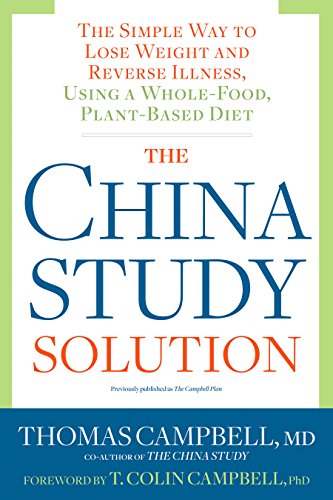
The China Study Solution: The Simple Way to Lose Weight and Reverse Illness, Using a Whole-Food, Plant-Based Diet - Softcover
Inhaltsangabe
In 2005, T. Colin Campbell, PhD, and Thomas Campbell, MD, co-authored The China Study, in which they detailed the groundbreaking research results showing that a whole-food, plant-based diet has the potential to prevent and reverse many chronic diseases. The China Study became a worldwide phenomenon, selling more than a million copies and inspiring countless readers to reinvigorate their health by making better food choices.
In The China Study Solution, Dr. Thomas Campbell, goes beyond why and shows you how to make the transition—and enjoy the journey—with practical guidance and a simple plan to make a whole-food, plant-based lifestyle easy and sustainable.
The China Study Solution tackles the most contentious questions: Is soy healthy? Should you eat gluten? Do you need to eat organic? Should you eat fish? Is GMO dangerous? How should you feed your kids?
With more than 50 easy recipes and a 2-week menu plan, The China Study Solution breaks down cutting-edge nutritional research into easy-to-follow instructions on what behavioral principles are needed to succeed in your journey, what to stock in your pantry, how to read labels and shop, and how to navigate social and eating-out situations.
Whether you wish to lose weight, reverse disease, or enjoy the best health of your life, The China Study Solution provides step-by-step guidance to help you achieve your goals.
Die Inhaltsangabe kann sich auf eine andere Ausgabe dieses Titels beziehen.
Über die Autorin bzw. den Autor
Thomas Campbell, MD, is an instructor of clinical family medicine at the University of Rochester School of Medicine and Dentistry. He coauthored The China Study, which sold more than a million copies and inspired the 2011 documentary Forks over Knives. He also is director of the T. Colin Campbell Center for Nutrition Studies, a nonprofit organization in Ithaca, New York, that promotes optimal nutrition through science-based education, advocacy, and research in partnership with eCornell, Cornell University's online course provider. He lives in Rochester, NY.
Auszug. © Genehmigter Nachdruck. Alle Rechte vorbehalten.
Part 1
FOUNDATIONS OF HEALTH
Chapter 1
The China Study
"I think you mean the high-protein diet," she said. I looked back at her, a bit confused as to why my teacher would tell me I was wrong. I probably started to disagree. "I think you mean the rats that ate more protein ran more," she said again. "But that's okay. Thank you for telling us about the experiment." She turned to the class. "Class, thank Tom for the opportunity to learn about this experiment." That was probably the first nutritional disagreement of my life, and honestly, I had no idea what was going on.
I was in grade school, standing in front of the class giving a presentation. My dad, T. Colin Campbell, PhD, had long been a nutritional biochemist who, among other things, had been conducting cutting-edge research on the influence of diet on cancer at Cornell University. He had a robust research program that was gaining national recognition, and some of his research utilized rats eating different types of diets. He had offered my teacher the opportunity to conduct a little experiment in class involving rats. Nothing pleases elementary students more than having rodents in the classroom, so of course this seemed like a perfect idea.
The experiment explored the following question: If you fed rats different levels of protein, which rats would exercise the most? Each of the rats I brought in was housed in a cage with an exercise wheel that had a counter rigged up to register the number of times the rats turned the wheel. It was like a rat pedometer. The rats would intermittently get on the wheel and run and run and run--with purpose. It made me wonder if they knew they were not going anywhere, but I suppose you could ask the same thing at your local gym. Animals just need to exercise, I guess, even if it involves not actually going anywhere.
Both groups of rats ate exactly the same dietary chow with just one variation: One group had a low-protein chow (probably about 5 percent protein) and the other group had a high-protein chow (probably about 20 percent protein). The low-protein chow had a bit more sugar to replace the protein component.
I would feed the rats faithfully and record exactly how much they exercised. My dad supplied everything, of course. As you might imagine, as an elementary school student I didn't really know what was going on. I had some very cute rats and I wrote down the wheel counter results and I fed them. It was a good life.
After a week or two, I accumulated all of my data and got my final result: The low-protein rats exercised more. I was a compulsive child, relishing the details and double-checking all my records carefully. At the end of the experiment, I stood up in front of the class and reported the data to the other sniffly kids. The rats eating the low-protein diet ran more on their wheels, I said. This was when my teacher interjected, telling me I got either the rats or the numbers mixed up, that surely I meant that the rats eating the high-protein chow exercised more. As a young student, I had no idea why my teacher would disagree with my findings. She was a wonderful teacher--very caring, enthusiastic, and nurturing. She was one of my favorite teachers.
But I certainly did not get the numbers mixed up. She hadn't recorded the exercise wheel counts; I had. How would she know what the results were? I probably told her I was actually right, but I can't remember. I was also a stubborn child. It's funny--I can't remember much about the experience of the experiment, but for some reason I have remembered the teacher telling me I got things mixed up. And so went the first nutritional disagreement of my life. I didn't know it at the time, but this was my first lesson in the absolute reverence people have for protein.
GETTING TO KNOW DAD
Despite getting to play with rats in elementary school, I was not particularly enamored with my dad's work or with nutrition early in life. As a child and adolescent, I barely knew what he did for work. I was much more interested in sports and friends. Since that time, I have traveled a long, winding path to where I am today. In my nostalgia, it is hard not to think about some of the most remarkable experiences I have had since that time, particularly during my training as a medical doctor. I will never forget the life-and-death moments I have been privy to: doing chest compressions on a man who should have been in the prime of his life; doing chest compressions on a baby born at 26 weeks of gestation not even struggling to take in the first breath. I have been the person to tell someone that their mom was dying, or their spouse was dying, or that their imaging results showed a mass likely to be cancer. I have seen jubilant tears of joy and triumph and quiet love while helping to deliver almost 100 babies. I have assisted in the operating room at a variety of surgeries on patients made sterile by the patchwork of blue drapes around the surgical field. I will never forget some of these experiences. Nor will I forget the work, the stress, or the agony of uncertainty when nothing less than perfection is expected.
These moments may seem like they have nothing to do with nutrition, but the only reason I ever lived them was because of my experience in nutrition. I did not choose at an early age to become a doctor. Instead, it was a path I chose after working with my father and being inspired to pursue a career in health. After a childhood of not being aware of what type of work my dad did and later making forays into theater and acting, even immigration law, my path dramatically changed in my midtwenties. I had the opportunity to work with my dad as coauthor of The China Study: The Most Comprehensive Study of Nutrition Ever Conducted and the Startling Implications for Diet, Weight Loss and Long-Term Health, in which we tell the story of his career and the most exciting results in his research. In addition, we detail the findings of many dozens of other researchers investigating diet and health. In all of this, there is a surprisingly consistent, inspiring message: Whole-food, plant-based diets are profoundly important in preventing and even treating disease.
Much of my dad's work focused on protein and cancer. Having grown up on a dairy farm and gone on to school to find out how we might produce high- quality animal protein more efficiently, he started with the same reverence for protein that my grade school teacher had. But he went on to conduct decades of experimental research on diet and cancer using a variety of experimental rodent models. The research revealed that cancer caused by a dose of a potent cancer-causing chemical can be almost entirely controlled by protein intake. In fact, one of the most provocative experiments found that early cancer growth can be turned on or off simply by changing the level of protein consumed. And guess what? High-protein diets were the most dangerous kind. The figure below shows a 12-week experiment1 in which protein intake was changed every 3 weeks. It shows how diets composed of 5 percent protein turned off early cancer growth, whereas 20 percent protein diets promoted early cancer growth.
Perhaps the biggest surprise was that the protein that promoted cancer in these experimental models was casein, the main protein in cow's milk. Wheat2 and soy protein in their naturally occurring forms in food do not promote cancer, even at higher levels of intake. Furthermore, protein intake affects cancer initiation and promotion in numerous ways. Dietary composition did not exert its cancer-related effects through one enzyme or one chemical; instead, it changed just about every biochemical aspect of cancer initiation and promotion that was investigated. For decades, funding sources such as the National Institutes of Health, the American Cancer Society, and the American Institute for Cancer Research...
„Über diesen Titel“ kann sich auf eine andere Ausgabe dieses Titels beziehen.
Suchergebnisse für The China Study Solution: The Simple Way to Lose Weight...

Beispielbild für diese ISBN
The China Study Solution: The Simple Way to Lose Weight and Reverse Illness, Using a Whole-Food, Plant-Based Diet
Anbieter: World of Books (was SecondSale), Montgomery, IL, USA
Verkäuferbewertung 5 von 5 Sternen

Paperback. Zustand: Good. In 2005, T. Colin Campbell, PhD, and Thomas Campbell, MD, co-authored The China Study, in which they detailed the groundbreaking research results showing that a whole-food, plant-based diet has the potential to prevent and reverse many chronic diseases. The China Study became a worldwide phenomenon, selling more than a million copies and inspiring countless readers to reinvigorate their health by making better food choices. In The China Study Solution, Dr. Thomas Campbell, goes beyond why and shows you how to make the transition-and enjoy the journey-with practical guidance and a simple plan to make a whole-food, plant-based lifestyle easy and sustainable. The China Study Solution tackles the most contentious questions: Is soy healthy? Should you eat gluten? Do you need to eat organic? Should you eat fish? Is GMO dangerous? How should you feed your kids? With more than 50 easy recipes and a 2-week menu plan, The China Study Solution breaks down cutting-edge nutritional research into easy-to-follow instructions on what behavioral principles are needed to succeed in your journey, what to stock in your pantry, how to read labels and shop, and how to navigate social and eating-out situations. Whether you wish to lose weight, reverse disease, or enjoy the best health of your life, The China Study Solution provides step-by-step guidance to help you achieve your goals. Bestandsnummer des Verkäufers 00100586202
Gebraucht kaufen
EUR 3,92
Versand gratis
Versand innerhalb von USA
Versand innerhalb von USA
Anzahl: 14 verfügbar
Beispielbild für diese ISBN
The China Study Solution: The Simple Way to Lose Weight and Reverse Illness, Using a Whole-Food, Plant-Based Diet
Anbieter: Your Online Bookstore, Houston, TX, USA
Verkäuferbewertung 5 von 5 Sternen
Paperback. Zustand: Good. Bestandsnummer des Verkäufers 1623367573-3-24655407
Gebraucht kaufen
EUR 3,92
Versand gratis
Versand innerhalb von USA
Versand innerhalb von USA
Anzahl: 1 verfügbar
Foto des Verkäufers
The China Study Solution: The Simple Way to Lose Weight and Reverse Illness, Using a Whole-Food, Plant-Based Diet
Anbieter: Zoom Books East, Glendale Heights, IL, USA
Verkäuferbewertung 5 von 5 Sternen
Zustand: very_good. Book is in very good condition and may include minimal underlining highlighting. The book can also include "From the library of" labels. May not contain miscellaneous items toys, dvds, etc. . We offer 100% money back guarantee and 24 7 customer service. Bestandsnummer des Verkäufers ZEV.1623367573.VG
Gebraucht kaufen
EUR 4,57
Versand gratis
Versand innerhalb von USA
Versand innerhalb von USA
Anzahl: 1 verfügbar
Foto des Verkäufers
The China Study Solution: The Simple Way to Lose Weight and Reverse Illness, Using a Whole-Food, Plant-Based Diet
Anbieter: ZBK Books, Carlstadt, NJ, USA
Verkäuferbewertung 5 von 5 Sternen
Zustand: very_good. Fast & Free Shipping â" Very Good condition book with a firm cover and clean pages. Shows normal use and some light wear or limited notes markings. A solid, nice copy to enjoy. Bestandsnummer des Verkäufers ZWV.1623367573.VG
Gebraucht kaufen
EUR 4,89
Versand gratis
Versand innerhalb von USA
Versand innerhalb von USA
Anzahl: 1 verfügbar
Beispielbild für diese ISBN
The China Study Solution: The Simple Way to Lose Weight and Reverse Illness, Using a Whole-Food, Plant-Based Diet
Verlag:
Rodale Books (edition 1), 2016
ISBN 10: 1623367573
ISBN 13: 9781623367572
Gebraucht
Paperback
Anbieter: BooksRun, Philadelphia, PA, USA
Verkäuferbewertung 5 von 5 Sternen
Paperback. Zustand: Very Good. 1. It's a well-cared-for item that has seen limited use. The item may show minor signs of wear. All the text is legible, with all pages included. It may have slight markings and/or highlighting. Bestandsnummer des Verkäufers 1623367573-8-1
Gebraucht kaufen
EUR 5,40
Versand gratis
Versand innerhalb von USA
Versand innerhalb von USA
Anzahl: 1 verfügbar
Foto des Verkäufers
The China Study Solution: The Simple Way to Lose Weight and Reverse Illness, Using a Whole-Food, Plant-Based Diet
Anbieter: Zoom Books East, Glendale Heights, IL, USA
Verkäuferbewertung 5 von 5 Sternen
Zustand: like_new. Book is in like new condition with minimal signs of wear. Pages are clean and free from notes or highlighting. Dust cover is intact. May not contain miscellaneous items toys, dvds, etc. . We offer 100% money back guarantee and 24 7 customer service. Bestandsnummer des Verkäufers ZEV.1623367573.LN
Gebraucht kaufen
EUR 5,44
Versand gratis
Versand innerhalb von USA
Versand innerhalb von USA
Anzahl: 1 verfügbar
Foto des Verkäufers
The China Study Solution: The Simple Way to Lose Weight and Reverse Illness, Using a Whole-Food, Plant-Based Diet
Anbieter: Zoom Books Company, Lynden, WA, USA
Verkäuferbewertung 5 von 5 Sternen
Zustand: very_good. Book is in very good condition and may include minimal underlining highlighting. The book can also include "From the library of" labels. May not contain miscellaneous items toys, dvds, etc. . We offer 100% money back guarantee and 24 7 customer service. Bestandsnummer des Verkäufers ZBV.1623367573.VG
Gebraucht kaufen
EUR 5,62
Versand gratis
Versand innerhalb von USA
Versand innerhalb von USA
Anzahl: 1 verfügbar
Beispielbild für diese ISBN
The China Study Solution: The Simple Way to Lose Weight and Reverse Illness, Using a Whole-Food, Plant-Based Diet
Anbieter: World of Books Inc, Montgomery, IL, USA
Verkäuferbewertung 4 von 5 Sternen

Paperback. Zustand: Good. In 2005, T. Colin Campbell, PhD, and Thomas Campbell, MD, co-authored The China Study, in which they detailed the groundbreaking research results showing that a whole-food, plant-based diet has the potential to prevent and reverse many chronic diseases. The China Study became a worldwide phenomenon, selling more than a million copies and inspiring countless readers to reinvigorate their health by making better food choices. In The China Study Solution, Dr. Thomas Campbell, goes beyond why and shows you how to make the transition-and enjoy the journey-with practical guidance and a simple plan to make a whole-food, plant-based lifestyle easy and sustainable. The China Study Solution tackles the most contentious questions: Is soy healthy? Should you eat gluten? Do you need to eat organic? Should you eat fish? Is GMO dangerous? How should you feed your kids? With more than 50 easy recipes and a 2-week menu plan, The China Study Solution breaks down cutting-edge nutritional research into easy-to-follow instructions on what behavioral principles are needed to succeed in your journey, what to stock in your pantry, how to read labels and shop, and how to navigate social and eating-out situations. Whether you wish to lose weight, reverse disease, or enjoy the best health of your life, The China Study Solution provides step-by-step guidance to help you achieve your goals. Bestandsnummer des Verkäufers CIN1623367573G
Gebraucht kaufen
EUR 5,72
Versand gratis
Versand innerhalb von USA
Versand innerhalb von USA
Anzahl: 14 verfügbar
Foto des Verkäufers
The China Study Solution: The Simple Way to Lose Weight and Reverse Illness, Using a Whole-Food, Plant-Based Diet
Anbieter: Dream Books Co., Denver, CO, USA
Verkäuferbewertung 5 von 5 Sternen
Zustand: good. Gently used with minimal wear on the corners and cover. A few pages may contain light highlighting or writing, but the text remains fully legible. Dust jacket may be missing, and supplemental materials like CDs or codes may not be included. May be ex-library with library markings. Ships promptly! Bestandsnummer des Verkäufers 4EKGU90099DM_ns
Gebraucht kaufen
EUR 6,09
Versand gratis
Versand innerhalb von USA
Versand innerhalb von USA
Anzahl: 1 verfügbar
Beispielbild für diese ISBN
The China Study Solution: The Simple Way to Lose Weight and Reverse Illness, Using a Whole-Food, Plant-Based Diet
Anbieter: ThriftBooks-Dallas, Dallas, TX, USA
Verkäuferbewertung 5 von 5 Sternen
Paperback. Zustand: Very Good. No Jacket. May have limited writing in cover pages. Pages are unmarked. ~ ThriftBooks: Read More, Spend Less. Bestandsnummer des Verkäufers G1623367573I4N00
Gebraucht kaufen
EUR 6,46
Versand gratis
Versand innerhalb von USA
Versand innerhalb von USA
Anzahl: 1 verfügbar