
Verwandte Artikel zu The New Science of Consciousness: Exploring the Complexity...
Inhaltsangabe
This book explains in layperson's terms a new approach to studying consciousness based on a partnership between neuroscientists and complexity scientists. The author, a physicist turned neuroscientist, outlines essential features of this partnership. The new science goes well beyond traditional cognitive science and simple neural networks, which are often the focus in artificial intelligence research. It involves many fields including neuroscience, artificial intelligence, physics, cognitive science, and psychiatry.
What causes autism, schizophrenia, and Alzheimer's disease? How does our unconscious influence our actions? As the author shows, these important questions can be viewed in a new light when neuroscientists and complexity scientists work together. This cross-disciplinary approach also offers fresh insights into the major unsolved challenge of our age: the origin of self-awareness. Do minds emerge from brains? Or is something more involved?
Using human social networks as a metaphor, the author explains how brain behavior can be compared with the collective behavior of large-scale global systems. Emergent global systems that interact and form relationships with lower levels of organization and the surrounding environment provide useful models for complex brain functions.
By blending lucid explanations with illuminating analogies, this book offers the general reader a window into the latest exciting developments in brain research.
Die Inhaltsangabe kann sich auf eine andere Ausgabe dieses Titels beziehen.
Über die Autorin bzw. den Autor
Paul L. Nunez is emeritus professor of biomedical engineering at Tulane University and the owner and chief scientist of Cognitive Dissonance, LLC, a consulting firm specializing in brain research. He is the author of four books on the brain, most recently Brain, Mind, and the Structure of Reality.
Auszug. © Genehmigter Nachdruck. Alle Rechte vorbehalten.
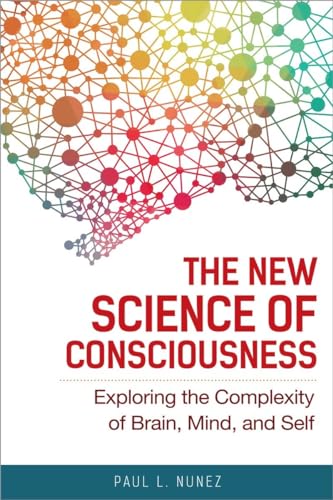
The New Science of Consciousness
Exploring the Complexity of Brain, Mind, and Self
By Paul L. NunezPrometheus Books
Copyright © 2016 Paul L. Nunez
All rights reserved.
ISBN: 978-1-63388-219-5All rights reserved.
Contents
Preface, 9,
Chapter 1: Introduction to Mind and Brain, 13,
Chapter 2: The Science and Philosophy of Mind, 39,
Chapter 3: A Brief Look into Brain Structure and Function, 69,
Chapter 4: States of Mind, 109,
Chapter 5: Signatures of Consciousness, 139,
Chapter 6: Rhythms of the Brain, 167,
Chapter 7: Brain Synchrony, Coherence, and Resonance, 205,
Chapter 8: Networks of the Brain, 239,
Chapter 9: Introduction to the Hard Problem, 275,
Chapter 10: Multiscale Speculations on the Hard Problem, 299,
Glossary, 331,
Notes, 345,
Index, 365,
CHAPTER 1
INTRODUCTION TO MIND AND BRAIN
1.1 THE DEEP MYSTERY OF CONSCIOUSNESS
The challenge of consciousness is uniquely curious. I am conscious, but what about you? We have no direct experience of any consciousness other than our own. We infer that others share similar kinds of internal experiences mainly because they look, behave, and talk as we do. These similarities encourage the belief that others are aware of their own existence, thoughts, and environment just as we are. But how much do we really know about the internal experiences of others? How do you experience a Mozart concerto, a bungee jump, a cockroach in your kitchen, or a nude person surprising you in an elevator? What about your dog or cat — what kinds of internal experiences do they have? Or, in the colorful words of one philosopher, "What is it like to be a bat?"
The word self in this book's subtitle suggests that even if consciousness emerges from brain complexity as believed by most scientists, the very existence of the phenomenon of self-awareness remains a deep mystery. The title also suggests that self-awareness involves developments beyond mind; some lower animals can have "minds" but apparently lack a sense of "self." In other words, lower animals probably have primary consciousness, an awareness of their current environment. They may, however, lack the higher consciousness of higher animals, that is, those with awareness of self and its relation to the past, present, and future. If this distinction is indeed valid, just where do we draw the line separating higher from lower animals? Most of us think that dolphins, chimps, and dogs are conscious. But to what extent are they conscious, and how are humans special?
The phenomenon of consciousness is the major unsolved challenge of our age. Not only do we not have answers, we are often unsure of the right questions. This is not to say that the study of consciousness lies outside the province of science. The consciousness challenge may be divided into two parts, the easy problem and the hard problem. The "easy problem" is concerned with the various electrical or chemical measures of brain functions that occur in different brain states. These measures, called consciousness correlates or signatures of consciousness, are indicated symbolically in figure 1-1, where the lighted regions might indicate any one of several kinds of brain activity. For example, what happens to blood-oxygen levels in different brain regions when we recognize a face or carry out some task? Or, how do electrical patterns over the brain change between waking and sleeping or with various depths of anesthesia? How do brain injuries or diseases that afflict certain brain structures change our consciousness? What causes autism, schizophrenia, or Alzheimer's disease? And the really big question — how can the massive interactions between nerve cells (neurons), shown in figure 1-2, determine our thoughts and behaviors?
No one questions that these studies of consciousness correlates represent legitimate science. By contrast, the hard problem is concerned with the very existence of the amazing phenomenon of conscious experience. Many scientists do not consider the hard problem to be a scientific problem at all; they would leave this issue at the feet of philosophers. We will look into this controversy from several perspectives in the following chapters. Suffice it to say, our scientific knowledge about how brains work grows every day, yet a central theme that permeates our story is the delicate balance between knowledge and ignorance: how much we know, but how little we know of consciousness.
Brains are "complex" in the manner understood in the field of complexity science, an exciting new approach adopted to study everything from social systems to ecology to economics to weather patterns. Plausible assumptions about the underlying causes for various healthy and disease states of brains are suggested by analogy to other complex systems that are better understood and more easily visualized, for example, human and animal social systems. Human social networks interact with each other in many complex ways; they are also embedded within larger cultures that act top-down on the local networks. The profound idea of top-down influences across multiple levels of organization applies to many areas of science as well as our everyday lives. We will return to this issue many times in later chapters, but the following outline summarizes the general idea.
Our interactions with friends on religious, political, financial, and other issues are likely to be substantially influenced by larger systems like the mass media or the culture of our local geographic region, as indicated in figure 1-3. The arrows, both vertical and horizontal, indicate top-down influences across levels of organization. Are you a Democrat or a Republican? Are you a born-again Christian or an atheist? Regardless of our beliefs, the activities of any of our many overlapping social networks are likely to look quite different in Texas than in California. To take a more-obvious example, imagine that one of your social networks in the United States were to be suddenly transported to Saudi Arabia. The Saudi laws and customs would provide major top-down influences. Ask your wife to drive you to the airport? Forget it. Meet with friends to have drinks at a local restaurant? Don't even think about it. Such top-down social interactions provide useful and intriguing metaphors for the brain's neural networks, which are similarly influenced by top-down effects. As discussed in later chapters, top-down influences on neural networks originate from both inside and outside the brain, as indicated in figure 1-4. With such metaphors in mind, one might label this approach to brain science as neuron sociology.
1.2 A PERSONAL PERSPECTIVE ON SCIENCE, PHILOSOPHY, AND RELIGION
The scientific material, interpretations, and opinions in this book are biased by my educational, professional, and other life experiences. This is, of course, true of all books and their authors, but such influences can be masked by the author's desire to appear unbiased. This book addresses both the "easy" and "hard" problems of consciousness. Most agree that the so-called easy problem, finding brain correlates of conscious states, lies well within scientific purview. However, the hard problem is considered by many to lie outside of science, perhaps to be left to philosophy or religion. In contrast to most scientific publications, religious issues are faced in this book when they appear to overlap the consciousness challenge. After all, much of humanity follows some sort of faith, and...
„Über diesen Titel“ kann sich auf eine andere Ausgabe dieses Titels beziehen.
Suchergebnisse für The New Science of Consciousness: Exploring the Complexity...

Foto des Verkäufers
The New Science of Consciousness: Exploring the Complexity of Brain, Mind, and Self
Anbieter: Bay State Book Company, North Smithfield, RI, USA
Verkäuferbewertung 5 von 5 Sternen

Zustand: very_good. Bestandsnummer des Verkäufers BSM.1D1ZU
Gebraucht kaufen
EUR 5,45
Versand gratis
Versand innerhalb von USA
Versand innerhalb von USA
Anzahl: 1 verfügbar
Beispielbild für diese ISBN
The New Science of Consciousness: Exploring the Complexity of Brain, Mind, and Self
Anbieter: ThriftBooks-Dallas, Dallas, TX, USA
Verkäuferbewertung 5 von 5 Sternen
Hardcover. Zustand: Good. No Jacket. Pages can have notes/highlighting. Spine may show signs of wear. ~ ThriftBooks: Read More, Spend Less. Bestandsnummer des Verkäufers G1633882195I3N00
Gebraucht kaufen
EUR 7,02
Versand gratis
Versand innerhalb von USA
Versand innerhalb von USA
Anzahl: 1 verfügbar
Beispielbild für diese ISBN
The New Science of Consciousness: Exploring the Complexity of Brain, Mind, and Self
Anbieter: ThriftBooks-Dallas, Dallas, TX, USA
Verkäuferbewertung 5 von 5 Sternen
Hardcover. Zustand: Very Good. No Jacket. May have limited writing in cover pages. Pages are unmarked. ~ ThriftBooks: Read More, Spend Less. Bestandsnummer des Verkäufers G1633882195I4N00
Gebraucht kaufen
EUR 7,02
Versand gratis
Versand innerhalb von USA
Versand innerhalb von USA
Anzahl: 1 verfügbar
Beispielbild für diese ISBN
The New Science of Consciousness : Exploring the Complexity of Brain, Mind, and Self
Verlag:
Prometheus Books, Publishers, 2016
ISBN 10: 1633882195
ISBN 13: 9781633882195
Gebraucht
Hardcover
Anbieter: Better World Books, Mishawaka, IN, USA
Verkäuferbewertung 5 von 5 Sternen
Zustand: Good. Pages intact with minimal writing/highlighting. The binding may be loose and creased. Dust jackets/supplements are not included. Stock photo provided. Product includes identifying sticker. Better World Books: Buy Books. Do Good. Bestandsnummer des Verkäufers 14344823-6
Gebraucht kaufen
EUR 10,07
Versand gratis
Versand innerhalb von USA
Versand innerhalb von USA
Anzahl: 1 verfügbar
Beispielbild für diese ISBN
The New Science of Consciousness : Exploring the Complexity of Brain, Mind, and Self
Verlag:
Prometheus Books, Publishers, 2016
ISBN 10: 1633882195
ISBN 13: 9781633882195
Gebraucht
Hardcover
Anbieter: Better World Books, Mishawaka, IN, USA
Verkäuferbewertung 5 von 5 Sternen
Zustand: Good. Former library copy. Pages intact with minimal writing/highlighting. The binding may be loose and creased. Dust jackets/supplements are not included. Includes library markings. Stock photo provided. Product includes identifying sticker. Better World Books: Buy Books. Do Good. Bestandsnummer des Verkäufers 40442263-6
Gebraucht kaufen
EUR 10,07
Versand gratis
Versand innerhalb von USA
Versand innerhalb von USA
Anzahl: 1 verfügbar
Beispielbild für diese ISBN
The New Science of Consciousness: Exploring the Complexity of Brain, Mind, and Self
Anbieter: Half Price Books Inc., Dallas, TX, USA
Verkäuferbewertung 5 von 5 Sternen
Hardcover. Zustand: Very Good. Connecting readers with great books since 1972! Used books may not include companion materials, and may have some shelf wear or limited writing. We ship orders daily and Customer Service is our top priority! Bestandsnummer des Verkäufers S_480581820
Gebraucht kaufen
EUR 8,91
EUR 3,25 Versand
Versand innerhalb von USA
Versand innerhalb von USA
Anzahl: 1 verfügbar
Beispielbild für diese ISBN
The New Science of Consciousness: Exploring the Complexity of Brain, Mind, and Self
Anbieter: Sequitur Books, Boonsboro, MD, USA
Verkäuferbewertung 5 von 5 Sternen
hardcover. Zustand: Very Good. Hardcover and dust jacket. Good binding and cover. Bestandsnummer des Verkäufers 2304030002
Gebraucht kaufen
EUR 10,70
EUR 5,17 Versand
Versand innerhalb von USA
Versand innerhalb von USA
Anzahl: 1 verfügbar
Foto des Verkäufers
The New Science of Consciousness: Exploring the Complexity of Brain, Mind, and Self
Anbieter: Shakespeare Book House, Rockford, IL, USA
Verkäuferbewertung 5 von 5 Sternen
Zustand: new. Bestandsnummer des Verkäufers EBBV.1633882195.N
Neu kaufen
EUR 13,60
EUR 3,46 Versand
Versand innerhalb von USA
Versand innerhalb von USA
Anzahl: 1 verfügbar
Beispielbild für diese ISBN
The New Science of Consciousness Format: Hardcover
Anbieter: INDOO, Avenel, NJ, USA
Verkäuferbewertung 5 von 5 Sternen
Zustand: As New. Unread copy in mint condition. Bestandsnummer des Verkäufers SS9781633882195
Gebraucht kaufen
EUR 20,40
Versand gratis
Versand innerhalb von USA
Versand innerhalb von USA
Anzahl: Mehr als 20 verfügbar
Beispielbild für diese ISBN
The New Science of Consciousness Format: Hardcover
Anbieter: INDOO, Avenel, NJ, USA
Verkäuferbewertung 5 von 5 Sternen
Zustand: New. Brand New. Bestandsnummer des Verkäufers 9781633882195
Neu kaufen
EUR 20,49
Versand gratis
Versand innerhalb von USA
Versand innerhalb von USA
Anzahl: Mehr als 20 verfügbar