
Verwandte Artikel zu Forbidden Notebook: A Novel
Inhaltsangabe
A New York Times Notable Book of the Year
“Powerful.” —The New Yorker
“Brilliant.” —The Wall Street Journal
"Astounding." —NPR
“Forceful, clear and morally engaged.” —The Washington Post
“Subversive.” —The New York Times Book Review
"An exquisite, tormented howl." —The Financial Times
"Quick, propulsive, and addictive." —Los Angeles Review of Books
“Gripping.” —Minneapolis Star Tribune
“A remarkable story.” —Publisher’s Weekly (starred review)
“Wrenching, sardonic.” —Kirkus (starred review)
“As relevant today as it was in postwar Italy." —Shelf Awareness (starred review)
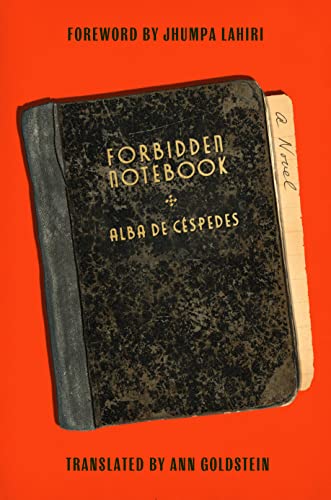
With a foreword by Jhumpa Lahiri, Forbidden Notebook is a classic domestic novel by the Italian-Cuban feminist writer Alba de Céspedes, whose work inspired contemporary writers like Elena Ferrante.
In this modern translation by acclaimed Elena Ferrante translator Ann Goldstein, Forbidden Notebook centers the inner life of a dissatisfied housewife living in postwar Rome.
Valeria Cossati never suspected how unhappy she had become with the shabby gentility of her bourgeois life—until she begins to jot down her thoughts and feelings in a little black book she keeps hidden in a closet. This new secret activity leads her to scrutinize herself and her life more closely, and she soon realizes that her individuality is being stifled by her devotion and sense of duty toward her husband, daughter, and son. As the conflicts between parents and children, husband and wife, and friends and lovers intensify, what goes on behind the Cossatis’ facade of middle-class respectability gradually comes to light, tearing the family’s fragile fabric apart.
An exquisitely crafted portrayal of domestic life, Forbidden Notebook recognizes the universality of human aspirations.
Die Inhaltsangabe kann sich auf eine andere Ausgabe dieses Titels beziehen.
Über die Autorin bzw. den Autor
Alba de Céspedes (1911–1997) was a bestselling Italian-Cuban feminist writer greatly influenced by the cultural developments that led to and resulted from World War II. In 1935, she was jailed for her anti-fascist activities in Italy. Two of her novels were also banned—Nessuno Torna Indietro (1938) and La Fuga (1940). In 1943, she was again imprisoned for her assistance with Radio Partigiana in Bari, where she was a Resistance radio personality known as Clorinda. After the war, she moved to Paris, where she lived until her death in 1997.
Auszug. © Genehmigter Nachdruck. Alle Rechte vorbehalten.
November 26, 1950
I was wrong to buy this notebook, very wrong. But it’s too late now for regrets, the damage is done. I don’t even know what impelled me to buy it—pure chance. I’ve never thought of keeping a diary, partly because a diary has to be secret, and so it would have to be hidden from Michele and the children. I don’t like hiding things; besides, there’s so little space in our house it would be impossible to manage. Here’s how it happened. Two weeks ago, it was a Sunday, I left the house rather early in the morning. I was going to buy cigarettes for Michele. I wanted him to find them on his night table when he woke up: he always sleeps in on Sunday. It was a beautiful day, warm, though it was late autumn. I felt a childish pleasure walking along the streets, on the sunny side, and seeing the trees still green and people happy as they always seem to be on holidays. So I decided to take a short stroll and go to the tobacco shop in the square. Along the way I saw that a lot of people were stopping at the flower stall, so I stopped, too, and bought a bunch of calendulas. “You need flowers on the table on a Sunday,” the flower seller said to me. “Men notice.” I smiled, nodding, but the truth is, I wasn’t thinking of Michele or of Riccardo when I was buying those flowers, even though Riccardo does seem to appreciate them. I bought them for myself, to hold while I walked.
The tobacco shop was crowded. Waiting my turn, with the cigarette money ready, I saw a stack of notebooks in the window. They were black, shiny, thick, the type used in school, in which—before even starting it—I would immediately write my name excitedly on the first page: Valeria. “I would also like a notebook,” I said, digging in my purse to find some more money. But when I looked up, I saw that the tobacconist had assumed a severe expression to tell me: “I can’t. It’s forbidden.” He explained that an officer stood guard at the door, every Sunday, to make sure that he sold tobacco only, nothing else. I was alone now in the shop. “I need it,” I said, “I absolutely need it.” I was speaking in a whisper, agitated, ready to insist, plead. So he looked around, then quickly grabbed a notebook and handed it to me across the counter, saying: “Hide it under your coat.”
I kept the notebook under my coat all the way home. I was afraid it would slide out, fall on the ground while the porter was telling me something or other about the gas pipes. I felt flushed when I turned the key to open the door to the apartment. I started to sneak off to my room, but I remembered that Michele was still in bed. Meanwhile Mirella was calling me: “Mamma . . . ” Riccardo asked, “Did you buy the paper, mamma?” I was agitated, confused, I was afraid I wouldn’t manage to be alone while I took off my coat. “I’ll put it in the closet,” I thought. “No, Mirella’s always going in there to get something of mine to wear, a pair of gloves, a blouse. The night table, Michele always opens it. The desk is now occupied by Riccardo. ”I considered that in the entire house, I no longer had a drawer, orany storage space, that was still mine. I proposed to assert my rights starting that day. “In the linen closet,” I decided. Then I recalled that every Sunday Mirella gets out a clean tablecloth when she’s setting the table. I finally threw it in the ragbag, in the kitchen. I had only just closed the bag when Mirella came in and said, “What’s wrong, mamma? You’re all red in the face.”
“It must be the coat,” I said, taking it off. “It’s warm out today.” It seemed to me that she might say: “That’s not true. It’s because you’ve hidden something in the bag.” In vain I tried to convince myself that I had done nothing wrong. Again I heard the tobacconist’s voice warning me: “It’s forbidden.”
„Über diesen Titel“ kann sich auf eine andere Ausgabe dieses Titels beziehen.
Suchergebnisse für Forbidden Notebook: A Novel

Beispielbild für diese ISBN
Forbidden Notebook
Anbieter: World of Books (was SecondSale), Montgomery, IL, USA
Verkäuferbewertung 5 von 5 Sternen

Zustand: Good. Item in good condition. Textbooks may not include supplemental items i.e. CDs, access codes etc. Bestandsnummer des Verkäufers 00110703745
Gebraucht kaufen
EUR 12,53
Versand gratis
Versand innerhalb von USA
Versand innerhalb von USA
Anzahl: 1 verfügbar
Beispielbild für diese ISBN
Forbidden Notebook: A Novel
Verlag:
Astra House January 2023, 2023
ISBN 10: 1662601395
ISBN 13: 9781662601392
Gebraucht
Hardcover
Anbieter: Inquiring Minds, Saugerties, NY, USA
Verkäuferbewertung 4 von 5 Sternen

Hardcover. Zustand: Used - Very Good. Bestandsnummer des Verkäufers 612019
Gebraucht kaufen
EUR 8,95
EUR 5,22 Versand
Versand innerhalb von USA
Versand innerhalb von USA
Anzahl: 1 verfügbar
Beispielbild für diese ISBN
Forbidden Notebook: A Novel
Anbieter: World of Books Inc, Montgomery, IL, USA
Verkäuferbewertung 4 von 5 Sternen
Hardback. Zustand: Good. A New York Times Notable Book of the Year "Powerful." --The New Yorker "Brilliant." --The Wall Street Journal "Astounding." --NPR "Forceful, clear and morally engaged." --The Washington Post "Subversive." --The New York Times Book Review "An exquisite, tormented howl." --The Financial Times "Quick, propulsive, and addictive." --Los Angeles Review of Books "Gripping." --Minneapolis Star Tribune "A remarkable story." --Publisher's Weekly (starred review) "Wrenching, sardonic." --Kirkus (starred review) "As relevant today as it was in postwar Italy." --Shelf Awareness (starred review) With a foreword by Jhumpa Lahiri, Forbidden Notebook is a classic domestic novel by the Italian-Cuban feminist writer Alba de Céspedes, whose work inspired contemporary writers like Elena Ferrante. In this modern translation by acclaimed Elena Ferrante translator Ann Goldstein, Forbidden Notebook centers the inner life of a dissatisfied housewife living in postwar Rome. Valeria Cossati never suspected how unhappy she had become with the shabby gentility of her bourgeois life--until she begins to jot down her thoughts and feelings in a little black book she keeps hidden in a closet. This new secret activity leads her to scrutinize herself and her life more closely, and she soon realizes that her individuality is being stifled by her devotion and sense of duty toward her husband, daughter, and son. As the conflicts between parents and children, husband and wife, and friends and lovers intensify, what goes on behind the Cossatis' facade of middle-class respectability gradually comes to light, tearing the family's fragile fabric apart. An exquisitely crafted portrayal of domestic life, Forbidden Notebook recognizes the universality of human aspirations. Bestandsnummer des Verkäufers CIN1662601395G
Gebraucht kaufen
EUR 14,32
Versand gratis
Versand innerhalb von USA
Versand innerhalb von USA
Anzahl: 1 verfügbar
Beispielbild für diese ISBN
Forbidden Notebook: A Novel
Verlag:
Astra House, 2023
ISBN 10: 1662601395
ISBN 13: 9781662601392
Gebraucht
Hardcover
Erstausgabe
Anbieter: Rick's Books NYC, New York, NY, USA
Verkäuferbewertung 4 von 5 Sternen
Hardcover. Zustand: Very Good. Zustand des Schutzumschlags: Very Good. 1st Edition. Bestandsnummer des Verkäufers ABE-1778113919473
Gebraucht kaufen
EUR 16,18
Versand gratis
Versand innerhalb von USA
Versand innerhalb von USA
Anzahl: 2 verfügbar
Beispielbild für diese ISBN
Forbidden Notebook: A Novel
Anbieter: Dave's Books, Brooklyn, NY, USA
Verkäuferbewertung 5 von 5 Sternen
Hardcover. Zustand: As New. Zustand des Schutzumschlags: As New. 2nd hardcover printing in as new condition. Bestandsnummer des Verkäufers ABE-1756416121256
Gebraucht kaufen
EUR 12,05
EUR 4,79 Versand
Versand innerhalb von USA
Versand innerhalb von USA
Anzahl: 1 verfügbar
Beispielbild für diese ISBN
Forbidden Notebook : A Novel
Anbieter: Better World Books, Mishawaka, IN, USA
Verkäuferbewertung 5 von 5 Sternen
Zustand: Very Good. Former library copy. Pages intact with possible writing/highlighting. Binding strong with minor wear. Dust jackets/supplements may not be included. Includes library markings. Stock photo provided. Product includes identifying sticker. Better World Books: Buy Books. Do Good. Bestandsnummer des Verkäufers 46833047-75
Gebraucht kaufen
EUR 19,96
Versand gratis
Versand innerhalb von USA
Versand innerhalb von USA
Anzahl: 1 verfügbar
Beispielbild für diese ISBN
Forbidden Notebook; A Novel
Anbieter: Time Traveler Books, Pittsburgh, PA, USA
Verkäuferbewertung 5 von 5 Sternen
Hardcover. Zustand: Fine. Zustand des Schutzumschlags: Fine. Second Printing. 272 pages. Bestandsnummer des Verkäufers 44524
Gebraucht kaufen
EUR 16,10
EUR 3,92 Versand
Versand innerhalb von USA
Versand innerhalb von USA
Anzahl: 1 verfügbar
Beispielbild für diese ISBN
Forbidden Notebook
Verlag:
Astra House January 2023, 2023
ISBN 10: 1662601395
ISBN 13: 9781662601392
Gebraucht
Hardcover
Anbieter: Montclair Book Center, Montclair, NJ, USA
Verkäuferbewertung 4 von 5 Sternen
Hardcover. Zustand: USED Very Good. Bestandsnummer des Verkäufers 620437
Gebraucht kaufen
EUR 17,04
EUR 5,22 Versand
Versand innerhalb von USA
Versand innerhalb von USA
Anzahl: 1 verfügbar
Beispielbild für diese ISBN
Forbidden Notebook: A Novel
Anbieter: Kennys Bookshop and Art Galleries Ltd., Galway, GY, Irland
Verkäuferbewertung 5 von 5 Sternen
Zustand: New. 2023. Translation. hardcover. . . . . . Bestandsnummer des Verkäufers V9781662601392
Neu kaufen
EUR 31,06
EUR 9,50 Versand
Versand von Irland nach USA
Versand von Irland nach USA
Anzahl: 1 verfügbar
Beispielbild für diese ISBN
Forbidden Notebook: A Novel
Anbieter: Kennys Bookstore, Olney, MD, USA
Verkäuferbewertung 5 von 5 Sternen
Zustand: New. 2023. Translation. hardcover. . . . . . Books ship from the US and Ireland. Bestandsnummer des Verkäufers V9781662601392
Neu kaufen
EUR 35,90
EUR 9,14 Versand
Versand innerhalb von USA
Versand innerhalb von USA
Anzahl: 1 verfügbar