
Verwandte Artikel zu Eccentric Choices: A Fictionalized Account of Botanical...
Inhaltsangabe
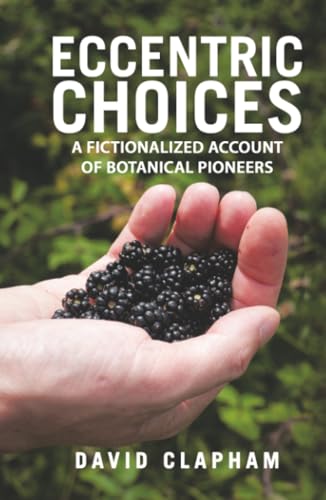
How is life in a lab where people in the early twentieth century are making hugely significant biological discoveries? This fictionalized account opens in 1922 with the fourteen-year-old Len La Cour arriving at the John Innes Horticultural Institution, located in an outer London suburb. The institution is directed by Dr Bateson, a pioneer plant geneticist. He appoints Len as technician because he is the only candidate who can spell microscope. Many of the staff are women, owing to the shortage of male scientists following the Great War, and they create a 'domesticated' working atmosphere, encouraging each other to follow up on their own ideas rather than those passed down from above. Dr Bateson's secretary, librarian, and researcher, Caroline Pellew, takes care of Len and helps him engage with other staff, including Cyril Darlington, who makes outstanding discoveries about chromosomes; J. B. S. Haldane, an eminent evolutionist; and the congenitally deaf and dumb Herbert Osterstock, a plant illustrator. Darlington and Haldane both require scientific enemies as work stimuli. A member of the governing body, A. G. Tansley, an ecological pioneer, introduces Freudian psychology to Britain ahead of the medicals. Rose Scott-Moncrieff, working with Haldane, shows that genes determine enzyme activity. This novel explores the often overlooked or ignored contributions of botanists in the last century, presenting their stories in a fictionalized narrative.
Die Inhaltsangabe kann sich auf eine andere Ausgabe dieses Titels beziehen.
Suchergebnisse für Eccentric Choices: A Fictionalized Account of Botanical...

Beispielbild für diese ISBN
Eccentric Choices (Hardcover)
Print-on-DemandAnbieter: Grand Eagle Retail, Bensenville, IL, USA
Verkäuferbewertung 5 von 5 Sternen

Hardcover. Zustand: new. Hardcover. How is life in a lab where people in the early twentieth century are making hugely significant biological discoveries? This fictionalized account opens in 1922 with the fourteen-year-old Len La Cour arriving at the John Innes Horticultural Institution, located in an outer London suburb. The institution is directed by Dr Bateson, a pioneer plant geneticist. He appoints Len as technician because he is the only candidate who can spell microscope. Many of the staff are women, owing to the shortage of male scientists following the Great War, and they create a 'domesticated' working atmosphere, encouraging each other to follow up on their own ideas rather than those passed down from above. Dr Bateson's secretary, librarian, and researcher, Caroline Pellew, takes care of Len and helps him engage with other staff, including Cyril Darlington, who makes outstanding discoveries about chromosomes; J. B. S. Haldane, an eminent evolutionist; and the congenitally deaf and dumb Herbert Osterstock, a plant illustrator. Darlington and Haldane both require scientific enemies as work stimuli. A member of the governing body, A. G. Tansley, an ecological pioneer, introduces Freudian psychology to Britain ahead of the medicals. Rose Scott-Moncrieff, working with Haldane, shows that genes determine enzyme activity. This novel explores the often overlooked or ignored contributions of botanists in the last century, presenting their stories in a fictionalized narrative. This item is printed on demand. Shipping may be from multiple locations in the US or from the UK, depending on stock availability. Bestandsnummer des Verkäufers 9781663265227
Beispielbild für diese ISBN
Eccentric Choices: A Fictionalized Account of Botanical Pioneers
Anbieter: California Books, Miami, FL, USA
Verkäuferbewertung 5 von 5 Sternen
Zustand: New. Bestandsnummer des Verkäufers I-9781663265227
Neu kaufen
EUR 37,70
Versand gratis
Versand innerhalb von USA
Versand innerhalb von USA
Anzahl: Mehr als 20 verfügbar
Beispielbild für diese ISBN
Eccentric Choices
Anbieter: PBShop.store US, Wood Dale, IL, USA
Verkäuferbewertung 5 von 5 Sternen
HRD. Zustand: New. New Book. Shipped from UK. Established seller since 2000. Bestandsnummer des Verkäufers L2-9781663265227
Neu kaufen
EUR 41,91
Versand gratis
Versand innerhalb von USA
Versand innerhalb von USA
Anzahl: Mehr als 20 verfügbar
Beispielbild für diese ISBN
Eccentric Choices
Anbieter: PBShop.store UK, Fairford, GLOS, Vereinigtes Königreich
Verkäuferbewertung 5 von 5 Sternen
HRD. Zustand: New. New Book. Shipped from UK. Established seller since 2000. Bestandsnummer des Verkäufers L2-9781663265227
Neu kaufen
EUR 37,82
EUR 5,92 Versand
Versand von Vereinigtes Königreich nach USA
Versand von Vereinigtes Königreich nach USA
Anzahl: Mehr als 20 verfügbar
Foto des Verkäufers
Eccentric Choices
Anbieter: Rarewaves.com USA, London, LONDO, Vereinigtes Königreich
Verkäuferbewertung 5 von 5 Sternen
Hardback. Zustand: New. Bestandsnummer des Verkäufers LU-9781663265227
Neu kaufen
EUR 43,90
Versand gratis
Versand von Vereinigtes Königreich nach USA
Versand von Vereinigtes Königreich nach USA
Anzahl: Mehr als 20 verfügbar
Beispielbild für diese ISBN
Eccentric Choices: A Fictionalized Account of Botanical Pioneers
Print-on-DemandAnbieter: Revaluation Books, Exeter, Vereinigtes Königreich
Verkäuferbewertung 5 von 5 Sternen
Hardcover. Zustand: Brand New. 306 pages. 5.74x0.96x8.74 inches. This item is printed on demand. Bestandsnummer des Verkäufers x-1663265224
Neu kaufen
EUR 50,26
EUR 11,80 Versand
Versand von Vereinigtes Königreich nach USA
Versand von Vereinigtes Königreich nach USA
Anzahl: 2 verfügbar
Beispielbild für diese ISBN
Eccentric Choices
Print-on-DemandAnbieter: BuchWeltWeit Ludwig Meier e.K., Bergisch Gladbach, Deutschland
Verkäuferbewertung 5 von 5 Sternen
Buch. Zustand: Neu. This item is printed on demand - it takes 3-4 days longer - Neuware 306 pp. Englisch. Bestandsnummer des Verkäufers 9781663265227
Neu kaufen
EUR 44,40
EUR 23,00 Versand
Versand von Deutschland nach USA
Versand von Deutschland nach USA
Anzahl: 2 verfügbar
Beispielbild für diese ISBN
Eccentric Choices (Hardcover)
Print-on-DemandAnbieter: AussieBookSeller, Truganina, VIC, Australien
Verkäuferbewertung 5 von 5 Sternen
Hardcover. Zustand: new. Hardcover. How is life in a lab where people in the early twentieth century are making hugely significant biological discoveries? This fictionalized account opens in 1922 with the fourteen-year-old Len La Cour arriving at the John Innes Horticultural Institution, located in an outer London suburb. The institution is directed by Dr Bateson, a pioneer plant geneticist. He appoints Len as technician because he is the only candidate who can spell microscope. Many of the staff are women, owing to the shortage of male scientists following the Great War, and they create a 'domesticated' working atmosphere, encouraging each other to follow up on their own ideas rather than those passed down from above. Dr Bateson's secretary, librarian, and researcher, Caroline Pellew, takes care of Len and helps him engage with other staff, including Cyril Darlington, who makes outstanding discoveries about chromosomes; J. B. S. Haldane, an eminent evolutionist; and the congenitally deaf and dumb Herbert Osterstock, a plant illustrator. Darlington and Haldane both require scientific enemies as work stimuli. A member of the governing body, A. G. Tansley, an ecological pioneer, introduces Freudian psychology to Britain ahead of the medicals. Rose Scott-Moncrieff, working with Haldane, shows that genes determine enzyme activity. This novel explores the often overlooked or ignored contributions of botanists in the last century, presenting their stories in a fictionalized narrative. This item is printed on demand. Shipping may be from our Sydney, NSW warehouse or from our UK or US warehouse, depending on stock availability. Bestandsnummer des Verkäufers 9781663265227
Neu kaufen
EUR 49,74
EUR 33,04 Versand
Versand von Australien nach USA
Versand von Australien nach USA
Anzahl: 1 verfügbar
Beispielbild für diese ISBN
Eccentric Choices (Hardcover)
Print-on-DemandAnbieter: CitiRetail, Stevenage, Vereinigtes Königreich
Verkäuferbewertung 5 von 5 Sternen
Hardcover. Zustand: new. Hardcover. How is life in a lab where people in the early twentieth century are making hugely significant biological discoveries? This fictionalized account opens in 1922 with the fourteen-year-old Len La Cour arriving at the John Innes Horticultural Institution, located in an outer London suburb. The institution is directed by Dr Bateson, a pioneer plant geneticist. He appoints Len as technician because he is the only candidate who can spell microscope. Many of the staff are women, owing to the shortage of male scientists following the Great War, and they create a 'domesticated' working atmosphere, encouraging each other to follow up on their own ideas rather than those passed down from above. Dr Bateson's secretary, librarian, and researcher, Caroline Pellew, takes care of Len and helps him engage with other staff, including Cyril Darlington, who makes outstanding discoveries about chromosomes; J. B. S. Haldane, an eminent evolutionist; and the congenitally deaf and dumb Herbert Osterstock, a plant illustrator. Darlington and Haldane both require scientific enemies as work stimuli. A member of the governing body, A. G. Tansley, an ecological pioneer, introduces Freudian psychology to Britain ahead of the medicals. Rose Scott-Moncrieff, working with Haldane, shows that genes determine enzyme activity. This novel explores the often overlooked or ignored contributions of botanists in the last century, presenting their stories in a fictionalized narrative. This item is printed on demand. Shipping may be from our UK warehouse or from our Australian or US warehouses, depending on stock availability. Bestandsnummer des Verkäufers 9781663265227
Neu kaufen
EUR 41,90
EUR 43,65 Versand
Versand von Vereinigtes Königreich nach USA
Versand von Vereinigtes Königreich nach USA
Anzahl: 1 verfügbar
Beispielbild für diese ISBN
Eccentric Choices : A Fictionalized Account of Botanical Pioneers
Print-on-DemandAnbieter: AHA-BUCH GmbH, Einbeck, Deutschland
Verkäuferbewertung 5 von 5 Sternen
Buch. Zustand: Neu. nach der Bestellung gedruckt Neuware - Printed after ordering - How is life in a lab where people in the early twentieth century are making hugely significant biological discoveries This fictionalized account opens in 1922 with the fourteen-year-old Len La Cour arriving at the John Innes Horticultural Institution, located in an outer London suburb. The institution is directed by Dr Bateson, a pioneer plant geneticist. He appoints Len as technician because he is the only candidate who can spell microscope. Many of the staff are women, owing to the shortage of male scientists following the Great War, and they create a 'domesticated' working atmosphere, encouraging each other to follow up on their own ideas rather than those passed down from above. Dr Bateson's secretary, librarian, and researcher, Caroline Pellew, takes care of Len and helps him engage with other staff, including Cyril Darlington, who makes outstanding discoveries about chromosomes; J. B. S. Haldane, an eminent evolutionist; and the congenitally deaf and dumb Herbert Osterstock, a plant illustrator. Darlington and Haldane both require scientific enemies as work stimuli. A member of the governing body, A. G. Tansley, an ecological pioneer, introduces Freudian psychology to Britain ahead of the medicals. Rose Scott-Moncrieff, working with Haldane, shows that genes determine enzyme activity.This novel explores the often overlooked or ignored contributions of botanists in the last century, presenting their stories in a fictionalized narrative. Bestandsnummer des Verkäufers 9781663265227
Neu kaufen
EUR 52,06
EUR 35,00 Versand
Versand von Deutschland nach USA
Versand von Deutschland nach USA
Anzahl: 2 verfügbar