
Verwandte Artikel zu A History of the Amish: Third Edition
Inhaltsangabe
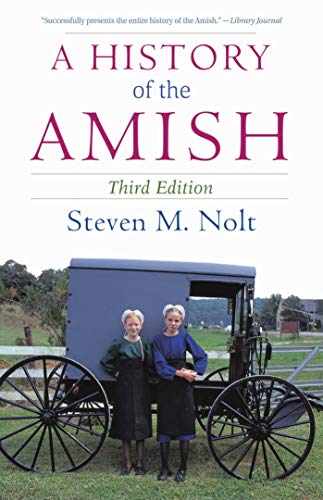
Authoritative, thorough, and interestingly written, A History of the Amish presents the deep and rich heritage of the Amish people with dozens of illustrations and updated statistics.
The Amish, one of America’s most intriguingly private, unique, and often misunderstood religious communities, have survived for three hundred years! How has that happened?
While much has been written on the Amish, little has been revealed about their history. This book brings together in one volume a thorough history of the Amish people. From their beginnings in Europe through their settlement in North America, the Amish have struggled to maintain their beliefs and traditions in often hostile settings. Chapters include:
- Migration and Persistence: The Amish in Europe, 1693-1801
- Settlement and Struggle in a New World: The Amish in Eighteenth Century Pennsylvania
- Merging Traditions: Amish Mennonites and Mennonites in North America and Europe, 1870-1937
- Finding a Place in Modern America, 1900-1945
- And more!
Now updated, the book gives an in-depth look at how the modern Amish church continues to grow and change. It covers recent developments in new Amish settlements, the community’s conflict and negotiation with government, the Nickel Mines school shooting, and the media’s constant fascination with this religious people, from reality TV shows to romance novels.
Die Inhaltsangabe kann sich auf eine andere Ausgabe dieses Titels beziehen.
Über die Autorin bzw. den Autor
Steven M. Nolt is a professor at Goshen College, where he teaches American history and Mennonite history. Over the past twenty years he has visited dozens of Amish communities in numerous states and in Ontario, doing numerous research projects. Nolt’s PhD is from the University of Notre Dame. He is the author or coauthor of a dozen books, most recently The Amish and Seeking Places of Peace, the North American volume in the Global Mennonite History series. He lives near Goshen, Indiana.
Auszug. © Genehmigter Nachdruck. Alle Rechte vorbehalten.
A History of the Amish
By Steven M. NoltSkyhorse Publishing
Copyright © 2015 Good Books, an imprint of Skyhorse Publishing, Inc.
All rights reserved.
ISBN: 978-1-68099-065-2All rights reserved.
Contents
Acknowledgments,
1. A Reformation Heritage,
2. Amish Beginnings, 1693-1712,
3. Migration and Persistence: The Amish in Europe, 1693-1801,
4. Settlement and Struggle in a New World: The Amish in Eighteenth-Century Pennsylvania,
5. A Time of Testing: The Amish in Europe, 1790-1860,
6. Prosperity and Promise in North America, 1800-1865,
7. Years of Division, 1850-1878,
8. Merging Traditions: Amish Mennonites and Mennonites in North America and Europe, 1870-1937,
9. Preservation and Perseverance: Old Order Amish, 1865-1900,
10. Finding a Place in Modern America, 1900-1945,
11. Conflict, Compromise, and Renewal, 1945-1975,
12. Peoplehood in the Midst of Modernity,
Endnotes,
Bibliography,
Index,
About the Author,
CHAPTER 1
A Reformation Heritage
"We have been united to stand fast in the Lord."
— Anabaptist leaders, 1527
A peculiar people in a land of grand expectations
For many Americans, the early 1960s seemed an era of buoyant optimism and impressive progress. Poverty rates were falling, life expectancy increasing, and modern medicine promised to end a host of dread diseases. A decade and a half of economic growth had boosted national and personal incomes to new heights and with it remarkable new consumer goods, from air conditioning to transistor radios. Weather satellites, jet airplanes, and other technological wonders gave people confidence that President John Kennedy was right when he vowed that humans would walk on the moon before the decade ended. Undergirding national prosperity was an expanding system of education and technical know-how, and the security that came from residing within the boundaries of a superpower whose global influence and military muscle supported an "American way of life." Cold war tensions could put people on edge, but in the years before a deepening war in Vietnam, the assassination of Martin Luther King, or the cynicism of Watergate, the spirit of the times was one of grand expectation.
Near the crossroads community of Winesburg, in eastern Holmes County, Ohio, thirty-one-year-old Elizabeth Miller was not so sure. That year, Miller, an Old Order Amish farm wife and mother, penned several essays on church history and contemporary life. Apparently well-read and familiar with current events, Miller was nonplussed by many of the developments that others took to be progress. She had heard the puzzled questions often enough: "Don't [you] care for the use of electricity and the pleasure of owning an automobile?"
"Surely Christ would not have led a homeless poor life as he did" if it wasn't "necessary for a follower of Christ to live a humble life" as well, Miller reasoned, but in a society celebrating abundance it was difficult to explain why her family did not seek "anything more than what is needed to live." Yet modernity bore more than curious questions. It had a coercive edge. Miller felt mounting pressure on Amish parents to send their youth to consolidated high schools that featured "basketball games, dances, [and] shows" and that assumed one can "learn to plow straight by reading how to do it," rather than getting one's hands dirty through experience. In response to state demands, faithful Amish "mothers and fathers sorrowfully have been apprehended and served prison terms" rather than subject "their beloved children" to such higher schooling.
In some ways, Miller's reflections on life in the 1960s expressed noticeably American themes. She condemned "godless communism," for example, and gave money to the Red Cross and to fund a cure for polio. But her brand of patriotism differed from those who "believe in fighting for their country ... with guns and bombs." She knew that the pacifist Amish "are looked upon with scorn because they refuse to take up arms." She had attended the court hearings of Amish men sent to prison by military draft boards. Rather than seeing better days ahead, Miller wondered aloud whether her people could persevere in an environment where those "in high places who administer the laws" considered the Amish "ignorant, illiterate, and unlettered."
A half century later, Miller's community of faith has not only persisted in the midst of hypermodern society, but is a growing, vibrant group. As a "plain and peculiar people," in Miller's self-description, the Amish attract the attention of tourists and mass marketers who see the Amish as everything from examples of nostalgic conservatism to icons of postmodern environmentalism. For their part, the Amish insist they are not exactly any of these things. They are not timeless figures frozen in the past, nor the poster-children of political activists. Taken on their own terms, the Old Order Amish are a community that takes seriously the task of personal discipleship and collective witness to a particular Christian way of life that values humility, simplicity, and obedience. From their 1693 beginnings in Switzerland and the south Rhine Valley, to their immigration to North America and settlement in thirty U.S. states and the province of Ontario, the Amish have charted a distinctive history. At times, like Elizabeth Miller's musing on current events, that story has been recognizably North American, yet it has also been markedly different from the dominant narrative of individual achievement and scientific progress that has shaped modern life.
One of the striking features of Elizabeth Miller's writing was the ease with which she invoked the past. Her reflections on the present instinctively and repeatedly turned to stories from Amish history and accounts from old church martyr books. That Miller situated her people's contemporary life in a long tradition of dissenting and suffering forebears is no surprise. The Amish are one of several spiritual heirs of the Protestant Reformation's Anabaptist movement, and the source of Miller's faith had roots deep in sixteenth-century Europe.
Turbulent times
In the early 1500s, an array of political and economic woes troubled Western Europe. For more than fifty years, a population explosion had seemed to outstrip the continent's ability to feed itself. The Spanish conquistadors, who brought news of exotic "new worlds" across the sea, also brought shiploads of silver, plundered from the Americas. This destabilized European economies, producing inflation of prices and rents that drove land-owning peasants into poverty. In towns and cities, a growing class of wealthy merchants and craftspeople challenged the authority of hereditary nobles, while university scholars and disgruntled students voiced sharp criticism of public corruption.
The growing power of the Ottoman Turks to the east threatened Western Europeans' sense of security. Kings struggled not only to wrest power and authority from local nobles, but also from rival monarchs. Anxiety only grew as the printing press seemed to shrink the European world. No longer were events in Paris and Vienna so distant. The printed page relayed messages of trouble, defeat, and social unrest from city to city in a matter of days. Free from direct state control, the new press circulated ideas and arguments in a way that often increased unease and discontent.
Amid all the turbulence, however, the church had still stitched the social fabric together. For more than a thousand years, Western Europe had been united in "One Holy...
„Über diesen Titel“ kann sich auf eine andere Ausgabe dieses Titels beziehen.
Suchergebnisse für A History of the Amish: Third Edition

Beispielbild für diese ISBN
A History of the Amish: Third Edition
Anbieter: New Legacy Books, Annandale, NJ, USA
Verkäuferbewertung 5 von 5 Sternen

paperback. Zustand: Good. Fast shipping and order satisfaction guaranteed. A portion of your purchase benefits Non-Profit Organizations, First Aid and Fire Stations! Bestandsnummer des Verkäufers mon0000162738
Gebraucht kaufen
EUR 2,79
EUR 2,17 Versand
Versand innerhalb von USA
Versand innerhalb von USA
Anzahl: 1 verfügbar
Beispielbild für diese ISBN
A History of the Amish
Anbieter: ThriftBooks-Dallas, Dallas, TX, USA
Verkäuferbewertung 5 von 5 Sternen
Paperback. Zustand: Good. No Jacket. Pages can have notes/highlighting. Spine may show signs of wear. ~ ThriftBooks: Read More, Spend Less. Bestandsnummer des Verkäufers G1680990659I3N00
Gebraucht kaufen
EUR 5,82
Versand gratis
Versand innerhalb von USA
Versand innerhalb von USA
Anzahl: 3 verfügbar
Beispielbild für diese ISBN
A History of the Amish
Anbieter: ThriftBooks-Atlanta, AUSTELL, GA, USA
Verkäuferbewertung 5 von 5 Sternen
Paperback. Zustand: Good. No Jacket. Pages can have notes/highlighting. Spine may show signs of wear. ~ ThriftBooks: Read More, Spend Less. Bestandsnummer des Verkäufers G1680990659I3N00
Gebraucht kaufen
EUR 5,82
Versand gratis
Versand innerhalb von USA
Versand innerhalb von USA
Anzahl: 3 verfügbar
Beispielbild für diese ISBN
A History of the Amish
Anbieter: ThriftBooks-Dallas, Dallas, TX, USA
Verkäuferbewertung 5 von 5 Sternen
Paperback. Zustand: Fair. No Jacket. Readable copy. Pages may have considerable notes/highlighting. ~ ThriftBooks: Read More, Spend Less. Bestandsnummer des Verkäufers G1680990659I5N00
Gebraucht kaufen
EUR 5,82
Versand gratis
Versand innerhalb von USA
Versand innerhalb von USA
Anzahl: 1 verfügbar
Beispielbild für diese ISBN
A History of the Amish
Anbieter: ThriftBooks-Dallas, Dallas, TX, USA
Verkäuferbewertung 5 von 5 Sternen
Paperback. Zustand: As New. No Jacket. Pages are clean and are not marred by notes or folds of any kind. ~ ThriftBooks: Read More, Spend Less. Bestandsnummer des Verkäufers G1680990659I2N00
Gebraucht kaufen
EUR 5,82
Versand gratis
Versand innerhalb von USA
Versand innerhalb von USA
Anzahl: 1 verfügbar
Beispielbild für diese ISBN
A History of the Amish
Anbieter: ThriftBooks-Atlanta, AUSTELL, GA, USA
Verkäuferbewertung 5 von 5 Sternen
Paperback. Zustand: Fair. No Jacket. Readable copy. Pages may have considerable notes/highlighting. ~ ThriftBooks: Read More, Spend Less. Bestandsnummer des Verkäufers G1680990659I5N00
Gebraucht kaufen
EUR 5,82
Versand gratis
Versand innerhalb von USA
Versand innerhalb von USA
Anzahl: 1 verfügbar
Beispielbild für diese ISBN
A History of the Amish: Third Edition
Anbieter: HPB-Emerald, Dallas, TX, USA
Verkäuferbewertung 5 von 5 Sternen
Paperback. Zustand: Very Good. Connecting readers with great books since 1972! Used books may not include companion materials, and may have some shelf wear or limited writing. We ship orders daily and Customer Service is our top priority! Bestandsnummer des Verkäufers S_472860997
Gebraucht kaufen
EUR 2,69
EUR 3,26 Versand
Versand innerhalb von USA
Versand innerhalb von USA
Anzahl: 1 verfügbar
Beispielbild für diese ISBN
A History of the Amish: Third Edition
Anbieter: Half Price Books Inc., Dallas, TX, USA
Verkäuferbewertung 5 von 5 Sternen
Paperback. Zustand: Very Good. Connecting readers with great books since 1972! Used books may not include companion materials, and may have some shelf wear or limited writing. We ship orders daily and Customer Service is our top priority! Bestandsnummer des Verkäufers S_453582080
Gebraucht kaufen
EUR 2,91
EUR 3,26 Versand
Versand innerhalb von USA
Versand innerhalb von USA
Anzahl: 1 verfügbar
Foto des Verkäufers
A History of the Amish: Third Edition
Anbieter: Blue Vase Books, Interlochen, MI, USA
Verkäuferbewertung 5 von 5 Sternen
Zustand: good. The item shows wear from consistent use, but it remains in good condition and works perfectly. All pages and cover are intact including the dust cover, if applicable . Spine may show signs of wear. Pages may include limited notes and highlighting. May NOT include discs, access code or other supplemental materials. Bestandsnummer des Verkäufers 31UEZG000X19_ns
Gebraucht kaufen
EUR 6,31
Versand gratis
Versand innerhalb von USA
Versand innerhalb von USA
Anzahl: 1 verfügbar
Beispielbild für diese ISBN
A History of the Amish
Anbieter: ThriftBooks-Reno, Reno, NV, USA
Verkäuferbewertung 5 von 5 Sternen
Paperback. Zustand: Fair. No Jacket. Readable copy. Pages may have considerable notes/highlighting. ~ ThriftBooks: Read More, Spend Less. Bestandsnummer des Verkäufers G1680990659I5N00
Gebraucht kaufen
EUR 6,35
Versand gratis
Versand innerhalb von USA
Versand innerhalb von USA
Anzahl: 1 verfügbar