
Verwandte Artikel zu Second Lives, Second Chances: A Surgeon's Stories...
Inhaltsangabe
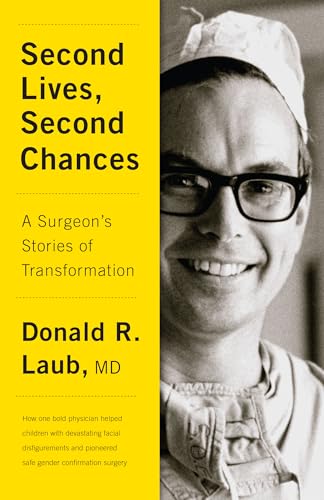
Sensitive targeting on social mediaLean in on reviews and coverageOutreach to organization newslettersPitch to book trade publications, i.e., Kirkus Reviews, Publishers Weekly, Booklist, Library Journal, Shelf AwarenessPitch to Bay Area media, i.e., SF Weekly, Seattle Times, etc.Pitch to medical and professional journals, publications, and websites, i.e., ReSurge publications, Medical Xpress, Everyday Health, STAT, etc.Pitch to LGBTQ+ publications, i.e., Over the Rainbow Books, Xtra, The Advocate, Gay & Lesbian Review, LGBT-Today.com, The Rainbow Times, The TransGen Times, etc.Pitch for reviews and lifestyle features in major dailies across North America, i.e., New York Times, Minneapolis Star Tribune, New Statesman, Wall Street Journal, Washington Post, etc. Short DescriptionThrough his work in plastic and reconstructive surgery, Dr. Laub changed the lives of thousands of patients, and fostered the development of key areas in surgery: pioneering humanitarian medical missions in the developing world, revolutionizing gender affirmation surgery, and mentoring over 50 surgeons.Sales and Market BulletsGender affirmation surgeries are being talked about more openly. As of 2016, approximately 1.4 million adults in the U.S. identify as transgender.Cleft lip and palates occur in 1 to 2 per 1000 births in the developed world (Watkins, Meyer, Strauss, and Aylsworth, “Classification, Epidemiology, and Genetics of Orofacial Clefts”).AudienceNonfiction readersFans of medical nonfictionSan Francisco regional appeal due to author’s locationAge 25–55Liberal/Left leaning The engrossing memoir of a plastic and reconstructive surgeon involved in groundbreaking and life-changing proceduresThrough his work in plastic and reconstructive surgery, Dr. Donald Laub changed the lives of thousands of people who had been shunned by society. Dr. Laub’s influence fostered the development of three key areas in the surgical profession: pioneering and influencing international humanitarian medical missions in the developing world, being at the forefront of gender affirmation surgery for transgender people since 1968, and the education and training of over 50 plastic and reconstructive surgeons.His unstinting efforts to surgically correct cleft palates gave new lives to thousands of children in developing countries. As one of the original surgeons to perform gender affirmation surgery, Laub not only continually improved on his methods, but he also became a tireless advocate for the rights of transgender people. His non-profit foundation (Interplast, now called ReSurge International) has sent thousands of multidisciplinary teams to perform transformative and reconstructive surgery in the developing world. Second Lives, Second Chances is more than just a memoir; it’s a testament to how the determination of one person can bring others together to make a lasting difference in the world.
Die Inhaltsangabe kann sich auf eine andere Ausgabe dieses Titels beziehen.
Über die Autorin bzw. den Autor
Dr. Donald Laub was chief of plastic surgery at Stanford University School of Medicine from 1968 to 1980 before entering private practice. In 1969, he founded ReSurge International, the first organization to advance the idea that plastic surgeons could help those in the developing world with injuries or congenital conditions. In the 1970s, he was a pioneer in gender reassignment surgery in the U.S. Dr. Laub lives in Redwood City, California.
Auszug. © Genehmigter Nachdruck. Alle Rechte vorbehalten.
Second Lives, Second Chances
A Surgeon's Stories of Transformation
By Donald R. LaubECW PRESS
Copyright © 2019 Donald R. Laub, M.D.
All rights reserved.
ISBN: 978-1-77041-467-9All rights reserved.
Contents
Introduction,
Brains and Brawls,
One Amazed and Sockless,
Two Cut to the Chase,
Three Practically Pluripotent,
Four Plans A through D,
Five The Perfect Smile,
Six The Right Thing,
Seven Interplast Flies High,
Eight Shape Shifting,
Nine The President Versus the Nun,
Ten The Gun That Won the West,
Eleven The Rolls-Royce Vagina and the Postmodern Penis,
Twelve The Cast of Characters (and Characters in Casts),
Thirteen The Old Order Changeth,
Fourteen The History of My Head,
Fifteen Doctorgenarian,
Acknowledgments,
About the Author,
Copyright,
CHAPTER 1
Amazed and Sockless
I became a doctor because my father didn't, and I became a plastic and reconstructive surgeon because of a maroon Cadillac, a bunch of high school bullies who threatened to beat the crap out of me, and an embarrassing DIY tattoo.
But perhaps the path was laid even earlier.
I was almost born on December 31, 1934, at 11:38 p.m., but the doctor pushed my head back into the birth canal to await the stroke of midnight. I was unable to be brought down again by my mother's efforts, and the doctor had to extract me using forceps. I was the first baby born in Milwaukee in 1935, and my picture was in the newspaper. The pressure of the forceps accounted for a small bald area on the right side of my forehead and may, some members of my family think, be responsible for a lifetime of outside-the-box behavior. I was the second of four children, three boys and a girl. We all went to Catholic school. My father, Rudolf Laub, sold insurance, and my mother, Ella Donnersberger Laub, not only made a safe and happy home but was an energetic organizer of community projects and probably ought to have run for elected office.
Growing up in the Milwaukee suburb of Shorewood, a place with lots of elm trees and plenty of parental emphasis on education, our crew — me and the six boys I'd hung out with since kindergarten — stood out for our swagger. Or so we thought. During our freshman year at Marquette University High School, my best friend, Bill Griffith, had the habit of borrowing his father's new maroon Cadillac while his parents were at church on Tuesday evenings. He'd hotwire the car in the church parking lot by shoving a silver dollar under the ignition. Then all of us would drive around town pretending we were adults. We'd return the Cadillac just before the service let out, hoping we'd get the same parking spot. We were never caught.
One night we got cocky; we took the car right from the Griffiths' garage and drove to a football game, our school versus Whitefish Bay High School. While we were strutting around during halftime thinking we were pretty tough, some much bigger, much tougher Whitefish Bay boys picked a fight. Outmatched, we ran to take refuge in the Cadillac and locked ourselves inside. But the Whitefish Bay boys jumped up on the hood, tried to smash the windows, and put a dent in the rear fender that was detected the next morning by Dr. Griffith, Bill's father. Griff got a good licking from his mother, a tough German lady.
The seven of us dedicated ourselves to revenge, determined to beat up those Whitefish Bay guys. We taught ourselves ju-jitsu from a library book and took some rather extreme steps in our quest to toughen up. Dan Riordan cut the veins on his wrists with his hunting knife, and we drank his blood. Jack Slater fashioned some brass knuckles by pouring molten lead into a homemade plaster mold of his fist. I burned my initials, DRL, into my forearm with a cigarette in order to prove that pain could be overcome by the force of the brain — mind over matter, à laLawrence of Arabia. I washed the wound with alcohol daily to prevent infection, and I wore a long-sleeved shirt for a couple of months so my mother couldn't see what I'd done. When the burn scabbed over and healed, my initials stood out in white. I also demonstrated the concept of mind over matter — and my toughness — by eating dirt and, I'm chagrined to recall, personal waste products. I was willing to eat shit to prove to my pals that I was a wild man.
Our self-confidence increased significantly. The next year, at the same game, we found that the menacing Whitefish Bay gang had somehow shrunken in size and ferocity. We threatened them, and they backed away before we could deliver justice.
After high school, I enrolled at Marquette University as a business major, because my father ran an insurance agency and I thought I should follow in his footsteps. I realized after two days that I hated the subject and consulted my dad. "Why did you go to business school?" he asked.
"Because you're a businessman and I was following you," I said. "What would you do if you were me?" He said he would be a doctor and told me something I'd never known — that he'd started medical school in Milwaukee but had to drop out because he couldn't afford tuition. I'd had no idea about this episode in his life, and I dearly wish now that I'd asked him more about it. The day after our talk, I switched to pre-med and instantly loved the course of study. The change also helped me make good on a rather rash promise I'd made to God in a moment of panic as a young teenager — a vow to do great good for humanity in a very particular way. I'd figured that I could keep the promise working in business by making loads of money and then giving a bunch to charity — the Robin Hood theory. But medicine would offer a more direct approach to good deeds, and the thought of becoming a healer felt much truer to my original pledge.
When I was fourteen and an enthusiastic Boy Scout, I belonged to the Wolf Pack Unit. We practiced our howls and qualified for woodsmanship badges explained in the Boy Scout Handbook, which was written by a naturalist I admired, Ernest Thompson Seton, the author of Wild Animals I Have Known. I wanted to know some wild animals, too. I thought I might get the chance when my family decided to road test a stretch of a new highway to Canadian gold country. We drove through Wisconsin and Minnesota and into Ontario, Canada, as far as a lodge at Cliff Lake, to catch walleyes and muskies. After a day of fishing and dinner at the lodge, it was still light. I hoped to hear some wolves, so I set out on a hike. I was sure I'd be fine because I had a hatchet, and I'd learned as a Boy Scout that I'd never get lost if I notched trees as I went so I could find my way back. Wolves were indeed starting to howl. Wonderful! I tried to follow the sound, and soon, despite my faithful notching, I was utterly lost, and it was dark. I tried looking for moss to indicate the north side of a tree, another Boy Scout trick, but I found none. So I built a shelter out of branches — that's what Ernest Thompson Seton would do — intending to spend the night, though I was terrified that wolves would attack. I lay down on some springy pine boughs and thought, What are you doing? No one knows where you are, and there are wolves! Get the hell out of here. I swore to God that if I got rescued and lived, I would become a priest.
Then I remembered another Boy Scout trick that had slipped my mind: follow a creek downhill to a bigger creek, then follow that creek to a river. This system led me back to Cliff Lake. I...
„Über diesen Titel“ kann sich auf eine andere Ausgabe dieses Titels beziehen.
Suchergebnisse für Second Lives, Second Chances: A Surgeon's Stories...

Beispielbild für diese ISBN
Second Lives, Second Chances: A Surgeon's Stories of Transformation
Anbieter: World of Books (was SecondSale), Montgomery, IL, USA
Verkäuferbewertung 5 von 5 Sternen

Hardback. Zustand: Good. Through his work in plastic and reconstructive surgery, Dr. Donald Laub changed the lives of thousands of people who had been shunned by society. Dr. Laub's influence fostered the development of three key areas in the surgical profession: pioneering and influencing international humanitarian medical missions in the developing world, being at the forefront of gender affirmation surgery for transgender people since 1968, and the education and training of over 50 plastic and reconstructive surgeons. Bestandsnummer des Verkäufers CIN1770414673G
Gebraucht kaufen
EUR 9,11
Versand gratis
Versand innerhalb von USA
Versand innerhalb von USA
Anzahl: 1 verfügbar
Beispielbild für diese ISBN
Second Lives, Second Chances: A Surgeon's Stories of Transformation
Anbieter: World of Books Inc, Montgomery, IL, USA
Verkäuferbewertung 4 von 5 Sternen

Hardback. Zustand: Good. Through his work in plastic and reconstructive surgery, Dr. Donald Laub changed the lives of thousands of people who had been shunned by society. Dr. Laub's influence fostered the development of three key areas in the surgical profession: pioneering and influencing international humanitarian medical missions in the developing world, being at the forefront of gender affirmation surgery for transgender people since 1968, and the education and training of over 50 plastic and reconstructive surgeons. Bestandsnummer des Verkäufers CIN1770414673G
Gebraucht kaufen
EUR 10,95
Versand gratis
Versand innerhalb von USA
Versand innerhalb von USA
Anzahl: 1 verfügbar
Beispielbild für diese ISBN
Second Lives, Second Chances: A Surgeon's Stories of Transformation
Anbieter: ThriftBooks-Dallas, Dallas, TX, USA
Verkäuferbewertung 5 von 5 Sternen
Hardcover. Zustand: Very Good. No Jacket. Former library book; May have limited writing in cover pages. Pages are unmarked. ~ ThriftBooks: Read More, Spend Less. Bestandsnummer des Verkäufers G1770414673I4N10
Gebraucht kaufen
EUR 12,79
Versand gratis
Versand innerhalb von USA
Versand innerhalb von USA
Anzahl: 1 verfügbar
Foto des Verkäufers
Second Lives, Second Chances: A Surgeon's Stories of Transformation
Anbieter: Windflower Bookstore, Rockford, IL, USA
Verkäuferbewertung 4 von 5 Sternen
Zustand: new. Bestandsnummer des Verkäufers WFBV.1770414673.N
Neu kaufen
EUR 13,09
EUR 3,56 Versand
Versand innerhalb von USA
Versand innerhalb von USA
Anzahl: 1 verfügbar
Beispielbild für diese ISBN
Second Lives, Second Chances Format: Hardback
Anbieter: INDOO, Avenel, NJ, USA
Verkäuferbewertung 5 von 5 Sternen
Zustand: New. Bestandsnummer des Verkäufers 9781770414679
Neu kaufen
EUR 19,07
Versand gratis
Versand innerhalb von USA
Versand innerhalb von USA
Anzahl: Mehr als 20 verfügbar
Beispielbild für diese ISBN
Second Lives, Second Chances Format: Hardback
Anbieter: INDOO, Avenel, NJ, USA
Verkäuferbewertung 5 von 5 Sternen
Zustand: As New. Unread copy in mint condition. Bestandsnummer des Verkäufers SS9781770414679
Gebraucht kaufen
EUR 19,53
Versand gratis
Versand innerhalb von USA
Versand innerhalb von USA
Anzahl: Mehr als 20 verfügbar
Foto des Verkäufers
Second Lives, Second Chances : A Surgeon's Stories of Transformation
Anbieter: GreatBookPrices, Columbia, MD, USA
Verkäuferbewertung 5 von 5 Sternen
Zustand: As New. Unread book in perfect condition. Bestandsnummer des Verkäufers 34943847
Gebraucht kaufen
EUR 23,32
EUR 2,36 Versand
Versand innerhalb von USA
Versand innerhalb von USA
Anzahl: 15 verfügbar
Foto des Verkäufers
Second Lives, Second Chances : A Surgeon's Stories of Transformation
Anbieter: GreatBookPrices, Columbia, MD, USA
Verkäuferbewertung 5 von 5 Sternen
Zustand: New. Bestandsnummer des Verkäufers 34943847-n
Neu kaufen
EUR 23,59
EUR 2,36 Versand
Versand innerhalb von USA
Versand innerhalb von USA
Anzahl: 15 verfügbar
Foto des Verkäufers
Second Lives, Second Chances
Anbieter: Rarewaves.com USA, London, LONDO, Vereinigtes Königreich
Verkäuferbewertung 5 von 5 Sternen
Hardback. Zustand: New. No Edition. Bestandsnummer des Verkäufers LU-9781770414679
Neu kaufen
EUR 26,03
Versand gratis
Versand von Vereinigtes Königreich nach USA
Versand von Vereinigtes Königreich nach USA
Anzahl: Mehr als 20 verfügbar
Beispielbild für diese ISBN
Second Lives, Second Chances
Anbieter: PBShop.store US, Wood Dale, IL, USA
Verkäuferbewertung 5 von 5 Sternen
HRD. Zustand: New. New Book. Shipped from UK. Established seller since 2000. Bestandsnummer des Verkäufers EB-9781770414679