
Verwandte Artikel zu Against Amazon: and Other Essays (Biblioasis International...
Against Amazon: and Other Essays (Biblioasis International Translation Series, 30, Band 32) - Softcover
Buch 30 von 42: Biblioasis International Translation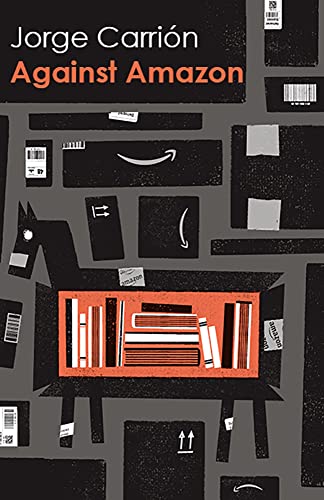
Inhaltsangabe
A NEW YORK TIMES NEW & NOTEWORTHY BOOK
Good bookshops are questions without answers. They are places that provoke you intellectually, encode riddles, surprise and offer challenges … A pleasing labyrinth where you can’t get lost: that comes later, at home, when you immerse yourself in the books you have bought; lose yourself in new questions, knowing you will find answers.
Picking up where the widely praised Bookshops: A Reader’s History left off, Against Amazon and Other Essays explores the increasing pressures of Amazon and other new technologies on bookshops and libraries. In essays on these vital social, cultural, and intellectual spaces, Jorge Carrión travels from London to Geneva, from Miami’s Little Havana to Argentina, from his own well-loved childhood library to the rosewood shelves of Jules Verne’s Nautilus and the innovative spaces that characterize South Korea’s bookshop renaissance. Including interviews with writers and librarians―including Alberto Manguel, Iain Sinclair, Luigi Amara, and Han Kang, among others―Against Amazon is equal parts a celebration of books and bookshops, an autobiography of a reader, a travelogue, a love letter―and, most urgently, a manifesto against the corrosive influence of late capitalism.
Die Inhaltsangabe kann sich auf eine andere Ausgabe dieses Titels beziehen.
Über die Autorin bzw. den Autor
Jorge Carrión’s Bookshops: A Reader’s History, published by Biblioasis in 2017, was universally acclaimed and has appeared in thirteen languages. He is the author of three novels, including Los muertos, which won the 2011 Festival de Chambéry Prize for best first novel in Spanish. Carrión’s journalism appears in the Spanish-language edition of the New York Times and many other newspapers in Europe and the Americas. He lives in Barcelona, where he is the director of the creative writing program at Pompeu Fabra University.
Peter Bush's recent translations include Teresa Solana’s The First Prehistoric Serial Killer and Other Stories, his selection of Barcelona Tales, and Quim Monzó’s Why, Why, Why? In press are Josep Pla’s Salt Water and Juan Francisco de Dios Hernández’s Leonardo Balada: A Transatlantic Gaze; in process, Balzac’s The Lily in the Valley and Najat El Hachmi’s Mother of Milk and Honey. He lives in Oxford, UK.
Auszug. © Genehmigter Nachdruck. Alle Rechte vorbehalten.
Against Amazon: Seven Arguments, One Manifesto
I. Because I don’t want to be an accomplice to symbolic expropriation.
For 55 years that building in Barcelona, one of city’s few examples of modern industrial architecture, was the head office of the publishers Gustavo Gili. Now, after a refurbishment costing several million euros, it has become Amazon’s local center of operations. Thanks to the technology of efficiency and immediacy it houses, Barcelona is now one of the 45 cities in the world where the company guarantees delivery of products in an hour. The Canuda bookshop that shut in 2013 after over 80 years’ of existence is now a gigantic Mango. The Catalònia bookshop, after over a hundred, is now a McDonald’s with a kitsch modernist decor. Expropriation is literal and physical, but also symbolic.
If you enter “Amazon bookshop” on Google, dozens of links appear to Amazon pages that sell bookshelves. As I will never tire of repeating: Amazon is not a bookshop, it is a hypermarket. Its warehouses store books next to toasters, toys or skateboards. In its new physical bookshops books are placed face up, because they only display the 5,000 best-selling books most sought after by their customers, a lot less than the number on the shelves of genuine bookshops that are prepared to take risks. Amazon is now considering whether to repeat the same operation with a chain of small supermarkets. As far as it is concerned there is no difference between a cultural institution and an establishment that sells food and other goods.
Jeff Bezos has a history of lengthy, symbolic expropriation. He plumped for the sale of books rather than electrical goods because he saw a niche in the market: all available titles couldn’t fit in bookshops and he was in a position to offer every single one. In the 1990s there were few large-scale competitors (mainly Barnes & Noble and Borders) and distributors had already adapted their catalogues to the digital age, with ISBN numbers incorporated. That was why Bezos followed a course offered by the American Booksellers Association and in record time appropriated the prestige that books had accumulated over centuries.
Even today, when Amazon produces television series, offers music online, stocks spare parts for cars and motorcycles and is considering whether to become a mobile-phone operator, everybody continues to associate the brand with the object and symbol that we call a book. Kindle, from its launch in 2007, has imitated the form of the printed page and the tone of the ink. Fortunately, for the moment they can’t reproduce on screen the vegetable feel or the smell of lignin. Whether we like it or not, we still cannot remember with the same precision what we read on paper and what we read in an e-book. Architectural transitions happen quickly; mental transitions, less so, fortunately.
II. Because we are all cyborgs, but not robots.
We all carry implants.
We all depend on that prosthetic: our mobile phone.
We are all cyborgs: mainly human, slightly mechanical.
But we don’t want to be robots.
The work Amazon employees have to do is robotic. It was ever thus: in 1994, when five people were working in the garage of Jeff Bezos’s house in Seattle, they were already obsessed about being quick. It has been like that for 20 years, with stories galore of stress, harassment, and inhuman conditions at work to achieve a horrendous efficiency that is only possible if you are a machine.
The Amazonians are now helped by Kiva robots capable of lifting 340 kilo loads and moving at a speed of a meter and a half per second. Synchronized with the human labor-force via an algorithm, they keep themselves busy lifting shelves to facilitate product collection. Once they have gathered the items a customer has purchased, another machine, by the name of Slam, with its huge conveyor belt, sees to the scanning and packaging.
Kiva and Slam are the result of years of research. Amazon commissioned robot competitions within the framework of the Seattle International Conference on Robotics and Automation to perfect the processing of orders. One year the machines designed by MIT or the Technical University in Berlin had to collect up in the shortest time possible a rubber duck, a bag of Oreo biscuits, a toy dog and a book. For Amazon there is no substantial difference between those four items. They are equivalent commodities.
But not for us.
Amazon has gradually eliminated the human factor. In the early years it employed people to write reviews of the books it sold; now there isn’t even mediation in the process of making up and placing a self-published book on the network. It has robotized the chain of distribution and wants us, the consumers, to perform similarly.
But we won’t.
Because for us a book is a book is a book.
And a read―choice or present―is a rite, the echo of an echo of an echo of something that was sacred once.
III. Because I reject hypocrisy.
The great shame of Barcelona, a city with many, excellent bookshops, was the existence for 24 years of the Europa Bookshop, run by the neo-Nazi Pedro Varela, an important center for the diffusion of anti-Semitic ideology.
Fortunately, it closed down last September. Amazon sells a huge number of editions of Mein Kampf, many of them with highly dubious prologues and notes. In fact, the World Jewish Congress alerted the company to the dozens of negationist books it makes available with no obstacle to purchase. In other words, the Europa Bookshop was closed down for inciting hatred, amongst other crimes, but Amazon isn’t. Even though it is a crime to deny the Holocaust in many of the countries where it operates.
Amazon defends its opposition to censorship. That’s why it kept selling, despite the hue-and-cry raised, The Pedophile’s Guide to Love and Pleasure: a Child-lover’s Code of Conduct, by Phillip R. Graves, although they had to withdraw it in the end. Something similar happened with Understanding Loved Boys and Boy-lovers, by David L. Riegel. Amazon defended giving its customers the opportunity to access those books promoting the sensual love of children, just as it did with books promoting Nazi ideas, because supposedly it doesn’t want to censor. However, the truth is it censors or privileges books to suit its own interests. During its dispute with the Hachette publishing group a couple of years ago, the writer Ursula K. Le Guin denounced the fact that her books were more difficult to find on Amazon while the conflict lasted.
Apparently the only thing that matters is the speed and efficiency of the service. Seemingly there is no mediation. Everything is automatic, almost instantaneous. However, a large economic and political structure exists behind all those individual operations. A structure that puts pressure on publishing houses in order to maximize Amazon’s profits from their products, just as it does on manufacturers of skateboards or producers of frozen pizzas. A macro-structure that determines visibility, access and influence: that is shaping our future.
IV. Because I don’t want to be accomplice to a new empire.
There are no booksellers in Amazon. Human recommendations were eliminated because it was inefficient. Because it torpedoed speed, the only value the company recognizes. Recommendation is in the hands of an algorithm. An algorithm represents the height of fluidity. The machine transforms the customer into the prescriber. Customers who bought this product also bought. Self-publishing puts the process in the hands of...
„Über diesen Titel“ kann sich auf eine andere Ausgabe dieses Titels beziehen.
Suchergebnisse für Against Amazon: and Other Essays (Biblioasis International...

Beispielbild für diese ISBN
Against Amazon: and Other Essays (Biblioasis International Translation Series, 30)
Anbieter: Open Books, Chicago, IL, USA
Verkäuferbewertung 5 von 5 Sternen

paperback. Zustand: Good. Open Books is a nonprofit social venture that provides literacy experiences for thousands of readers each year through inspiring programs and creative capitalization of books. Bestandsnummer des Verkäufers mon0000829996
Gebraucht kaufen
EUR 1,32
EUR 3,44 Versand
Versand innerhalb von USA
Versand innerhalb von USA
Anzahl: 1 verfügbar
Beispielbild für diese ISBN
Against Amazon and Other Essay
Anbieter: World of Books (was SecondSale), Montgomery, IL, USA
Verkäuferbewertung 5 von 5 Sternen
Zustand: Very Good. Item in good condition. Textbooks may not include supplemental items i.e. CDs, access codes etc. Bestandsnummer des Verkäufers 00035677459
Gebraucht kaufen
EUR 4,86
Versand gratis
Versand innerhalb von USA
Versand innerhalb von USA
Anzahl: 1 verfügbar
Beispielbild für diese ISBN
Against Amazon: and Other Essays (Biblioasis International Translation Series, 30)
Anbieter: Half Price Books Inc., Dallas, TX, USA
Verkäuferbewertung 5 von 5 Sternen
paperback. Zustand: Very Good. Connecting readers with great books since 1972! Used books may not include companion materials, and may have some shelf wear or limited writing. We ship orders daily and Customer Service is our top priority! Bestandsnummer des Verkäufers S_379144238
Gebraucht kaufen
EUR 3,77
EUR 3,24 Versand
Versand innerhalb von USA
Versand innerhalb von USA
Anzahl: 1 verfügbar
Beispielbild für diese ISBN
Against Amazon: and Other Essays (Biblioasis International Translation Series, 30)
Anbieter: HPB-Emerald, Dallas, TX, USA
Verkäuferbewertung 5 von 5 Sternen
paperback. Zustand: Very Good. Connecting readers with great books since 1972! Used books may not include companion materials, and may have some shelf wear or limited writing. We ship orders daily and Customer Service is our top priority! Bestandsnummer des Verkäufers S_459625603
Gebraucht kaufen
EUR 4,91
EUR 3,24 Versand
Versand innerhalb von USA
Versand innerhalb von USA
Anzahl: 1 verfügbar
Beispielbild für diese ISBN
Against Amazon : And Other Essays
Anbieter: Better World Books, Mishawaka, IN, USA
Verkäuferbewertung 5 von 5 Sternen
Zustand: Very Good. Former library copy. Pages intact with possible writing/highlighting. Binding strong with minor wear. Dust jackets/supplements may not be included. Includes library markings. Stock photo provided. Product includes identifying sticker. Better World Books: Buy Books. Do Good. Bestandsnummer des Verkäufers 42735968-6
Gebraucht kaufen
EUR 9,00
Versand gratis
Versand innerhalb von USA
Versand innerhalb von USA
Anzahl: 1 verfügbar
Beispielbild für diese ISBN
Against Amazon: and Other Essays: 30 (Biblioasis International Translation Series, 30)
Anbieter: WorldofBooks, Goring-By-Sea, WS, Vereinigtes Königreich
Verkäuferbewertung 5 von 5 Sternen
Paperback. Zustand: Very Good. The book has been read, but is in excellent condition. Pages are intact and not marred by notes or highlighting. The spine remains undamaged. Bestandsnummer des Verkäufers GOR011730087
Gebraucht kaufen
EUR 3,39
EUR 6,54 Versand
Versand von Vereinigtes Königreich nach USA
Versand von Vereinigtes Königreich nach USA
Anzahl: 1 verfügbar
Beispielbild für diese ISBN
Against Amazon: and Other Essays: 30 (Biblioasis International Translation Series, 30)
Anbieter: WorldofBooks, Goring-By-Sea, WS, Vereinigtes Königreich
Verkäuferbewertung 5 von 5 Sternen
Paperback. Zustand: Fine. Bestandsnummer des Verkäufers GOR014563588
Gebraucht kaufen
EUR 3,39
EUR 6,54 Versand
Versand von Vereinigtes Königreich nach USA
Versand von Vereinigtes Königreich nach USA
Anzahl: 1 verfügbar
Foto des Verkäufers
Against Amazon: and Other Essays (Biblioasis International Translation Series, 30)
Anbieter: MusicMagpie, Stockport, Vereinigtes Königreich
Verkäuferbewertung 5 von 5 Sternen
Zustand: Very Good. 1769527591. 1/27/2026 3:26:31 PM. Bestandsnummer des Verkäufers U9781771963039
Gebraucht kaufen
EUR 6,60
EUR 6,41 Versand
Versand von Vereinigtes Königreich nach USA
Versand von Vereinigtes Königreich nach USA
Anzahl: 1 verfügbar
Beispielbild für diese ISBN
Against Amazon: and Other Essays (Biblioasis International Translation Series (30))
Anbieter: Lakeside Books, Benton Harbor, MI, USA
Verkäuferbewertung 5 von 5 Sternen
Zustand: New. Brand New! Not Overstocks or Low Quality Book Club Editions! Direct From the Publisher! We're not a giant, faceless warehouse organization! We're a small town bookstore that loves books and loves it's customers! Buy from Lakeside Books! Bestandsnummer des Verkäufers OTF-S-9781771963039
Neu kaufen
EUR 10,20
EUR 3,44 Versand
Versand innerhalb von USA
Versand innerhalb von USA
Anzahl: Mehr als 20 verfügbar
Beispielbild für diese ISBN
Against Amazon: and Other Essays (Biblioasis International Translation Series, 30)
Anbieter: Gulf Coast Books, Cypress, TX, USA
Verkäuferbewertung 5 von 5 Sternen
paperback. Zustand: New. Bestandsnummer des Verkäufers 1771963034-11-31347927