
Verwandte Artikel zu Prophet at the Gate: Norman Murray Bell and the Quest...
Inhaltsangabe
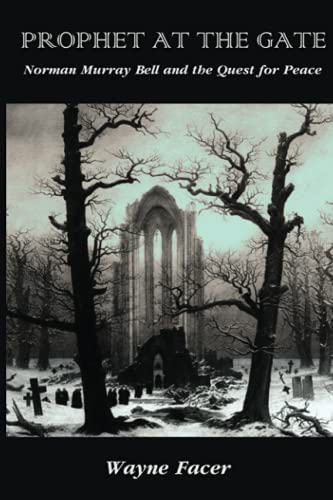
Norman Murray Bell (1887-1962) may be regarded as a prophet: a person who speaks in a visionary way about a cause. His cause was peace. His life provides a window into the peace movement in New Zealand, particularly during the period between the two world wars. Bell was educated at New Zealand’s oldest and most prestigious Church of England school, Christ’s College in Christchurch. There he was confirmed into the Anglican Church and, in keeping with the school’s military ethos with the ideals of honour and duty, trained in the army cadets. He graduated from the University of New Zealand with a BA and MA in classics and chemistry in 1909. His academic career in New Zealand culminated in an award that would take him to Trinity College, Cambridge University.At Trinity College from 1909 to 1912, he completed his BA with first-class honours and won the College Classics prize. He was a visiting researcher in the Chemistry Department at the University of Liverpool between 1913 and 1914. He spent one academic year at St Andrews University as a research student in Education, then spent a year studying Philosophy of Science at Bern University in Switzerland, 1915-1916. During this time, Bell was also studying theology at London University. It is most likely at this time that he developed his ideas about pacifism, which he saw as intricately linked to his Christian belief. Upon his return to New Zealand in 1917, Bell, now twenty-nine years old, obtained a teaching position at Christchurch Boys High School. His tenure as a teacher would be short-lived, however. As a pacifist, he ran up against the requirements of the Military Service Act 1916, which required the registration of all non-Māori men between the ages of 20 to 46 years. Publicly known to be a religious objector, Bell was arrested for breach of the Act. Eventually he was convicted at a district court-martial of disobeying lawful commands given by a superior officer and sentenced to two years’ imprisonment with hard labour. Following his release from prison, his political ambitions were thwarted by legal restrictions which deprived conscientious objectors of their civil rights. Prohibited from any government-related work, such as a university college teacher, he supported himself as a private instructor for secondary students and a part-time Tutor in sociology for the Workers’ Educational Association. Throughout the 1920s and 30s Bell campaigned on the political front: by 1934 he was national president of the No More War campaign, which functioned in tandem with the Free Religious Movement. In 1930 he experienced a unique psychological event which transformed his life. In a period of altered consciousness, he saw the web of life that connected all living things. After this revelation, while continuing his work with the National Peace Council, No More War Movement and the Movement Against War and Fascism, he embraced the creed of vegetarianism and expounded it with unsurpassed zeal. During World War II Bell struggled to publish his pacifist journal Cosmos, printing it by hand and delivering copies on foot. His home was often raided by the police, at the instigation of the security authorities searching for evidence of any seditious activities. After the war he could be found with a chair and small table sitting in Cathedral Square, the heart of Christchurch, with his petition calling for people to sign up opposing all war, especially nuclear war, and seeking support for animal welfare. But his journey did not quite end with his death in 1962. Having provided in his will that his estate be spent on 30 years of newspaper advertisements calling for peace between humans and domesticated animals, he ensured that he would speak beyond his age and time.
Die Inhaltsangabe kann sich auf eine andere Ausgabe dieses Titels beziehen.
Suchergebnisse für Prophet at the Gate: Norman Murray Bell and the Quest...

Beispielbild für diese ISBN
Prophet at the Gate: Norman Murray Bell and the Quest for Peace
Anbieter: GreatBookPrices, Columbia, MD, USA
Verkäuferbewertung 5 von 5 Sternen

Zustand: As New. Unread book in perfect condition. Bestandsnummer des Verkäufers 43070256
Gebraucht kaufen
EUR 14,99
EUR 2,27 Versand
Versand innerhalb von USA
Versand innerhalb von USA
Anzahl: Mehr als 20 verfügbar
Beispielbild für diese ISBN
Prophet at the Gate: Norman Murray Bell and the Quest for Peace
Anbieter: GreatBookPrices, Columbia, MD, USA
Verkäuferbewertung 5 von 5 Sternen
Zustand: New. Bestandsnummer des Verkäufers 43070256-n
Neu kaufen
EUR 15,33
EUR 2,27 Versand
Versand innerhalb von USA
Versand innerhalb von USA
Anzahl: Mehr als 20 verfügbar
Beispielbild für diese ISBN
Prophet at the Gate: Norman Murray Bell and the Quest for Peace
Anbieter: California Books, Miami, FL, USA
Verkäuferbewertung 4 von 5 Sternen

Zustand: New. Bestandsnummer des Verkäufers I-9781775355656
Neu kaufen
EUR 17,67
Versand gratis
Versand innerhalb von USA
Versand innerhalb von USA
Anzahl: Mehr als 20 verfügbar
Foto des Verkäufers
Prophet at the Gate
Anbieter: Rarewaves.com USA, London, LONDO, Vereinigtes Königreich
Verkäuferbewertung 5 von 5 Sternen
Paperback. Zustand: New. Bestandsnummer des Verkäufers LU-9781775355656
Neu kaufen
EUR 17,72
Versand gratis
Versand von Vereinigtes Königreich nach USA
Versand von Vereinigtes Königreich nach USA
Anzahl: Mehr als 20 verfügbar
Beispielbild für diese ISBN
Prophet at the Gate
Print-on-DemandAnbieter: PBShop.store US, Wood Dale, IL, USA
Verkäuferbewertung 5 von 5 Sternen
PAP. Zustand: New. New Book. Shipped from UK. THIS BOOK IS PRINTED ON DEMAND. Established seller since 2000. Bestandsnummer des Verkäufers L0-9781775355656
Neu kaufen
EUR 19,40
Versand gratis
Versand innerhalb von USA
Versand innerhalb von USA
Anzahl: Mehr als 20 verfügbar
Beispielbild für diese ISBN
Prophet at the Gate
Print-on-DemandAnbieter: PBShop.store UK, Fairford, GLOS, Vereinigtes Königreich
Verkäuferbewertung 5 von 5 Sternen
PAP. Zustand: New. New Book. Delivered from our UK warehouse in 4 to 14 business days. THIS BOOK IS PRINTED ON DEMAND. Established seller since 2000. Bestandsnummer des Verkäufers L0-9781775355656
Neu kaufen
EUR 17,77
EUR 4,85 Versand
Versand von Vereinigtes Königreich nach USA
Versand von Vereinigtes Königreich nach USA
Anzahl: Mehr als 20 verfügbar
Beispielbild für diese ISBN
Prophet at the Gate
Print-on-DemandAnbieter: Majestic Books, Hounslow, Vereinigtes Königreich
Verkäuferbewertung 4 von 5 Sternen
Zustand: New. Print on Demand pp. 226. Bestandsnummer des Verkäufers 390448585
Neu kaufen
EUR 20,33
EUR 7,58 Versand
Versand von Vereinigtes Königreich nach USA
Versand von Vereinigtes Königreich nach USA
Anzahl: 4 verfügbar
Beispielbild für diese ISBN
Prophet at the Gate
Print-on-DemandAnbieter: Books Puddle, New York, NY, USA
Verkäuferbewertung 4 von 5 Sternen
Zustand: New. Print on Demand pp. 226. Bestandsnummer des Verkäufers 26389184022
Neu kaufen
EUR 26,10
EUR 3,42 Versand
Versand innerhalb von USA
Versand innerhalb von USA
Anzahl: 4 verfügbar
Beispielbild für diese ISBN
Prophet at the Gate
Print-on-DemandAnbieter: Biblios, Frankfurt am main, HESSE, Deutschland
Verkäuferbewertung 4 von 5 Sternen
Zustand: New. PRINT ON DEMAND pp. 226. Bestandsnummer des Verkäufers 18389184028
Neu kaufen
EUR 21,22
EUR 9,95 Versand
Versand von Deutschland nach USA
Versand von Deutschland nach USA
Anzahl: 4 verfügbar
Beispielbild für diese ISBN
Prophet at the Gate: Norman Murray Bell and the Quest for Peace
Anbieter: Chiron Media, Wallingford, Vereinigtes Königreich
Verkäuferbewertung 5 von 5 Sternen
PF. Zustand: New. Bestandsnummer des Verkäufers 6666-IUK-9781775355656
Neu kaufen
EUR 13,46
EUR 18,07 Versand
Versand von Vereinigtes Königreich nach USA
Versand von Vereinigtes Königreich nach USA
Anzahl: 10 verfügbar