
Verwandte Artikel zu At Death's Window (Shaw & Valentine Mysteries,...
At Death's Window (Shaw & Valentine Mysteries, Band 5) - Hardcover
Buch 5 von 7: DI Peter Shaw & DS George Valentine series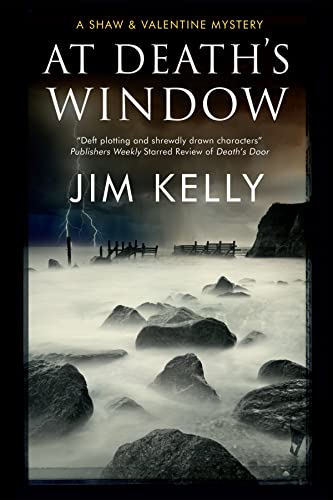
Inhaltsangabe
A Shaw & Valentine mystery
When a body is discovered beneath the waves off Scolt Head Island, the contents of the dead man’s pockets lead Detective Inspector Peter Shaw to suspect an outbreak of ‘samphire wars’: a turf battle for control of the prized sea asparagus which sells for a small fortune along the affluent North Norfolk coast. Or does the killer merely want it to look that way?
Meanwhile, Detective Sergeant George Valentine is investigating a series of break-ins targeted at wealthy second-home owners. And a lethal strain of adulterated cocaine is flooding the streets of nearby Lynn, leaving devastation in its wake.
Then the second body is found – and the simmering tensions underpinning this remote coastal community come bursting into the open … with devastating consequences.
Die Inhaltsangabe kann sich auf eine andere Ausgabe dieses Titels beziehen.
Über die Autorin bzw. den Autor
A previous Dagger in the Library winner, Jim Kelly is the author of seven Philip Dryden mysteries and four Shaw & Valentine police procedurals. He lives in Ely, Cambridgeshire.
Auszug. © Genehmigter Nachdruck. Alle Rechte vorbehalten.
At Death's Window
By Jim KellySevern House Publishers Ltd.
Copyright © 2014 Jim Kelly
All rights reserved.
ISBN: 978-1-78029-068-3All rights reserved.
CHAPTER 1
Saturday, 18 October
The first killing frost of the year struck on the night of the first of October; then, the following day, the skies cleared and the sun rose, burning off an autumn mist which clung to the beaches. Thermometers began to climb into the sixties, and then the seventies as a classic Indian summer took hold. For eighteen days in a row the noon air crackled with heat and electricity along the north Norfolk coast and thunderclouds billowed at sea, mushrooms of boiling, billowing, humid air. Thunder rumbled and jagged lightning crackled, but the rain held off. Trippers and second homeowners made the most of the heatwave for a week, then two, until even they had to go back to work, leaving the sands to grey-heads and couples with pre-school toddlers. The locals simply waited for the weather to break. The water was green and choppy, white with spray: a winter sea under a summer sky.
DI Peter Shaw sat on the back terrace of the Old Ship Inn – one of the coast's burgeoning collection of gastropubs – looking out over Brancaster Marsh, his wife, Lena, beside him. They sat in wicker chairs beside a glass-topped table, a bottle of white wine in a chiller. The plate before Shaw was porcelain, the two scallops chargrilled, each with its accompanying orange 'coral'. The detective used his knife to separate what he knew to be the mollusc's brightly coloured ovary from the rest of its body. There was something visceral about the vivid flesh which made his throat contract. He concentrated on the three new potatoes, which had been shaken in lovage, and the sprig of green samphire, the local 'sea asparagus', picked from the marsh and dusted with sea salt.
High tide was an hour away, and the sound of the surf breaking on the distant, unseen beach was a clear, methodical drum roll. The channels and creeks of the marsh were filling up to the brim like silvered mirrors. Lightning flashed once out at sea and the cutlery and glasses pulsed, as if intermittently charged with neon.
'God's fireworks,' said Shaw. The detective had a quiet, musical voice, which suggested an ability to hit a note at will. One of his eyes was blue – almost colourless, like tap water falling. The other was blind, the iris simply a moonlike white disc. Shaw pressed both eyes tightly shut and saw the forked lightning shape behind the right lid only. Five years earlier he'd been blinded in an accident involving toxic waste on the beach, but he never tired of testing his disability, pushing his remaining senses to the edge of what was still possible while monitoring the performance of the one vital remaining eye.
'This weather,' said Lena, stretching out long, lean legs. 'Can you promise me it'll be like this every year?'
'Sure. Every year. No problem.'
Lena was Jamaican, her black skin glowing after a summer spent working on the beach. The English weather to her was a constant source of real horror. Rainy days in June and July clouded her mood; a long grey English winter left her depressed. Living on the north Norfolk coast had always been a gamble. Sometimes she wished she'd never taken the risk.
'Odd term: Indian summer,' she said. 'Colonial, I suppose – another echo of the Raj?'
'For once you're wrong. Not everything's about the Empire,' said Shaw.
The coast, its moods, its shifting atmospherics, was one of his obsessions. Lena imagined him researching online, worrying away at the origins of that odd couplet: Indian summer.
'Nineteenth century, I think, from the Great Plains of America. A Red Indian summer, do you see? Not very PC. It gets worse: the Indian summer usually followed a Squaw's Winter – that's the first frost. We used to call it a St Martin's Summer – the feast day's November the eleventh, so presumably it can last till then. It's good news wherever you're from, because it shortens the winter. Less months to eke out the harvest grain. We love it because it lengthens the summer.' Shaw scratched his skull through close-cropped fair hair.
'You're telling me we could have another month of this sublime weather?' she asked. Lena's face was made up of a series of ample curves, as was the rest of her. Shaw thought she resembled an animated African mask, like the ones hanging in a museum of ethnology: Lena didn't so much show emotions as broadcast them.
Thunder rolled, buffeting the tables, making the wine glasses and cutlery tinkle. A woman sitting further along the terrace on her own let out a cry of alarm. Each table had a gas heater like an industrial hairdryer set to one side. Several were on, the flame-heated elements glowing like coals, giving an illusion – if little else – of extra heat as the afternoon waned.
'Here's to table heaters and global warming,' said Lena, lifting her glass. 'That's one thing we can do without.' She touched the metal stanchion of the heater beside their table. 'I'd prefer to see our customers wrapped up. We could provide blankets – I've seen that done. Tartan. How about open fires, in braziers? The Plough does that. A bit of heat, but it's a psychological trick. You just feel warm if you can see flames.'
Lena ran a beach café on a stretch of sand between Old Hunstanton and Holme, five miles to the west of where they sat. They'd bought the Old Beach Café for £8,000 six years earlier, having fled London. There was no mains power, no water, and no vehicle access except along the sand in a 4×4. Beside the café was the Old Boathouse, and behind it a small cottage. They'd converted the boathouse into Surf!, a shop selling everything from seventy-pence beach windmills to £3,000 wetsuits. They'd taken the café upmarket, symbolized by a gleaming Italian coffee-maker which looked like a vintage motorbike. This last summer, armed with a licence in Lena's name, they'd started staying open late, serving wine, bottled beer and snacks. The gentrification of the East Coast, spreading north from its heartlands in Suffolk, was bringing new money into a local economy which had once relied on old money.
Lena planned a big extension to the café, turning it into a pub and café, maybe even – eventually – a restaurant. She had in mind a beach bar she'd seen in Cornwall one summer's evening, which had been packed with nearly five hundred thirsty, hungry customers.
Shaw wondered what the hell they were doing. They'd moved to the Old Beach Café from the capital because they loved the solitude, the bleak beach, the dunes. And it was Shaw's childhood home – he'd played on that very beach, swum off the wide sands. They'd left the gritty greyness of the suburbs to give their daughter some space to grow. Shaw was happy to help Lena realize a dream – but one day soon he'd have to tell her that hundreds of trippers on his beach at sunset was his idea of a nightmare.
They'd agreed to spend the winter checking out the opposition along the coast, the dinner bills offset against tax. Lena wanted to write a business plan before approaching the bank for a loan. This was their first recce, and Shaw had chosen the spot. He rather hoped Lena would see that the market was already well served and that most customers wouldn't walk a hundred yards for their Pouilly Fumé and Brancaster mussels, let alone a mile of deserted sand. The downmarket outlook was no better, in his opinion. If people just wanted a pint and a packet of cheese and onion crisps they'd want to park...
„Über diesen Titel“ kann sich auf eine andere Ausgabe dieses Titels beziehen.
Suchergebnisse für At Death's Window (Shaw & Valentine Mysteries,...

Beispielbild für diese ISBN
At Death's Window: 5 (A Shaw a
Anbieter: World of Books (was SecondSale), Montgomery, IL, USA
Verkäuferbewertung 5 von 5 Sternen

Zustand: Good. Item in good condition. Textbooks may not include supplemental items i.e. CDs, access codes etc. Bestandsnummer des Verkäufers 00096657407
Gebraucht kaufen
EUR 5,81
Versand gratis
Versand innerhalb von USA
Versand innerhalb von USA
Anzahl: 2 verfügbar
Beispielbild für diese ISBN
At Death's Window: 5 (A Shaw a
Anbieter: World of Books (was SecondSale), Montgomery, IL, USA
Verkäuferbewertung 5 von 5 Sternen
Zustand: Very Good. Item in very good condition! Textbooks may not include supplemental items i.e. CDs, access codes etc. Bestandsnummer des Verkäufers 00085354068
Gebraucht kaufen
EUR 5,81
Versand gratis
Versand innerhalb von USA
Versand innerhalb von USA
Anzahl: 2 verfügbar
Beispielbild für diese ISBN
At Death's Window (A Shaw and Valentine Mystery, 5)
Anbieter: Bay State Book Company, North Smithfield, RI, USA
Verkäuferbewertung 5 von 5 Sternen
Zustand: good. The book is in good condition with all pages and cover intact, including the dust jacket if originally issued. The spine may show light wear. Pages may contain some notes or highlighting, and there might be a "From the library of" label. Boxed set packaging, shrink wrap, or included media like CDs may be missing. Bestandsnummer des Verkäufers BSM.19SHB
Gebraucht kaufen
EUR 5,82
Versand gratis
Versand innerhalb von USA
Versand innerhalb von USA
Anzahl: 1 verfügbar
Beispielbild für diese ISBN
At Death's Window
Anbieter: Better World Books, Mishawaka, IN, USA
Verkäuferbewertung 5 von 5 Sternen
Zustand: Good. First World Publication. Former library copy. Pages intact with minimal writing/highlighting. The binding may be loose and creased. Dust jackets/supplements are not included. Includes library markings. Stock photo provided. Product includes identifying sticker. Better World Books: Buy Books. Do Good. Bestandsnummer des Verkäufers GRP83150896
Gebraucht kaufen
EUR 5,96
Versand gratis
Versand innerhalb von USA
Versand innerhalb von USA
Anzahl: 3 verfügbar
Beispielbild für diese ISBN
At Death's Window
Anbieter: World of Books Inc, Montgomery, IL, USA
Verkäuferbewertung 2 von 5 Sternen

Hardback. Zustand: Very Good. A Shaw & Valentine mystery When a body is discoveredbeneath the waves off Scolt Head Island, the contents of the dead man s pockets lead Detective Inspector Peter Shaw to suspect an outbreak of samphire wars: a turf battle for control of the prized sea asparagus which sells for a small fortune along the affluent North Norfolk coast. Or does the killer merely want it to look that way? Meanwhile, Detective Sergeant George Valentine is investigating a series of break-ins targeted at wealthy second-home owners. And a lethal strain of adulterated cocaine is flooding the streets of nearby Lynn, leaving devastation in its wake. Then the second body is found and the simmering tensions underpinning this remote coastal community come bursting into the open with devastating consequences. Bestandsnummer des Verkäufers CIN1780290683VG
Gebraucht kaufen
EUR 7,59
Versand gratis
Versand innerhalb von USA
Versand innerhalb von USA
Anzahl: 2 verfügbar
Beispielbild für diese ISBN
At Death's Window
Anbieter: World of Books Inc, Montgomery, IL, USA
Verkäuferbewertung 2 von 5 Sternen
Hardback. Zustand: Good. A Shaw & Valentine mystery When a body is discoveredbeneath the waves off Scolt Head Island, the contents of the dead man s pockets lead Detective Inspector Peter Shaw to suspect an outbreak of samphire wars: a turf battle for control of the prized sea asparagus which sells for a small fortune along the affluent North Norfolk coast. Or does the killer merely want it to look that way? Meanwhile, Detective Sergeant George Valentine is investigating a series of break-ins targeted at wealthy second-home owners. And a lethal strain of adulterated cocaine is flooding the streets of nearby Lynn, leaving devastation in its wake. Then the second body is found and the simmering tensions underpinning this remote coastal community come bursting into the open with devastating consequences. Bestandsnummer des Verkäufers CIN1780290683G
Gebraucht kaufen
EUR 7,59
Versand gratis
Versand innerhalb von USA
Versand innerhalb von USA
Anzahl: 4 verfügbar
Beispielbild für diese ISBN
At Death's Window: 5 (A Shaw and Valentine Mystery)
Verlag:
Joffe Books, United Kingdom, Edinburgh, 2014
ISBN 10: 1780290683
ISBN 13: 9781780290683
Gebraucht
Paperback
Anbieter: WorldofBooks, Goring-By-Sea, WS, Vereinigtes Königreich
Verkäuferbewertung 5 von 5 Sternen
Paperback. Zustand: Very Good. The book has been read, but is in excellent condition. Pages are intact and not marred by notes or highlighting. The spine remains undamaged. Bestandsnummer des Verkäufers GOR006223849
Gebraucht kaufen
EUR 3,84
EUR 6,52 Versand
Versand von Vereinigtes Königreich nach USA
Versand von Vereinigtes Königreich nach USA
Anzahl: 4 verfügbar
Beispielbild für diese ISBN
At Death's Window
Anbieter: Better World Books Ltd, Dunfermline, Vereinigtes Königreich
Verkäuferbewertung 5 von 5 Sternen
Zustand: Good. First World Publication. Former library copy. Pages intact with minimal writing/highlighting. The binding may be loose and creased. Dust jackets/supplements are not included. Includes library markings. Stock photo provided. Product includes identifying sticker. Better World Books: Buy Books. Do Good. Bestandsnummer des Verkäufers GRP83150896
Gebraucht kaufen
EUR 5,60
EUR 5,82 Versand
Versand von Vereinigtes Königreich nach USA
Versand von Vereinigtes Königreich nach USA
Anzahl: 2 verfügbar
Beispielbild für diese ISBN
At Death's Window: A Shaw and Valentine Police Procedural
Anbieter: Revaluation Books, Exeter, Vereinigtes Königreich
Verkäuferbewertung 5 von 5 Sternen
Hardcover. Zustand: Brand New. 256 pages. 7.00x5.00x1.00 inches. In Stock. Bestandsnummer des Verkäufers 1780290683
Neu kaufen
EUR 21,99
EUR 11,65 Versand
Versand von Vereinigtes Königreich nach USA
Versand von Vereinigtes Königreich nach USA
Anzahl: 1 verfügbar
Foto des Verkäufers
At Death's Window
Verlag:
Crème de la Crime Severn House Publishers Ltd, London, 2014
ISBN 10: 1780290683
ISBN 13: 9781780290683
Gebraucht
Hardcover
Erstausgabe
Signiert
Anbieter: Raymond Tait, Beccles, SUFFO, Vereinigtes Königreich
Verkäuferbewertung 5 von 5 Sternen
Pictorial Cover. Zustand: Very Good. Zustand des Schutzumschlags: Very Good. First Edition. Signed by the author on the title page. Light edge wear to book and jacket - near Fine. First printing. Signed by Author(s). Bestandsnummer des Verkäufers 009218
Gebraucht kaufen
EUR 29,99
EUR 25,16 Versand
Versand von Vereinigtes Königreich nach USA
Versand von Vereinigtes Königreich nach USA
Anzahl: 1 verfügbar