
Verwandte Artikel zu Weird Realism: Lovecraft and Philosophy
Inhaltsangabe
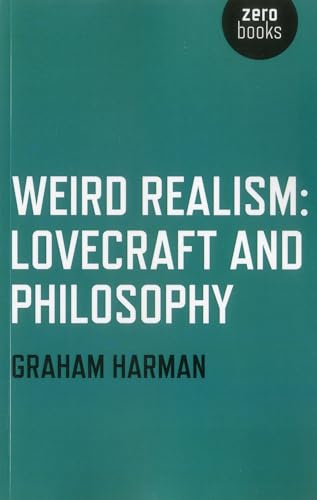
As Hölderlin was to Martin Heidegger and Mallarmé to Jacques Derrida, so is H.P. Lovecraft to the Speculative Realist philosophers. Lovecraft was one of the brightest stars of the horror and science fiction magazines, but died in poverty and relative obscurity in the 1930s. In 2005 he was finally elevated from pulp status to the classical literary canon with the release of a Library of America volume dedicated to his work. The impact of Lovecraft on philosophy has been building for more than a decade. Initially championed by shadowy guru Nick Land at Warwick during the 1990s, he was later discovered to be an object of private fascination for all four original members of the twenty-first century Speculative Realist movement. In this book, Graham Harman extracts the basic philosophical concepts underlying the work of Lovecraft, yielding a weird realism capable of freeing continental philosophy from its current soul-crushing impasse. Abandoning pious references by Heidegger to Hölderlin and the Greeks, Harman develops a new philosophical mythology centered in such Lovecraftian figures as Cthulhu, Wilbur Whately, and the rat-like monstrosity Brown Jenkin. The Miskatonic River replaces the Rhine and the Ister, while Hölderlin's Caucasus gives way to Lovecraft's Antarctic mountains of madness.
Die Inhaltsangabe kann sich auf eine andere Ausgabe dieses Titels beziehen.
Über die Autorinnen und Autoren
Graham Harman is Associate Provost for Research Administration and Professor of Philosophy at the American University in Cairo, Egypt. He was born in Iowa City, Iowa in 1968, the first of three sons of hippie parents who met at a Rolling Stones concert in Chicago. He received his undergraduate degree from the classical liberal arts program at St. John's College, Annapolis (1990). His Master's Degree was done at Penn State (1991) under the renowned philosopher Alphonso Lingis, and focused on Levinas. He completed his Ph.D. at DePaul University in Chicago (1999), with a dissertation that became his first book. While finishing his doctoral studies, he worked as a Chicago sportswriter from 1996-98. In September 2000 he began work in the Department of Philosophy at the American University in Cairo. Egypt has become his base for travel to more than 60 countries and the composition of ten books in less than a decade. He is very fond of animals, and became a vegetarian for ethical reasons at the age of 7.
,
„Über diesen Titel“ kann sich auf eine andere Ausgabe dieses Titels beziehen.
Suchergebnisse für Weird Realism: Lovecraft and Philosophy

Foto des Verkäufers
Weird Realism: Lovecraft and Philosophy
Anbieter: Dream Books Co., Denver, CO, USA
Verkäuferbewertung 5 von 5 Sternen

Zustand: acceptable. This copy has clearly been enjoyedâ"expect noticeable shelf wear and some minor creases to the cover. Binding is strong, and all pages are legible. May contain previous library markings or stamps. Bestandsnummer des Verkäufers DBV.1780992521.A
Gebraucht kaufen
EUR 16,07
Versand gratis
Versand innerhalb von USA
Versand innerhalb von USA
Anzahl: 1 verfügbar
Beispielbild für diese ISBN
Weird Realism
Anbieter: HPB-Diamond, Dallas, TX, USA
Verkäuferbewertung 5 von 5 Sternen
paperback. Zustand: Very Good. Connecting readers with great books since 1972! Used books may not include companion materials, and may have some shelf wear or limited writing. We ship orders daily and Customer Service is our top priority! Bestandsnummer des Verkäufers S_488115882
Gebraucht kaufen
EUR 14,24
EUR 3,36 Versand
Versand innerhalb von USA
Versand innerhalb von USA
Anzahl: 1 verfügbar
Beispielbild für diese ISBN
Weird Realism : Lovecraft and Philosophy
Anbieter: GreatBookPrices, Columbia, MD, USA
Verkäuferbewertung 5 von 5 Sternen
Zustand: As New. Unread book in perfect condition. Bestandsnummer des Verkäufers 18521436
Gebraucht kaufen
EUR 17,80
EUR 2,37 Versand
Versand innerhalb von USA
Versand innerhalb von USA
Anzahl: 11 verfügbar
Foto des Verkäufers
Weird Realism: Lovecraft and Philosophy
Anbieter: Goodwill of Greater Milwaukee and Chicago, Racine, WI, USA
Verkäuferbewertung 5 von 5 Sternen
Zustand: acceptable. Book is considered to be in acceptable condition. The actual cover image may not match the stock photo. Book may have one or more of the following defects: noticeable wear on the cover dust jacket or spine; curved, dog eared or creased page s ; writing or highlighting inside or on the edges; sticker s or other adhesive on cover; CD DVD may not be included; and book may be a former library copy. Bestandsnummer des Verkäufers SEWV.1780992521.A
Gebraucht kaufen
EUR 17,91
EUR 2,69 Versand
Versand innerhalb von USA
Versand innerhalb von USA
Anzahl: 1 verfügbar
Beispielbild für diese ISBN
Weird Realism : Lovecraft and Philosophy
Anbieter: GreatBookPrices, Columbia, MD, USA
Verkäuferbewertung 5 von 5 Sternen
Zustand: New. Bestandsnummer des Verkäufers 18521436-n
Neu kaufen
EUR 18,95
EUR 2,37 Versand
Versand innerhalb von USA
Versand innerhalb von USA
Anzahl: 11 verfügbar
Foto des Verkäufers
Weird Realism - Lovecraft and Philosophy
Anbieter: Rarewaves.com USA, London, LONDO, Vereinigtes Königreich
Verkäuferbewertung 5 von 5 Sternen
Paperback. Zustand: New. As Holderlin was to Martin Heidegger and Mallarme to Jacques Derrida, so is H.P. Lovecraft to the Speculative Realist philosophers. Lovecraft was one of the brightest stars of the horror and science fiction magazines, but died in poverty and relative obscurity in the 1930s. In 2005 he was finally elevated from pulp status to the classical literary canon with the release of a Library of America volume dedicated to his work. The impact of Lovecraft on philosophy has been building for more than a decade. Initially championed by shadowy guru Nick Land at Warwick during the 1990s, he was later discovered to be an object of private fascination for all four original members of the twenty-first century Speculative Realist movement. In this book, Graham Harman extracts the basic philosophical concepts underlying the work of Lovecraft, yielding a weird realism capable of freeing continental philosophy from its current soul-crushing impasse. Abandoning pious references by Heidegger to Holderlin and the Greeks, Harman develops a new philosophical mythology centered in such Lovecraftian figures as Cthulhu, Wilbur Whately, and the rat-like monstrosity Brown Jenkin.The Miskatonic River replaces the Rhine and the Ister, while Holderlin's Caucasus gives way to Lovecraft's Antarctic mountains of madness. Bestandsnummer des Verkäufers LU-9781780992525
Neu kaufen
EUR 21,40
Versand gratis
Versand von Vereinigtes Königreich nach USA
Versand von Vereinigtes Königreich nach USA
Anzahl: 5 verfügbar
Beispielbild für diese ISBN
Weird Realism: Lovecraft and Philosophy
Anbieter: Chiron Media, Wallingford, Vereinigtes Königreich
Verkäuferbewertung 5 von 5 Sternen
paperback. Zustand: New. Brand new book, sourced directly from publisher. Dispatch time is 24-48 hours from our warehouse. Book will be sent in robust, secure packaging to ensure it reaches you securely. Bestandsnummer des Verkäufers 6666-GRD-9781780992525
Neu kaufen
EUR 15,90
EUR 5,99 Versand
Versand von Vereinigtes Königreich nach USA
Versand von Vereinigtes Königreich nach USA
Anzahl: 5 verfügbar
Foto des Verkäufers
Weird Realism - Lovecraft and Philosophy
Anbieter: Rarewaves USA, HEBRON, KY, USA
Verkäuferbewertung 5 von 5 Sternen
Paperback. Zustand: New. As Holderlin was to Martin Heidegger and Mallarme to Jacques Derrida, so is H.P. Lovecraft to the Speculative Realist philosophers. Lovecraft was one of the brightest stars of the horror and science fiction magazines, but died in poverty and relative obscurity in the 1930s. In 2005 he was finally elevated from pulp status to the classical literary canon with the release of a Library of America volume dedicated to his work. The impact of Lovecraft on philosophy has been building for more than a decade. Initially championed by shadowy guru Nick Land at Warwick during the 1990s, he was later discovered to be an object of private fascination for all four original members of the twenty-first century Speculative Realist movement. In this book, Graham Harman extracts the basic philosophical concepts underlying the work of Lovecraft, yielding a weird realism capable of freeing continental philosophy from its current soul-crushing impasse. Abandoning pious references by Heidegger to Holderlin and the Greeks, Harman develops a new philosophical mythology centered in such Lovecraftian figures as Cthulhu, Wilbur Whately, and the rat-like monstrosity Brown Jenkin.The Miskatonic River replaces the Rhine and the Ister, while Holderlin's Caucasus gives way to Lovecraft's Antarctic mountains of madness. Bestandsnummer des Verkäufers LU-9781780992525
Beispielbild für diese ISBN
Weird Realism Lovecraft and Philosophy
Anbieter: PBShop.store UK, Fairford, GLOS, Vereinigtes Königreich
Verkäuferbewertung 5 von 5 Sternen
PAP. Zustand: New. New Book. Shipped from UK. Established seller since 2000. Bestandsnummer des Verkäufers GB-9781780992525
Neu kaufen
EUR 19,43
EUR 4,99 Versand
Versand von Vereinigtes Königreich nach USA
Versand von Vereinigtes Königreich nach USA
Anzahl: 5 verfügbar
Foto des Verkäufers
Weird Realism Lovecraft and Philosophy (Paperback)
Anbieter: Grand Eagle Retail, Bensenville, IL, USA
Verkäuferbewertung 5 von 5 Sternen
Paperback. Zustand: new. Paperback. As Holderlin was to Martin Heidegger and Mallarme to Jacques Derrida, so is H.P. Lovecraft to the Speculative Realist philosophers. Lovecraft was one of the brightest stars of the horror and science fiction magazines, but died in poverty and relative obscurity in the 1930s. In 2005 he was finally elevated from pulp status to the classical literary canon with the release of a Library of America volume dedicated to his work. The impact of Lovecraft on philosophy has been building for more than a decade. Initially championed by shadowy guru Nick Land at Warwick during the 1990s, he was later discovered to be an object of private fascination for all four original members of the twenty-first century Speculative Realist movement. In this book, Graham Harman extracts the basic philosophical concepts underlying the work of Lovecraft, yielding a weird realism capable of freeing continental philosophy from its current soul-crushing impasse. Abandoning pious references by Heidegger to Holderlin and the Greeks, Harman develops a new philosophical mythology centered in such Lovecraftian figures as Cthulhu, Wilbur Whately, and the rat-like monstrosity Brown Jenkin.The Miskatonic River replaces the Rhine and the Ister, while Holderlin's Caucasus gives way to Lovecraft's Antarctic mountains of madness. As Holderlin was to Martin Heidegger and Mallarme to Jacques Derrida, so is H.P. Lovecraft to the Speculative Realist philosophers. Shipping may be from multiple locations in the US or from the UK, depending on stock availability. Bestandsnummer des Verkäufers 9781780992525