
Verwandte Artikel zu In the Restaurant: From Michelin stars to fast food;...
In the Restaurant: From Michelin stars to fast food; what eating out tells us about who we are - Hardcover
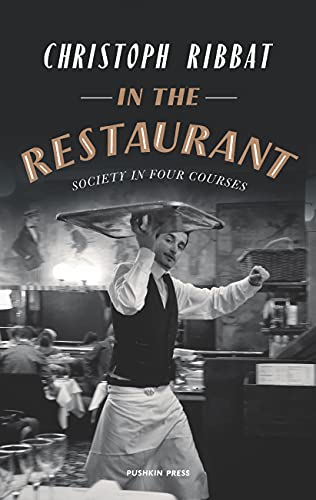
Inhaltsangabe
The deliciously cosmopolitan story of the restaurant from eighteenth-century Paris to El Bulli
What does eating out tell us about who we are? The restaurant is where we go to celebrate, to experience pleasure, to see and be seen - or, sometimes, just because we're hungry. But these temples of gastronomy hide countless stories.
As this dazzlingly entertaining, eye-opening book shows, the restaurant is where performance, fashion, commerce, ritual, class, work and desire all come together. Through its windows, we can glimpse the world.
This is the tale of the restaurant in all its guises, from the first formal establishments in eighteenth-century Paris serving 'restorative' bouillon, to today's new Nordic cuisine, via grand Viennese cafés and humble fast food joints. Here are tales of cooks who spend hours arranging rose petals for Michelin stars, of the university that teaches the consistency of the perfect shake, of the lunch counter that sparked a protest movement, of the writers - from Proust to George Orwell - who have been inspired or outraged by the restaurant's secrets.
Die Inhaltsangabe kann sich auf eine andere Ausgabe dieses Titels beziehen.
Über die Autorin bzw. den Autor
Christoph Ribbat (b. 1968) has taught in Bochum, Boston and Basel, and is now Professor of American Studies at the University of Paderborn.
Auszug. © Genehmigter Nachdruck. Alle Rechte vorbehalten.
Frances hurries through the crowds of Chicago. She is looking for a job as a waitress. The trams screech in her ears, a policeman’s whistle shrills, the ‘L’ train thunders. She is thirty-seven, a teacher by training. She started off in a village school with just one classroom, near St Clair in Michigan, right out by the Canadian border. She has lived in the suburbs of Detroit, in the suburbs of Chicago, and then in Great Falls, Montana. That was when she married William and stopped teaching. Then the economy in Great Falls collapsed. They moved back to Chicago. And William became incurably ill. In her threadbare black dress, Frances battles her way through the crowd of people in dark, narrow Van Buren Street. She has seen a job posting in the Chicago Daily News. Now she stands in front of the restaurant. She looks in through the window at the bright, decked tables, at ladies and gentlemen eating at leisure, white-aproned girls holding plates in their hands. Frances hesitates. Should she go in or not? Her heart is beating so fast, she writes later, that she almost can’t breathe. But she enters eventually, and asks the man behind the cigar counter whether they need a waitress. Yes, he says. They did. But they hired one just yesterday. I see, says Frances. She flees back on to the street, back into the hubbub of the year 1917.
*
The Chinese capital is famous for its restaurants. Fish and seafood are excellent here, as are beef, poultry and noodles. The choices are many and varied, because the restaurants aren’t just catering to long-established residents, but also to the refugees who now call this their home. Their traditions and dietary restrictions – for example those of Muslim residents – enrich the diversity of the local cuisine. The sweet soy soup at the market comes highly recommended. Also worthy of mention are Mother Song’s fish soup and rice served with mutton, while in front of the Longevity and Compassion Palace, meat cooked in ashes is on offer. The boiled pork at Wei-the-Big-Knife at the Cat Bridge is outstanding, and the honey fritters from Zhou Number Five by the five-span pavilion are absolutely exquisite. This is all according to a gourmet. In the year 1275 he writes about the impressive gastronomic scene in Hangzhou, the capital during the Song dynasty.
*
The history of the European restaurant begins with the fact that people aren’t hungry. Or at least, they act as though they aren’t. In Paris in 1760, with all its malnourished inhabitants, it wouldn’t be in keeping with the zeitgeist for the elite to stuff themselves to bursting point in some tavern or inn. Anyone with any sense of decorum has a delicate constitution. Unable to stomach much, they barely eat a thing, but still take their time about it. The upper-class clientele are enticed by the restaurant, this luxuriously furnished new style of inn. Large mirrors in which to admire oneself and others hang on the walls. The ‘restorative’ bouillons which lend the new restaurants their name, derived from the Latin restaurans, steam from decorative porcelain bowls. Made from poultry, game or beef stock, these brews are said to replenish the strength of those who are too sensitive for other forms of nourishment.
It is not the bouillons which make the restaurant successful, however, but rather its focus on individuals and their desires. Customers here don’t have to sit at a long, shared tavern table with all sorts of strangers. They get a table all to themselves. They can decide the hour at which they wish to be served. They make their choices from a menu.3 After the revolution, representatives of the National Assembly come to Paris from the provinces, and go out to eat together in restaurants. The Parisians emulate them. Before long, establishments begin to open which are also, fashionably, called restaurants, but more reasonably priced and less plush than the prototypes. In the revolutionary era, the guild system begins to ease its grip. Gastronomes now have more freedom to satisfy their customers’ varied desires. And from the very beginning, service is of great importance for the restaurant’s success. Enlightenment philosopher Diderot, for one, after dining out in 1767, praises the bouillon, the iced water and the beautiful restauratrice.4
*
Out in Van Buren Street, in front of the restaurant with the bright tables and smart waitresses, Frances, rejected would-be waitress, briefly feels relieved. But then she has to make her way onwards, to the next establishment that has placed an ad in the Daily News. She is just one of countless women in Chicago who are competing for jobs. She has often thought about these crowds of women, crashing into the heart of the city from the outskirts each morning like a tidal wave. Many are young, some already middle-aged, making themselves look younger with make-up and overly short skirts, while others are simply old, not even attempting to feign youth. An army of women: secretaries, hairdressers, textile workers, daughters of farmers and daughters of factory workers. They are cheap labour, because they are women and because they have no experience when it comes to life and work in the big city. The most visible female workers serve behind the expansive windows of the restaurants – of which Chicago now has over a thousand. And Frances wants to be one of them.
So she moves on. In the next restaurant, a woman is standing behind the cigar counter. She sends Frances on to a young man, who, in turn, refers her to a gentleman in the backroom, the manager, who is sorting aprons and jackets. She asks him whether he needs another waitress. He asks her whether she has worked as a waitress before. She lies and says yes. He asks her whether she is quick on her feet. She asks him whether it looks like she’s not. And then another young man leads her down a narrow staircase into a damp, foul-smelling cellar. Here, ten young women are getting changed, putting on lipstick, sweeping rouge across their cheeks, powdering their noses, tossing make-up brushes back and forth and cursing with a crudity that Frances has never heard before in her life. No one pays any attention to her at first, but eventually one of the quieter girls helps her get into her uniform. Frances is now a waitress. A waitress with a secret.
*
On the surface, the early Parisian restaurant resembles the cafés in which bourgeois public life develops. People come together in the cafés. They debate. They argue. Everything is very different from church or the royal court, different from the elite salons, the academies or scholarly societies. Anyone who can pay for his drinks and his food gets in. Anyone can join in the conversation. Newspapers are scattered around, supplying opinions. No authority intervenes, ends disputes or keeps order. If an argument arises, then eventually – or at least so one would imagine – common sense prevails, and the argument reaches a conclusion.
But the restaurant is different. You don’t go there to debate with others, nor to read the newspaper. You go to unwind or to put your sensibility on show. Once seated at the table, you make a choice that has little bearing on the broader political situation: between poultry, game or beef bouillon. The blend of public and private life sought here leans more towards the private. The Parisian café offers large rooms in which you can see everything and everyone. The restaurant, on the other hand, has niches and alcoves for customers to retreat into – groups and couples alike. There are cabinets particuliers – special rooms in which one can conduct private conversations or meet for assignations ranging from the romantic to the erotic. This is not the place for intense public discourse. And...
„Über diesen Titel“ kann sich auf eine andere Ausgabe dieses Titels beziehen.
Suchergebnisse für In the Restaurant: From Michelin stars to fast food;...

Beispielbild für diese ISBN
In the Restaurant: From Michelin stars to fast food; what eating out tells us about who we are
Anbieter: WorldofBooks, Goring-By-Sea, WS, Vereinigtes Königreich
Verkäuferbewertung 5 von 5 Sternen

Paperback. Zustand: Very Good. The book has been read, but is in excellent condition. Pages are intact and not marred by notes or highlighting. The spine remains undamaged. Bestandsnummer des Verkäufers GOR008635876
Gebraucht kaufen
EUR 3,32
EUR 6,69 Versand
Versand von Vereinigtes Königreich nach USA
Versand von Vereinigtes Königreich nach USA
Anzahl: 2 verfügbar
Foto des Verkäufers
In the Restaurant: Society in Four Courses: From Michelin stars to fast food; what eating out tells us about who we are
Anbieter: WeBuyBooks, Rossendale, LANCS, Vereinigtes Königreich
Verkäuferbewertung 5 von 5 Sternen
hardcover. Zustand: Good. Most items will be dispatched the same or the next working day. A copy that has been read but remains in clean condition. All of the pages are intact and the cover is intact and the spine may show signs of wear. The book may have minor markings which are not specifically mentioned. Bestandsnummer des Verkäufers rev4735662411
Gebraucht kaufen
EUR 3,11
EUR 7,06 Versand
Versand von Vereinigtes Königreich nach USA
Versand von Vereinigtes Königreich nach USA
Anzahl: 1 verfügbar
Beispielbild für diese ISBN
In the Restaurant
Anbieter: Better World Books, Mishawaka, IN, USA
Verkäuferbewertung 5 von 5 Sternen
Zustand: Good. Pages intact with minimal writing/highlighting. The binding may be loose and creased. Dust jackets/supplements are not included. Stock photo provided. Product includes identifying sticker. Better World Books: Buy Books. Do Good. Bestandsnummer des Verkäufers 15320860-6
Gebraucht kaufen
EUR 11,04
Versand gratis
Versand innerhalb von USA
Versand innerhalb von USA
Anzahl: 1 verfügbar
Beispielbild für diese ISBN
In the Restaurant: From Michelin stars to fast food; what eating out tells us about who we are
Anbieter: Sell Books, Elland, YORKS, Vereinigtes Königreich
Verkäuferbewertung 5 von 5 Sternen
hardcover. Zustand: Good. Our good condition books are generally good for reading but not for gifting or collecting. They could have imperfections such as creasing, fanning, inscriptions, margin notes, yellowing, staining on edge or cover or pages, bumps, scuffs, etc etc (sometimes multiple of these). It's a wide category that encompasses anything that isn't almost-new down to anything that is slightly better than poor. We would NOT recommend gifting Good books - these should be considered reading copies. Our books are dispatched from a Yorkshire former cotton mill. We list via barcode/ISBN so please note that the images are stock images and may not be the exact copy you receive, furthermore the details about edition and year might not be accurate as many publishers reuse the same ISBN for multiple editions and as we simply scan a barcode or enter an ISBN we do not check the validity of the edition data when listing. If you're looking for an exact edition please don't order (at least not without checking with us first, although we don't always have time to check). We aim to dispatch prompty, the service used will depend on order value and book size. We can ship to most countries, see our shipping policies. Payment is via Abe only. Bestandsnummer des Verkäufers SBAB-L-BPG00890-RAG-20250225-G
Gebraucht kaufen
EUR 3,14
EUR 9,27 Versand
Versand von Vereinigtes Königreich nach USA
Versand von Vereinigtes Königreich nach USA
Anzahl: 1 verfügbar
Foto des Verkäufers
In the Restaurant: Society in Four Courses
Anbieter: Zoom Books East, Glendale Heights, IL, USA
Verkäuferbewertung 5 von 5 Sternen
Zustand: like_new. Book is in like new condition with minimal signs of wear. Pages are clean and free from notes or highlighting. Dust cover is intact. May not contain miscellaneous items toys, dvds, etc. . We offer 100% money back guarantee and 24 7 customer service. Bestandsnummer des Verkäufers ZEV.1782273085.LN
Gebraucht kaufen
EUR 16,02
Versand gratis
Versand innerhalb von USA
Versand innerhalb von USA
Anzahl: 1 verfügbar
Beispielbild für diese ISBN
In the Restaurant: Society in Four Courses
Anbieter: Mesilla Internet, Las Cruces, NM, USA
Verkäuferbewertung 2 von 5 Sternen

Zustand: New. Bestandsnummer des Verkäufers 410C-6-09-23-147
Neu kaufen
EUR 32,55
EUR 2,66 Versand
Versand innerhalb von USA
Versand innerhalb von USA
Anzahl: 1 verfügbar