
Verwandte Artikel zu Pharmaceuticals in the Environment (Issues in Environmental...
Pharmaceuticals in the Environment (Issues in Environmental Science and Technology, 41, Band 41) - Hardcover
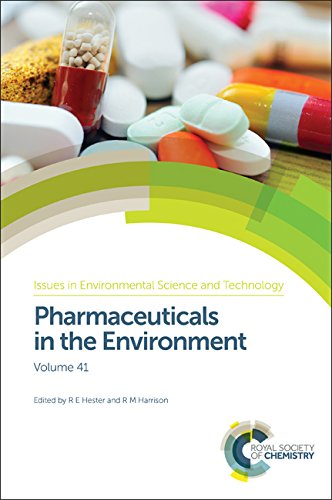
Inhaltsangabe
Medicines play an important role in the treatment and prevention of disease in humans and animals, but residues from these medicines can be released into the environment through a number of routes during their manufacture, use and disposal. It is only recently that the potential environmental impacts of this exposure to pharmaceuticals are being considered.
The book explores where pharmaceutical residues can be found, e.g. in surface waters, drinking water, sediments and the marine environment; the sources of these residues, from manufacture through to disposal of unused medicines; how these residues break down; and how this all impacts on wildlife and human health.
In reviewing the current position and examining further possible impacts, this book is an important reference for researchers working in the pharmaceutical industry, as well as for environmentalists, policy makers and students on pharmacy and environmental science courses wanting to better understand the impacts of pharmaceuticals on the environment.
Die Inhaltsangabe kann sich auf eine andere Ausgabe dieses Titels beziehen.
Über die Autorin bzw. den Autor
The series has been edited by Professors Hester and Harrison since it began in 1994.
Roy Harrison OBE is Queen Elizabeth II Birmingham Centenary Professor of Environmental Health at the University of Birmingham. In 2004 he was appointed OBE for services to environmental science. Professor Harrison’s research interests lie in the field of environment and human health. His main specialism is in air pollution, from emissions through atmospheric chemical and physical transformations to exposure and effects on human health. Much of this work is designed to inform the development of policy.
Ron Hester is an emeritus professor of chemistry at the University of York. In addition to his research work on a wide range of applications of vibrational spectroscopy, he has been actively involved in environmental chemistry and was a founder member of the Royal Society of Chemistry’s Environment Group. His current activities are mainly as an editor and as an external examiner and assessor on courses, individual promotions, and departmental/subject area evaluations both in the UK and abroad.
Von der hinteren Coverseite
Medicines play an important role in the treatment and prevention of disease in humans and animals, but residues from these medicines can be released into the environment through a number of routes during their manufacture, use and disposal. It is only recently that the potential environmental impacts of this exposure to pharmaceuticals are being considered.
The book explores where pharmaceutical residues can be found, e.g. in surface waters, drinking water, sediments and the marine environment; the sources of these residues, from manufacture through to disposal of unused medicines; how these residues break down; and how this all impacts on wildlife and human health.
In reviewing the current position and examining further possible impacts, this book is an important reference for researchers working in the pharmaceutical industry, as well as for environmentalists, policy makers and students on pharmacy and environmental science courses wanting to better understand the impacts of pharmaceuticals on the environment.
Aus dem Klappentext
Medicines play an important role in the treatment and prevention of disease in humans and animals, but residues from these medicines can be released into the environment through a number of routes during their manufacture, use and disposal. It is only recently that the potential environmental impacts of this exposure to pharmaceuticals are being considered.
The book explores where pharmaceutical residues can be found, e.g. in surface waters, drinking water, sediments and the marine environment; the sources of these residues, from manufacture through to disposal of unused medicines; how these residues break down; and how this all impacts on wildlife and human health.
In reviewing the current position and examining further possible impacts, this book is an important reference for researchers working in the pharmaceutical industry, as well as for environmentalists, policy makers and students on pharmacy and environmental science courses wanting to better understand the impacts of pharmaceuticals on the environment.
Auszug. © Genehmigter Nachdruck. Alle Rechte vorbehalten.
Pharmaceuticals in the Environment
By The Royal Society of Chemistry, R. E. Hester, R. M. HarrisonThe Royal Society of Chemistry
Copyright © 2016 The Royal Society of Chemistry
All rights reserved.
ISBN: 978-1-78262-189-8All rights reserved.
Contents
Editors,
List of Contributors,
The Pharmaceutical Industry and the Future of Drug Development David Taylor, 1,
Distribution of Pharmaceutical Residues in the Environment Benoit Roig and Vince D'Aco, 34,
Pharmaceuticals in the Marine Environment Sally Gaw, Kevin Thomas and Thomas H. Hutchinson, 70,
Sources of Pharmaceutical Residues in the Environment and their Control Daniel J. Caldwell, 92,
Pharmaceutical Residues in Sewage Treatment Works and their Fate in the Receiving Environment Nick Voulvoulis, Damia Barceló and Paola Verlicchi, 120,
Ecotoxicology, Environmental Risk Assessment and Potential Impact on Human Health Mitchell Kostich and Reinhard Länge, 180,
Impacts of Pharmaceuticals on Terrestrial Wildlife Mark A. Taggart, Ngaio Richards and Chad A. Kinney, 216,
Veterinary Pharmaceuticals Boris Kolar, Caroline Moermond and Silke Hickmann, 255,
Subject Index, 286,
CHAPTER 1
The Pharmaceutical Industry and the Future of Drug Development
DAVID TAYLOR
ABSTRACT
The pharmaceutical industry has a number of unusual characteristics, both in its structure and in the nature of its business operations, which are little known outside the industry but which materially affect the process of bringing new pharmaceuticals to the patient. The development of a new pharmaceutical is very time consuming, extremely costly and high risk, with very little chance of a successful outcome. The process of research and development is described, together with all its challenges, including environmental ones. The commercial realities and constraints of the business, together with its current problems, are discussed, followed by an exploration of some of the likely future commercial and technical developments in the business, including the development of a greener pharmacy.
1 Introduction
The pharmaceutical industry has a number of unusual characteristics that make it very different from what people normally think of as industry. It is also an industry replete with contradictions; for example, despite the undisputed fact that for over a century the industry has made a major contribution to human wellbeing and the reduction of ill health and suffering, it is still regularly identified by the public in opinion surveys as one of the least trusted industries, often being compared unfavourably to the nuclear industry. It is undoubtedly one of the riskiest businesses in which to invest money, yet it is perceived by the general public to be excessively profitable. The major pharma companies rightly promote themselves as being research-based organisations, yet most people believe that they spend more on marketing than on research. Despite the acknowledged risks and costs associated with pharmaceutical development, many citizens still believe that pharmaceuticals should be being developed to meet all human needs and that when developed they should be given away to everyone on the basis of need.
This opening chapter aims to provide a basic understanding of how the industry works and attempts to provide an explanation for some of its contradictions. The objective is to provide a backdrop to the business so that the challenges of the issue of pharmaceuticals in the environment can be better understood.
Note that the words "medicine," "pharmaceutical" and "drug" are often used interchangeably and the word "drug" can also mean both a medicine and an illegal substance, depending on the context. In this chapter the word "pharmaceutical" is arbitrarily assigned to the end-products of the pharmaceutical industry that are used by patients. The word "drug" is mainly used for potential pharmaceuticals whilst under development by the industry.
1.1 Historical Background
Human beings have been using "drugs" to treat illness and disease for more than 3000 years. A few dozen drugs of plant and animal origin were already recorded in China around 1100 BCE and by the end of the 16th century the Chinese were using at least 1900 different remedies. Today Traditional Chinese Medicine recognises more than 13 000 drugs.
Outside China, the first known pharmacopeia, the five volumes of De Material Medica, were written in the first century CE by Dioscorides, a Greek botanist. Herbal practitioners of this early period have been identified in many indigenous populations across the globe, such as North and South America, India and Australia. In the later mediaeval period, herbalism flourished in both the Islamic and Christian parts of the world. This tradition continued up to the 17th century, encompassing the work of Paracelsus in Switzerland and Culpepper in England. Culpepper's work, The English Physician, published in 1652, was one of the first English language pharmacopeias.
Until the 18th century the use of herbal medicines had been entirely based on empiricism: practitioners knew what worked but not why or how. However, in the late 18th century the foundations of pharmacology, the study of the actions of drugs and how they exert their effects, began to emerge. William Withering in the 1780s was one of the first people to study and isolate the active ingredient in a herbal remedy. He isolated digitalis from the foxglove, describing its extraction from various parts of the plant, its subsequent effects and the optimum way of using it to treat patients. The science of pharmacology developed slowly during the next century and Oswald Schmiedeberg (1838–1921) is now generally recognised as the founder of modern pharmacology. In 1872 he became professor of pharmacology at the University of Strassburg in Austria where he studied the pharmacology of chloroform and chloral hydrate and in 1878 published the classic text, Outline of Pharmacology.
Coincidentally, modern organic chemistry also began to emerge at around the same time as pharmacology. Before the 19th century, chemists had generally believed that compounds obtained from living organisms were endowed with a "vital force" that distinguished them from inorganic compounds. However, in 1828 Friedrich Wöhler produced the organic chemical urea, a constituent of urine, from the entirely inorganic compound, ammonium cyanate. Although Wöhler was always cautious about claiming that he had disproved the theory of vital force, this event has often been thought of as the starting point of organic chemistry. These two scientific developments in pharmacology and organic chemistry led, amongst other developments, to the foundation of the pharmaceutical industry in the last decade of the 19th century.
The modern pharmaceutical industry can trace its origin to two main sources: companies such as Merck, Eli Lilly and Roche that had previously supplied natural products such as morphine, quinine and strychnine, moved into large-scale production of drugs in the middle of the 19th century, whilst newly established dyestu? and chemical companies, such as Bayer, ICI, Pfizer & Sandoz, established research labs and discovered medical applications for their products. Nevertheless, growth was relatively modest and at the start of the 1930s most medicines were still sold without a prescription. Almost half of them were compounded locally by pharmacists and in many cases physicians themselves dispensed medicines directly to their patients.
However, a...
„Über diesen Titel“ kann sich auf eine andere Ausgabe dieses Titels beziehen.
Suchergebnisse für Pharmaceuticals in the Environment (Issues in Environmental...

Beispielbild für diese ISBN
Pharmaceuticals In The Environment
Anbieter: Basi6 International, Irving, TX, USA
Verkäuferbewertung 5 von 5 Sternen

Zustand: Brand New. New. US edition. Expediting shipping for all USA and Europe orders excluding PO Box. Excellent Customer Service. Bestandsnummer des Verkäufers ABEOCT25-206318
Beispielbild für diese ISBN
PHARMACEUTICALS IN THE ENVIRONMENT
Anbieter: SMASS Sellers, IRVING, TX, USA
Verkäuferbewertung 4 von 5 Sternen

Zustand: New. Brand New Original US Edition. Customer service! Satisfaction Guaranteed. Bestandsnummer des Verkäufers SNTA-4864
Beispielbild für diese ISBN
Issues in Environmental Science and Technology: Pharmaceuticals in the Environment (Volume 41)
Verlag:
Royal Society Of Chemistry, 2016
ISBN 10: 178262189X
ISBN 13: 9781782621898
Gebraucht
Hardcover
Anbieter: Anybook.com, Lincoln, Vereinigtes Königreich
Verkäuferbewertung 5 von 5 Sternen
Zustand: Good. Volume 41. This is an ex-library book and may have the usual library/used-book markings inside.This book has hardback covers. In good all round condition. No dust jacket. Please note the Image in this listing is a stock photo and may not match the covers of the actual item,750grams, ISBN:9781782621898. Bestandsnummer des Verkäufers 4947771
Gebraucht kaufen
EUR 37,27
EUR 15,81 Versand
Versand von Vereinigtes Königreich nach USA
Versand von Vereinigtes Königreich nach USA
Anzahl: 1 verfügbar
Beispielbild für diese ISBN
PHARMACEUTICALS IN THE ENVIRONMENT VOLUME 41 (HB 2016)
Anbieter: Basi6 International, Irving, TX, USA
Verkäuferbewertung 5 von 5 Sternen
Zustand: Brand New. New. US edition. Expediting shipping for all USA and Europe orders excluding PO Box. Excellent Customer Service. Bestandsnummer des Verkäufers ABEOCT25-206319
Beispielbild für diese ISBN
PHARMACEUTICALS IN THE ENVIRONMENT VOL 41 [DC]
Anbieter: Basi6 International, Irving, TX, USA
Verkäuferbewertung 5 von 5 Sternen
Zustand: Brand New. New. US edition. Expediting shipping for all USA and Europe orders excluding PO Box. Excellent Customer Service. Bestandsnummer des Verkäufers ABEOCT25-285753
Beispielbild für diese ISBN
Pharmaceuticals in the Environment (Issues in Environmental Science and Technology)
Anbieter: Books Puddle, Woodside, NY, USA
Verkäuferbewertung 4 von 5 Sternen
Zustand: New. pp. 250. Bestandsnummer des Verkäufers 26372535819
Neu kaufen
EUR 54,17
EUR 3,51 Versand
Versand innerhalb von USA
Versand innerhalb von USA
Anzahl: 1 verfügbar
Beispielbild für diese ISBN
Pharmaceuticals in the Environment (Issues in Environmental Science and Technology)
Anbieter: Majestic Books, Hounslow, Vereinigtes Königreich
Verkäuferbewertung 4 von 5 Sternen
Zustand: New. pp. 250. Bestandsnummer des Verkäufers 373542356
Neu kaufen
EUR 50,37
EUR 7,56 Versand
Versand von Vereinigtes Königreich nach USA
Versand von Vereinigtes Königreich nach USA
Anzahl: 1 verfügbar
Beispielbild für diese ISBN
Pharmaceuticals in the Environment (Issues in Environmental Science and Technology)
Anbieter: Biblios, Frankfurt am main, HESSE, Deutschland
Verkäuferbewertung 4 von 5 Sternen
Zustand: New. pp. 250. Bestandsnummer des Verkäufers 18372535809
Neu kaufen
EUR 49,45
EUR 9,95 Versand
Versand von Deutschland nach USA
Versand von Deutschland nach USA
Anzahl: 1 verfügbar
Beispielbild für diese ISBN
PHARMACEUTICALS IN THE ENVIRONMENT VOLUME 41 (HB 2016)
Anbieter: SMASS Sellers, IRVING, TX, USA
Verkäuferbewertung 4 von 5 Sternen
Zustand: New. Brand New Original US Edition. Customer service! Satisfaction Guaranteed. Bestandsnummer des Verkäufers SNTA-59764
Beispielbild für diese ISBN
Pharmaceuticals in the Environment
Anbieter: Basi6 International, Irving, TX, USA
Verkäuferbewertung 5 von 5 Sternen
Zustand: Brand New. New. US edition. Expediting shipping for all USA and Europe orders excluding PO Box. Excellent Customer Service. Bestandsnummer des Verkäufers ABEOCT25-206320