
Verwandte Artikel zu 'The Tempest' in Context: Sin, Repentance and...
'The Tempest' in Context: Sin, Repentance and Forgiveness (Anthem Perspectives in Literature) - Softcover
Buch 4 von 4: Anthem Perspectives in Literature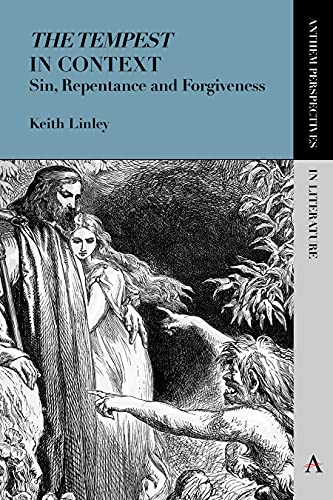
Inhaltsangabe
This engaging book provides detailed in-depth discussion of the various influences that an audience in 1611 would have brought to interpreting 'The Tempest'. How did people think about the world, about God, about sin, about kings, about civilized conduct? Learn about the social hierarchy, gender relationships, parenting and family dynamics, court corruption, class tensions, the concept of tragi-comedy - and all the subversions, transgressions, and oppositions that made the play an unsettling picture of a world attempting to come to terms with capitalism and colonialism while re-addressing the nature of rule.
Die Inhaltsangabe kann sich auf eine andere Ausgabe dieses Titels beziehen.
Über die Autorin bzw. den Autor
Keith Linley
Auszug. © Genehmigter Nachdruck. Alle Rechte vorbehalten.
The Tempest in Context
Sin, Repentance and Forgiveness
By Keith LinleyWimbledon Publishing Company
Copyright © 2015 Keith Linley
All rights reserved.
ISBN: 978-1-78308-375-6All rights reserved.
Contents
Introduction,
Prologue: The Setting,
Part I. The Inherited Past,
1. The Historical Context: An Overview,
2. The Elizabethan World Order: From Divinity to Dust,
3. Sin, Death and the Prince of Darkness,
4. The Seven Cardinal Virtues,
5. Kingship,
6. Patriarchy, Family Authority and Gender Relationships,
7. Man in His Place,
8. Images of Disorder: The Religious Context,
Part II. The Jacobean Context,
9. The Context of Education: Nature versus Nurture,
10. The Contemporary Political Context,
11. Enchantment: The Context of Magic,
12. The Context of Colonialism and Cannibalism: Theft or Duty?,
13. Literary Context,
14. Tender Patriarch or Tyrant? The Limits of Authority,
15. The Moral Context: Sins, Virtues and Transgressions,
Notes,
Bibliography,
Index,
CHAPTER 1
THE HISTORICAL CONTEXT: AN OVERVIEW
In 1603 Elizabeth I died and James VI of Scotland became James I of England. The play was written between 1610 and 1611, so falls into the Jacobean period (after Jacobus, Latin for James). In the wider European literary and political contexts, the period is the waning of the High Renaissance. Historians today call it Early Modern because many features of it are recognizably modern while being early in the evolution that shaped our world.
The new king, ruling until 1625, was of the Scottish family the Stuarts. They were a dynastic disaster; none was an effective ruler, and rule and authority are key themes in The Tempest. James was a learned but flawed monarch. Prospero announces his own failings when he claims, 'My library/Was dukedom large enough' (I. ii. 109–10). James too shirked the routines of work involved in government, but was a worse ruler than Prospero for he disliked contact with his people, drank heavily, was extravagant, impulsive, tactless, hectoring and bullying, and constantly in debt. He was a hard line right-winger in religion who backed the repression of Catholics and Puritans and was in perpetual conflict with Parliament. Sir Anthony Weldon dubbed him 'the wisest fool in Christendom'. The epithet captures the discrepancy between his writings on political theory and his practice as a lazy man only intermittently engaged with his role. London celebrated with bonfires when he succeeded peacefully. His apparent engagement with his regal duties generated hope, reflected in the mass of appalling, sycophantic, eulogistic verse published. During the royal procession through the city on 15 March 1603 two St Paul's choristers sang of London as Troynovant (New Troy), no longer a city but a bridal chamber, suggesting a mystical union and new hope.
This sense of promise soon evaporated as his failings and inconsistencies emerged. The Tempest is underpinned by concerns about authority and rule (or misrule) of self and others. Misrule of self is a theme running through all Shakespeare's plays. Parental rule over a child, the difficulties of ruling a recalcitrant 'subject' and the extent and limitations of authority over others are themes running through the play from its opening scene to its last. The major characters, even Miranda, are guilty of misrule of themselves; each transgresses in some way.
The previous monarch, Elizabeth I, a Tudor, was much loved and respected and had been a strong ruler, indeed strong enough to suppress the addressing of many problems which by James's time had become irresolvable. The Tudors (Henry VII, Henry VIII, Edward VI, Mary I and Elizabeth I) ruled 1485–1603. Though dysfunctional and brutally absolutist, they successfully brought stability after the turmoil of the Wars of the Roses (though there were various short-lived rebellions against them). Questions of succession, the nature of rulers, the use and limits of monarchical power, the influence of the court and the qualities of courtiers were matters that concerned people throughout the period and are among the contexts of The Tempest. Religion was a major area of conflict, with Dissenters and Catholics fighting for freedom from tight central control by the new Established Church. The effects on society and individual morality of the wealth that the new capitalism and the expansion of trade were creating also worried Jacobean writers. The new individualism, another context of the play, emerges in the self-centred ruthlessness of Sebastian and the established amorality of Antonio.
Henry VIII's great achievement (and cause of trouble) was breaking with the Catholic Church of Rome and setting up an independent English church. It was to remain essentially Catholic until the reforms of his son Edward aligned it with the Protestant movements on the Continent. This period of seismic change was called the English Reformation. There was some limited alliance with the Protestant Reformation led by Martin Luther, but in many ways the English went their own way. Monasteries and convents were dissolved and the infrastructure of Catholicism banished. Altars were stripped of ornaments (leaving only the cross), churches emptied of statues and relics and many murals whitewashed over. New church services and prayers were inaugurated in English rather than Latin. New English translations of the Bible began to appear and there was a Book of Common Prayer to be used in all parish churches. Holy shrines and saints' days were done away with as idols and superstitions. The vicar was to be the only intermediary between a person and God. After a brief fiery and bloody return to Catholicism under Mary I (1553–58), Elizabeth I succeeded and bedding-in of the new church continued. The new freedom of a reformed English religion, stripped back to its simple original faith, encouraged the rise of more extreme reformist Protestant sects (not always to the liking of the infant Established Church). These groups, called Non-Conformists, Independents or Dissenters, included the Puritans, Calvinists and Presbyterians – all Protestant, but with doctrinal differences. Some eccentric sects grew up too, such as the Anabaptists, Brownists and the Family of Love. Religion and the tensions between different sects is a persistently present consideration at this time, but despite all the official changes, the essential beliefs in sin, virtue, salvation, the centrality of Christ and the ubiquity of the Devil (the idea that he was everywhere, looking to tempt man) were the same as they always had been, as were the beliefs that punishment and possible perdition followed sin and that the world was in decline and would shortly come to an end. Sin and virtue are persistently referenced throughout The Tempest.
Another persistent feature is the political discourse on kingship. Elizabeth I (adoringly nicknamed 'Gloriana' after her identification with a character in Spenser's The Faerie Queene) ruled from 1558–1603, a time long enough to establish her as an icon, particularly as she headed up strong opposition (and victory) against the Spanish. But while external threats were repulsed, the Elizabethan-Jacobean period was one of unstoppable internal changes. These gradually altered the profile and mood of society. Religion, commerce, growing industrialization, increase of manufacture, social relationships, kingship and rule were all in flux. One feature of the period was the unceasing rise in prices,...
„Über diesen Titel“ kann sich auf eine andere Ausgabe dieses Titels beziehen.
Suchergebnisse für 'The Tempest' in Context: Sin, Repentance and...

Foto des Verkäufers
Tempest in Context : Sin, Repentance and Forgiveness
Anbieter: GreatBookPrices, Columbia, MD, USA
Verkäuferbewertung 5 von 5 Sternen

Zustand: As New. Unread book in perfect condition. Bestandsnummer des Verkäufers 23098730
Gebraucht kaufen
EUR 19,46
EUR 2,30 Versand
Versand innerhalb von USA
Versand innerhalb von USA
Anzahl: Mehr als 20 verfügbar
Foto des Verkäufers
Tempest in Context : Sin, Repentance and Forgiveness
Anbieter: GreatBookPrices, Columbia, MD, USA
Verkäuferbewertung 5 von 5 Sternen
Zustand: New. Bestandsnummer des Verkäufers 23098730-n
Neu kaufen
EUR 21,54
EUR 2,30 Versand
Versand innerhalb von USA
Versand innerhalb von USA
Anzahl: Mehr als 20 verfügbar
Foto des Verkäufers
'The Tempest' in Context
Anbieter: Rarewaves.com USA, London, LONDO, Vereinigtes Königreich
Verkäuferbewertung 5 von 5 Sternen
Paperback. Zustand: New. This engaging book provides detailed in-depth discussion of the various influences that an audience in 1611 would have brought to interpreting 'The Tempest'. How did people think about the world, about God, about sin, about kings, about civilized conduct? Learn about the social hierarchy, gender relationships, parenting and family dynamics, court corruption, class tensions, the concept of tragi-comedy - and all the subversions, transgressions, and oppositions that made the play an unsettling picture of a world attempting to come to terms with capitalism and colonialism while re-addressing the nature of rule. Bestandsnummer des Verkäufers LU-9781783083756
Neu kaufen
EUR 23,91
Versand gratis
Versand von Vereinigtes Königreich nach USA
Versand von Vereinigtes Königreich nach USA
Anzahl: 4 verfügbar
Beispielbild für diese ISBN
'The Tempest' in Context
Anbieter: PBShop.store UK, Fairford, GLOS, Vereinigtes Königreich
Verkäuferbewertung 5 von 5 Sternen
PAP. Zustand: New. New Book. Shipped from UK. Established seller since 2000. Bestandsnummer des Verkäufers CX-9781783083756
Neu kaufen
EUR 20,53
EUR 5,86 Versand
Versand von Vereinigtes Königreich nach USA
Versand von Vereinigtes Königreich nach USA
Anzahl: 15 verfügbar
Beispielbild für diese ISBN
'The Tempest' in Context
Anbieter: PBShop.store US, Wood Dale, IL, USA
Verkäuferbewertung 5 von 5 Sternen
PAP. Zustand: New. New Book. Shipped from UK. Established seller since 2000. Bestandsnummer des Verkäufers CX-9781783083756
Beispielbild für diese ISBN
'The Tempest' in Context (Paperback)
Anbieter: Grand Eagle Retail, Bensenville, IL, USA
Verkäuferbewertung 5 von 5 Sternen
Paperback. Zustand: new. Paperback. This engaging book provides detailed in-depth discussion of the various influences that an audience in 1611 would have brought to interpreting 'The Tempest'. How did people think about the world, about God, about sin, about kings, about civilized conduct? Learn about the social hierarchy, gender relationships, parenting and family dynamics, court corruption, class tensions, the concept of tragi-comedy and all the subversions, transgressions, and oppositions that made the play an unsettling picture of a world attempting to come to terms with capitalism and colonialism while re-addressing the nature of rule. How did the court audience of 1611 respond to this unusual play? Situating 'The Tempest' in its time, this guide explains the Christian ethics, contemporary political scene, literary atmosphere and requirements of tragi-comedy that inform the background of this magical and mysterious play. Shipping may be from multiple locations in the US or from the UK, depending on stock availability. Bestandsnummer des Verkäufers 9781783083756
Foto des Verkäufers
'The Tempest' in Context
Anbieter: Rarewaves USA, HEBRON, KY, USA
Verkäuferbewertung 5 von 5 Sternen
Paperback. Zustand: New. This engaging book provides detailed in-depth discussion of the various influences that an audience in 1611 would have brought to interpreting 'The Tempest'. How did people think about the world, about God, about sin, about kings, about civilized conduct? Learn about the social hierarchy, gender relationships, parenting and family dynamics, court corruption, class tensions, the concept of tragi-comedy - and all the subversions, transgressions, and oppositions that made the play an unsettling picture of a world attempting to come to terms with capitalism and colonialism while re-addressing the nature of rule. Bestandsnummer des Verkäufers LU-9781783083756
Neu kaufen
EUR 31,13
Versand gratis
Versand innerhalb von USA
Versand innerhalb von USA
Anzahl: Mehr als 20 verfügbar
Beispielbild für diese ISBN
'The Tempest' in Context: Sin, Repentance and Forgiveness (Anthem Perspectives in Literature)
Anbieter: Ria Christie Collections, Uxbridge, Vereinigtes Königreich
Verkäuferbewertung 5 von 5 Sternen
Zustand: New. In English. Bestandsnummer des Verkäufers ria9781783083756_new
Neu kaufen
EUR 24,12
EUR 13,17 Versand
Versand von Vereinigtes Königreich nach USA
Versand von Vereinigtes Königreich nach USA
Anzahl: 12 verfügbar
Beispielbild für diese ISBN
'The Tempest' in Context: Sin, Repentance and Forgiveness (Anthem Perspectives in Literature)
Anbieter: Chiron Media, Wallingford, Vereinigtes Königreich
Verkäuferbewertung 5 von 5 Sternen
Paperback. Zustand: New. Bestandsnummer des Verkäufers 6666-IUK-9781783083756
Neu kaufen
EUR 19,33
EUR 18,07 Versand
Versand von Vereinigtes Königreich nach USA
Versand von Vereinigtes Königreich nach USA
Anzahl: 12 verfügbar
Foto des Verkäufers
Tempest in Context : Sin, Repentance and Forgiveness
Anbieter: GreatBookPricesUK, Woodford Green, Vereinigtes Königreich
Verkäuferbewertung 5 von 5 Sternen
Zustand: New. Bestandsnummer des Verkäufers 23098730-n
Neu kaufen
EUR 21,36
EUR 17,50 Versand
Versand von Vereinigtes Königreich nach USA
Versand von Vereinigtes Königreich nach USA
Anzahl: Mehr als 20 verfügbar