
Capitalizing on Language Learners' Individuality: From Premise to Practice (Second Language Acquisition, 72, Band 72) - Softcover
Buch 76 von 159: Second Language Acquisition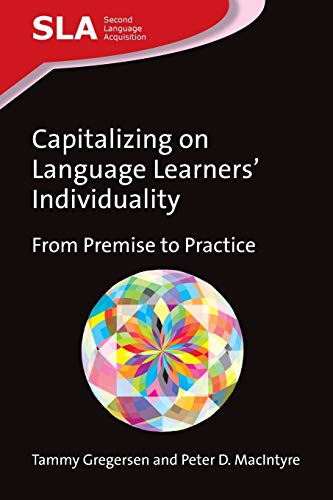
Inhaltsangabe
This book closes the gap between theory and classroom application by capitalizing on learners' individuality in second or foreign language learning. The book examines the existing literature and theoretical underpinnings of each of the most prominent learner characteristics including anxiety, beliefs, cognitive abilities, motivation, strategies, styles and willingness to communicate. This strong foundation, coupled with the wide variety of activities that are suggested at the end of each chapter, arms the reader with ideas to conquer the problems created by negative affect and to capitalize on positive, facilitative emotions. The tasks are unrestricted by language and can be modified for use with technology, emergent learners and large classes, making this book a useful resource for both in-service teachers and pre-service teachers in university language teacher education programs.
Die Inhaltsangabe kann sich auf eine andere Ausgabe dieses Titels beziehen.
Über die Autorin bzw. den Autor
Tammy Gregersen is Professor of TESOL at the American University of Sharjah in the United Arab Emirates. She has published extensively on individual differences, teacher education, nonverbal communication in language classrooms, positive psychology, and language teacher wellbeing. She was awarded two Fulbright Scholar opportunities in Costa Rica and Chile.
Auszug. © Genehmigter Nachdruck. Alle Rechte vorbehalten.
Capitalizing on Language Learners' Individuality
From Premise to Practice
By Tammy Gregersen, Peter D. MacIntyreMultilingual Matters
Copyright © 2014 Tammy Gregersen and Peter D. MacIntyre
All rights reserved.
ISBN: 978-1-78309-119-5All rights reserved.
Contents
Foreword, ix,
Introduction, xiii,
1 Anxiety, 1,
2 Beliefs, 32,
3 Cognitive Abilities: Aptitude, Working Memory and Multiple Intelligences, 64,
4 Motivation, 107,
5 Language Learning Strategies, 146,
6 Language Learning Styles, 174,
7 Willingness to Communicate, 211,
Epilogue, 240,
References, 245,
Index, 256,
CHAPTER 1
Anxiety
From Premise ...
Unchecked debilitating foreign language anxiety has destructive consequences on the language learners who suffer from it. Negative self-comparisons, excessive self-evaluations, worry over potential failures, concern over thoughts of others: these are some of the self-related thoughts that have anxious language learners focusing on their flaws rather than on their achievements, thus limiting the positive interaction and community-building that characterizes supportive language learning environments. In the following story, the 'cracked pot' is somewhat analogous to language anxious learners. He feels distress and shame over his flaws and even with evidence of the positive outcomes in the form of beautiful flowers, still needs to be encouraged.
To make an even stronger connection with how foreign language anxious students feel, take a moment to think about how you projected yourself in your TL as compared to your L1 as you first attempted to communicate. If you were like many other beginning TL speakers, while you probably considered yourself somewhat articulate in your first language – kind of funny ... sort of intelligent ... authentically you – you may have feared that others thought your jokes were not quite as funny, that they questioned your intelligence, and that the 'self' you communicated in your TL was somehow not the same person you were in your L1. It is this very awareness of the inability to authentically communicate who we are in our first languages when using our second languages that is the impetus for foreign language anxiety. These feelings can leave learners apprehensive about communicating, fearful of negative evaluation, and suffering from test anxiety (Horwitz et al., 1986). In the classroom context, anxious students have reported that the greatest source of their anxiety comes from speaking in front of peers (fearing being laughed at or ridiculed), making errors, and not communicating effectively (Price, 1991).
This self-realization might not be so bad if the manifestations of it were not so influential in the language learning classroom. There is nowhere for learners to hide when they freeze up during oral classroom activities, experience memory loss, or refuse to participate (Horwitz et al., 1986). Anxious students do not seem to handle language errors as effectively as more relaxed peers (Gregersen, 2003) partly because of the tendency to engage in negative self-talk and brood over poor performance. Doing so takes up space in working memory, which tends to reduce information-processing abilities (MacIntyre & Gardner, 1991c). Anxious learners exhibit avoidance behaviors by skipping class or putting off assignments. Some language learners tend toward perfectionism, adding unrealistically high personal performance standards to an already challenging learning process (Gregersen & Horwitz, 2002). Over time, the effects of language anxiety may culminate in lower proficiency and course grades, or in dropping out of language learning all together.
Although few specific classroom activities for reducing anxiety are outlined in the literature, researchers do give general guidelines for teachers to follow. Among these are the creation of student support systems and encouraging classroom environments that focus on sensitively correcting errors (Horwitz et al., 1986); encouraging the overhaul of unrealistic expectations and counter-productive beliefs about language learning; incorporating more supportive, small group activities, and focusing on the meaning of the message rather than accuracy (Price, 1991). Language methodologists have also tried to remedy the maladies of debilitating anxiety by creating specific approaches that target negative affect. For example, the method, Desuggestopedia, attempts to 'de-suggest' the psychological barriers that are erected against the language learning process, and still another method, The Natural Approach, is designed to mimic as accurately as possible the way that children acquire their first language.
Throughout this chapter, we will examine what language classroom anxiety is, where it comes from, and by assessing its stigmatizing effects, draw some conclusions about the importance of this variable to language learning. After appraising how anxiety influences the four skills of reading, writing, speaking and listening, the chapter will conclude with what research suggests are general guidelines to consider for lessening anxiety's debilitating effects, followed by the introduction of specific activities teachers can implement in their classrooms.
Exploring Foreign Language Anxiety, Its Origins and Its Significance
What language anxiety is
Self-expression is intimately linked to self-concept. Language anxiety reflects the worry and negative emotional reaction aroused when learning and using a second language and is especially relevant in a classroom where self-expression takes place. Horwitz et al. (1986: 128) identify this phenomenon as 'a distinct complex of self-perceptions, beliefs, feeling and behaviors related to classroom language learning arising from the uniqueness of the language learning process.' To understand its origins, MacIntyre and Gardner (1991c: 297) propose that 'initially, anxiety is an undifferentiated, negative affective response to some experience in language class' and that 'with repeated occurrences, anxiety becomes reliably associated with the language class and differentiated from other contexts.' In other words, foreign language anxiety is situation-specific; learners may be anxiety-free in other environments, but upon entering the language classroom, they become anxiety-ridden.
Horwitz et al. (1986) discuss three interrelated concerns that work together in the specific milieu of the language classroom: communication apprehension, fear of negative evaluation, and test anxiety. The interacting parts consist of the realization that target language (TL) messages often are incomplete at best and incomprehensible at worst, leading to frustration and aborted communication. This tendency is exacerbated by the apprehension that nuanced self-expression in the TL is limited by impoverished vocabulary and inexperience with the nonlinguistic aspects of intercultural communication; self-expression is not as authentic as it would be in one's native language. This recognition of disparity is further intensified by frequent and often unreliable evaluations of learning, particularly the performance-based type of testing that occurs in the language classroom.
With this network of negative arousal jockeying for attention with plans to escape the misery, it is no wonder that language anxiety interferes with acquisition, retention and production of the TL. In its infancy, research into language anxiety centered mostly on speaking, as this was the skill that seemed to generate the...
„Über diesen Titel“ kann sich auf eine andere Ausgabe dieses Titels beziehen.
Weitere beliebte Ausgaben desselben Titels

Suchergebnisse für Capitalizing on Language Learners' Individuality:...

Foto des Verkäufers
Capitalizing on Language Learners' Individuality: From Premise to Practice (Second Language Acquisition, 72)
Anbieter: -OnTimeBooks-, Phoenix, AZ, USA
Verkäuferbewertung 5 von 5 Sternen

Zustand: very_good. Gently read. May have name of previous ownership, or ex-library edition. Binding tight; spine straight and smooth, with no creasing; covers clean and crisp. Minimal signs of handling or shelving. 100% GUARANTEE! Shipped with delivery confirmation, if you're not satisfied with purchase please return item for full refund. Ships USPS Media Mail. Bestandsnummer des Verkäufers OTV.1783091193.VG
Gebraucht kaufen
EUR 12,78
Versand gratis
Versand innerhalb von USA
Versand innerhalb von USA
Anzahl: 2 verfügbar
Foto des Verkäufers
Capitalizing on Language Learners' Individuality : From Premise to Practice
Anbieter: GreatBookPrices, Columbia, MD, USA
Verkäuferbewertung 5 von 5 Sternen
Zustand: As New. Unread book in perfect condition. Bestandsnummer des Verkäufers 19921438
Gebraucht kaufen
EUR 35,08
EUR 2,29 Versand
Versand innerhalb von USA
Versand innerhalb von USA
Anzahl: Mehr als 20 verfügbar
Foto des Verkäufers
Capitalizing on Language Learners' Individuality : From Premise to Practice
Anbieter: GreatBookPrices, Columbia, MD, USA
Verkäuferbewertung 5 von 5 Sternen
Zustand: New. Bestandsnummer des Verkäufers 19921438-n
Neu kaufen
EUR 37,09
EUR 2,29 Versand
Versand innerhalb von USA
Versand innerhalb von USA
Anzahl: Mehr als 20 verfügbar
Beispielbild für diese ISBN
Capitalizing on Language Learners' Individuality
Anbieter: PBShop.store US, Wood Dale, IL, USA
Verkäuferbewertung 5 von 5 Sternen
PAP. Zustand: New. New Book. Shipped from UK. Established seller since 2000. Bestandsnummer des Verkäufers CX-9781783091195
Foto des Verkäufers
Capitalizing on Language Learners' Individuality
Verlag:
Channel View Publications Ltd, GB, 2014
ISBN 10: 1783091193
ISBN 13: 9781783091195
Neu
Paperback
Anbieter: Rarewaves.com USA, London, LONDO, Vereinigtes Königreich
Verkäuferbewertung 5 von 5 Sternen
Paperback. Zustand: New. This book closes the gap between theory and classroom application by capitalizing on learners' individuality in second or foreign language learning. The book examines the existing literature and theoretical underpinnings of each of the most prominent learner characteristics including anxiety, beliefs, cognitive abilities, motivation, strategies, styles and willingness to communicate. This strong foundation, coupled with the wide variety of activities that are suggested at the end of each chapter, arms the reader with ideas to conquer the problems created by negative affect and to capitalize on positive, facilitative emotions. The tasks are unrestricted by language and can be modified for use with technology, emergent learners and large classes, making this book a useful resource for both in-service teachers and pre-service teachers in university language teacher education programs. Bestandsnummer des Verkäufers LU-9781783091195
Neu kaufen
EUR 40,71
Versand gratis
Versand von Vereinigtes Königreich nach USA
Versand von Vereinigtes Königreich nach USA
Anzahl: 13 verfügbar
Beispielbild für diese ISBN
Capitalizing on Language Learners' Individuality
Anbieter: PBShop.store UK, Fairford, GLOS, Vereinigtes Königreich
Verkäuferbewertung 4 von 5 Sternen

PAP. Zustand: New. New Book. Shipped from UK. Established seller since 2000. Bestandsnummer des Verkäufers CX-9781783091195
Neu kaufen
EUR 36,80
EUR 4,78 Versand
Versand von Vereinigtes Königreich nach USA
Versand von Vereinigtes Königreich nach USA
Anzahl: 15 verfügbar
Foto des Verkäufers
Capitalizing on Language Learners' Individuality: From Premise to Practice (Paperback or Softback)
Verlag:
Multilingual Matters Limited 1/13/2014, 2014
ISBN 10: 1783091193
ISBN 13: 9781783091195
Neu
Paperback or Softback
Anbieter: BargainBookStores, Grand Rapids, MI, USA
Verkäuferbewertung 5 von 5 Sternen
Paperback or Softback. Zustand: New. Capitalizing on Language Learners' Individuality: From Premise to Practice. Book. Bestandsnummer des Verkäufers BBS-9781783091195
Foto des Verkäufers
Capitalizing on Language Learners' Individuality
Verlag:
Channel View Publications Ltd, GB, 2014
ISBN 10: 1783091193
ISBN 13: 9781783091195
Neu
Paperback
Anbieter: Rarewaves USA, OSWEGO, IL, USA
Verkäuferbewertung 5 von 5 Sternen
Paperback. Zustand: New. This book closes the gap between theory and classroom application by capitalizing on learners' individuality in second or foreign language learning. The book examines the existing literature and theoretical underpinnings of each of the most prominent learner characteristics including anxiety, beliefs, cognitive abilities, motivation, strategies, styles and willingness to communicate. This strong foundation, coupled with the wide variety of activities that are suggested at the end of each chapter, arms the reader with ideas to conquer the problems created by negative affect and to capitalize on positive, facilitative emotions. The tasks are unrestricted by language and can be modified for use with technology, emergent learners and large classes, making this book a useful resource for both in-service teachers and pre-service teachers in university language teacher education programs. Bestandsnummer des Verkäufers LU-9781783091195
Neu kaufen
EUR 52,44
Versand gratis
Versand innerhalb von USA
Versand innerhalb von USA
Anzahl: Mehr als 20 verfügbar
Foto des Verkäufers
Capitalizing on Language Learners' Individuality : From Premise to Practice
Anbieter: GreatBookPricesUK, Woodford Green, Vereinigtes Königreich
Verkäuferbewertung 5 von 5 Sternen
Zustand: New. Bestandsnummer des Verkäufers 19921438-n
Neu kaufen
EUR 35,63
EUR 17,25 Versand
Versand von Vereinigtes Königreich nach USA
Versand von Vereinigtes Königreich nach USA
Anzahl: Mehr als 20 verfügbar
Beispielbild für diese ISBN
Capitalizing on Language Learners' Individuality: From Premise to Practice (Second Language Acquisition, 72)
Anbieter: Ria Christie Collections, Uxbridge, Vereinigtes Königreich
Verkäuferbewertung 5 von 5 Sternen
Zustand: New. In. Bestandsnummer des Verkäufers ria9781783091195_new
Neu kaufen
EUR 40,65
EUR 13,78 Versand
Versand von Vereinigtes Königreich nach USA
Versand von Vereinigtes Königreich nach USA
Anzahl: Mehr als 20 verfügbar