
Inhaltsangabe
Formulated around a number of key thematic concerns—new creative trends; the politics and practices of memory; auteurship, genre, and stardom in a transnational age—this reassessment of contemporary Spanish cinema from 1992 to 2012 brings leading academics from a broad range of disciplinary and geographical backgrounds into dialogue with critically and commercially successful practitioners to suggest the need to redefine the parameters of one of the world’s most creative national cinemas. This volume will appeal not only to students and scholars of Spanish film, but also to anyone with an interest in contemporary world cinema.
Die Inhaltsangabe kann sich auf eine andere Ausgabe dieses Titels beziehen.
Über die Autorin bzw. den Autor
Duncan Wheeler is associate professor in Spanish studies at the University of Leeds, where he is also a member of the Executive Committee for the Centre for World Cinemas. Fernando Canet is associate professor in film studies at the Polytechnic University of Valencia.
Auszug. © Genehmigter Nachdruck. Alle Rechte vorbehalten.
(Re)viewing Creative, Critical and Commercial Practices in Contemporary Spanish Cinema
By Duncan Wheeler, Fernando CanetIntellect Ltd
Copyright © 2014 Intellect Ltd
All rights reserved.
ISBN: 978-1-78320-406-9All rights reserved.
Contents
Acknowledgements, xi,
Editorial Note, xiii,
Chapter 1: Introduction: How and Why This Book Came into Being Fernando Canet and Duncan Wheeler, 1,
Chapter 2: Spanish Films, 1992-2012: Two Decades of Cinematic Production and Critical Discourse Duncan Wheeler, 7,
Chapter 3: From the Past to the Present: Contemporising Trends that Define Spanish Cinema Fernando Canet, 35,
Part 1: Sense and Sensibility: New Forms of Being and Seeing in Recent Spanish Cinema Section introduction by Duncan Wheeler, 57,
Chapter 4: Back to Africa? Colonial History and Postcolonial Dynamics in Recent Spanish Cinema Alberto Elena, 65,
Chapter 5: The New Ethos of Gay Culture and the Limits of Normalization Helio San Miguel, 79,
Chapter 6: Behind the Enigma Construct: A Certain Trend in Spanish Cinema Javier Moral, 93,
Chapter 7: Reproduction and Rhetorical Processes in the Construction of Reality: En Construcción and La leyenda del tiempo as Case Studies Fernando Canet, 105,
Chapter 8: Art and Ethnography: Miquel Barceló and Isaki Lacuesta - Earth Magicians? Wenceslao García Puchades and Miguel Corella Lacasa, 119,
Chapter 9 :The Everyday Affect: Isabel Coixet and the Five Senses Jennie Rothwell, 131,
Part 2: Revisiting the Past: The Politics of Memory and the Transition's Cinematic Legacy Section introduction by Duncan Wheeler, 145,
Chapter 10: Ana Torrent as Palimpsest in Elio Quiroga's No-Do (The Haunting) Sarah Wright, 153,
Chapter 11: Victimhood in Contemporary Spanish Documentary: The Politics of Agency in Jaime Camino's La vieja memoria and Los niños de Rusia Isabel Estrada and Melissa M. González, 165,
Chapter 12: New Bodies, New Sounds: Rediscovering the Eroticism of the Transition Alejandro Melero, 177,
Chapter 13: Blood and Unfulfilled Promises: Representations of Terrorism and the Transition Concepción Cascajosa Virino, 191,
Chapter 14: Back to the Future: Repackaging Spain's Troublesome Past for Local and Global Audiences Duncan Wheeler, 205,
Chapter 15: Clowns, Goats, Music and the Comedic Violent: Late Francoism and the Transition to Democracy in Álex de la Iglesia's Films Vicente Rodríguez Ortega, 235,
Part 3: Redefining Auteurship, Genre and Stardom in a Transnational Age Section introduction by Duncan Wheeler, 249,
Chapter 16: Almodóvar in the USA/The USA in Almodóvar Cristina Martínez-Carazo, 259,
Chapter 17: Acting and Directing in Spain: Historicizing Stardom and the Author Function Duncan Wheeler, 271,
Chapter 18: Sex, Art and Commerce: Penélope Cruz and Isabel Coixet Tackle Philip Roth in Elegy Duncan Wheeler, 291,
Chapter 19: Deadly Hybridity: Sexykiller, the Female Serial Killer and the New Spanish Horror Film Shelagh Rowan-Legg, 311,
Chapter 20: Flexing Generic Boundaries: Torrente, [REC] and Adolescent Cinema in Spain Agustín Rico-Albero, 323,
Chapter 21: The Torrente Tetralogy: A Homegrown Saga Lidia Merás, 335,
Chapter 22: Hybrid Models: Auteurism and Genre in Contemporary Spanish Crime Thrillers Carmen Herrero, 351,
Chapter 23: Planet 51 and Spanish Animation: The Risks and Attractions of Globalization Maria Soler Campillo, Marta Martín Núñez and Javier Marzal Felici, 365,
Coda: Backstage Pass - Engaging with Practitioners and Cinematic Institutions, 377,
Chapter 24: How to Make Arty Films Now Luis Miñarro, 379,
Chapter 25: How to Make Commercial Films Now Mercedes Gamero and Duncan Wheeler, 389,
Chapter 26: San Sebastián: A Film Festival of Contrasts Mar Diestro-Dópido, 405,
Chapter 27: The Art Director as Architect: The Reconstruction of Deconstructed Memories Sandra Martorell, 419,
Chapter 28: The Films of Isaki Lacuesta: Hidden Portraits, Multiple Lives Linda C. Ehrlich, 431,
Chapter 29: Color perro que huye: An Audio-visual Prosumer versus the Institutional Cinematic Model Elena López Riera, 441,
Chapter 30: New Tendencies in Contemporary Cinema: Round Table Discussion with José Luis Guerin, Isaki Lacuesta and Luis Miñarro Fernando Canet and Duncan Wheeler, 453,
Notes on Contributors, 471,
Index, 477,
CHAPTER 1
Introduction: How and Why this Book Came into Being
Fernando Canet and Duncan Wheeler
The problem of the critic, as of the artist, is not to discount his subjectivity, but to include it; not to overcome it in agreement, but to master it in exemplary ways.
(Cavell, 1976: 94)
Although there is a certain arbitrariness in all attempts at chronological division, there are clearly key moments in which, as a result of broader socio-historical factors and/or aesthetic developments, national cinemas appear to undergo serious transformation. In the case of Spain, this has been inextricably linked with changes in political mood or power: therefore, it is customary to refer to its cinema in terms of the period in which it was produced, be that during the Second Republic, the Spanish Civil War or the dictatorship. Even those films produced in the late 1970s and 1980s tended to be viewed and written about in terms of the nascent democracy; hence, a film-maker as ostensibly apolitical as Pedro Almodóvar was often interpreted (especially abroad) in relation to Franco's death and the dictatorship's demise. If 1992 was the year in which, through a series of emblematic events – the Barcelona Olympics, the Expo in Seville, Madrid being named City of Culture – Spain announced its democratic credentials to the world, then it also marked the final point at which its cinematic output could be plausibly classified in relation to its sociopolitical Transition.
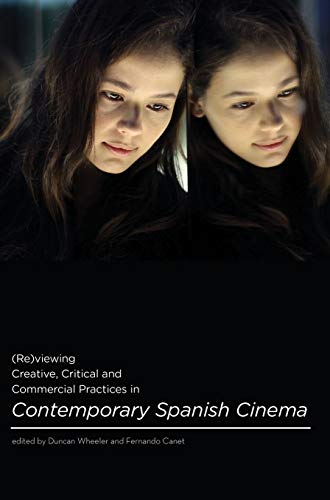
If, for example, we take even a fleeting glance at the film whose image graces the front cover of this volume – La mosquitera/The Mosquito Net (Vila, 2010) – the need to extend our artillery of heuristic tools and the parameters of what is commonly understood by Spanish cinema become apparent. In a twenty-first century continuation of Spain's rich surrealist tradition, this depiction of a dysfunctional upper -middle-class family is an artfully constructed, psychologically acute and engaging black comedy; nevertheless, it trades in the kind of bourgeois angst more habitually associated with French cinema and whose manifestation in modern-day Barcelona is a symptom, for better or worse, of Spain's economic and social normalization in relation to its European neighbours. Although the film's producer, the prolific Luis Miñarro has, to borrow a phrase from Paul Julian Smith (2011: 184), 'midwifed much of the new Catalan art cinema', La mosquitera is fairly conventional in many respects: made with television funding, it has a pace redolent of commercial cinema and stars Emma Suárez, a figure familiar to Spanish television and cinema audiences, who first made her name as an adolescent sex symbol in the 1980s. While a few years previously these ingredients would have virtually guaranteed box office success, La mosquitera delivered only a modest financial return, but it was very well received at a number of international film festivals which constitute a circuit on which much Spanish cinema is increasingly reliant, implicating even ostensibly national films such as this...
„Über diesen Titel“ kann sich auf eine andere Ausgabe dieses Titels beziehen.
Suchergebnisse für (Re)viewing Creative, Critical and Commercial Practices...

Beispielbild für diese ISBN
(Re) Viewing Creative, Critical and Commercial Practices in Contemporary Spanish Cinema
Anbieter: Daedalus Books, Portland, OR, USA
Verkäuferbewertung 4 von 5 Sternen

Hardcover. Zustand: Very Good+. Without jacket as issued. A nice, bright copy. ; 9.1 X 6.7 X 1.5 inches; 486 pages. Bestandsnummer des Verkäufers 281874
Gebraucht kaufen
EUR 15,94
EUR 5,60 Versand
Versand innerhalb von USA
Versand innerhalb von USA
Anzahl: 1 verfügbar
Foto des Verkäufers
(Re)viewing Creative, Critical and Commercial Practices in Contemporary Spanish Cinema
Anbieter: WeBuyBooks, Rossendale, LANCS, Vereinigtes Königreich
Verkäuferbewertung 5 von 5 Sternen

Zustand: Good. Most items will be dispatched the same or the next working day. A copy that has been read but remains in clean condition. All of the pages are intact and the cover is intact and the spine may show signs of wear. The book may have minor markings which are not specifically mentioned. Bestandsnummer des Verkäufers wbs2910579617
Gebraucht kaufen
EUR 19,89
EUR 11,88 Versand
Versand von Vereinigtes Königreich nach USA
Versand von Vereinigtes Königreich nach USA
Anzahl: 1 verfügbar
Beispielbild für diese ISBN
(Re)viewing Creative, Critical and Commercial Practices in Contemporary Spanish Cinema
Anbieter: PBShop.store UK, Fairford, GLOS, Vereinigtes Königreich
Verkäuferbewertung 5 von 5 Sternen
HRD. Zustand: New. New Book. Shipped from UK. Established seller since 2000. Bestandsnummer des Verkäufers CX-9781783204069
Neu kaufen
EUR 85,43
EUR 7,83 Versand
Versand von Vereinigtes Königreich nach USA
Versand von Vereinigtes Königreich nach USA
Anzahl: 15 verfügbar
Foto des Verkäufers
Reviewing Creative, Critical and Commercial Practices in Contemporary Spanish Cinema
Anbieter: GreatBookPrices, Columbia, MD, USA
Verkäuferbewertung 5 von 5 Sternen
Zustand: New. Bestandsnummer des Verkäufers 21439708-n
Neu kaufen
EUR 92,42
EUR 2,27 Versand
Versand innerhalb von USA
Versand innerhalb von USA
Anzahl: Mehr als 20 verfügbar
Beispielbild für diese ISBN
(Re)viewing Creative, Critical and Commercial Practices in Contemporary Spanish Cinema
Anbieter: PBShop.store US, Wood Dale, IL, USA
Verkäuferbewertung 5 von 5 Sternen
HRD. Zustand: New. New Book. Shipped from UK. Established seller since 2000. Bestandsnummer des Verkäufers CX-9781783204069
Foto des Verkäufers
Reviewing Creative, Critical and Commercial Practices in Contemporary Spanish Cinema
Anbieter: GreatBookPrices, Columbia, MD, USA
Verkäuferbewertung 5 von 5 Sternen
Zustand: As New. Unread book in perfect condition. Bestandsnummer des Verkäufers 21439708
Gebraucht kaufen
EUR 95,88
EUR 2,27 Versand
Versand innerhalb von USA
Versand innerhalb von USA
Anzahl: Mehr als 20 verfügbar
Foto des Verkäufers
Reviewing Creative, Critical and Commercial Practices in Contemporary Spanish Cinema
Anbieter: GreatBookPricesUK, Woodford Green, Vereinigtes Königreich
Verkäuferbewertung 5 von 5 Sternen
Zustand: New. Bestandsnummer des Verkäufers 21439708-n
Neu kaufen
EUR 85,42
EUR 17,37 Versand
Versand von Vereinigtes Königreich nach USA
Versand von Vereinigtes Königreich nach USA
Anzahl: Mehr als 20 verfügbar
Beispielbild für diese ISBN
(Re)viewing Creative, Critical and Commercial Practices in Contemporary Spanish Cinema
Anbieter: Chiron Media, Wallingford, Vereinigtes Königreich
Verkäuferbewertung 5 von 5 Sternen
hardcover. Zustand: New. Bestandsnummer des Verkäufers 6666-NBN-9781783204069
Neu kaufen
EUR 85,34
EUR 17,94 Versand
Versand von Vereinigtes Königreich nach USA
Versand von Vereinigtes Königreich nach USA
Anzahl: 17 verfügbar
Beispielbild für diese ISBN
(Re)viewing Creative, Critical and Commercial Practices in Contemporary Spanish Cinema
Anbieter: Ria Christie Collections, Uxbridge, Vereinigtes Königreich
Verkäuferbewertung 5 von 5 Sternen
Zustand: New. In. Bestandsnummer des Verkäufers ria9781783204069_new
Neu kaufen
EUR 98,87
EUR 13,87 Versand
Versand von Vereinigtes Königreich nach USA
Versand von Vereinigtes Königreich nach USA
Anzahl: Mehr als 20 verfügbar
Foto des Verkäufers
Reviewing Creative, Critical and Commercial Practices in Contemporary Spanish Cinema
Anbieter: GreatBookPricesUK, Woodford Green, Vereinigtes Königreich
Verkäuferbewertung 5 von 5 Sternen
Zustand: As New. Unread book in perfect condition. Bestandsnummer des Verkäufers 21439708
Gebraucht kaufen
EUR 96,27
EUR 17,37 Versand
Versand von Vereinigtes Königreich nach USA
Versand von Vereinigtes Königreich nach USA
Anzahl: Mehr als 20 verfügbar