
Verwandte Artikel zu In the Flow
Inhaltsangabe
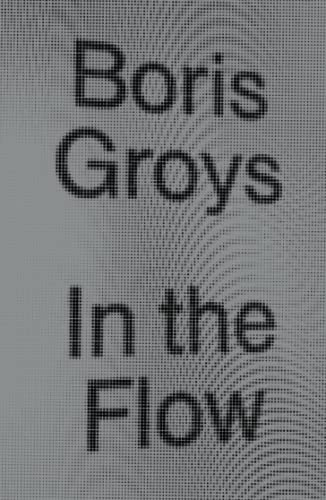
In the early 20th century, art and its institutions came under critique from a new democratic and egalitarian spirit. In an age of secularism and materialism, artworks would be understood as merely things among other things. This meant an attack on the techniques of realism, and the traditional mission of the museum, both designed shield a small class of objects from the entropic fate awaiting everything else—and the development of an approach that Boris Groys calls “direct realism”: an art that would not produce objects, but practices that could enter the flow of time to live and die like the rest of us. But for more than a century now, every advance in this direction has been quickly followed by new means of preserving art’s distinction. In this major new work, Groys, one of the world’s leading art theorists, charts the paradoxes produced by this tension, which continues to structure the production and reception of new art. The internet, the latest medium through which artists have attempted to disavow this special status, inverts the most notorious consequence of early modernist developments. If the techniques of mechanical reproduction gave us objects without aura, digital production generates aura without objects, transforming all its materials into vanishing markers of the transitory present.
Die Inhaltsangabe kann sich auf eine andere Ausgabe dieses Titels beziehen.
Über die Autorin bzw. den Autor
Boris Groys is Professor of Aesthetics, Art History and Media Theory at the Center for Art and Media Technology in Karlsruhe, and, since 2005, the Global Distinguished Professor in the Faculty of Arts and Science, NYU. He has published numerous books, including On the New, Introduction to Antiphilosophy, The Total Art of Stalinism, and The Communist Postscript.
„Über diesen Titel“ kann sich auf eine andere Ausgabe dieses Titels beziehen.
Suchergebnisse für In the Flow

Beispielbild für diese ISBN
In the Flow
Anbieter: World of Books (was SecondSale), Montgomery, IL, USA
Verkäuferbewertung 5 von 5 Sternen

Paperback. Zustand: Good. In the early 20th century, art and its institutions came under critique from a new democratic and egalitarian spirit. In an age of secularism and materialism, artworks would be understood as merely things among other things. This meant an attack on the techniques of realism, and the traditional mission of the museum, both designed shield a small class of objects from the entropic fate awaiting everything else-and the development of an approach that Boris Groys calls "direct realism": an art that would not produce objects, but practices that could enter the flow of time to live and die like the rest of us. But for more than a century now, every advance in this direction has been quickly followed by new means of preserving art's distinction. In this major new work, Groys, one of the world's leading art theorists, charts the paradoxes produced by this tension, which continues to structure the production and reception of new art. The internet, the latest medium through which artists have attempted to disavow this special status, inverts the most notorious consequence of early modernist developments. If the techniques of mechanical reproduction gave us objects without aura, digital production generates aura without objects, transforming all its materials into vanishing markers of the transitory present. Bestandsnummer des Verkäufers CIN178478351XG
Gebraucht kaufen
EUR 5,47
Versand gratis
Versand innerhalb von USA
Versand innerhalb von USA
Anzahl: 1 verfügbar
Beispielbild für diese ISBN
In the Flow
Anbieter: World of Books Inc, Montgomery, IL, USA
Verkäuferbewertung 4 von 5 Sternen

Paperback. Zustand: Good. In the early 20th century, art and its institutions came under critique from a new democratic and egalitarian spirit. In an age of secularism and materialism, artworks would be understood as merely things among other things. This meant an attack on the techniques of realism, and the traditional mission of the museum, both designed shield a small class of objects from the entropic fate awaiting everything else-and the development of an approach that Boris Groys calls "direct realism": an art that would not produce objects, but practices that could enter the flow of time to live and die like the rest of us. But for more than a century now, every advance in this direction has been quickly followed by new means of preserving art's distinction. In this major new work, Groys, one of the world's leading art theorists, charts the paradoxes produced by this tension, which continues to structure the production and reception of new art. The internet, the latest medium through which artists have attempted to disavow this special status, inverts the most notorious consequence of early modernist developments. If the techniques of mechanical reproduction gave us objects without aura, digital production generates aura without objects, transforming all its materials into vanishing markers of the transitory present. Bestandsnummer des Verkäufers CIN178478351XG
Gebraucht kaufen
EUR 7,31
Versand gratis
Versand innerhalb von USA
Versand innerhalb von USA
Anzahl: 1 verfügbar
Beispielbild für diese ISBN
In the Flow
Anbieter: AwesomeBooks, Wallingford, Vereinigtes Königreich
Verkäuferbewertung 5 von 5 Sternen
Paperback. Zustand: Very Good. In the Flow This book is in very good condition and will be shipped within 24 hours of ordering. The cover may have some limited signs of wear but the pages are clean, intact and the spine remains undamaged. This book has clearly been well maintained and looked after thus far. Money back guarantee if you are not satisfied. See all our books here, order more than 1 book and get discounted shipping. Bestandsnummer des Verkäufers 7719-9781784783518
Gebraucht kaufen
EUR 14,70
EUR 4,88 Versand
Versand von Vereinigtes Königreich nach USA
Versand von Vereinigtes Königreich nach USA
Anzahl: 2 verfügbar
Beispielbild für diese ISBN
In the Flow
Anbieter: Lakeside Books, Benton Harbor, MI, USA
Verkäuferbewertung 5 von 5 Sternen
Zustand: New. Brand New! Not Overstocks or Low Quality Book Club Editions! Direct From the Publisher! We're not a giant, faceless warehouse organization! We're a small town bookstore that loves books and loves it's customers! Buy from Lakeside Books! Bestandsnummer des Verkäufers OTF-S-9781784783518
Neu kaufen
EUR 17,38
EUR 3,56 Versand
Versand innerhalb von USA
Versand innerhalb von USA
Anzahl: Mehr als 20 verfügbar
Foto des Verkäufers
In the Flow
Anbieter: GreatBookPrices, Columbia, MD, USA
Verkäuferbewertung 5 von 5 Sternen
Zustand: New. Bestandsnummer des Verkäufers 28699116-n
Neu kaufen
EUR 18,61
EUR 2,36 Versand
Versand innerhalb von USA
Versand innerhalb von USA
Anzahl: Mehr als 20 verfügbar
Foto des Verkäufers
In the Flow (Paperback or Softback)
Anbieter: BargainBookStores, Grand Rapids, MI, USA
Verkäuferbewertung 5 von 5 Sternen
Paperback or Softback. Zustand: New. In the Flow. Book. Bestandsnummer des Verkäufers BBS-9781784783518
Foto des Verkäufers
In the Flow
Anbieter: Rarewaves USA, HEBRON, KY, USA
Verkäuferbewertung 5 von 5 Sternen
Paperback. Zustand: New. In the early 20th century, art and its institutions came under critique from a new democratic and egalitarian spirit. In an age of secularism and materialism, artworks would be understood as merely things among other things. This meant an attack on the techniques of realism, and the traditional mission of the museum, both designed shield a small class of objects from the entropic fate awaiting everything else-and the development of an approach that Boris Groys calls "direct realism": an art that would not produce objects, but practices that could enter the flow of time to live and die like the rest of us. But for more than a century now, every advance in this direction has been quickly followed by new means of preserving art's distinction. In this major new work, Groys, one of the world's leading art theorists, charts the paradoxes produced by this tension, which continues to structure the production and reception of new art. The internet, the latest medium through which artists have attempted to disavow this special status, inverts the most notorious consequence of early modernist developments. If the techniques of mechanical reproduction gave us objects without aura, digital production generates aura without objects, transforming all its materials into vanishing markers of the transitory present. Bestandsnummer des Verkäufers LU-9781784783518
Neu kaufen
EUR 23,59
Versand gratis
Versand innerhalb von USA
Versand innerhalb von USA
Anzahl: Mehr als 20 verfügbar
Foto des Verkäufers
In the Flow
Anbieter: GreatBookPrices, Columbia, MD, USA
Verkäuferbewertung 5 von 5 Sternen
Zustand: As New. Unread book in perfect condition. Bestandsnummer des Verkäufers 28699116
Gebraucht kaufen
EUR 21,35
EUR 2,36 Versand
Versand innerhalb von USA
Versand innerhalb von USA
Anzahl: Mehr als 20 verfügbar
Beispielbild für diese ISBN
In the Flow
Anbieter: California Books, Miami, FL, USA
Verkäuferbewertung 5 von 5 Sternen
Zustand: New. Bestandsnummer des Verkäufers I-9781784783518
Neu kaufen
EUR 23,91
Versand gratis
Versand innerhalb von USA
Versand innerhalb von USA
Anzahl: Mehr als 20 verfügbar
Beispielbild für diese ISBN
In the Flow
Anbieter: Books Puddle, Woodside, NY, USA
Verkäuferbewertung 4 von 5 Sternen
Zustand: New. Reprint edition NO-PA16APR2015-KAP. Bestandsnummer des Verkäufers 26376283421
Neu kaufen
EUR 21,22
EUR 3,56 Versand
Versand innerhalb von USA
Versand innerhalb von USA
Anzahl: 4 verfügbar