
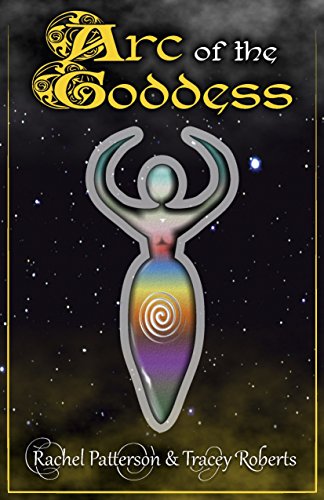
Inhaltsangabe
This year-long Arc of the Goddess course will take you on a personal journey of discovery, taking each month as the wheel of the year turns and introducing you to different goddesses and pantheons with your choice (or theirs…) about who you work with and how you work with them. The authors hope to help you connect with the magical energies of each month as well as giving you lots of practical exercises to work with and suggestions on how to make your spiritual connection stronger. At the end of the course it is hoped you will not only have discovered your own personal pantheon of goddesses to work with but also uncovered The Goddess Within…
Die Inhaltsangabe kann sich auf eine andere Ausgabe dieses Titels beziehen.
Über die Autorin bzw. den Autor
Rachel Patterson is High Priestess of the Kitchen Witch Coven and an Elder of the Kitchen Witch School of Natural Witchcraft. A Green/Kitchen Witch with an added dash of hedgewitch and folk magic. She lives in Portsmouth, UK.
Tracey Roberts (Sunchylde DryadMoon) is an Elder and co High Priestess of the Kitchen Witch online School and Coven. She has walked a pagan path for many years, studying many different areas such as Wicca, herbalism, tarot, aromotherapy, Qabalah, yoga and historical paganism, although myths and history are her particular passion. She walks an eclectic path taking practices and inspiration from any area that works for her.
Auszug. © Genehmigter Nachdruck. Alle Rechte vorbehalten.
Arc of the Goddess
By Rachel Patterson, Tracey RobertsJohn Hunt Publishing Ltd.
Copyright © 2015 Rachel Patterson & Tracey Roberts
All rights reserved.
ISBN: 978-1-78535-318-5All rights reserved.
Contents
About the Authors,
Your Journey Begins ...,
January,
February,
March,
April,
May,
June,
July,
August,
September,
October,
November,
December,
The Goddess Within ...,
The End and the Beginning ...,
CHAPTER 1
January
January has always been for me a bit of a damp squib month. The festivities of the Yule season have all gone, the weather is usually dark, damp, cold and dreary and everyone is suffering from over-eating and over-spending.
It is a time to withdraw, to contemplate and, okay, not actually hibernate but draw in and spend time with your inner being. Rest, recuperate, but also take some time to reflect on the year before and plot, plan and scheme for the year ahead.
Seek your inner wisdom, look for answers within and listen to your intuition and what guidance it has for you.
Deities
In this part of the course we suggest nine goddesses that we associate with this month. Have a read through the information and see if any of them resonate with you. It may be that one of them comes to you in the meditation, it might be that another deity altogether greets you ... go with your intuition. We have also included a list of some deities that have celebrations or feast days within this month too.
Abundantia
Abundantia is the Roman goddess of abundance, good fortune and success. Her name means 'plenty' or 'overflowing riches'. She has also been called 'the beautiful maiden of success'. Abundantia often carries a cornucopia, known as the horn of plenty. This cornucopia is symbolic of a funnel that continually outpours from the universe, the infinite and all-encompassing supply of abundance, good fortune, opportunities, and success – constantly pouring out all good things. I definitely need to get one of these ... Abundantia is extremely wise in the ways of finance. If invited she will provide guidance toward investments, finance and business/venture planning. A powerful protector of prosperity, if requested, the goddess Abundantia will safeguard valuables, providing peace of mind by ensuring that which we deem to be valuable is secure and well protected.
Don
This is a Welsh mother goddess (the equivalent of the Irish Dana). Don is an earth goddess and mother of the gods. This goddess is family personified and she brings trust along with nourishment for the earth as a whole. All her children are good and wholesome and bring light with them as they battle against darkness.
Erce
She is an Anglo Saxon goddess of the earth and known as 'Earth as Lady'. Erce is the female representation of the wheel of the year and the changes of the seasons. Worshipped as the triple goddess, her name can also be used as an invocation to the earth.
Lakshmi
Lakshmi is the Hindu goddess of light, beauty, good fortune, prosperity and wealth in both the spiritual and material realms. She rules prosperity in all forms and widely bestows her gifts on those who are open to receive it. Being the consort of Vishnu, the preserving principle, Lakshmi also signifies love and grace. Full moons are sacred to her.
White Buffalo Calf Woman
White Buffalo Calf Woman is a mother goddess of Native America. She taught the people how to survive by working with the land and growing crops as well as teaching them about sacred ceremonies and rites. She is often seen in buffalo form, offering herself up to the tribe so that they may be nourished, live and prosper.
Gaia
The Greek Mother Earth goddess, she is the beginning of all life and creation and represents all that has been created and all that grows upon the earth including all land, sky and sea. She is the lush green land and the fertile soils.
Devi
The great goddess and the ultimate female force in Hinduism, Devi's name literally means 'goddess'. She is the balance between dark and light, good and evil, and she is the mother of the entire universe. Devi is at the centre of every Hindu goddess.
Pachamama
An earth goddess from the Inca culture she rules the earth and agriculture, depicted as a dragon that sleeps under the mountains of Peru. If not honoured she sends earthquakes. If kept happy she ensures an abundance of good harvests.
Sheela Na Gig
A lusty Irish hag goddess, her carvings are found throughout Ireland as a naked female holding open her vulva. She is a dark crone goddess, guardian of all things feminine as well as the cycle of birth, death and rebirth.
Feast/Celebration Days
We have listed here the feast and celebration days for deities (we have included gods as well as goddesses) throughout January from various cultures and pantheons. These are taken from our own research ... we apologise for any errors, but history is a fickle thing and calendars have changed over the years ...
1st January
A Roman festival where vows were offered to Juno and Janus, presents were exchanged as a token of friendship. Dates, figs and honey were sealed in white jars and offered to Janus.
The Goddess: A Guatemalan festival where the water from five sacred coconuts is drunk and used to fertilise the ground. Women officiate the ceremony and guard the coconuts overnight, then dedicate them to the goddess before the coconut milk is drunk.
Fortuna: A Roman day of sacrifices, which were given to Fortuna to bring a year of luck and abundance.
2nd January
Isis: Offerings were made to celebrate the coming of Isis from Phoenicia.
Inanna: A white candle was lit the previous night at sunset to burn throughout the night and extinguished the next morning to celebrate the birth of Inanna.
5th January
Kore/Persephone: People spent the night in a temple singing to Alexandria, after which a statue, a wooden idol, was brought into the inner temple and carried around seven times in honour of the story of Persephone.
6th January
Ancient Italian festival of La Befana: An old hag figure, Befana flies around the world on a broomstick, landing on the roofs of houses and descending down the chimney where she delivers sweets and presents to children who have been good, or coal to those that haven't. They story goes that La Befana was approached by the Three Wise Men who asked her to direct them to the stable where baby Jesus had been born. La Befana was too busy doing the housework and declined. But then she realised she may have made a mistake and gathered up a bag of gifts and set off to search for the baby Jesus. Although she followed the star she was unable to find the stable so she continues to travel the world, searching every house for Jesus. The arrival on 6 January of La Befana marks the end of the festive holiday season and is celebrated with feasting.
Freya: The first Monday after January 6th was called Old Saxons' Plough Monday, the day when men returned to the plough (or their daily work). The farm labourers would draw a plough from door to door of the parish and solicit plough money. The queen of their celebration was Bessie, a caricature of Freya. Those dragging the plough would dress as white mummers covered with flowers and ribbons.
7th January
Sekhmet: In...
„Über diesen Titel“ kann sich auf eine andere Ausgabe dieses Titels beziehen.
Suchergebnisse für Arc of the Goddess

Beispielbild für diese ISBN
Arc Of The Goddess
Anbieter: HPB-Diamond, Dallas, TX, USA
Verkäuferbewertung 5 von 5 Sternen

paperback. Zustand: Very Good. Connecting readers with great books since 1972! Used books may not include companion materials, and may have some shelf wear or limited writing. We ship orders daily and Customer Service is our top priority! Bestandsnummer des Verkäufers S_452353184
Gebraucht kaufen
EUR 6,19
EUR 3,23 Versand
Versand innerhalb von USA
Versand innerhalb von USA
Anzahl: 1 verfügbar
Foto des Verkäufers
Arc of the Goddess
Anbieter: GreatBookPrices, Columbia, MD, USA
Verkäuferbewertung 5 von 5 Sternen
Zustand: New. Bestandsnummer des Verkäufers 26063769-n
Neu kaufen
EUR 14,81
EUR 2,27 Versand
Versand innerhalb von USA
Versand innerhalb von USA
Anzahl: 1 verfügbar
Beispielbild für diese ISBN
ARC OF THE GODDESS Format: Paperback
Anbieter: INDOO, Avenel, NJ, USA
Verkäuferbewertung 5 von 5 Sternen
Zustand: New. Bestandsnummer des Verkäufers 9781785353185
Neu kaufen
EUR 17,16
Versand gratis
Versand innerhalb von USA
Versand innerhalb von USA
Anzahl: Mehr als 20 verfügbar
Foto des Verkäufers
Arc of the Goddess
Anbieter: GreatBookPrices, Columbia, MD, USA
Verkäuferbewertung 5 von 5 Sternen
Zustand: As New. Unread book in perfect condition. Bestandsnummer des Verkäufers 26063769
Gebraucht kaufen
EUR 14,93
EUR 2,27 Versand
Versand innerhalb von USA
Versand innerhalb von USA
Anzahl: 1 verfügbar
Beispielbild für diese ISBN
ARC OF THE GODDESS Format: Paperback
Anbieter: INDOO, Avenel, NJ, USA
Verkäuferbewertung 5 von 5 Sternen
Zustand: As New. Unread copy in mint condition. Bestandsnummer des Verkäufers SS9781785353185
Gebraucht kaufen
EUR 17,28
Versand gratis
Versand innerhalb von USA
Versand innerhalb von USA
Anzahl: Mehr als 20 verfügbar
Beispielbild für diese ISBN
Arc of the Goddess
Anbieter: PBShop.store UK, Fairford, GLOS, Vereinigtes Königreich
Verkäuferbewertung 4 von 5 Sternen

PAP. Zustand: New. New Book. Shipped from UK. Established seller since 2000. Bestandsnummer des Verkäufers FW-9781785353185
Neu kaufen
EUR 17,76
EUR 4,79 Versand
Versand von Vereinigtes Königreich nach USA
Versand von Vereinigtes Königreich nach USA
Anzahl: 1 verfügbar
Beispielbild für diese ISBN
Arc of the Goddess
Anbieter: Revaluation Books, Exeter, Vereinigtes Königreich
Verkäuferbewertung 5 von 5 Sternen
Paperback. Zustand: Brand New. 272 pages. 8.50x5.50x0.75 inches. In Stock. Bestandsnummer des Verkäufers __1785353187
Neu kaufen
EUR 15,04
EUR 11,51 Versand
Versand von Vereinigtes Königreich nach USA
Versand von Vereinigtes Königreich nach USA
Anzahl: 1 verfügbar
Beispielbild für diese ISBN
Arc Of The Goddess
Anbieter: Kennys Bookshop and Art Galleries Ltd., Galway, GY, Irland
Verkäuferbewertung 5 von 5 Sternen
Zustand: New. A year-long journey taking you on your own personal pathway through the magical energy of each month. Num Pages: 272 pages. BIC Classification: VXWS. Category: (G) General (US: Trade). Dimension: 216 x 140 x 15. Weight in Grams: 259. . 2016. Paperback. . . . . Bestandsnummer des Verkäufers V9781785353185
Neu kaufen
EUR 19,37
EUR 10,50 Versand
Versand von Irland nach USA
Versand von Irland nach USA
Anzahl: 1 verfügbar
Beispielbild für diese ISBN
Arc of the Goddess
Anbieter: Russell Books, Victoria, BC, Kanada
Verkäuferbewertung 4 von 5 Sternen
Zustand: Very Good. Bestandsnummer des Verkäufers FORT938916
Gebraucht kaufen
EUR 13,30
EUR 17,22 Versand
Versand von Kanada nach USA
Versand von Kanada nach USA
Anzahl: 1 verfügbar
Beispielbild für diese ISBN
Arc Of The Goddess
Anbieter: Kennys Bookstore, Olney, MD, USA
Verkäuferbewertung 4 von 5 Sternen
Zustand: New. A year-long journey taking you on your own personal pathway through the magical energy of each month. Num Pages: 272 pages. BIC Classification: VXWS. Category: (G) General (US: Trade). Dimension: 216 x 140 x 15. Weight in Grams: 259. . 2016. Paperback. . . . . Books ship from the US and Ireland. Bestandsnummer des Verkäufers V9781785353185
Neu kaufen
EUR 23,11
EUR 9,05 Versand
Versand innerhalb von USA
Versand innerhalb von USA
Anzahl: 1 verfügbar