
Verwandte Artikel zu Partitioning Bazaar Art: Popular Visual Culture of...
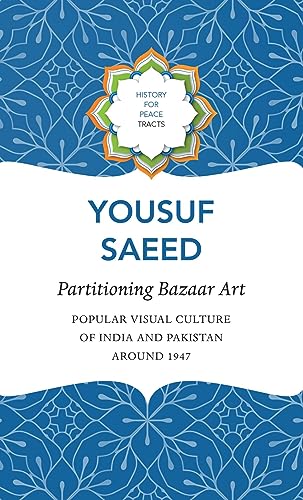
Partitioning Bazaar Art: Popular Visual Culture of India and Pakistan Around 1947 (History for Peace Tracts) - Hardcover
Inhaltsangabe
Offers insight into the links between the development of print culture and the many dynamic strains of nationalism in dialogue during the Partition of the Indian subcontinent in 1947.
How did inexpensive posters influence nationalism in the decades leading up to and succeeding the Partition of the Indian subcontinent in 1947? If mechanically reproduced images that occupy public spaces reflect the aesthetics of the “masses,” what can a critical interpretation of subcontinental popular visual culture in the mid-twentieth century reveal about the formation of communal identities?
In this essay, Yousuf Saeed studies the selective deification of leaders fighting for Indian independence. He highlights the biased representation within the domain of “patriotic” posters of the time and the evolving portrayal of religious minority communities in India’s popular print culture over subsequent decades. Also charts the turn popular print culture took in post-Partition Pakistan, Saeed focuses on the country’s thriving industry of Sufi-saint posters. Partitioning Bazaar Art is a timely exploration of how nationalism can be defined through popular imagery.
Die Inhaltsangabe kann sich auf eine andere Ausgabe dieses Titels beziehen.
Über die Autorin bzw. den Autor
Yousuf Saeed is a filmmaker, author, and archivist of random ephemera based in Delhi, India. His work includes the feature-length documentary Khayal Darpan about the state of classical music in Pakistan. He is also the author of Muslim Devotional Art in India.
„Über diesen Titel“ kann sich auf eine andere Ausgabe dieses Titels beziehen.
Suchergebnisse für Partitioning Bazaar Art: Popular Visual Culture of...

Beispielbild für diese ISBN
Partitioning Bazaar Art: Popular Visual Culture of India and Pakistan around 1947 (History for Peace)
Anbieter: Midtown Scholar Bookstore, Harrisburg, PA, USA
Verkäuferbewertung 5 von 5 Sternen

hardcover. Zustand: Very Good. HARDCOVER Very Good - Crisp, clean, unread book with some shelfwear/edgewear, may have a remainder mark - NICE Standard-sized. Bestandsnummer des Verkäufers M1803092912Z2
Gebraucht kaufen
EUR 4,97
EUR 5,34 Versand
Versand innerhalb von USA
Versand innerhalb von USA
Anzahl: 3 verfügbar
Beispielbild für diese ISBN
Partitioning Bazaar Art: Popular Visual Culture of India and Pakistan Around 1947 (History for Peace)
Verlag:
Seagull Books November 2023, 2023
ISBN 10: 1803092912
ISBN 13: 9781803092911
Gebraucht
Hardcover
Anbieter: Magus Books Seattle, Seattle, WA, USA
Verkäuferbewertung 5 von 5 Sternen
Hardcover. Zustand: VG-. Zustand des Schutzumschlags: Good. used hardcover in a dust jacket. jacket is slightly worn about the edges, but with no tears and not price clipped. pages and binding are clean, straight and tight. there are no marks to the text or other serious flaws. Bestandsnummer des Verkäufers 1435938
Gebraucht kaufen
EUR 9,53
EUR 4,45 Versand
Versand innerhalb von USA
Versand innerhalb von USA
Anzahl: 1 verfügbar
Foto des Verkäufers
Partitioning Bazaar Art : Popular Visual Culture of India and Pakistan Around 1947
Anbieter: GreatBookPrices, Columbia, MD, USA
Verkäuferbewertung 5 von 5 Sternen
Zustand: New. Bestandsnummer des Verkäufers 45796591-n
Neu kaufen
EUR 11,98
EUR 2,35 Versand
Versand innerhalb von USA
Versand innerhalb von USA
Anzahl: 1 verfügbar
Beispielbild für diese ISBN
PartitioningBazaarArt Format: Hardback
Anbieter: INDOO, Avenel, NJ, USA
Verkäuferbewertung 5 von 5 Sternen
Zustand: New. Brand New. Bestandsnummer des Verkäufers 9781803092911
Neu kaufen
EUR 14,41
Versand gratis
Versand innerhalb von USA
Versand innerhalb von USA
Anzahl: Mehr als 20 verfügbar
Beispielbild für diese ISBN
Partitioning Bazaar Art: Popular Visual Culture of India and Pakistan around 1947 (History for Peace)
Anbieter: Midtown Scholar Bookstore, Harrisburg, PA, USA
Verkäuferbewertung 5 von 5 Sternen
hardcover. Zustand: Good. HARDCOVER Good - Bumped and creased book with tears to the extremities, but not affecting the text block, may have remainder mark or previous owner's name - GOOD Standard-sized. Bestandsnummer des Verkäufers M1803092912Z3
Gebraucht kaufen
EUR 9,11
EUR 5,34 Versand
Versand innerhalb von USA
Versand innerhalb von USA
Anzahl: 1 verfügbar
Foto des Verkäufers
Partitioning Bazaar Art - Popular Visual Culture of India and Pakistan around 1947
Anbieter: Rarewaves.com USA, London, LONDO, Vereinigtes Königreich
Verkäuferbewertung 5 von 5 Sternen
Hardback. Zustand: New. Offers insight into the links between the development of print culture and the many dynamic strains of nationalism in dialogue during the Partition of the Indian subcontinent in 1947. How did inexpensive posters influence nationalism in the decades leading up to and succeeding the Partition of the Indian subcontinent in 1947? If mechanically reproduced images that occupy public spaces reflect the aesthetics of the "masses," what can a critical interpretation of subcontinental popular visual culture in the mid-twentieth century reveal about the formation of communal identities? In this essay, Yousuf Saeed studies the selective deification of leaders fighting for Indian independence. He highlights the biased representation within the domain of "patriotic" posters of the time and the evolving portrayal of religious minority communities in India's popular print culture over subsequent decades. Also charts the turn popular print culture took in post-Partition Pakistan, Saeed focuses on the country's thriving industry of Sufi-saint posters. Partitioning Bazaar Art is a timely exploration of how nationalism can be defined through popular imagery. Bestandsnummer des Verkäufers LU-9781803092911
Neu kaufen
EUR 15,41
Versand gratis
Versand von Vereinigtes Königreich nach USA
Versand von Vereinigtes Königreich nach USA
Anzahl: 2 verfügbar
Foto des Verkäufers
Partitioning Bazaar Art : Popular Visual Culture of India and Pakistan Around 1947
Anbieter: GreatBookPrices, Columbia, MD, USA
Verkäuferbewertung 5 von 5 Sternen
Zustand: As New. Unread book in perfect condition. Bestandsnummer des Verkäufers 45796591
Gebraucht kaufen
EUR 13,70
EUR 2,35 Versand
Versand innerhalb von USA
Versand innerhalb von USA
Anzahl: 1 verfügbar
Beispielbild für diese ISBN
Partitioning Bazaar Art Popular Visual Culture of India and Pakistan around 1947 (Hardcover)
Verlag:
Seagull Books London Ltd, Greenford, 2023
ISBN 10: 1803092912
ISBN 13: 9781803092911
Neu
Hardcover
Anbieter: Grand Eagle Retail, Bensenville, IL, USA
Verkäuferbewertung 5 von 5 Sternen
Hardcover. Zustand: new. Hardcover. Offers insight into the links between the development of print culture and the many dynamic strains of nationalism in dialogue during the Partition of the Indian subcontinent in 1947. How did inexpensive posters influence nationalism in the decades leading up to and succeeding the Partition of the Indian subcontinent in 1947? If mechanically reproduced images that occupy public spaces reflect the aesthetics of the masses, what can a critical interpretation of subcontinental popular visual culture in the mid-twentieth century reveal about the formation of communal identities? In this essay, Yousuf Saeed studies the selective deification of leaders fighting for Indian independence. He highlights the biased representation within the domain of patriotic posters of the time and the evolving portrayal of religious minority communities in Indias popular print culture over subsequent decades. Also charts the turn popular print culture took in post-Partition Pakistan, Saeed focuses on the countrys thriving industry of Sufi-saint posters. Partitioning Bazaar Art is a timely exploration of how nationalism can be defined through popular imagery. "The text in this volume is an updated edition of a lecture delivered at the 2016 History for Peace conference 'The idea of nationalism'"--T.p. verso Shipping may be from multiple locations in the US or from the UK, depending on stock availability. Bestandsnummer des Verkäufers 9781803092911
Beispielbild für diese ISBN
Partitioning Bazaar Art: Popular Visual Culture of India and Pakistan around 1947 (History for Peace)
Anbieter: Majestic Books, Hounslow, Vereinigtes Königreich
Verkäuferbewertung 4 von 5 Sternen

Zustand: New. Bestandsnummer des Verkäufers 401422164
Neu kaufen
EUR 8,54
EUR 7,71 Versand
Versand von Vereinigtes Königreich nach USA
Versand von Vereinigtes Königreich nach USA
Anzahl: 4 verfügbar
Beispielbild für diese ISBN
Partitioning Bazaar Art Popular Visual Culture of India and Pakistan around 1947 (History for Peace)
Verlag:
Seagull Books London Ltd 2023-12-06, 2023
ISBN 10: 1803092912
ISBN 13: 9781803092911
Neu
Hardcover
Anbieter: Chiron Media, Wallingford, Vereinigtes Königreich
Verkäuferbewertung 5 von 5 Sternen
Hardcover. Zustand: New. Brand new book, sourced directly from publisher. Dispatch time is 24-48 hours from our warehouse. Book will be sent in robust, secure packaging to ensure it reaches you securely. Bestandsnummer des Verkäufers 6666-GRD-9781803092911
Neu kaufen
EUR 12,29
EUR 5,33 Versand
Versand von Vereinigtes Königreich nach USA
Versand von Vereinigtes Königreich nach USA
Anzahl: 1 verfügbar