
Verwandte Artikel zu Hands-On Mathematics for Deep Learning: Build a solid...
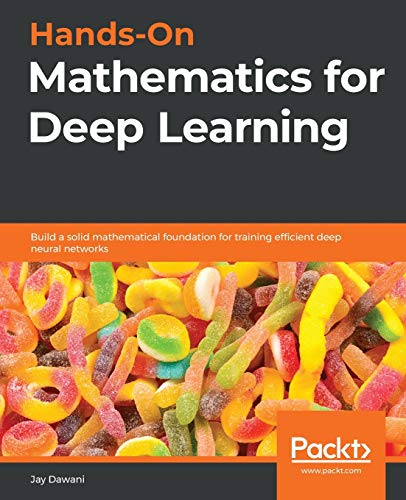
Hands-On Mathematics for Deep Learning: Build a solid mathematical foundation for training efficient deep neural networks - Softcover
Inhaltsangabe
A comprehensive guide to getting well-versed with the mathematical techniques for building modern deep learning architectures
Key Features
- Understand linear algebra, calculus, gradient algorithms, and other concepts essential for training deep neural networks
- Learn the mathematical concepts needed to understand how deep learning models function
- Use deep learning for solving problems related to vision, image, text, and sequence applications
Book Description
Most programmers and data scientists struggle with mathematics, having either overlooked or forgotten core mathematical concepts. This book uses Python libraries to help you understand the math required to build deep learning (DL) models.
You'll begin by learning about core mathematical and modern computational techniques used to design and implement DL algorithms. This book will cover essential topics, such as linear algebra, eigenvalues and eigenvectors, the singular value decomposition concept, and gradient algorithms, to help you understand how to train deep neural networks. Later chapters focus on important neural networks, such as the linear neural network and multilayer perceptrons, with a primary focus on helping you learn how each model works. As you advance, you will delve into the math used for regularization, multi-layered DL, forward propagation, optimization, and backpropagation techniques to understand what it takes to build full-fledged DL models. Finally, you'll explore CNN, recurrent neural network (RNN), and GAN models and their application.
By the end of this book, you'll have built a strong foundation in neural networks and DL mathematical concepts, which will help you to confidently research and build custom models in DL.
What you will learn
- Understand the key mathematical concepts for building neural network models
- Discover core multivariable calculus concepts
- Improve the performance of deep learning models using optimization techniques
- Cover optimization algorithms, from basic stochastic gradient descent (SGD) to the advanced Adam optimizer
- Understand computational graphs and their importance in DL
- Explore the backpropagation algorithm to reduce output error
- Cover DL algorithms such as convolutional neural networks (CNNs), sequence models, and generative adversarial networks (GANs)
Who this book is for
This book is for data scientists, machine learning developers, aspiring deep learning developers, or anyone who wants to understand the foundation of deep learning by learning the math behind it. Working knowledge of the Python programming language and machine learning basics is required.
Table of Contents
- Linear Algebra
- Vector Calculus
- Probability and Statistics
- Optimization
- Graph Theory
- Linear Neural Networks
- Feedforward Neural Networks
- Regularization
- Convolutional Neural Networks
- Recurrent Neural Networks
- Attention Mechanisms
- Generative Models
- Transfer and Meta Learning
- Geometric Deep Learning
Die Inhaltsangabe kann sich auf eine andere Ausgabe dieses Titels beziehen.
Über die Autorin bzw. den Autor
Jay Dawani is a former professional swimmer turned mathematician and computer scientist. He is also a Forbes 30 Under 30 Fellow. At present, he is the Director of Artificial Intelligence at Geometric Energy Corporation (NATO CAGE) and the CEO of Lemurian Labs - a startup he founded that is developing the next generation of autonomy, intelligent process automation, and driver intelligence. Previously he has also been the technology and R&D advisor to Spacebit Capital. He has spent the last three years researching at the frontiers of AI with a focus on reinforcement learning, open-ended learning, deep learning, quantum machine learning, human-machine interaction, multi-agent and complex systems, and artificial general intelligence.
Von der hinteren Coverseite
A comprehensive guide to getting well-versed with the mathematical techniques for building modern deep learning architectures Key Features Understand linear algebra, calculus, gradient algorithms, and other concepts essential for training deep neural networks Learn the mathematical concepts needed to understand how deep learning models function Use deep learning for solving problems related to vision, image, text, and sequence applications Book Description Most programmers and data scientists struggle with mathematics, having either overlooked or forgotten core mathematical concepts. This book uses Python libraries to help you understand the math required to build deep learning (DL) models. You'll begin by learning about core mathematical and modern computational techniques used to design and implement DL algorithms. This book will cover essential topics, such as linear algebra, eigenvalues and eigenvectors, the singular value decomposition concept, and gradient algorithms, to help you understand how to train deep neural networks. Later chapters focus on important neural networks, such as the linear neural network and multilayer perceptrons, with a primary focus on helping you learn how each model works. As you advance, you will delve into the math used for regularization, multi-layered DL, forward propagation, optimization, and backpropagation techniques to understand what it takes to build full-fledged DL models. Finally, you'll explore CNN, recurrent neural network (RNN), and GAN models and their application. By the end of this book, you'll have built a strong foundation in neural networks and DL mathematical concepts, which will help you to confidently research and build custom models in DL. What you will learn Understand the key mathematical concepts for building neural network models Discover core multivariable calculus concepts Improve the performance of deep learning models using optimization techniques Cover optimization algorithms, from basic stochastic gradient descent (SGD) to the advanced Adam optimizer Understand computational graphs and their importance in DL Explore the backpropagation algorithm to reduce output error Cover DL algorithms such as convolutional neural networks (CNNs), sequence models, and generative adversarial networks (GANs) Who this book is for This book is for data scientists, machine learning developers, aspiring deep learning developers, or anyone who wants to understand the foundation of deep learning by learning the math behind it. Working knowledge of the Python programming language and machine learning basics is required.
„Über diesen Titel“ kann sich auf eine andere Ausgabe dieses Titels beziehen.
Suchergebnisse für Hands-On Mathematics for Deep Learning: Build a solid...

Foto des Verkäufers
Hands-On Mathematics for Deep Learning: Build a solid mathematical foundation for training efficient deep neural networks
Anbieter: Bay State Book Company, North Smithfield, RI, USA
Verkäuferbewertung 5 von 5 Sternen

Zustand: very_good. Bestandsnummer des Verkäufers BSM.1BPRU
Gebraucht kaufen
EUR 28,59
Versand gratis
Versand innerhalb von USA
Versand innerhalb von USA
Anzahl: 1 verfügbar
Beispielbild für diese ISBN
Hands-On Mathematics for Deep Learning
Anbieter: GreatBookPrices, Columbia, MD, USA
Verkäuferbewertung 5 von 5 Sternen
Zustand: New. Bestandsnummer des Verkäufers 41469428-n
Neu kaufen
EUR 42,93
EUR 2,28 Versand
Versand innerhalb von USA
Versand innerhalb von USA
Anzahl: Mehr als 20 verfügbar
Beispielbild für diese ISBN
Hands-On Mathematics for Deep Learning: Build a solid mathematical foundation for training efficient deep neural networks
Anbieter: California Books, Miami, FL, USA
Verkäuferbewertung 4 von 5 Sternen

Zustand: New. Bestandsnummer des Verkäufers I-9781838647292
Neu kaufen
EUR 45,29
Versand gratis
Versand innerhalb von USA
Versand innerhalb von USA
Anzahl: Mehr als 20 verfügbar
Beispielbild für diese ISBN
Hands-On Mathematics for Deep Learning
Anbieter: GreatBookPrices, Columbia, MD, USA
Verkäuferbewertung 5 von 5 Sternen
Zustand: As New. Unread book in perfect condition. Bestandsnummer des Verkäufers 41469428
Gebraucht kaufen
EUR 48,64
EUR 2,28 Versand
Versand innerhalb von USA
Versand innerhalb von USA
Anzahl: Mehr als 20 verfügbar
Beispielbild für diese ISBN
Hands-On Mathematics for Deep Learning
Print-on-DemandAnbieter: PBShop.store UK, Fairford, GLOS, Vereinigtes Königreich
Verkäuferbewertung 5 von 5 Sternen
PAP. Zustand: New. New Book. Delivered from our UK warehouse in 4 to 14 business days. THIS BOOK IS PRINTED ON DEMAND. Established seller since 2000. Bestandsnummer des Verkäufers IQ-9781838647292
Neu kaufen
EUR 48,28
EUR 6,85 Versand
Versand von Vereinigtes Königreich nach USA
Versand von Vereinigtes Königreich nach USA
Anzahl: 15 verfügbar
Foto des Verkäufers
Hands-On Mathematics for Deep Learning
Anbieter: Rarewaves.com USA, London, LONDO, Vereinigtes Königreich
Verkäuferbewertung 5 von 5 Sternen
Paperback. Zustand: New. A comprehensive guide to getting well-versed with the mathematical techniques for building modern deep learning architecturesKey FeaturesUnderstand linear algebra, calculus, gradient algorithms, and other concepts essential for training deep neural networksLearn the mathematical concepts needed to understand how deep learning models functionUse deep learning for solving problems related to vision, image, text, and sequence applicationsBook DescriptionMost programmers and data scientists struggle with mathematics, having either overlooked or forgotten core mathematical concepts. This book uses Python libraries to help you understand the math required to build deep learning (DL) models.You'll begin by learning about core mathematical and modern computational techniques used to design and implement DL algorithms. This book will cover essential topics, such as linear algebra, eigenvalues and eigenvectors, the singular value decomposition concept, and gradient algorithms, to help you understand how to train deep neural networks. Later chapters focus on important neural networks, such as the linear neural network and multilayer perceptrons, with a primary focus on helping you learn how each model works. As you advance, you will delve into the math used for regularization, multi-layered DL, forward propagation, optimization, and backpropagation techniques to understand what it takes to build full-fledged DL models. Finally, you'll explore CNN, recurrent neural network (RNN), and GAN models and their application.By the end of this book, you'll have built a strong foundation in neural networks and DL mathematical concepts, which will help you to confidently research and build custom models in DL.What you will learnUnderstand the key mathematical concepts for building neural network modelsDiscover core multivariable calculus conceptsImprove the performance of deep learning models using optimization techniquesCover optimization algorithms, from basic stochastic gradient descent (SGD) to the advanced Adam optimizerUnderstand computational graphs and their importance in DLExplore the backpropagation algorithm to reduce output errorCover DL algorithms such as convolutional neural networks (CNNs), sequence models, and generative adversarial networks (GANs)Who this book is forThis book is for data scientists, machine learning developers, aspiring deep learning developers, or anyone who wants to understand the foundation of deep learning by learning the math behind it. Working knowledge of the Python programming language and machine learning basics is required. Bestandsnummer des Verkäufers LU-9781838647292
Neu kaufen
EUR 55,68
Versand gratis
Versand von Vereinigtes Königreich nach USA
Versand von Vereinigtes Königreich nach USA
Anzahl: Mehr als 20 verfügbar
Beispielbild für diese ISBN
Hands-On Mathematics for Deep Learning
Anbieter: Books Puddle, New York, NY, USA
Verkäuferbewertung 4 von 5 Sternen
Zustand: New. pp. 345. Bestandsnummer des Verkäufers 26376866447
Neu kaufen
EUR 54,94
EUR 3,44 Versand
Versand innerhalb von USA
Versand innerhalb von USA
Anzahl: 4 verfügbar
Beispielbild für diese ISBN
Hands-On Mathematics for Deep Learning
Print-on-DemandAnbieter: Majestic Books, Hounslow, Vereinigtes Königreich
Verkäuferbewertung 4 von 5 Sternen
Zustand: New. Print on Demand pp. 345. Bestandsnummer des Verkäufers 369178960
Neu kaufen
EUR 51,71
EUR 7,58 Versand
Versand von Vereinigtes Königreich nach USA
Versand von Vereinigtes Königreich nach USA
Anzahl: 4 verfügbar
Beispielbild für diese ISBN
Hands-On Mathematics for Deep Learning: Build a solid mathematical foundation for training efficient deep neural networks
Anbieter: Ria Christie Collections, Uxbridge, Vereinigtes Königreich
Verkäuferbewertung 5 von 5 Sternen
Zustand: New. In. Bestandsnummer des Verkäufers ria9781838647292_new
Neu kaufen
EUR 48,72
EUR 13,17 Versand
Versand von Vereinigtes Königreich nach USA
Versand von Vereinigtes Königreich nach USA
Anzahl: Mehr als 20 verfügbar
Beispielbild für diese ISBN
Hands-On Mathematics for Deep Learning
Print-on-DemandAnbieter: Biblios, Frankfurt am main, HESSE, Deutschland
Verkäuferbewertung 4 von 5 Sternen
Zustand: New. PRINT ON DEMAND pp. 345. Bestandsnummer des Verkäufers 18376866437
Neu kaufen
EUR 52,77
EUR 9,95 Versand
Versand von Deutschland nach USA
Versand von Deutschland nach USA
Anzahl: 4 verfügbar