
Verwandte Artikel zu I Curse the River of Time
Inhaltsangabe
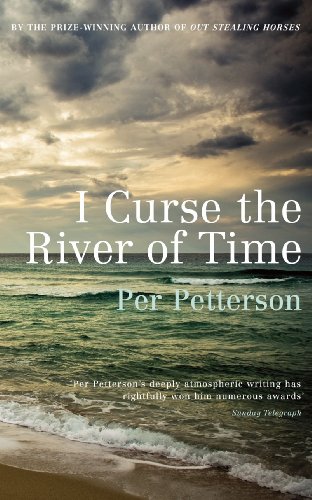
It is 1989 and all over Europe Communism is crumbling. Arvid Jansen, 37, is in the throes of a divorce. At the same time, his mother is diagnosed with cancer. Over a few intense autumn days, we follow Arvid as he struggles to find a new footing in his life, while all the established patterns around him are changing at staggering speed. As he attempts to negotiate the present, he casts his mind back to holidays on the beach with his brothers, to courtship, and to his early working life, when as a young Communist he abandoned his studies to work on a production line.
I Curse the River of Time is an honest, heartbreaking yet humorous portrayal of a complicated mother-son relationship told in Petterson's precise and beautiful prose.
Die Inhaltsangabe kann sich auf eine andere Ausgabe dieses Titels beziehen.
Über die Autorinnen und Autoren
Per Petterson was born in Oslo in 1952 and worked for several years as an unskilled labourer and a bookseller. He has received the prestigious Nordic Council Literature Prize and, on multiple occasions, the Brage Prize, the Norwegian Critics Prize for Literature and the Booksellers' Best Book of the Year Award for his many celebrated novels, such as In the Wake, I Curse the River of Time and I Refuse. Petterson made his literary breakthrough in 2003 with Out Stealing Horses, which in English translation won the International IMPAC Dublin Literary Award and the Independent Foreign Fiction Prize. It has been published in fifty languages and was an international bestseller.
Charlotte Barslund translates Scandinavian novels and plays. Her recent work includes Calling Out For You by Karin Fossum, Machine by Peter Adolphsen and The Pelican by August Strindberg.
Auszug. © Genehmigter Nachdruck. Alle Rechte vorbehalten.
1
All this happened quite a few years ago. My mother had been unwell for some time. To put a stop to my brothers’ nagging and my father’s especially, she finally went to see the doctor she always saw, the doctor my family had used since the dawn of time. He must have been ancient at that point for I cannot recall ever not visiting him, nor can I recall him ever being young. I used him myself even though I now lived a good distance away.
After a brief check-up, this old family doctor swiftly referred her to Aker Hospital for further examination. Having been for several, no doubt painful, tests in rooms painted white, painted apple green, at the big hospital near the Sinsen junction on the side of Oslo I always like to think of as our side, the east side that is, she was told to go home and wait two weeks for the results. When they finally arrived, three weeks later rather than two, it turned out that she had stomach cancer. Her first reaction was as follows: Good Lord, here I’ve been lying awake night after night, year after year, especially when the children were small, terrified of dying from lung cancer, and then I get cancer of the stomach. What a waste of time!
My mother was like that. And she was a smoker, just as I have been my entire adult life. I know well those night-time moments when you lie in bed staring into the dark, with dry, aching eyes feeling life like ashes in your mouth, even though I have probably worried more about my own life than leaving my children fatherless.
For a while she just sat at the kitchen table with the envelope in her hand, staring out of the window at the same lawn, the same white painted fence, the same clothes lines and the same row of identical grey houses she had been looking at for so many years, and she realised she did not like it here at all. She did not like all the rock in this country, did not like the spruce forests or the high plains, did not like the mountains. She could not see the mountains, but she knew they were everywhere out there leaving their mark, every single day, on the people who lived in Norway.
She stood up, went out into the hallway, made a call, replaced the receiver after a brief conversation and returned to the kitchen table to wait for my father. My father was retired and had been for some years, but she was fourteen years younger than him and still working; though today was her day off.
My father was out, he always had something he needed to see to, errands to run my mother was rarely told about, the results of which she never saw, but whatever conflicts there had been between them were settled long ago. There was a truce now. As long as he did not try to run her life, he was left in peace to run his own. She had even started to defend and protect him. If I uttered a word of criticism or took her side in a misguided attempt to support the women’s liberation, I was told to mind my own business. It is easy for you to criticise, she would say, who have had it all handed to you on a silver plate. You squirt.
As if my own life were plain sailing. I was heading full speed for a divorce. It was my first; I thought it was the end of the world. There were days I could not move from the kitchen to the bathroom without falling to my knees at least once before I could pull myself together and walk on.
When finally my father returned from whatever project he thought was the most urgent, something at Vålerenga no doubt, which was the place he was born, where I too had been born seven years after the end of the war, a place he often returned to, to meet up with men his own age and background, to see the old boys, as they called themselves, my mother was still sitting at the kitchen table. She was smoking a cigarette, a Salem, I guess, or perhaps a Cooly. If you were scared of lung cancer you ended up smoking menthols.
My father stood in the doorway with a well-worn bag in his hand, not unlike the one I used in years six and seven at school, we all carried a bag like that then, and for all I know it was the same one. In that case the bag was more than twenty-five years old.
‘I’m leaving today,’ my mother said.
‘Where to?’ my father said.
‘Home.’
‘Home,’ he said. ‘Today? Shouldn’t we talk about it first? Don’t I get a chance to think about it?’
‘There’s nothing to discuss,’ my mother said. ‘I’ve booked my ticket. I’ve just had a letter from Aker Hospital. I’ve got cancer.’
‘You have cancer?’
‘Yes. I’ve got stomach cancer. So now I have to go home for a bit.’
She still referred to Denmark as home when she spoke about the town she came from, in the far north of that small country, even though she had lived in Norway, in Oslo, for forty years exactly.
‘But, do you want to go alone?’ he said.
‘Yes,’ my mother said. ‘That’s what I want.’
And when she said it like this she knew my father would be hurt and upset, and that gave her no pleasure at all, on the contrary, he deserves better, she thought, after so much life, but she did not feel she had a choice. She had to go on her own.
‘I probably won’t stay very long,’ she said. ‘Just a few days, and then I’ll be back. I have to go into hospital. I may need an operation. At least I hope so. In any case I’m catching the evening ferry.’
She looked at her watch.
‘And that’s in three hours. I’d best go upstairs and pack my things.’
They lived in a terraced house with a kitchen and a living room on the ground floor and three small bedrooms and a tiny bathroom on the first. I grew up in that house. I knew every crinkle in the wallpaper, every crack in the floorboards, every terrifying corner in the cellar. It was cheap housing. If you kicked the wall hard enough, your foot would crash into your neighbour’s living room.
She stubbed out the cigarette in the ashtray and stood up. My father had not moved, he was still standing in the doorway with the bag in one hand, the other insecurely raised in her direction. He had never been a champ when it came to physical contact, not outside the boxing ring, and frankly, it was not her strong point either, but now she pushed my father aside, carefully, almost lovingly so that she could get past. And he let her do it, but with so much reluctance, both firm and slow, it was enough for her to understand he wanted to give her something tangible, a sign, without putting it into words. But it’s too late for that, she told herself, far too late, she said, but he could not hear her. Yet she allowed my father to hold her up long enough for him to understand there was enough between them after forty years together and four sons, even though one of them had already died, for them to live in the same house still, in the same flat, and wait for each other and not just run off when something important had happened.
The ferry she was travelling on, which we all travelled on when we headed south, was called the Holger Danske. Later she was docked and turned into a shelter for refugees, in Stockholm first, I’ve found out, and then in Malmö, and was now stripped down to scrap metal on some beach in Asia, in India or Bangladesh, but in the days I am talking about here, she still sailed between Oslo and this town in the far north of Jutland, the very town my mother grew up in.
She liked that boat and thought its poor...
„Über diesen Titel“ kann sich auf eine andere Ausgabe dieses Titels beziehen.
Suchergebnisse für I Curse the River of Time

Beispielbild für diese ISBN
I Curse the River of Time
Anbieter: AwesomeBooks, Wallingford, Vereinigtes Königreich
Verkäuferbewertung 5 von 5 Sternen

Hardcover. Zustand: Very Good. I Curse the River of Time This book is in very good condition and will be shipped within 24 hours of ordering. The cover may have some limited signs of wear but the pages are clean, intact and the spine remains undamaged. This book has clearly been well maintained and looked after thus far. Money back guarantee if you are not satisfied. See all our books here, order more than 1 book and get discounted shipping. Bestandsnummer des Verkäufers 7719-9781846553004
Gebraucht kaufen
EUR 3,77
EUR 4,89 Versand
Versand von Vereinigtes Königreich nach USA
Versand von Vereinigtes Königreich nach USA
Anzahl: 2 verfügbar
Beispielbild für diese ISBN
I Curse the River of Tim(ltd Edn)
Anbieter: Better World Books Ltd, Dunfermline, Vereinigtes Königreich
Verkäuferbewertung 5 von 5 Sternen
Zustand: Good. Pages intact with minimal writing/highlighting. The binding may be loose and creased. Dust jackets/supplements are not included. Stock photo provided. Product includes identifying sticker. Better World Books: Buy Books. Do Good. Bestandsnummer des Verkäufers GRP102191609
Gebraucht kaufen
EUR 5,70
EUR 5,93 Versand
Versand von Vereinigtes Königreich nach USA
Versand von Vereinigtes Königreich nach USA
Anzahl: 1 verfügbar
Beispielbild für diese ISBN
I Curse the River of Tim(ltd Edn)
Anbieter: Better World Books Ltd, Dunfermline, Vereinigtes Königreich
Verkäuferbewertung 5 von 5 Sternen
Zustand: Very Good. Former library copy. Pages intact with possible writing/highlighting. Binding strong with minor wear. Dust jackets/supplements may not be included. Includes library markings. Stock photo provided. Product includes identifying sticker. Better World Books: Buy Books. Do Good. Bestandsnummer des Verkäufers 39502129-20
Gebraucht kaufen
EUR 5,70
EUR 5,93 Versand
Versand von Vereinigtes Königreich nach USA
Versand von Vereinigtes Königreich nach USA
Anzahl: 2 verfügbar
Beispielbild für diese ISBN
I Curse the River of Time
Anbieter: Bahamut Media, Reading, Vereinigtes Königreich
Verkäuferbewertung 4 von 5 Sternen

Hardcover. Zustand: Very Good. This book is in very good condition and will be shipped within 24 hours of ordering. The cover may have some limited signs of wear but the pages are clean, intact and the spine remains undamaged. This book has clearly been well maintained and looked after thus far. Money back guarantee if you are not satisfied. See all our books here, order more than 1 book and get discounted shipping. Bestandsnummer des Verkäufers 6545-9781846553004
Gebraucht kaufen
EUR 4,79
EUR 8,28 Versand
Versand von Vereinigtes Königreich nach USA
Versand von Vereinigtes Königreich nach USA
Anzahl: 2 verfügbar
Beispielbild für diese ISBN
I Curse the River of Time
Anbieter: Greener Books, London, Vereinigtes Königreich
Verkäuferbewertung 4 von 5 Sternen
Hardcover. Zustand: Used; Very Good. **SHIPPED FROM UK** We believe you will be completely satisfied with our quick and reliable service. All orders are dispatched as swiftly as possible! Buy with confidence! Greener Books. Bestandsnummer des Verkäufers 5021194
Gebraucht kaufen
EUR 4,48
EUR 23,72 Versand
Versand von Vereinigtes Königreich nach USA
Versand von Vereinigtes Königreich nach USA
Anzahl: 1 verfügbar
Foto des Verkäufers
I Curse the River of Time (Signed, Limited UK Edition)
Verlag:
Harvill Secker, London, 2010
ISBN 10: 1846553008
ISBN 13: 9781846553004
Gebraucht
Hardcover
Erstausgabe
Signiert
Anbieter: McInBooks, IOBA, Farmington, NM, USA
Verkäuferbewertung 5 von 5 Sternen
Hardcover. Zustand: Fine. Zustand des Schutzumschlags: Fine. SIGNED, FIRST UK LIMITED EDITION, FIRST PRINTING (stated, complete number line to 1) Harvill Secker, London, 2010. NEW, Unread. Author's Signature, no inscription, on a bookplate attached to the first chapter page. Note on bookplate reads "This edition of I Curse the River of Tim e, signed by the author, is limited to 1,000 copies". Dust Jacket Bright in Brodart protective cover, Clean, no wear, no tears, not price clipped (£12.99). Text Clean, no marks. No remainder mark. Not ex-library. Not book club. Fast shipping from Dry, Smoke-Free home. Email Confirmation with Tracking Number. International ships Air Mail. Signed, First UK Limited Edition, First Printing. Bestandsnummer des Verkäufers B393 P76
Gebraucht kaufen
EUR 27,49
EUR 5,34 Versand
Versand innerhalb von USA
Versand innerhalb von USA
Anzahl: 2 verfügbar
Foto des Verkäufers
I Curse the River of Time
Verlag:
Harvill Secker, UK, 2010
ISBN 10: 1846553008
ISBN 13: 9781846553004
Gebraucht
Hardcover
Erstausgabe
Signiert
Anbieter: Alkaemia Books, Cambridge, CAMBR, Vereinigtes Königreich
Verkäuferbewertung 5 von 5 Sternen
Hardcover. Zustand: Fine. Zustand des Schutzumschlags: Fine. 1st. First printing UK printing - True First. SIGNED by Per Petterson to bookplate on title page?.this is a Limited Edition of 1000 copies. Book is As New, crisp and clean and unread. A perfect copy of this prize-winning novel by the author of "Out Stealing Horses.". Signed by Author. Bestandsnummer des Verkäufers P392
Gebraucht kaufen
EUR 30,54
EUR 24,79 Versand
Versand von Vereinigtes Königreich nach USA
Versand von Vereinigtes Königreich nach USA
Anzahl: 1 verfügbar
Beispielbild für diese ISBN
I Curse the River of Time
Verlag:
Harvill Secker, 2010
ISBN 10: 1846553008
ISBN 13: 9781846553004
Gebraucht
Hardcover
Signiert
Anbieter: Green Ink Booksellers, Hay-on-Wye, POWYS, Vereinigtes Königreich
Verkäuferbewertung 5 von 5 Sternen
Zustand: Very Good. Zustand des Schutzumschlags: Very Good. UK first edition, signed limited edition of 1000 copies, signed to bookplate. Promotional sticker to front of wrapper. Dustwrapper very slightly faded around spine, top edge of text block slightly toned. Otherwise clean, bright, tight book. Signed by Author(s). Bestandsnummer des Verkäufers 642112
Gebraucht kaufen
EUR 42,75
EUR 14,23 Versand
Versand von Vereinigtes Königreich nach USA
Versand von Vereinigtes Königreich nach USA
Anzahl: 1 verfügbar
Foto des Verkäufers
I Curse the River of Time
Verlag:
Harvill Secker, London, UK, 2010
ISBN 10: 1846553008
ISBN 13: 9781846553004
Gebraucht
Hardcover
Erstausgabe
Signiert
Anbieter: Kelleher Rare Books, Naas, IE, Irland
Verkäuferbewertung 5 von 5 Sternen
Hardcover. Zustand: Near Fine. Zustand des Schutzumschlags: Fine. 1st Edition. First UK Edition, First Printing. This true first edition, first printing (first impression) with the number "1" to the copyright page to indicate a true first print in a New Dust Jacket. One of only 1000 copies SIGNED by Per Petterson to the first chapter page via a bookplate.[This edition of I Curse the River of Time, signed by the author, is limited to 1000 copies]. Signed by Author(s). Bestandsnummer des Verkäufers 000726
Gebraucht kaufen
EUR 35,00
EUR 24,00 Versand
Versand von Irland nach USA
Versand von Irland nach USA
Anzahl: 1 verfügbar
Foto des Verkäufers
I CURSE THE RIVER OF TIME - Rare Pristine Copy of The First British Edition/First Printing: Signed by Per Petterson - SIGNED ON THE TITLE PAGE
Verlag:
London, England: Harvill Secker, 2010, 2010
ISBN 10: 1846553008
ISBN 13: 9781846553004
Gebraucht
Hardcover
Erstausgabe
Signiert
Anbieter: ModernRare, CHICAGO, IL, USA
Verkäuferbewertung 5 von 5 Sternen
Hardcover. Zustand: As New. Zustand des Schutzumschlags: As New. 1st Edition. 1st Printing. Signed. 233 pages. Published in 2010. The author's fourth novel. Now considered a contemporary classic. The first appearance of the title in English and in the United Kingdom. Precedes and should not be confused with all other subsequent editions, particularly copies that are signed on a bookplate. Published in a small and limited first print run as a hardcover original only. The First Edition is now scarce. Presents Per Petterson's "Jeg forbanner tidens elv" in a felicitous English translation. The fourth novel by Per Petterson to be translated into English. A prequel to his second novel, "In The Wake" (2006). "Examines lives half-lived, ending and perhaps beginning anew. In 1989, 37-year-old Arvid Jansen's marriage is ending and his mother is dying of cancer. Hoping to leave his marital woes behind in Oslo, Jansen follows his Danish-born mother to her home country, to the beach house where the family spent summers. During the ferry ride and the following days in Denmark, Jansen recalls his childhood bond with his mother and his decision, after two years of college, to leave school and join his fellow Communists in the factories. He struggles with his commitment to Communism - the title is a line from a poem by Mao Tse Tung - and with his place in his family and the larger world. Petterson blends hope with gorgeously evoked melancholy to come up with a heart-breaking and cautiously optimistic work" (Allison Block). An absolute "must-have" title for Per Petterson collectors. This copy is very prominently and beautifully signed in blue ink-pen on the title page by Per Petterson. It is signed directly on the page itself, not on a bookplate, as signed copies of the book are. This title is a contemporary classic. This is one of few such signed copies of the First Hardcover Edition/First Printing (British) still available online and is in especially fine condition: Clean, crisp, and bright. Please note: Copies available online have serious flaws, are subsequent printings, or are remainder-marked. This is surely an accessible and lovely alternative. A rare signed copy thus. Winner of the IMPAC Dublin Literary Award in 2007 for "Out Stealing Horses". One of the greatest writers of our time. A fine copy. (SEE ALSO OTHER PER PETTERSON AND GERBRAND BAKKER TITLES IN OUR CATALOG) ISBN 1846553008. Signed by Author. Bestandsnummer des Verkäufers 15898
Gebraucht kaufen
EUR 50,41
EUR 9,74 Versand
Versand innerhalb von USA
Versand innerhalb von USA
Anzahl: 1 verfügbar