Inhaltsangabe
An essential text that critically examines the basis of Western research, and the positioning of the indigenous as 'Other.'
Die Inhaltsangabe kann sich auf eine andere Ausgabe dieses Titels beziehen.
Über die Autorin bzw. den Autor
Linda Tuhiwai is Vice-Chancellor with responsibilities for Maori development at the University of Waikato, as well as Dean of the University's School of Maori and Pacific Development. Her other books include the co-edited collections Decolonizing Research: Indigenous Storywork as Methodology (Zed 2019) and Indigenous and Decolonizing Studies in Education (2018).
Auszug. © Genehmigter Nachdruck. Alle Rechte vorbehalten.
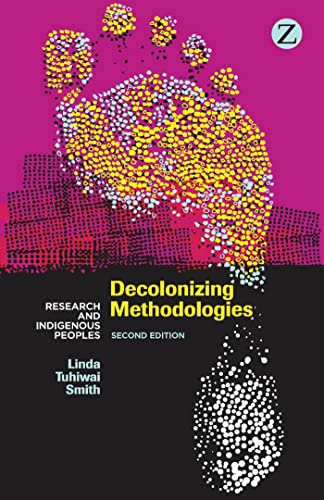
Decolonizing Methodologies
Research and Indigenous Peoples
By Linda Tuhiwai SmithZed Books Ltd
Copyright © 2012 Linda Tuhiwai Smith
All rights reserved.
ISBN: 978-1-84813-951-0All rights reserved.
Contents
Acknowledgements, viii,
Foreword, ix,
Introduction, 1,
1 Imperialism, History, Writing and Theory, 20,
2 Research through Imperial Eyes, 44,
3 Colonizing Knowledges, 61,
4 Research Adventures on Indigenous Lands, 81,
5 Notes from Down Under, 98,
6 The Indigenous Peoples' Project: Setting a New Agenda, 111,
7 Articulating an Indigenous Research Agenda, 127,
8 Twenty-five Indigenous Projects, 143,
9 Responding to the Imperatives of an Indigenous Agenda: A Case Study of Maori, 165,
10 Towards Developing Indigenous Methodologies: Kaupapa Maori Research, 185,
11 Choosing the Margins: The Role of Research in Indigenous Struggles for Social Justice, 198,
12 Getting the Story Right, Telling the Story Well: Indigenous Activism, Indigenous Research, 217,
Conclusion: A Personal Journey, 228,
Index, 234,
CHAPTER 1
Imperialism, History, Writing and Theory
The master's tools will never dismantle the master's house.
Audre Lorde
Imperialism frames the indigenous experience. It is part of our story, our version of modernity. Writing about our experiences under imperialism and its more specific expression of colonialism has become a significant project of the indigenous world. In a literary sense this has been defined by writers like Salman Rushdie, Ngugi wa Thiong'o and many others whose literary origins are grounded in the landscapes, languages, cultures and imaginative worlds of peoples and nations whose own histories were interrupted and radically reformulated by European imperialism. While the project of creating this literature is important, what indigenous activists would argue is that imperialism cannot be struggled over only at the level of text and literature. Imperialism still hurts, still destroys and is reforming itself constantly. Indigenous peoples as an international group have had to challenge, understand and have a shared language for talking about the history, the sociology, the psychology and the politics of imperialism and colonialism as an epic story telling of huge devastation, painful struggle and persistent survival. We have become quite good at talking that kind of talk, most often amongst ourselves, for ourselves and to ourselves. 'The talk' about the colonial past is embedded in our political discourses, our humour, poetry, music, story telling and other common sense ways of passing on both a narrative of history and an attitude about history. The lived experiences of imperialism and colonialism contribute another dimension to the ways in which terms like 'imperialism' can be understood. This is a dimension that indigenous peoples know and understand well.
In this chapter the intention is to discuss and contextualize four concepts which are often present (though not necessarily clearly visible) in the ways in which the ideas of indigenous peoples are articulated: imperialism, history, writing, and theory. These terms may seem to make up a strange selection, particularly as there are more obvious concepts such as self-determination or sovereignty which are used commonly in indigenous discourses. I have selected these words because from an indigenous perspective they are problematic. They are words which tend to provoke a whole array of feelings, attitudes and values. They are words of emotion which draw attention to the thousands of ways in which indigenous languages, knowledges and cultures have been silenced or misrepresented, ridiculed or condemned in academic and popular discourses. They are also words which are used in particular sorts of ways or avoided altogether. In thinking about knowledge and research, however, these are important terms which underpin the practices and styles of research with indigenous peoples. Decolonization is a process which engages with imperialism and colonialism at multiple levels. For researchers, one of those levels is concerned with having a more critical understanding of the underlying assumptions, motivations and values which inform research practices.
Imperialism
There is one particular figure whose name looms large, and whose spectre lingers, in indigenous discussions of encounters with the West: Christopher Columbus. It is not simply that Columbus is identified as the one who started it all, but rather that he has come to represent a huge legacy of suffering and destruction. Columbus 'names' that legacy more than any other individual. He sets its modern time frame (500 years) and defines the outer limits of that legacy, that is, total destruction. But there are other significant figures who symbolize and frame indigenous experiences in other places. In the imperial literature these are the 'heroes', the discoverers and adventurers, the 'fathers' of colonialism. In the indigenous literature these figures are not so admired; their deeds are definitely not the deeds of wonderful discoverers and conquering heroes. In the South Pacific, for example it is the British explorer James Cook, whose expeditions had a very clear scientific purpose and whose first encounters with indigenous peoples were fastidiously recorded. Hawai'ian academic Haunani Kay Trask's list of what Cook brought to the Pacific includes: 'capitalism, Western political ideas (such as predatory individualism) and Christianity. Most destructive of all he brought diseases that ravaged my people until we were but a remnant of what we had been on contact with his pestilent crew.' The French are remembered by Tasmanian Aborigine Greg Lehman, 'not [for] the intellectual hubbub of an emerging anthrologie or even with the swish of their travel-weary frocks. It is with an arrogant death that they presaged their appearance. ...' For many communities there were waves of different sorts of Europeans: Dutch, Portuguese, British, French, whoever had political ascendancy over a region. And, in each place, after figures such as Columbus and Cook had long departed, there came a vast array of military personnel, imperial administrators, priests, explorers, missionaries, colonial officials, artists, entrepreneurs and settlers, who cut a devastating swathe, and left a permanent wound, on the societies and communities who occupied the lands named and claimed under imperialism.
The concepts of imperialism and colonialism are crucial ones which are used across a range of disciplines, often with meanings which are taken for granted. The two terms are interconnected and what is generally agreed upon is that colonialism is but one expression of imperialism. Imperialism tends to be used in at least four different ways when describing the form of European imperialism which 'started' in the fifteenth century: (1) imperialism as economic expansion; (2) imperialism as the subjugation of 'others'; (3) imperialism as an idea or spirit with many forms of realization; and (4) imperialism as a discursive field of knowledge. These usages do not necessarily contradict each other; rather, they need to be seen as analyses which focus on different layers of imperialism. Initially the term was used by historians to explain a series of developments leading to the economic expansion of Europe. Imperialism in this sense could be tied to a chronology of events related to 'discovery', conquest, exploitation, distribution and appropriation.
Economic explanations of imperialism were first advanced by English...
„Über diesen Titel“ kann sich auf eine andere Ausgabe dieses Titels beziehen.
Weitere beliebte Ausgaben desselben Titels

Suchergebnisse für Decolonizing Methodologies: Research and Indigenous...

Foto des Verkäufers
Decolonizing Methodologies: Research and Indigenous Peoples
Anbieter: Greenworld Books, Arlington, TX, USA
Verkäuferbewertung 5 von 5 Sternen

Zustand: good. Fast Free Shipping â" Good condition book with a firm cover and clean, readable pages. Shows normal use, including some light wear or limited notes highlighting, yet remains a dependable copy overall. Supplemental items like CDs or access codes may not be included. Bestandsnummer des Verkäufers GWV.1848139519.G
Beispielbild für diese ISBN
Decolonizing Methodologies: Research and Indigenous Peoples
Anbieter: Toscana Books, AUSTIN, TX, USA
Verkäuferbewertung 5 von 5 Sternen
Hardcover. Zustand: new. Excellent Condition.Excels in customer satisfaction, prompt replies, and quality checks. Bestandsnummer des Verkäufers Scanned1848139519