
Verwandte Artikel zu Networks as Connected Contracts: Edited with an Introduction...
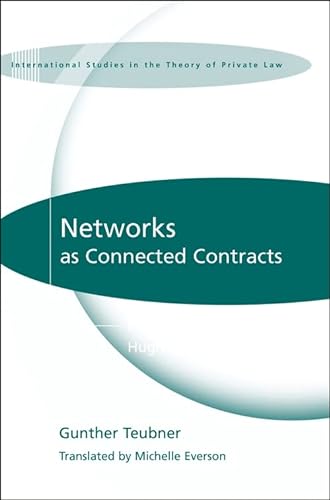
Networks as Connected Contracts: Edited with an Introduction by Hugh Collins (International Studies in the Theory of Private Law, Band 7) - Hardcover
Inhaltsangabe
Business networks consist of several independent businesses that enter into interrelated contracts, conferring on the parties many of the benefits of co-ordination achieved through vertical integration in a single firm, without creating a single integrated business such as a corporation or partnership. Retail franchises are one such example of a network, but the most common instance is a credit card transaction between a customer, retailer, and the issuer of the card. How should the law analyse this hybrid economic phenomenon? It is neither exactly a market relationship - because that overlooks the co-ordination, relational qualities and interdependence of the contracts - nor is it a type of business association or company, since it lacks a centralised co-ordinating authority that receives the residual profits.
This book is a translation of Gunther Teubner's classic work on networks, setting out his novel legal concept of 'connected contracts'. In it he explains how this concept addresses the problems posed by networks, such as the question whether the network as a whole can be held legally responsible for damage that it causes to third parties such as customers. A substantial introduction by Hugh Collins explains the analysis of networks in the context of German law and the systems theory from which Teubner approaches the topic. The introduction also explores how far the concept of connected contracts might assist in the common law world, including the UK and the USA, to address the same problems that arise in cases involving networks. As well as making a contribution to comparative law and legal theory, the book will be of interest to scholars interested in contract law, commercial law and the law of business associations.
Die Inhaltsangabe kann sich auf eine andere Ausgabe dieses Titels beziehen.
Über die Autorinnen und Autoren
Gunther Teubner is Professor Emeritus of Private Law and Legal Sociology at the Faculty of Law, Goethe-University Frankfurt am Main, Germany.
Michelle Everson is a Research Fellow at the European University Institute in Florence.
„Über diesen Titel“ kann sich auf eine andere Ausgabe dieses Titels beziehen.
Suchergebnisse für Networks as Connected Contracts: Edited with an Introduction...

Beispielbild für diese ISBN
Networks as Connected Contracts
Print-on-DemandAnbieter: PBShop.store UK, Fairford, GLOS, Vereinigtes Königreich
Verkäuferbewertung 5 von 5 Sternen

HRD. Zustand: New. New Book. Delivered from our UK warehouse in 4 to 14 business days. THIS BOOK IS PRINTED ON DEMAND. Established seller since 2000. Bestandsnummer des Verkäufers L1-9781849461740
Neu kaufen
EUR 130,71
EUR 3,83 Versand
Versand von Vereinigtes Königreich nach USA
Versand von Vereinigtes Königreich nach USA
Anzahl: Mehr als 20 verfügbar
Foto des Verkäufers
Networks As Connected Contracts
Anbieter: GreatBookPrices, Columbia, MD, USA
Verkäuferbewertung 5 von 5 Sternen
Zustand: New. Bestandsnummer des Verkäufers 11895592-n
Neu kaufen
EUR 132,85
EUR 2,31 Versand
Versand innerhalb von USA
Versand innerhalb von USA
Anzahl: Mehr als 20 verfügbar
Beispielbild für diese ISBN
Networks as Connected Contracts
Print-on-DemandAnbieter: PBShop.store US, Wood Dale, IL, USA
Verkäuferbewertung 5 von 5 Sternen
HRD. Zustand: New. New Book. Shipped from UK. THIS BOOK IS PRINTED ON DEMAND. Established seller since 2000. Bestandsnummer des Verkäufers L1-9781849461740
Neu kaufen
EUR 135,24
Versand gratis
Versand innerhalb von USA
Versand innerhalb von USA
Anzahl: Mehr als 20 verfügbar
Foto des Verkäufers
Networks As Connected Contracts
Anbieter: GreatBookPrices, Columbia, MD, USA
Verkäuferbewertung 5 von 5 Sternen
Zustand: As New. Unread book in perfect condition. Bestandsnummer des Verkäufers 11895592
Gebraucht kaufen
EUR 142,21
EUR 2,31 Versand
Versand innerhalb von USA
Versand innerhalb von USA
Anzahl: Mehr als 20 verfügbar
Foto des Verkäufers
Networks As Connected Contracts
Anbieter: GreatBookPricesUK, Woodford Green, Vereinigtes Königreich
Verkäuferbewertung 5 von 5 Sternen
Zustand: New. Bestandsnummer des Verkäufers 11895592-n
Neu kaufen
EUR 130,70
EUR 17,48 Versand
Versand von Vereinigtes Königreich nach USA
Versand von Vereinigtes Königreich nach USA
Anzahl: Mehr als 20 verfügbar
Beispielbild für diese ISBN
Networks as Connected Contracts
Anbieter: Kennys Bookshop and Art Galleries Ltd., Galway, GY, Irland
Verkäuferbewertung 5 von 5 Sternen
Zustand: New. This translation of Teubner's work sets out his concept of 'connected contracts' and explains how it addresses the problems posed by networks. Translator(s): Everson, Michelle. Series: International Studies in the Theory of Private Law. Num Pages: 314 pages, black & white illustrations. BIC Classification: LNCJ. Category: (P) Professional & Vocational. Dimension: 236 x 164 x 24. Weight in Grams: 654. . 2011. Hardback. . . . . Bestandsnummer des Verkäufers V9781849461740
Neu kaufen
EUR 144,77
EUR 9,50 Versand
Versand von Irland nach USA
Versand von Irland nach USA
Anzahl: Mehr als 20 verfügbar
Beispielbild für diese ISBN
Networks as Connected Contracts: Edited with an Introduction by Hugh Collins (International Studies in the Theory of Private Law)
Anbieter: Ria Christie Collections, Uxbridge, Vereinigtes Königreich
Verkäuferbewertung 5 von 5 Sternen
Zustand: New. In English. Bestandsnummer des Verkäufers ria9781849461740_new
Neu kaufen
EUR 141,67
EUR 13,16 Versand
Versand von Vereinigtes Königreich nach USA
Versand von Vereinigtes Königreich nach USA
Anzahl: Mehr als 20 verfügbar
Foto des Verkäufers
Networks As Connected Contracts
Anbieter: GreatBookPricesUK, Woodford Green, Vereinigtes Königreich
Verkäuferbewertung 5 von 5 Sternen
Zustand: As New. Unread book in perfect condition. Bestandsnummer des Verkäufers 11895592
Gebraucht kaufen
EUR 143,51
EUR 17,48 Versand
Versand von Vereinigtes Königreich nach USA
Versand von Vereinigtes Königreich nach USA
Anzahl: Mehr als 20 verfügbar
Foto des Verkäufers
Networks as Connected Contracts
Verlag:
Bloomsbury Publishing PLC, GB, 2011
ISBN 10: 1849461740
ISBN 13: 9781849461740
Neu
Hardcover
Anbieter: Rarewaves.com USA, London, LONDO, Vereinigtes Königreich
Verkäuferbewertung 5 von 5 Sternen
Hardback. Zustand: New. Business networks consist of several independent businesses that enter into interrelated contracts, conferring on the parties many of the benefits of co-ordination achieved through vertical integration in a single firm, without creating a single integrated business such as a corporation or partnership. Retail franchises are one such example of a network, but the most common instance is a credit card transaction between a customer, retailer, and the issuer of the card. How should the law analyse this hybrid economic phenomenon? It is neither exactly a market relationship - because that overlooks the co-ordination, relational qualities and interdependence of the contracts - nor is it a type of business association or company, since it lacks a centralised co-ordinating authority that receives the residual profits. This book is a translation of Gunther Teubner's classic work on networks, setting out his novel legal concept of 'connected contracts'. In it he explains how this concept addresses the problems posed by networks, such as the question whether the network as a whole can be held legally responsible for damage that it causes to third parties such as customers. A substantial introduction by Hugh Collins explains the analysis of networks in the context of German law and the systems theory from which Teubner approaches the topic. The introduction also explores how far the concept of connected contracts might assist in the common law world, including the UK and the USA, to address the same problems that arise in cases involving networks. As well as making a contribution to comparative law and legal theory, the book will be of interest to scholars interested in contract law, commercial law and the law of business associations. Bestandsnummer des Verkäufers LU-9781849461740
Neu kaufen
EUR 165,92
Versand gratis
Versand von Vereinigtes Königreich nach USA
Versand von Vereinigtes Königreich nach USA
Anzahl: Mehr als 20 verfügbar
Beispielbild für diese ISBN
Networks as Connected Contracts (Hardcover)
Verlag:
Bloomsbury Publishing PLC, Oxford, 2011
ISBN 10: 1849461740
ISBN 13: 9781849461740
Neu
Hardcover
Anbieter: Grand Eagle Retail, Bensenville, IL, USA
Verkäuferbewertung 5 von 5 Sternen
Hardcover. Zustand: new. Hardcover. Business networks consist of several independent businesses that enter into interrelated contracts, conferring on the parties many of the benefits of co-ordination achieved through vertical integration in a single firm, without creating a single integrated business such as a corporation or partnership. Retail franchises are one such example of a network, but the most common instance is a credit card transaction between a customer, retailer, and the issuer of the card. How should the law analyse this hybrid economic phenomenon? It is neither exactly a market relationship - because that overlooks the co-ordination, relational qualities and interdependence of the contracts - nor is it a type of business association or company, since it lacks a centralised co-ordinating authority that receives the residual profits. This book is a translation of Gunther Teubner's classic work on networks, setting out his novel legal concept of 'connected contracts'. In it he explains how this concept addresses the problems posed by networks, such as the question whether the network as a whole can be held legally responsible for damage that it causes to third parties such as customers. A substantial introduction by Hugh Collins explains the analysis of networks in the context of German law and the systems theory from which Teubner approaches the topic. The introduction also explores how far the concept of connected contracts might assist in the common law world, including the UK and the USA, to address the same problems that arise in cases involving networks. As well as making a contribution to comparative law and legal theory, the book will be of interest to scholars interested in contract law, commercial law and the law of business associations. This translation of Teubner's work sets out his concept of 'connected contracts' and explains how it addresses the problems posed by networks. This item is printed on demand. Shipping may be from multiple locations in the US or from the UK, depending on stock availability. Bestandsnummer des Verkäufers 9781849461740