
Verwandte Artikel zu Green Trends in Insect Control: Rsc (RSC Green Chemistry,...
Green Trends in Insect Control: Rsc (RSC Green Chemistry, Band 11) - Hardcover
Buch 9 von 61: Green Chemistry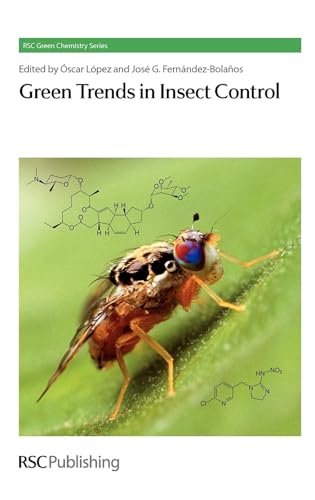
Inhaltsangabe
This book presents the current approaches for insect pest control as a "green" alternative to classical and more toxaic agrochemicals. An overview of the recent advances in insecticide chemistry is also included, which will be of interest to a vast group of researchers - agrochemists, biochemists, chemists and toxicologists. The combination of both chemical and toxicological aspects of insecticides is unique and the book includes contributions from synthetic chemists, entomologists, environmentalists and toxicologists giving it wide appeal. Throughout the book, the different approaches that involve "greener chemicals" are emphasized. The book is divided into 9 chapters, each considering the state of art of each family of insecticides, together with future expectations. Each chapter gives a description of useful biorational insecticides, highlighting environmentally-friendly processes and then the mode of action is fully-described, emphasizing selectivity towards targeted species. Finally, for every family of compounds, their environmental effects (toxicity, bioaccumulation and metabolism) is considered, comparing them to classical insecticides, including human and environmental risk assessments. In addition the formulation, dispersal and persistence in the environment are covered as key aspects in developing greener agrochemicals. The book also includes a general introduction to entomology, with special emphasis on those insects that act as vectors in the spread of diseases. Insects that may be potential pests against humans and livestock are included, focusing on their life cycles, and physiology, as a logical comprehension of mode of action of insecticides. In addition there is a chapter on classical insecticides (covering both, approaches prior to the chemical era, and classical chemical insecticides, organochlorinated, organophosphorus, and carbamates) for comparison with current trends in pest control. The negative environmental effects that such insecticides have caused in nature, such as poisonings, bioaccumulation or toxic effects are highlighted. It is hoped that the use of more specific agrochemicals and approaches may avoid, or at least considerably reduce such severe and irreversible effects in nature. The insecticides covered are considered from numerous points of views: chemistry, toxicological profile, risk assessment, legal status, environmental behaviour and selectivity. The most important families of currently used insecticides are covered and critical discussions about future perspectives are included with frequent comparisons to classical insecticides. The following topics are covered in the book, as greener alternatives to classical insecticides: "Pyrethrins and pyrethroids "Neonicotinoids "Spynosins "Insect growth regulators "Botanical insecticides "Microbial insecticides "Integrated Pest Management Programs (IPM)
Die Inhaltsangabe kann sich auf eine andere Ausgabe dieses Titels beziehen.
Über die Autorinnen und Autoren
Dr Ëscar L¾pez received his PhD at Seville University in 2003 under the direction of Professor JosÚ G Fernßndez-Bola±os, JosÚ Fuentes and InÚs Maya. In March 2004, he was appointed as lecturer in Environmental Organic Chemistry at the University of Huelva, Spain. In June 2004, he was appointed as lecturer in Organic Chemistry at the University of Seville, Spain, in the Faculty of Chemistry. He spent 16 months (2005-2006) in a postdoctoral stay in Aarhus University, Denmark under the direction of Professor Mikael Bols working on the design of glycosidase inhibitors and the preparation of cyclodextrin derivatives as artificial enzymes. In 2009 he got a position as an Associate Professor in the Organic Chemistry Department, University of Seville, Spain. His research interests include Carbohydrate Chemistry, Heterocyclic Chemistry, Green Chemistry, Organoselenium Chemistry, Cyclodextrins and Supramolecular Chemistry, Glycosidase Inhibitors and Antioxidants. Professor JosÚ G Fernßndez-Bola±os completed his PhD at Seville University in 1984, after working on the synthesis of C-nucleoside of imidazol, under the direction of Professor JosÚ Fernßndez-Bola±os, his father, and Professor JosÚ Fuentes. He spent one year in a postdoctoral stay at the Technical University of Denmark, Lyngby, working on the synthesis and conformational analysis of sterically hindered oligosaccharides, under the direction of Professor Klaus Bock. He got a position as Professor at Seville University in 1987, and is currently a Professor of Organic Chemistry. His research interests include Carbohydrate Chemistry, Heterocyclic Chemistry, Green Chemistry, Organoselenium Chemistry, Cyclodextrins, Antioxidants from natural sources and Alkaloid Insecticides.
Dr Ëscar L¾pez received his PhD at Seville University in 2003 under the direction of Professor JosÚ G Fernßndez-Bola±os, JosÚ Fuentes and InÚs Maya. In March 2004, he was appointed as lecturer in Environmental Organic Chemistry at the University of Huelva, Spain. In June 2004, he was appointed as lecturer in Organic Chemistry at the University of Seville, Spain, in the Faculty of Chemistry. He spent 16 months (2005-2006) in a postdoctoral stay in Aarhus University, Denmark under the direction of Professor Mikael Bols working on the design of glycosidase inhibitors and the preparation of cyclodextrin derivatives as artificial enzymes. In 2009 he got a position as an Associate Professor in the Organic Chemistry Department, University of Seville, Spain. His research interests include Carbohydrate Chemistry, Heterocyclic Chemistry, Green Chemistry, Organoselenium Chemistry, Cyclodextrins and Supramolecular Chemistry, Glycosidase Inhibitors and Antioxidants. Professor JosÚ G Fernßndez-Bola±os completed his PhD at Seville University in 1984, after working on the synthesis of C-nucleoside of imidazol, under the direction of Professor JosÚ Fernßndez-Bola±os, his father, and Professor JosÚ Fuentes. He spent one year in a postdoctoral stay at the Technical University of Denmark, Lyngby, working on the synthesis and conformational analysis of sterically hindered oligosaccharides, under the direction of Professor Klaus Bock. He got a position as Professor at Seville University in 1987, and is currently a Professor of Organic Chemistry. His research interests include Carbohydrate Chemistry, Heterocyclic Chemistry, Green Chemistry, Organoselenium Chemistry, Cyclodextrins, Antioxidants from natural sources and Alkaloid Insecticides.
Von der hinteren Coverseite
Green Trends in Insect Control presents the current approaches for insect pest control as a "green" alternative to classical and more toxic agrochemicals. An overview of the recent advances in insecticide chemistry is also included, which will be of interest to a vast group of researchers - agrochemists, biochemists, chemists and toxicologists. The combination of both chemical and toxicological aspects of insecticides is unique and the book includes contributions from synthetic chemists, entomologists, environmentalists and toxicologists giving it wide appeal. Throughout the book, the different approaches that involve "greener chemicals" are emphasized. The book is divided into nine chapters, each considering the state-of-the-art of each family of insecticides, together with future expectations. Each chapter gives a description of useful biorational insecticides, highlighting environmentally-friendly processes and then the mode of action is fully-described, emphasizing selectivity towards targeted species. Finally, for every family of compounds, their environmental effects (toxicity, bioaccumulation and metabolism) is considered, comparing them to classical insecticides, including human and environmental risk assessments. The book also includes a general introduction to entomology, with special emphasis on those insects which act as vectors in the spread of diseases. Insects that may be potential pests against humans and livestock are included, focusing on their life cycles, and physiology. In addition there is a chapter on classical insecticides for comparison with current trends in pest control.
Auszug. © Genehmigter Nachdruck. Alle Rechte vorbehalten.
Green Trends in Insect Control
By Óscar López, José G. Fernández-BolañosThe Royal Society of Chemistry
Copyright © 2011 Royal Society of Chemistry
All rights reserved.
ISBN: 978-1-84973-149-2All rights reserved.
Contents
Chapter 1 Main Topics in Entomology: Insects as Disease Vectors S. Manguin, J. Mouchet and P. Carnevale, 1,
Chapter 2 Classical Insecticides: Past, Present and Future Ó. López, J. G. Fernández-Bolaños and M. V. Gil, 53,
Chapter 3 Pyrethrins and Pyrethroid Insecticides Jerome J. Schleier III and Robert K. D. Peterson, 94,
Chapter 4 Basic and Applied Aspects of Neonicotinoid Insecticides R. Nauen and P. Jeschke, 132,
Chapter 5 The Spinosyn Insecticides J. E. Dripps, R. E. Boucher, A. Chloridis, C. B. Cleveland, C. V. DeAmicis, L. E. Gomez, D. L. Paroonagian, L. A. Pavan, T. C. Sparks and G. B. Watson, 163,
Chapter 6 The Bisacylhydrazine Insecticides Luis E. Gomez, Kerry Hastings, Harvey A. Yoshida, James E. Dripps, Jason Bailey, Sandra Rotondaro, Steve Knowles, Doris L. Paroonagian, Tarlochan Singh Dhadialla and Raymond Boucher, 213,
Chapter 7 Needles in the Haystack: Exploring Chemical Diversity of Botanical Insecticides Murray B. Isman and Gretchen Paluch, 248,
Chapter 8 Towards a Healthy Control of Insect Pests: Potential Use of Microbial Insecticides Alejandra Bravo, M. Cristina del Rincon-Castro, Jorge E. Ibarra and Mario Soberón, 266,
Chapter 9 The Challenge of Green in a Pesticide-Dominant IPM (Integrated Pest Management) World S. J. Castle and N. Prabhaker, 300,
Subject Index, 339,
CHAPTER 1
Main Topics in Entomology: Insects as Disease Vectors
S. MANGUIN, J. MOUCHET AND P. CARNEVALE
1.1 Introduction
Insects of medical interest are numerous, and some have had a major impact on the course of human history due to epidemics of vector-borne diseases which have led to millions of deaths. Mosquitoes are at the origin of severe epidemics of malaria, dengue, yellow fever and chikungunya, all of which continue to kill millions of people throughout the world each year. Fleas are responsible for propagating the plague, which killed millions of people during three pandemics. Lice transmit typhus, which has been shown to weaken armies in periods of war. Among those insects of medical interest, the vast majority belongs to the insect order Diptera. This chapter deals with the most common insect vectors of diseases, whose classification is as follows.
1.2 Mosquitoes
There are more than 3400 species of mosquitoes, which belong to 37 genera joined together in only a single family: Culicidae, which is divided into three sub-families: (1) Toxorhynchitinae, (2) Anophelinae and (3) Culicinae. Mosquitoes have a worldwide distribution. They occur in tropical and temperate zones, even on the level of the Arctic Circle; there are, however, no mosquitoes in the Antarctic. Mosquitoes are also found in mountainous regions (at 5500 m altitude), as well as in caves and mines (at –1250 m altitude).
The mosquitoes that bite humans and which are the most important vectors of disease, belong to the genera Anopheles, Culex, Aedes, Mansonia, Haemagogus and Sabethes. Anopheles can transmit malaria parasites, but also lymphatic microfilariae (e.g. Wuchereria bancrofti, Brugia malayi and Brugia timori) and some arboviruses (e.g. O'nyong-nyong and equine encephalitis). Some Culex species also transmit the microfilariae responsible for Bancroftian lymphatic filariasis, as well as many arboviruses, such as the West Nile, Japanese encephalitis, Saint Louis encephalitis, Murray Valley encephalitis and Rift Valley arboviruses. The Aedes genus includes important vectors of the viruses responsible for yellow fever, dengue (and hemorrhagic dengue), chi- kungunya, eastern equine encephalitis (EEE), and many other arboviruses. Some Aedes species also transmit microfilarial parasites (Bancroftian lymphatic filariasis), such as Ae. polynesiensis in the Pacific islands.
1.2.1 General Morphology
The development cycle of mosquitoes includes two phases (see Figure 1.1): (1) an aquatic phase, with the succession of immature stages, such as eggs, larvae (four stages) and pupae, and (2) an air phase with the male and female adults.
The eggs are ovoid and measure approximately 0.5 mm. They are laid either on the surface of water (e.g. Anopheles and Culex) or near the surface of water (e.g. Aedes). The eggs may be laid separately (e.g. Anopheles and Aedes) or close together in the form of an "egg raft" at the time of oviposition (e.g. Culex and Coquillettidia). The eggs are able to float due to side floats (e.g. Anopheles) or apical floats (e.g. Culex). The variations in egg ornamentation have been used to dismember the complex Anopheles maculipennis in order to understand the phenomenon of "anophelism without malaria" in Western Europe.
This raises the concept of "species complex", in which sibling species are important disease vectors whilst others are not involved in pathogen transmission at all, despite the fact that these species cannot be differentiated morphologically. Identification of the individual species must be based on more sophisticated techniques, in particular molecular ones. Many of the main vectors of pathogenic diseases belong to a species complex, such as Anopheles gambiae, An. dirus, An. farauti, Culex pipiens, etc.
The larvae which emerge from the egg evolve in four stages (L1, L2, L3 and L4), intersected with three moults which allow the larvae to grow from 1 mm (L1) to 15 mm (L4) in a week (longer in temperate regions). The four larval stages have a comparable general morphology. The larva is composed of three parts: head, thorax and abdomen. The 8th abdominal segment is modified (the "respiratory segment") with two important structures: (1) on the lateral side, the "comb" (pecten) which is made up of spines and scales of different forms, sizes and numbers, according to the genus and species of the mosquito, and (2) on the dorsal face, the spiracular apparatus which is located either directly on the tegument for Anopheles, or at the end of a respiratory siphon for Culicinae. This is a useful characteristic with which to differentiate the position of the larvae, as Anopheles larvae (without siphon) stay parallel to the water surface, whilst Culex or Aedes larvae (with a siphon) have an oblique angle of suspension to the water surface. For Mansonia, the end of the siphon is modified in a hard organ used to bore plants. Mansonia larvae do not breathe like other mosquitoes but attach themselves to the roots, leaves and stems of aquatic plants in order to obtain their air supply.
The pupa's morphology is completely different from that of the larva, consisting of two parts: (1) a prominent cephalothorax equipped with two respiratory trumpets (the pupa does not have an oral apparatus as it breathes but does not feed), and (2) an abdomen made up of eight visible segments (the ninth segment is barely visible), the eighth segment carries a pair of swimming paddles. The pupa is quite mobile and dives when disturbed. Its lifespan is short (one to two days).
The adults. Male and female mosquitoes can be easily differentiated by observing the head and the end of the abdomen. The head comprises of two compound eyes made up of hundreds of ommatidia, and...
„Über diesen Titel“ kann sich auf eine andere Ausgabe dieses Titels beziehen.
Suchergebnisse für Green Trends in Insect Control: Rsc (RSC Green Chemistry,...

Beispielbild für diese ISBN
Green Trends in Insect Control (RSC Green Chemistry Series, Volume 11)
ISBN 10: 1849731497
ISBN 13: 9781849731492
Gebraucht
Hardcover
Erstausgabe
Anbieter: Alien Bindings, BALTIMORE, MD, USA
Verkäuferbewertung 4 von 5 Sternen

Hardcover. Zustand: Very Good. No Jacket. First Edition. Green Trends in Insect Control (RSC Green Chemistry Series, Volume 11) edited by Oscar López [Óscar López] and Jose G. Fernández-Bolaños [José G. Fernández-Bolaños]. This hardcover edition is in Near Fine/VG+ condition with faint surface wear to the covers; otherwise, the covers are in excellent shape, maintaining their original high gloss. The binding is square and tight, with minor abrasion on the front flyleaf. The interior pages are clean, bright, and unmarked.This book examines contemporary approaches to insect pest control, focusing on "green" alternatives to traditional and more toxic agrochemicals. Covering recent advances in insecticide chemistry, it will interest a broad range of professionals, including agrochemists, biochemists, and toxicologists. The volume's unique combination of chemical and toxicological perspectives includes contributions from synthetic chemists, entomologists, and environmentalists, emphasizing methods that utilize "greener chemicals." Divided into nine chapters, each section explores the current state of different insecticide families, including environmentally-friendly processes, modes of action, and selective targeting. The environmental impacts of each family (such as toxicity, bioaccumulation, and metabolism) are discussed with a comparison to traditional insecticides, highlighting human and environmental risk assessments. Additional chapters address traditional insecticides and the negative environmental effects of historical insecticide use, including poisoning and bioaccumulation. Topics covered in this book include pyrethrins and pyrethroids, neonicotinoids, spinosyns, insect growth regulators, botanical insecticides, microbial insecticides, and integrated pest management (IPM) programs.The advances detailed in this book are particularly relevant for professionals seeking greener approaches to insect control, and it provides a valuable resource for academia and research.The book will be carefully packaged for shipment to ensure protection from the elements. A USPS electronic tracking number will be issued free of charge. Feel free to contact us for more information or pictures regarding the book. Bestandsnummer des Verkäufers 16594
Gebraucht kaufen
EUR 50,30
Versand gratis
Versand innerhalb von USA
Versand innerhalb von USA
Anzahl: 1 verfügbar
Beispielbild für diese ISBN
GREEN TRENDS IN INSECT CONTROL
Anbieter: Romtrade Corp., STERLING HEIGHTS, MI, USA
Verkäuferbewertung 5 von 5 Sternen

Zustand: New. This is a Brand-new US Edition. This Item may be shipped from US or any other country as we have multiple locations worldwide. Bestandsnummer des Verkäufers ABBB-67447
Beispielbild für diese ISBN
Green Trends In Insect Control (Hb)
Anbieter: Basi6 International, Irving, TX, USA
Verkäuferbewertung 5 von 5 Sternen
Zustand: Brand New. New. US edition. Expediting shipping for all USA and Europe orders excluding PO Box. Excellent Customer Service. Bestandsnummer des Verkäufers ABEOCT25-221713
Beispielbild für diese ISBN
GREEN TRENDS IN INSECT CONTROL
Anbieter: SMASS Sellers, IRVING, TX, USA
Verkäuferbewertung 4 von 5 Sternen
Zustand: New. Brand New Original US Edition. Customer service! Satisfaction Guaranteed. Bestandsnummer des Verkäufers SNTA-67447
Beispielbild für diese ISBN
Green Trends in Insect Control
Anbieter: Basi6 International, Irving, TX, USA
Verkäuferbewertung 5 von 5 Sternen
Zustand: Brand New. New. US edition. Expediting shipping for all USA and Europe orders excluding PO Box. Excellent Customer Service. Bestandsnummer des Verkäufers ABEOCT25-221714
Beispielbild für diese ISBN
Green Trends In Insect Control
Anbieter: Romtrade Corp., STERLING HEIGHTS, MI, USA
Verkäuferbewertung 5 von 5 Sternen
Zustand: New. This is a Brand-new US Edition. This Item may be shipped from US or any other country as we have multiple locations worldwide. Bestandsnummer des Verkäufers ABBB-254727

Internationale Ausgabe
GREEN TRENDS IN INSECT CONTROL (HB 2011)
Internationale AusgabeAnbieter: UK BOOKS STORE, London, LONDO, Vereinigtes Königreich
Verkäuferbewertung 5 von 5 Sternen
Zustand: New. Brand New ! Fast Delivery This is an International Edition and ship within 24-48 hours. Deliver by FedEx and Dhl, & Aramex, UPS, & USPS and we do accept APO and PO BOX Addresses. Order can be delivered worldwide within 6-10 days and we do have flat rate for up to 2LB. Extra shipping charges will be requested if the Book weight is more than 5 LB. This Item May be shipped from India, United states & United Kingdom. Depending on your location and availability. Bestandsnummer des Verkäufers Cvs 9781849731492
Neu kaufen
EUR 110,40
EUR 4,41 Versand
Versand von Vereinigtes Königreich nach USA
Versand von Vereinigtes Königreich nach USA
Anzahl: Mehr als 20 verfügbar
Foto des Verkäufers
Green Trends in Insect Control
Verlag:
Royal Society of Chemistry, GB, 2011
ISBN 10: 1849731497
ISBN 13: 9781849731492
Neu
Hardcover
Anbieter: Rarewaves USA, HEBRON, KY, USA
Verkäuferbewertung 5 von 5 Sternen
Hardback. Zustand: New. This book presents the current approaches for insect pest control as a "green" alternative to classical and more toxaic agrochemicals. An overview of the recent advances in insecticide chemistry is also included, which will be of interest to a vast group of researchers - agrochemists, biochemists, chemists and toxicologists. The combination of both chemical and toxicological aspects of insecticides is unique and the book includes contributions from synthetic chemists, entomologists, environmentalists and toxicologists giving it wide appeal. Throughout the book, the different approaches that involve "greener chemicals" are emphasized. The book is divided into 9 chapters, each considering the state of art of each family of insecticides, together with future expectations. Each chapter gives a description of useful biorational insecticides, highlighting environmentally-friendly processes and then the mode of action is fully-described, emphasizing selectivity towards targeted species. Finally, for every family of compounds, their environmental effects (toxicity, bioaccumulation and metabolism) is considered, comparing them to classical insecticides, including human and environmental risk assessments. In addition the formulation, dispersal and persistence in the environment are covered as key aspects in developing greener agrochemicals. The book also includes a general introduction to entomology, with special emphasis on those insects that act as vectors in the spread of diseases. Insects that may be potential pests against humans and livestock are included, focusing on their life cycles, and physiology, as a logical comprehension of mode of action of insecticides. In addition there is a chapter on classical insecticides (covering both, approaches prior to the chemical era, and classical chemical insecticides, organochlorinated, organophosphorus, and carbamates) for comparison with current trends in pest control. The negative environmental effects that such insecticides have caused in nature, such as poisonings, bioaccumulation or toxic effects are highlighted. It is hoped that the use of more specific agrochemicals and approaches may avoid, or at least considerably reduce such severe and irreversible effects in nature. The insecticides covered are considered from numerous points of views: chemistry, toxicological profile, risk assessment, legal status, environmental behaviour and selectivity. The most important families of currently used insecticides are covered and critical discussions about future perspectives are included with frequent comparisons to classical insecticides. The following topics are covered in the book, as greener alternatives to classical insecticides: "Pyrethrins and pyrethroids "Neonicotinoids "Spynosins "Insect growth regulators "Botanical insecticides "Microbial insecticides "Integrated Pest Management Programs (IPM). Bestandsnummer des Verkäufers LU-9781849731492
Neu kaufen
EUR 168,47
Versand gratis
Versand innerhalb von USA
Versand innerhalb von USA
Anzahl: Mehr als 20 verfügbar
Beispielbild für diese ISBN
Green Trends in Insect Control
Anbieter: PBShop.store UK, Fairford, GLOS, Vereinigtes Königreich
Verkäuferbewertung 5 von 5 Sternen
HRD. Zustand: New. New Book. Shipped from UK. Established seller since 2000. Bestandsnummer des Verkäufers CX-9781849731492
Neu kaufen
EUR 173,21
EUR 6,91 Versand
Versand von Vereinigtes Königreich nach USA
Versand von Vereinigtes Königreich nach USA
Anzahl: 15 verfügbar
Beispielbild für diese ISBN
Green Trends in Insect Control
Anbieter: PBShop.store US, Wood Dale, IL, USA
Verkäuferbewertung 5 von 5 Sternen
HRD. Zustand: New. New Book. Shipped from UK. Established seller since 2000. Bestandsnummer des Verkäufers CX-9781849731492
Neu kaufen
EUR 182,27
Versand gratis
Versand innerhalb von USA
Versand innerhalb von USA
Anzahl: 15 verfügbar