
Verwandte Artikel zu The Carcinogenicity of Metals: Human Risk Through Occupation...
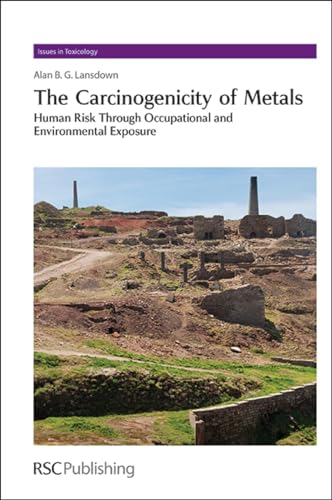
The Carcinogenicity of Metals: Human Risk Through Occupational and Environmental Exposure (Issues in Toxicology) - Hardcover
Inhaltsangabe
This book re-evaluates epidemiological and occupational health studies, experimental studies in animals and in vitro experiments relating to the toxicity of 27 metal and metalloid elements for which evidence of carcinogenicity has been presented. Human carcinogenic risk is substantiated in relation to arsenic, beryllium, thorium, chromium, radioactive elements, probably lead, and some nickel and cobalt compounds, and respirable silica particles, but the carcinogenicity of iron, aluminium, titanium, tungsten, antimony, bismuth, mercury, precious metals, and certain related compounds in humans is unresolved. The toxicity and carcinogenicity of each element is specific but correlates poorly with its position in the Periodic Table. Carcinogenicity differs according to the valency of the ion and its ability to interact with and penetrate membranes in target cells and to bind, denature or induce mutations by genotoxic or epigenetic mechanisms.
This important text comprehensively examines each of the elements providing detailed information on the carcinogenicity and toxicity and detailing the most up-to-date research in this area. The book is an essential tool for toxicologists, medicinal and biochemists, and environmental scientists working in both industry and academia.
Die Inhaltsangabe kann sich auf eine andere Ausgabe dieses Titels beziehen.
Über die Autorin bzw. den Autor
40 years research into the biology and pathology of the skin and its response to injury. Research into the nutrition and physiology of trace and xenbiotic metals in the skin. Study of intrinsic cytoprotective mechanisms against metal toxicity. Special studies onthe biological value of silver in wound care and as an antimicrobial agent in medical devices. International consultant and lecturer. Published 250 scientific papers and book chapters.
Von der hinteren Coverseite
This book re-evaluates epidemiological and occupational health studies, experimental studies in animals and in vitro experiments relating to the toxicity of 27 metal and metalloid elements for which evidence of carcinogenicity has been presented.Human carcinogenic risk is substantiated in relation to arsenic, beryllium, thorium, chromium, radioactive elements, probably lead, and some nickel and cobalt compounds, and respirable silica particles, but the carcinogenicity of iron, aluminium, titanium, tungsten, antimony, bismuth, mercury, precious metals, and certain related compounds in humans is unresolved.The toxicity and carcinogenicity of each element is specific but correlates poorly with its position in the Periodic Table.Carcinogenicity differs according to the valency of the ion and its ability to interact with and penetrate membranes in target cells and to bind, denature or induce mutations by genotoxic or epigenetic mechanisms.
This important text comprehensively examines each of the elements providing detailed information on the carcinogenicity and toxicity and detailing the most up-to-date research in this area. The book is an essential tool for toxicologists, medicinal and biochemists, and environmental scientists working in both industry and academia.
Aus dem Klappentext
This book re-evaluates epidemiological and occupational health studies, experimental studies in animals and in vitro experiments relating to the toxicity of 27 metal and metalloid elements for which evidence of carcinogenicity has been presented.Human carcinogenic risk is substantiated in relation to arsenic, beryllium, thorium, chromium, radioactive elements, probably lead, and some nickel and cobalt compounds, and respirable silica particles, but the carcinogenicity of iron, aluminium, titanium, tungsten, antimony, bismuth, mercury, precious metals, and certain related compounds in humans is unresolved.The toxicity and carcinogenicity of each element is specific but correlates poorly with its position in the Periodic Table.Carcinogenicity differs according to the valency of the ion and its ability to interact with and penetrate membranes in target cells and to bind, denature or induce mutations by genotoxic or epigenetic mechanisms.
This important text comprehensively examines each of the elements providing detailed information on the carcinogenicity and toxicity and detailing the most up-to-date research in this area. The book is an essential tool for toxicologists, medicinal and biochemists, and environmental scientists working in both industry and academia.
Auszug. © Genehmigter Nachdruck. Alle Rechte vorbehalten.
The Carcinogenicity of Metals
Human Risk Through Occupational and Environmental Exposure
By Alan B. G. LansdownThe Royal Society of Chemistry
Copyright © 2014 Alan Lansdown
All rights reserved.
ISBN: 978-1-84973-718-0All rights reserved.
Contents
Chapter 1 Introduction, 1,
Part 1: Elements of Importance as Nutrients,
Chapter 2 Iron, 21,
Chapter 3 Zinc, 36,
Chapter 4 Chromium and Chromates, 53,
Chapter 5 Cobalt and Nickel, 76,
Chapter 6 Calcium, Strontium, Magnesium and Copper, 108,
Chapter 7 Minor Trace Elements: Manganese, Vanadium, Molybdenum, Tin, 141,
Chapter 8 The Metalloid Elements, Selenium and Silicon, 165,
Part 2: Xenobiotic Elements of No Nutritional Value,
Chapter 9 Aluminium and Zirconium, 199,
Chapter 10 Cadmium and Mercury, 216,
Chapter 11 Lead, 242,
Chapter 12 Tungsten (Wolfram) and Hard Metals, 266,
Chapter 13 Precious Metals: Silver, Gold and Platinum-related Metals, 278,
Chapter 14 Beryllium, 301,
Chapter 15 Gallium, Indium and Thallium, 316,
Chapter 16 Thorium and Titanium, 331,
Chapter 17 Arsenic, Antimony and Bismuth, 347,
Part 3: Metals and Metalloid Elements as Carcinogens,
Chapter 18 Discussion and Conclusions, 389,
Acknowledgements, 404,
Subject Index, 405,
CHAPTER 1
Introduction
1.1 Introduction
Metals and metalloid elements are ubiquitous in the human environment (Figure 1.1). They are present to a varying extent in the rocks and soils throughout the world and exist in the air we breathe and in our food or drinking water. Natural deposits in some parts of the world are extensive and in the case of lead and arsenic are prominent sources of local health problems. Inland waterways, estuaries and open sea contain the largest natural sources of metals and their compounds. In addition, these waters accumulate metal residues eluted from inland sources, pesticides and agrochemicals, factory wastes and sludges, deposits from landfill sites and even domestic waste. Metal residues enter local streams, lakes and rivers to be disseminated into open water through tides, offshore currents and adverse weather conditions. This is well illustrated by discharges of silver residues into the San Fransisco Bay area in California (the so-called Great Silver Estuary) where sediments in one year were as high as 8800 kg. Other notable examples include the Minamata Bay catastrophe in Japan in 1953 where an estimated 27 tons of mercury compounds were discharged into sea waters, and local disasters following release of cadmium residues into rivers by mining companies (Figure 1.2). In such cases, cadmium is concentrated in local food sources such that fish in the rivers start to die and rice irrigated with river water fails to grow. Cadmium poisoning is related to the human disease Itai-Itai, which causes softening of the bones and kidney failure. Cadmium and cadmium compounds are now listed as human carcinogens. Sea water possibly contains all stable and some radioactive metal and metalloid elements listed in the Periodic Table, albeit some being present in minute quantities.
Ecologists, environmentalists and regulatory toxicologists throughout the world are justifiably concerned that high concentrations of toxic metals discharged into sea water concentrate in marine deposits, fish and marine life and enter human food chains. Other major ecological and human health concerns relate to the discharge of metal particles into the air by volcanic action, natural erosion of rocks and shales, emissions and effluents from mining, extraction and refining from metal industries, and incineration of commercial and domestic waste. Plants and food animals in contaminated pastures accumulate lead, mercury, cadmium and other xenobiotic elements. Other concerns relate to the increasing use of nanotechnology and the production of minute metal particles of 20 nm or less for commercial purposes. Nanoparticles in the air present special problems. They are considered to have different surface properties, and the physico-chemical properties of their grain boundaries may be more injurious to health. Nanoparticles of silver are probably more than 100-fold more soluble than silver foil or filings. Special health problems of pulmonary fibrosis, pneumoconiosis, chronic respiratory disease and even cancer are recognised following inhalation of industrial dust and nanoparticles of respirable size of gold, silver, chromium, silica and nickel in industrial environments (Figure 1.3).
1.2 Metals as Nutrients
The human body has evolved over many millennia to depend upon certain metals and metalloid elements as constituents of cellular structure or intercellular matrices, electrolytes, or as components or co-factors of key enzyme systems or biosynthetic pathways (Table 1.1). Metalloenzymes containing calcium, magnesium, zinc, iron and copper are important at critical stages of the cell cycle and may have a role in carcinogenic transformation. Patterns of uptake, metabolism, metal-binding proteins, cellular metabolism and excretion are well denned for all nutrients, although optimal levels for good health for minor trace metals such as molybdenum, vanadium, chromium and nickel are still debatable. The roles of blood concentrations, hormones or other factors regulating uptake, levels in the systemic circulation, tissue accumulation and excretion are imperfectly understood.
Macro- and trace nutrients are defined broadly as substances required at appropriate concentrations for optimal health and wellbeing. Demands for different nutrients vary according to age, sex and physiological state (especially pregnancy and lactation). The body displays characteristic signs of metal ion deficiency through malnutrition, dietary imbalances and malabsorption syndromes, through genetic or acquired disease processes. These conditions regress when deficiencies are corrected, as illustrated by iron deficiency anaemia (IDA), hypozincaemia, hypocalcaemia and cobalt deficiency (manifest through sub-optimal Vitamin B12 levels). The role of tin and strontium as trace metal nutrients is still unclear.
Metal ions interact in the body and ionic balances determined by carrier proteins, are critical in regulating the programmed sequence of proliferation in stem cells, maintenance of cellular architecture, cell-to-cell adhesion and functional differentiation. Calcium, for example, interacts with zinc, magnesium, copper and iron and imbalances in metal-to-metal ionic ratios can be detrimental at specific phases in the cell cycle and in the post-mitotic functional differentiation in tissues such as skin, bone, bone marrow and gastrointestinal mucosae with high stem cell populations. Calcium is a particularly important macro-nutrient and more than 70 calcium-binding proteins are present in the body, notably the so-called "EF-hand proteins", cahederins, calmodulin and S-100 proteins. Most display binding sites for other metal ions, notably strontium, lead, aluminium and mercury. Strontium mimics calcium and can substitute for it in biological systems, particularly musculo-skeletal tissues.
Elements such as silver, arsenic, aluminium, bismuth, platinum and lead have no nutritional function but are present occasionally in the body at low levels (Table 1.2). Several bind to proteins such as metallothioneins, ferritin, calmodulin, etc. and can impair the availability of essential nutrients if present to excess (Table 1.3). Arsenic accumulates in bone and displaces calcium from hydroxyapatite binding; clinical studies in...
„Über diesen Titel“ kann sich auf eine andere Ausgabe dieses Titels beziehen.
Suchergebnisse für The Carcinogenicity of Metals: Human Risk Through Occupation...

Beispielbild für diese ISBN
THE CARCINOGENICITY OF METALS HUMAN RISK THROUGH OCCUPATIONAL AND ENVIRONMENTAL EXPOSURE (HB 2014)
Anbieter: SMASS Sellers, IRVING, TX, USA
Verkäuferbewertung 4 von 5 Sternen

Zustand: New. Brand New Original US Edition. Customer service! Satisfaction Guaranteed. Bestandsnummer des Verkäufers SNTA-59322
Beispielbild für diese ISBN
THE CARCINOGENICITY OF METALS HUMAN RISK THROUGH OCCUPATIONAL AND ENVIRONMENTAL EXPOSURE (HB 2014)
Anbieter: Basi6 International, Irving, TX, USA
Verkäuferbewertung 5 von 5 Sternen

Zustand: Brand New. New. US edition. Expediting shipping for all USA and Europe orders excluding PO Box. Excellent Customer Service. Bestandsnummer des Verkäufers ABEOCT25-222346
Beispielbild für diese ISBN
THE CARCINOGENICITY OF METALS HUMAN RISK THROUGH OCCUPATIONAL AND ENVIRONMENTAL EXPOSURE (HB 2014)
Anbieter: Romtrade Corp., STERLING HEIGHTS, MI, USA
Verkäuferbewertung 5 von 5 Sternen
Zustand: New. This is a Brand-new US Edition. This Item may be shipped from US or any other country as we have multiple locations worldwide. Bestandsnummer des Verkäufers ABBB-59322
Beispielbild für diese ISBN
The Carcinogenicity of Metals: Human Risk Through Occupational and Environmental Exposure
Anbieter: Basi6 International, Irving, TX, USA
Verkäuferbewertung 5 von 5 Sternen
Zustand: Brand New. New. US edition. Expediting shipping for all USA and Europe orders excluding PO Box. Excellent Customer Service. Bestandsnummer des Verkäufers ABEOCT25-222347
Beispielbild für diese ISBN
The Carcinogenicity of Metals: Human Risk Through Occupational and Environmental Exposure
Anbieter: Romtrade Corp., STERLING HEIGHTS, MI, USA
Verkäuferbewertung 5 von 5 Sternen
Zustand: New. This is a Brand-new US Edition. This Item may be shipped from US or any other country as we have multiple locations worldwide. Bestandsnummer des Verkäufers ABBB-203863
Beispielbild für diese ISBN
The Carcinogenicity of Metals: Human Risk Through Occupational and Environmental Exposure
Anbieter: SMASS Sellers, IRVING, TX, USA
Verkäuferbewertung 4 von 5 Sternen
Zustand: New. Brand New Original US Edition. Customer service! Satisfaction Guaranteed. Bestandsnummer des Verkäufers SNTA-203863
Beispielbild für diese ISBN
The Carcinogenicity of Metals
Verlag:
Royal Society of Chemistry RSC, 2013
ISBN 10: 1849737185
ISBN 13: 9781849737180
Neu
Hardcover
Anbieter: Books Puddle, Woodside, NY, USA
Verkäuferbewertung 4 von 5 Sternen
Zustand: New. pp. 300. Bestandsnummer des Verkäufers 2654551654
Neu kaufen
EUR 116,71
EUR 3,51 Versand
Versand innerhalb von USA
Versand innerhalb von USA
Anzahl: 4 verfügbar
Beispielbild für diese ISBN
The Carcinogenicity of Metals: Human Risk Through Occupational and Environmental Exposure
Anbieter: Basi6 International, Irving, TX, USA
Verkäuferbewertung 5 von 5 Sternen
Zustand: Brand New. New. US edition. Expediting shipping for all USA and Europe orders excluding PO Box. Excellent Customer Service. Bestandsnummer des Verkäufers ABEOCT25-222348
Beispielbild für diese ISBN
The Carcinogenicity of Metals: Human Risk Through Occupational and Environmental Exposure
Anbieter: Romtrade Corp., STERLING HEIGHTS, MI, USA
Verkäuferbewertung 5 von 5 Sternen
Zustand: New. This is a Brand-new US Edition. This Item may be shipped from US or any other country as we have multiple locations worldwide. Bestandsnummer des Verkäufers ABBB-137417
Beispielbild für diese ISBN
The Carcinogenicity of Metals
Anbieter: Majestic Books, Hounslow, Vereinigtes Königreich
Verkäuferbewertung 4 von 5 Sternen
Zustand: New. pp. 300. Bestandsnummer des Verkäufers 53992377
Neu kaufen
EUR 117,89
EUR 7,56 Versand
Versand von Vereinigtes Königreich nach USA
Versand von Vereinigtes Königreich nach USA
Anzahl: 4 verfügbar