Inhaltsangabe
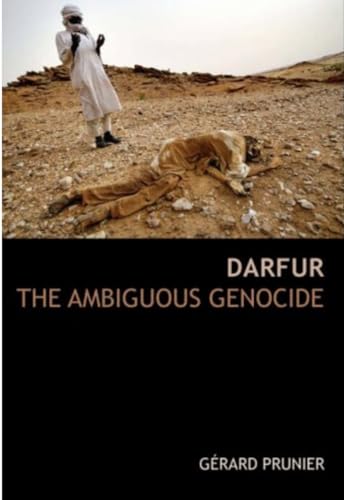
In mid-2004 the Darfur crisis in Western Sudan forced itself on to the centre stage of world affairs. A formerly obscure 'tribal conflict' in the heart of Africa has escalated into what could be the first genocide of the twenty-first century. Its characteristics - Arabism, Islamism, African consciousness, famine as a weapon of war, mass rape, international obfuscation and a refusal to look evil squarely in the face - reflect many of the problems of the global South in general and Africa in particular. Because of the urgent need for knowledge about this humanitarian catastrophe, journalistic explanations of the unfolding crisis have often been rushed and given to hurried generalisations and inaccuracies. Darfur: The Ambiguous Genocide explains what lies behind the conflict, how it came about, why it should not be over-simplified and why it is so relevant to the future of the continent. Prunier sets out the ethnopolitical make up of the Sudan and explains why the Darfur rebellion is regarded as a key threat to Arab power in the country, much more so than the secessionism of the Christian south. This, he argues, accounts for the government's deployment of 'exemplary violence' by the Janjaweed militias in order to cow other Black Muslims into subservience.
Die Inhaltsangabe kann sich auf eine andere Ausgabe dieses Titels beziehen.
Über die Autorin bzw. den Autor
A renowned analyst of East Africa, the Horn, Sudan and the Great Lakes, Gerard Prunier is a research professor at the University of Paris and author of The Rwanda Crisis: History of a Genocide (Hurst, 1992) and of From Genocide to Continental War: The Congolese Conflict and the Crisis of Contemporary Africa (Hurst, 2005, see p. 26).
„Über diesen Titel“ kann sich auf eine andere Ausgabe dieses Titels beziehen.
Weitere beliebte Ausgaben desselben Titels

Suchergebnisse für Darfur: The Ambiguous Genocide (Crises in World Politics,...

Beispielbild für diese ISBN
Darfur : The Ambiguous Genocide
Verlag:
C. Hurst and Company (Publishers) Limited, 2005
ISBN 10: 185065770X
ISBN 13: 9781850657705
Gebraucht
Hardcover
Anbieter: Better World Books: West, Reno, NV, USA
Verkäuferbewertung 5 von 5 Sternen

Zustand: Very Good. Former library book; may include library markings. Used book that is in excellent condition. May show signs of wear or have minor defects. Bestandsnummer des Verkäufers GRP80945173
Beispielbild für diese ISBN
Darfur: The Ambiguous Genocide
Verlag:
C Hurst & Co Publishers Ltd, 2007
ISBN 10: 185065770X
ISBN 13: 9781850657705
Gebraucht
Hardcover
Anbieter: Anybook.com, Lincoln, Vereinigtes Königreich
Verkäuferbewertung 5 von 5 Sternen
Zustand: Poor. This is an ex-library book and may have the usual library/used-book markings inside.This book has hardback covers. In poor condition, suitable as a reading copy. No dust jacket. Please note the Image in this listing is a stock photo and may not match the covers of the actual item,400grams, ISBN:185065770X. Bestandsnummer des Verkäufers 8497162
Gebraucht kaufen
EUR 2,95
Versand:
EUR 15,34
Von Vereinigtes Königreich nach USA
Anzahl: 1 verfügbar
Foto des Verkäufers
Darfur
Verlag:
C Hurst and Co Publishers Ltd, GB, 2005
ISBN 10: 185065770X
ISBN 13: 9781850657705
Neu
Hardcover
Anbieter: Rarewaves.com USA, London, LONDO, Vereinigtes Königreich
Verkäuferbewertung 5 von 5 Sternen
Hardback. Zustand: New. In mid-2004 the Darfur crisis in Western Sudan forced itself on to the centre stage of world affairs. A formerly obscure 'tribal conflict' in the heart of Africa has escalated into what could be the first genocide of the twenty-first century. Its characteristics - Arabism, Islamism, African consciousness, famine as a weapon of war, mass rape, international obfuscation and a refusal to look evil squarely in the face - reflect many of the problems of the global South in general and Africa in particular. Because of the urgent need for knowledge about this humanitarian catastrophe, journalistic explanations of the unfolding crisis have often been rushed and given to hurried generalisations and inaccuracies. Darfur: The Ambiguous Genocide explains what lies behind the conflict, how it came about, why it should not be over-simplified and why it is so relevant to the future of the continent. Prunier sets out the ethnopolitical make up of the Sudan and explains why the Darfur rebellion is regarded as a key threat to Arab power in the country, much more so than the secessionism of the Christian south. This, he argues, accounts for the government's deployment of 'exemplary violence' by the Janjaweed militias in order to cow other Black Muslims into subservience. Bestandsnummer des Verkäufers LU-9781850657705
Neu kaufen
EUR 44,17
Versand:
Gratis
Von Vereinigtes Königreich nach USA
Anzahl: Mehr als 20 verfügbar
Beispielbild für diese ISBN
Darfur (Hardcover)
Verlag:
C Hurst & Co Publishers Ltd, London, 2005
ISBN 10: 185065770X
ISBN 13: 9781850657705
Neu
Hardcover
Anbieter: Grand Eagle Retail, Bensenville, IL, USA
Verkäuferbewertung 5 von 5 Sternen
Hardcover. Zustand: new. Hardcover. In mid-2004 the Darfur crisis in Western Sudan forced itself on to the centre stage of world affairs. A formerly obscure 'tribal conflict' in the heart of Africa has escalated into what could be the first genocide of the twenty-first century. Its characteristics - Arabism, Islamism, African consciousness, famine as a weapon of war, mass rape, international obfuscation and a refusal to look evil squarely in the face - reflect many of the problems of the global South in general and Africa in particular. Because of the urgent need for knowledge about this humanitarian catastrophe, journalistic explanations of the unfolding crisis have often been rushed and given to hurried generalisations and inaccuracies. Darfur: The Ambiguous Genocide explains what lies behind the conflict, how it came about, why it should not be over-simplified and why it is so relevant to the future of the continent. Prunier sets out the ethnopolitical make up of the Sudan and explains why the Darfur rebellion is regarded as a key threat to Arab power in the country, much more so than the secessionism of the Christian south. This, he argues, accounts for the government's deployment of 'exemplary violence' by the Janjaweed militias in order to cow other Black Muslims into subservience. In mid-2004 the Darfur crisis in Western Sudan forced itself on to the centre stage of world affairs. A formerly obscure 'tribal conflict' in the heart of Africa has escalated into what could be the first genocide of the twenty-first century. Its characteristics - Arabism, Islamism, African consciousness, famine as a weapon of war, mass rape, international obfuscation and a refusal to look evil squarely in the face - reflect many of the problems of the global South in general and Africa in particular. Because of the urgent need for knowledge about this humanitarian catastrophe, journalistic explanations of the unfolding crisis have often been rushed and given to hurried generalisations and inaccuracies. Darfur: The Ambiguous Genocide explains what lies behind the conflict, how it came about, why it should not be over-simplified and why it is so relevant to the future of the continent. Prunier sets out the ethnopolitical make up of the Sudan and explains why the Darfur rebellion is regarded as a key threat to Arab power in the country, much more so than the secessionism of the Christian south. This, he argues, accounts for the government's deployment of 'exemplary violence' by the Janjaweed militias in order to cow other Black Muslims into subservience. Shipping may be from multiple locations in the US or from the UK, depending on stock availability. Bestandsnummer des Verkäufers 9781850657705
Beispielbild für diese ISBN
Darfur
Verlag:
C. Hurst & Co. (Publishers) Ltd., 2005
ISBN 10: 185065770X
ISBN 13: 9781850657705
Neu
Hardcover
Anbieter: Majestic Books, Hounslow, Vereinigtes Königreich
Verkäuferbewertung 4 von 5 Sternen

Zustand: New. pp. 236. Bestandsnummer des Verkäufers 58158236
Neu kaufen
EUR 44,18
Versand:
EUR 7,44
Von Vereinigtes Königreich nach USA
Anzahl: 3 verfügbar
Beispielbild für diese ISBN
Darfur
Verlag:
C Hurst and Co Publishers Ltd, 2005
ISBN 10: 185065770X
ISBN 13: 9781850657705
Neu
Hardcover
Anbieter: PBShop.store UK, Fairford, GLOS, Vereinigtes Königreich
Verkäuferbewertung 5 von 5 Sternen
HRD. Zustand: New. New Book. Shipped from UK. Established seller since 2000. Bestandsnummer des Verkäufers FV-9781850657705
Neu kaufen
EUR 47,23
Versand:
EUR 4,76
Von Vereinigtes Königreich nach USA
Anzahl: 10 verfügbar
Beispielbild für diese ISBN
DARFUR
Anbieter: Revaluation Books, Exeter, Vereinigtes Königreich
Verkäuferbewertung 5 von 5 Sternen
Hardcover. Zustand: Brand New. 176 pages. 7.40x4.96x0.94 inches. In Stock. Bestandsnummer des Verkäufers __185065770X
Neu kaufen
EUR 41,83
Versand:
EUR 11,45
Von Vereinigtes Königreich nach USA
Anzahl: 1 verfügbar
Beispielbild für diese ISBN
Darfur
Verlag:
C. Hurst & Co. (Publishers) Ltd., 2005
ISBN 10: 185065770X
ISBN 13: 9781850657705
Neu
Hardcover
Anbieter: Books Puddle, New York, NY, USA
Verkäuferbewertung 4 von 5 Sternen
Zustand: New. pp. 236. Bestandsnummer des Verkäufers 2650385731
Beispielbild für diese ISBN
Darfur: The Ambiguous Genocide (Crises in World Politics)
Anbieter: Kennys Bookshop and Art Galleries Ltd., Galway, GY, Irland
Verkäuferbewertung 5 von 5 Sternen
Zustand: New. Series: Crises in World Politics. Num Pages: 236 pages, 1 map. BIC Classification: 1HBS; 3JM; HBJH; HBLX. Category: (G) General (US: Trade). Dimension: 133 x 194 x 18. Weight in Grams: 330. . 2005. Hardcover. . . . . Bestandsnummer des Verkäufers V9781850657705
Neu kaufen
EUR 46,03
Versand:
EUR 10,50
Von Irland nach USA
Anzahl: Mehr als 20 verfügbar
Beispielbild für diese ISBN
Darfur
Verlag:
C. Hurst & Co. (Publishers) Ltd., 2005
ISBN 10: 185065770X
ISBN 13: 9781850657705
Neu
Hardcover
Anbieter: Biblios, Frankfurt am main, HESSE, Deutschland
Verkäuferbewertung 4 von 5 Sternen
Zustand: New. pp. 236. Bestandsnummer des Verkäufers 1850385737
Neu kaufen
EUR 51,14
Versand:
EUR 9,95
Von Deutschland nach USA
Anzahl: 3 verfügbar