Inhaltsangabe
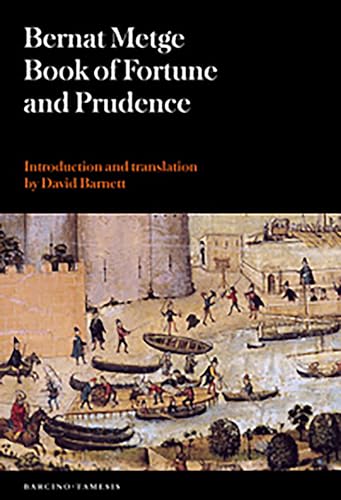
Written around 1381 by Bernat Metge, the most important Catalan writer of the fourteenth century, the Llibre de Fortuna i Prudència is a fantasy in verse, drawing on learned sources, principally The Consolation of Philosophy by Boethius.
Early one morning, Bernat, the protagonist and narrator, decides to alleviate his sorrows by strolling around the harbour of Barcelona. He meets an old man, apparently a beggar, who tricks him into getting into a boat which, despite the absence of sails and oars, conveys him to an island where the goddess Fortuna appears to him. In a heated discussion, Bernat blames her for all his misfortunes. His next meeting is with Prudencia who is accompanied by seven maidens representing the liberal arts. Prudencia is able to lessen his despair, and exhorts him to trust in providence and renounce material possessions. When she considers him cured, she and the maidens send him sailing back to Barcelona, where he quickly goes home to avoid gossiping townsfolk.
Published in association with Editorial Barcino, Barcelona.
DAVID BARNETT, whose doctorate is from Queen Mary, University of London, continues to be involved in research on medieval Catalan literature.
Die Inhaltsangabe kann sich auf eine andere Ausgabe dieses Titels beziehen.
Críticas
The exceptionally clear presentation of the volume facilitates comparison of the two languages and Barnett is to be congratulated on his very readable translation. BULLETIN OF SPANISH STUDIES, December 2013
Reseña del editor
Written around 1381 by Bernat Metge, the most important Catalan writer of the fourteenth century, the Llibre de Fortuna i Prudència is a fantasy in verse, drawing on learned sources, principally The Consolation of Philosophy by Boethius.
Early one morning, Bernat, the protagonist and narrator, decides to alleviate his sorrows by strolling around the harbour of Barcelona. He meets an old man, apparently a beggar, who tricks him into getting into a boat which, despite the absence of sails and oars, conveys him to an island where the goddess Fortuna appears to him. In a heated discussion, Bernat blames her for all his misfortunes. His next meeting is with Prudencia who is accompanied by seven maidens representing the liberal arts. Prudencia is able to lessen his despair, and exhorts him to trust in providence and renounce material possessions. When she considers him cured, she and the maidens send him sailing back to Barcelona, where he quickly goes home to avoid gossiping townsfolk.
Published in association with Editorial Barcino, Barcelona.
DAVID BARNETT, whose doctorate is from Queen Mary, University of London, continues to be involved in research on medieval Catalan literature.
„Über diesen Titel“ kann sich auf eine andere Ausgabe dieses Titels beziehen.
Suchergebnisse für Book of Fortune and Prudence (Llibre de Fortuna i Prudència)...

Beispielbild für diese ISBN
Bernat Metge Book of Fortune and Prudence [Paperback] Metge, Bernat and Barnett, David
Anbieter: The Compleat Scholar, Rochester, NY, USA
Verkäuferbewertung 5 von 5 Sternen

Paperback. Zustand: As New. Paperback showing light shelf wear. Otherwise as new: pages clean, no notes or highlighting. Bestandsnummer des Verkäufers 15-0217-014-8142
Beispielbild für diese ISBN
Book of Fortune and Prudence (Textos B)
Anbieter: Michener & Rutledge Booksellers, Inc., Baldwin City, KS, USA
Verkäuferbewertung 5 von 5 Sternen
Paperback. Zustand: Very Good. Text clean and tight; Llibre De Fortuna Fortuna I Prudencia; 9.13 X 6.14 X 0.39 inches; 224 pages. Bestandsnummer des Verkäufers 210256
Beispielbild für diese ISBN
Bernat Metge Book of Fortune and Prudence
Anbieter: Powell's Bookstores Chicago, ABAA, Chicago, IL, USA
Verkäuferbewertung 5 von 5 Sternen
Zustand: Used - Very Good. 2011. Paperback. Pap. Minor shelf wear. Very Good. Bestandsnummer des Verkäufers SOL05365
Beispielbild für diese ISBN
Book of Fortune and Prudence (ILlibre de Fortuna i Prud?ncia/I)
Anbieter: PBShop.store US, Wood Dale, IL, USA
Verkäuferbewertung 5 von 5 Sternen
PAP. Zustand: New. New Book. Shipped from UK. Established seller since 2000. Bestandsnummer des Verkäufers FW-9781855662285
Foto des Verkäufers
Book of Fortune and Prudence (Llibre de Fortuna i Prudència)
Anbieter: Rarewaves.com USA, London, LONDO, Vereinigtes Königreich
Verkäuferbewertung 5 von 5 Sternen
Paperback. Zustand: New. A medieval Catalan verse fantasy by Bernat Metge, the most important Catalan writer of the fourteenth century,Written around 1381 by Bernat Metge, the most important Catalan writer of the fourteenth century, the Llibre de Fortuna i Prudència is a fantasy in verse, drawing on learned sources, principally The Consolation of Philosophy by Boethius. Early one morning, Bernat, the protagonist and narrator, decides to alleviate his sorrows by strolling around the harbour of Barcelona. He meets an old man, apparently a beggar, who tricks him into getting into a boat which, despite the absence of sails and oars, conveys him to an island where the goddess Fortuna appears to him. In a heated discussion, Bernat blames her for all his misfortunes. His next meeting is with Prudenciawho is accompanied by seven maidens representing the liberal arts. Prudencia is able to lessen his despair, and exhorts him to trust in providence and renounce material possessions. When she considers him cured, she and the maidens send him sailing back to Barcelona, where he quickly goes home to avoid gossiping townsfolk. Published in association with Editorial Barcino, Barcelona. DAVID BARNETT, whose doctorate is from Queen Mary, University of London, continues to be involved in research on medieval Catalan literature. Bestandsnummer des Verkäufers LU-9781855662285
Neu kaufen
EUR 29,85
Versand:
Gratis
Von Vereinigtes Königreich nach USA
Anzahl: Mehr als 20 verfügbar
Beispielbild für diese ISBN
Book of Fortune and Prudence (Llibre de Fortuna i Prud?ncia)
Anbieter: PBShop.store UK, Fairford, GLOS, Vereinigtes Königreich
Verkäuferbewertung 5 von 5 Sternen
PAP. Zustand: New. New Book. Shipped from UK. Established seller since 2000. Bestandsnummer des Verkäufers FW-9781855662285
Neu kaufen
EUR 27,68
Versand:
EUR 4,77
Von Vereinigtes Königreich nach USA
Anzahl: 15 verfügbar
Foto des Verkäufers
Book of Fortune and Prudence
Anbieter: GreatBookPrices, Columbia, MD, USA
Verkäuferbewertung 5 von 5 Sternen
Zustand: New. Bestandsnummer des Verkäufers 11634544-n
Neu kaufen
EUR 31,02
Versand:
EUR 2,27
Innerhalb der USA
Anzahl: Mehr als 20 verfügbar
Beispielbild für diese ISBN
Bernat Metge Book of Fortune and Prudence
Anbieter: Lucky's Textbooks, Dallas, TX, USA
Verkäuferbewertung 5 von 5 Sternen
Zustand: New. Bestandsnummer des Verkäufers ABLIING23Mar2912160259188
Beispielbild für diese ISBN
Book of Fortune and Prudence (Llibre de Fortuna i Prudncia) (Paperback)
Verlag:
Boydell & Brewer Ltd, Woodbridge, 2011
ISBN 10: 1855662280
ISBN 13: 9781855662285
Neu
Paperback
Anbieter: Grand Eagle Retail, Bensenville, IL, USA
Verkäuferbewertung 5 von 5 Sternen
Paperback. Zustand: new. Paperback. A medieval Catalan verse fantasy by Bernat Metge, the most important Catalan writer of the fourteenth century,Written around 1381 by Bernat Metge, the most important Catalan writer of the fourteenth century, the Llibre de Fortuna i Prudencia is a fantasy in verse, drawing on learned sources, principally The Consolation of Philosophy by Boethius.Early one morning, Bernat, the protagonist and narrator, decides to alleviate his sorrows by strolling around the harbour of Barcelona. He meets an old man, apparently a beggar, who tricks him into getting into a boat which, despite the absence of sails and oars, conveys him to an island where the goddess Fortuna appears to him. In a heated discussion, Bernat blames her for all his misfortunes. His next meeting is with Prudenciawho is accompanied by seven maidens representing the liberal arts. Prudencia is able to lessen his despair, and exhorts him to trust in providence and renounce material possessions. When she considers him cured, she and the maidens send him sailing back to Barcelona, where he quickly goes home to avoid gossiping townsfolk.Published in association with Editorial Barcino, Barcelona.DAVID BARNETT, whose doctorate is from Queen Mary, University of London, continues to be involved in research on medieval Catalan literature. A medieval Catalan verse fantasy by Bernat Metge, the most important Catalan writer of the fourteenth century, Shipping may be from multiple locations in the US or from the UK, depending on stock availability. Bestandsnummer des Verkäufers 9781855662285
Foto des Verkäufers
Book of Fortune and Prudence
Anbieter: GreatBookPrices, Columbia, MD, USA
Verkäuferbewertung 5 von 5 Sternen
Zustand: As New. Unread book in perfect condition. Bestandsnummer des Verkäufers 11634544
Gebraucht kaufen
EUR 35,13
Versand:
EUR 2,27
Innerhalb der USA
Anzahl: Mehr als 20 verfügbar