
Verwandte Artikel zu Ireland - Culture Smart!: The Essential Guide to Customs...
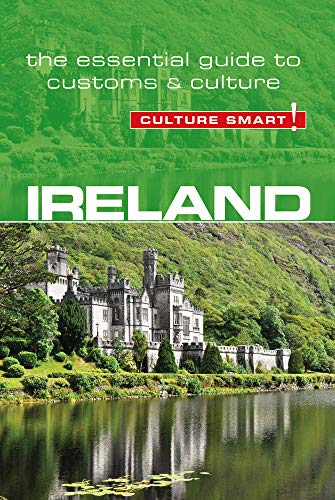
Inhaltsangabe
The island of Ireland is famous for its timeless beauty, the variety of its landscape, its quiet towns and lively cities, the poetic and literary genius of so many of its citizens, its music and folklore, and its colorful and bloody history.
What is also true is that the Irish people have in many ways changed in recent years, while retaining the scars and proud memories of their past, and their thriving national culture. Twenty-first century Ireland, North and South, is the product not only of its history and culture, but also of massive political change, remarkable efforts to heal centuries-old animosities, a metamorphosis in social and religious attitudes, and the dramatic peaks and troughs of a transformed economy.
Until the late twentieth century Southern Ireland's economy was essentially rural, tied to the UK; the North, a place of heavy industry. Then came the so-called "Celtic Tiger," springing forward into a largely new type of economy that reaped colossal rewards. New industries arose, old industries disappeared. This was followed by financial collapse in the first decade of this century, worse than almost any country in Europe. Helped by its friends, and, at least in the South, by governmental and popular acceptance of savage austerity measures, Ireland survived. Today the Republic is a major target for US and European investment.
Businesspeople and visitors who don't know Ireland will find this book an invaluable introduction to the people, the country, and the economic opportunities it offers; while if you think you know Ireland and the Irish you will find plenty here to broaden and deepen that knowledge, and also plenty that will surprise you.
Die Inhaltsangabe kann sich auf eine andere Ausgabe dieses Titels beziehen.
Über die Autorinnen und Autoren
John Scotney M.A., RSA, was the BBC’s Head of Drama in Ireland and later Head of BBC TV Drama Script Unit. A graduate of the University of Cambridge, he has written books and articles about literature and the media, and written and directed numerous programs for the BBC, many on Irish themes, including a critically acclaimed version of James Joyce’s Ulysses. He is a former advisor to the Arts Council and University Lecturer, and was Chair of the Writers’ Guild of Great Britain, Deputy Chair of the National Poetry Society, and is a Fellow of the Royal Society of Arts.
John Scotney M.A., RSA, was the BBC's Head of Drama in Ireland and later Head of BBC TV Drama Script Unit. A graduate of the University of Cambridge, he has written books and articles about literature and the media, and written and directed numerous programs for the BBC, many on Irish themes, including a critically acclaimed version of James Joyce's Ulysses. He is a former advisor to the Arts Council and University Lecturer, and was Chair of the Writers' Guild of Great Britain, Deputy Chair of the National Poetry Society, and is a Fellow of the Royal Society of Arts.
Auszug. © Genehmigter Nachdruck. Alle Rechte vorbehalten.
Ireland
By John ScotneyBravo Ltd
Copyright © 2016 Kuperard
All rights reserved.
ISBN: 978-1-85733-842-3All rights reserved.
Contents
Cover,
Title Page,
Copyright,
About the Author,
Map of Ireland,
Introduction,
Key Facts,
Chapter 1: LAND AND PEOPLE,
Chapter 2: VALUES AND ATTITUDES,
Chapter 3: RELIGION AND TRADITION,
Chapter 4: MAKING FRIENDS,
Chapter 5: CULTURAL LIFE,
Chapter 6: TIME OUT,
Chapter 7: BUSINESS BRIEFING,
Chapter 8: COMMUNICATING,
Appendix: Some Famous Irish Americans,
Further Reading,
CHAPTER 1
LAND & PEOPLE
GEOGRAPHY AND CLIMATE
Set at the very edge of Europe, battered by the Atlantic but warmed by the Gulf Stream, Ireland is tethered a few miles off the coasts of Wales, England, and Scotland. But in its shape — the smooth east coast and the straggling indented west coast — it seems to be reaching out across the Atlantic Ocean toward America, where so many of its sons and daughters now live.
Ireland's position and the nature of the land itself has shaped the way of life of the people and their attitudes toward themselves and others.
Ireland is famous for its greenness, and this greenness has become part of the Irish national identity: the national flag is green, white, and orange; the sportsmen and women play in green; even the telephone boxes are green.
Connemara on the west coast, which faces the great ocean head on, is not green. It is a brown, rugged, and bleak place of stones and of few trees. Yet it has a great natural grandeur and it is here that the old ways are best preserved. In the northwest is Donegal, distinctively beautiful, with magnificent beaches. Just south of Donegal, Sligo was immortalized by the poems of W. B. Yeats.
The Donegal Highlands in the northeast rise to about 700 feet (about 230 meters), but even Slieve Donard, the highest peak of the Mountains of Mourne, sweeps down to the sea from a height of just 2,786 feet (849 meters). The Wicklow Mountains in the east rise to a similar height. In the south the wonderfully named Macgillycuddy's Reeks are a little higher, making them the highest mountains in the whole island.
Ireland is a country of hills and plains, but above all it is a land of rivers and lakes; the Republic alone has 537 square miles (1,390 square kilometers) of water. Most people have heard of the beautiful Lakes of Killarney, but few realize Lough Neagh in Ulster is the largest lake in the British Isles. All this water is put to good use: hydroelectricity generates about 6 percent of Ireland's electrical needs.
The "pleasant waters of the river Lee," the Blackwater, the Suir, the Nore, the Barrow, the Liffey, from whose water Guinness is supposed to be made, the Boyne where a famous battle was fought, and the Lagan on which the city of Belfast stands, all flow toward the east. Only the Bann flows north; and the Shannon, two hundred fifty miles long and the longest river in the British Isles, flows south.
To the north of the Shannon lies the lovely county of Clare, with the unique landscape of the rocky Burren country.
Galway, in its famous bay, is the major city of the west and looks to the sea rather than the land.
No rivers flow into the sea in Connaught, but there is no shortage of water. The west is often seen as the most distinctively Irish part of the country — it is certainly the wettest. The water-bearing clouds fresh from the Atlantic strike the rising ground and the rain comes down in bucketfuls. But there's still plenty left for the rest of the country.
For in truth the "Emerald" Isle's color derives from its climate, which involves a certain amount of rain. Even the driest parts around Dublin get 150 days of rain a year, and an annual total of 29.5 inches (75 cm) of rainfall. Bring your umbrellas and waterproof gear even in the sunniest months of May and June, but be prepared equally for beautiful sunny days in February or November. The skies are often overcast, but the sun is always ready to surprise you by showing her face when she is least expected — the sun is a female noun in Irish, and was once a goddess. The combination of sunshine and moisture makes for wonderful sunsets over Galway Bay and for glorious rainbows. And all you have to do is find the foot of a rainbow to claim a Leprechaun's crock of gold.
If an Irishman tells you it's "a grand soft day" he means it is raining gently but the day is quite pleasantly warm. For the climate is surprisingly mild, milder than might be expected in northern latitudes thanks to the warm Gulf Stream that washes Ireland's shores. The rain rarely turns to snow, and temperatures in the east range from about 39°F (4°C) in January to 68°F (20°C) in August.
The mild damp climate affects many aspects of Irish culture. The ancient Irish clans roamed widely to rustle each other's cattle, and epic poems like The Cattle Raid of Cooley were recited about their deeds. These heroes never settled down to become respectable farmers tilling fields of wheat because wheat does not grow well in this climate. The rainfall is wonderful for grass, but wheat tends to rot. Even today 90 percent of Irish agricultural land is down to pasture or rough grazing.
About a third of Ireland is made up of a central plain covered with clay, deposited when the ice sheets withdrew at the end of the last ice age, which retains a lot of surface water from the copious rainfall. Here peat moss thrives and over thousands of years has built up into peat bogs, a sort of embryonic coal — though the island has very little true coal. Most of the bogs have been drained so the peat can be cut for fuel. The scent of a peat fire (the Irish often call peat "turf") drifting from a cottage chimney is unforgettable.
Ireland is known for the excellence of its beef and dairy products and Ireland is the biggest beef exporter in Europe. The green pastures of the central plain are devoted mainly to dairying, but also raise fine pigs, and the wonderful grass of the Curragh breeds famous horses. Beef cattle from the west are sent eastward to the richer pastures of Meath for fattening. James Joyce writes in Ulysses of a sturdy young woman being "beef to the heels" like a Mullingar heifer. There are few golden fields of corn; instead oats and potatoes are grown, and in the comparatively dry and sunny southeast, barley — Cork is famous for its brewing and distilling.
West of the west coast are the Aran Islands. These rocky places, battered by the seas and gales of the Atlantic, have an emotional significance to Irish people out of all proportion to the number of their inhabitants.
People have lived here for 4,000 years, and the islands are a treasure house of antiquities and Celtic remains. Gaelic is still many people's first language, though English is today heard almost as often. Here the old traditions and folklore lasted longer than on the mainland. The way of life was hard. Seaweed and sand were carried from the shore to cover the barren rocks with some sort of soil, which had to be held in by stone walls to keep it from being blown back into the sea. The tiny fields supported at best a single cow or a few scraggy sheep. To catch fish the islanders would brave the Atlantic rollers in currachs — frail canvas boats that they rowed with remarkable courage and skill.
Nowadays the island economy is rather more prosperous. In the course of the summer season 100,000 visitors arrive, and many of them take away with them one of the famous Aran...
„Über diesen Titel“ kann sich auf eine andere Ausgabe dieses Titels beziehen.
Suchergebnisse für Ireland - Culture Smart!: The Essential Guide to Customs...

Beispielbild für diese ISBN
Ireland - Culture Smart!
Anbieter: World of Books (was SecondSale), Montgomery, IL, USA
Verkäuferbewertung 5 von 5 Sternen

Paperback. Zustand: Good. Culture Smart guides help travellers have a more meaningful and successful time abroad through a better understanding of the local culture. Chapters on values, attitudes, customs, and daily life will help you make the most of your visit, while tips on etiquette and communication will help you navigate unfamiliar situations and avoid faux pas. Bestandsnummer des Verkäufers 00101007225
Gebraucht kaufen
EUR 4,36
Versand gratis
Versand innerhalb von USA
Versand innerhalb von USA
Anzahl: 4 verfügbar
Beispielbild für diese ISBN
Ireland - Culture Smart!: The Essential Guide to Customs & Culture
Verlag:
Kuperard (edition Second Edition, Second edition), 2016
ISBN 10: 1857338421
ISBN 13: 9781857338423
Gebraucht
Paperback
Anbieter: BooksRun, Philadelphia, PA, USA
Verkäuferbewertung 5 von 5 Sternen
Paperback. Zustand: Very Good. Second Edition, Second edition. It's a well-cared-for item that has seen limited use. The item may show minor signs of wear. All the text is legible, with all pages included. It may have slight markings and/or highlighting. Bestandsnummer des Verkäufers 1857338421-8-1
Gebraucht kaufen
EUR 4,37
Versand gratis
Versand innerhalb von USA
Versand innerhalb von USA
Anzahl: 1 verfügbar
Beispielbild für diese ISBN
Ireland - Culture Smart!: The Essential Guide to Customs & Culture
Anbieter: Evergreen Goodwill, Seattle, WA, USA
Verkäuferbewertung 5 von 5 Sternen
paperback. Zustand: Good. Bestandsnummer des Verkäufers mon0000594835
Gebraucht kaufen
EUR 1,83
EUR 3,55 Versand
Versand innerhalb von USA
Versand innerhalb von USA
Anzahl: 1 verfügbar
Beispielbild für diese ISBN
Ireland - Culture Smart!: The Essential Guide to Customs & Culture (74)
Anbieter: Half Price Books Inc., Dallas, TX, USA
Verkäuferbewertung 5 von 5 Sternen
Paperback. Zustand: Very Good. Connecting readers with great books since 1972! Used books may not include companion materials, and may have some shelf wear or limited writing. We ship orders daily and Customer Service is our top priority! Bestandsnummer des Verkäufers S_476426362
Gebraucht kaufen
EUR 2,75
EUR 3,33 Versand
Versand innerhalb von USA
Versand innerhalb von USA
Anzahl: 1 verfügbar
Beispielbild für diese ISBN
Ireland - Culture Smart!
Anbieter: World of Books Inc, Montgomery, IL, USA
Verkäuferbewertung 4 von 5 Sternen

Paperback. Zustand: Good. Culture Smart guides help travellers have a more meaningful and successful time abroad through a better understanding of the local culture. Chapters on values, attitudes, customs, and daily life will help you make the most of your visit, while tips on etiquette and communication will help you navigate unfamiliar situations and avoid faux pas. Bestandsnummer des Verkäufers CIN1857338421G
Gebraucht kaufen
EUR 6,19
Versand gratis
Versand innerhalb von USA
Versand innerhalb von USA
Anzahl: 4 verfügbar
Beispielbild für diese ISBN
Ireland - Culture Smart!: The Essential Guide to Customs & Culture
Anbieter: ThriftBooks-Atlanta, AUSTELL, GA, USA
Verkäuferbewertung 5 von 5 Sternen
Paperback. Zustand: Very Good. No Jacket. May have limited writing in cover pages. Pages are unmarked. ~ ThriftBooks: Read More, Spend Less. Bestandsnummer des Verkäufers G1857338421I4N00
Gebraucht kaufen
EUR 6,32
Versand gratis
Versand innerhalb von USA
Versand innerhalb von USA
Anzahl: 1 verfügbar
Beispielbild für diese ISBN
Ireland - Culture Smart!: The Essential Guide to Customs & Culture
Anbieter: ThriftBooks-Dallas, Dallas, TX, USA
Verkäuferbewertung 5 von 5 Sternen
Paperback. Zustand: Very Good. No Jacket. Former library book; May have limited writing in cover pages. Pages are unmarked. ~ ThriftBooks: Read More, Spend Less. Bestandsnummer des Verkäufers G1857338421I4N10
Gebraucht kaufen
EUR 6,32
Versand gratis
Versand innerhalb von USA
Versand innerhalb von USA
Anzahl: 1 verfügbar
Beispielbild für diese ISBN
Ireland - Culture Smart!: The Essential Guide to Customs & Culture
Anbieter: ThriftBooks-Dallas, Dallas, TX, USA
Verkäuferbewertung 5 von 5 Sternen
Paperback. Zustand: Fair. No Jacket. Readable copy. Pages may have considerable notes/highlighting. ~ ThriftBooks: Read More, Spend Less. Bestandsnummer des Verkäufers G1857338421I5N00
Gebraucht kaufen
EUR 6,32
Versand gratis
Versand innerhalb von USA
Versand innerhalb von USA
Anzahl: 1 verfügbar
Beispielbild für diese ISBN
Ireland - Culture Smart!: The Essential Guide to Customs & Culture
Anbieter: ThriftBooks-Atlanta, AUSTELL, GA, USA
Verkäuferbewertung 5 von 5 Sternen
Paperback. Zustand: Very Good. No Jacket. Former library book; May have limited writing in cover pages. Pages are unmarked. ~ ThriftBooks: Read More, Spend Less. Bestandsnummer des Verkäufers G1857338421I4N10
Gebraucht kaufen
EUR 6,32
Versand gratis
Versand innerhalb von USA
Versand innerhalb von USA
Anzahl: 1 verfügbar
Beispielbild für diese ISBN
Ireland - Culture Smart! : The Essential Guide to Customs and Culture
Anbieter: Better World Books, Mishawaka, IN, USA
Verkäuferbewertung 5 von 5 Sternen
Zustand: Good. Second Edition, Second edition. Pages intact with minimal writing/highlighting. The binding may be loose and creased. Dust jackets/supplements are not included. Stock photo provided. Product includes identifying sticker. Better World Books: Buy Books. Do Good. Bestandsnummer des Verkäufers 52071885-6
Gebraucht kaufen
EUR 6,54
Versand gratis
Versand innerhalb von USA
Versand innerhalb von USA
Anzahl: 1 verfügbar