
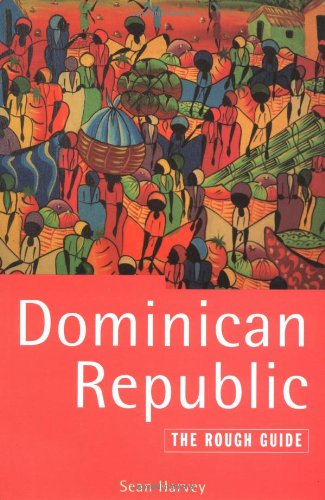
Verwandte Artikel zu Dominican Republic: The Rough Guide (Rough Guide Travel...
Inhaltsangabe
A comprehensive handbook to this diverse Caribbean destination of the Dominican Republic, this guide features detailed coverage of fishing villages and historic cities, and reviews of hotels, restaurants and bars.
Die Inhaltsangabe kann sich auf eine andere Ausgabe dieses Titels beziehen.
Auszug. © Genehmigter Nachdruck. Alle Rechte vorbehalten.
Where to go
As stated, many visitors head directly for beachfront resorts, and there's much there to admire, to be sure. The southeastern part of the country probably has the loveliest all-inclusive resort zones, Bvaro and Punta Cana, both holding more pristine coastline stretching for kilometres on end, broken up just by coconut trees and, of course, hotels. These are slightly outshined, if not in attractiveness then by sheer magnitude, by Playa Dorado along the north coast, the largest all-inclusive complex in the world. Fortunately, Playa Dorado is close by Puerto Plata, an historic city worth examining for its wealth of Victorian architecture and proximity to developed stations like windsurfing capital Cabarete, to the east, and less trammelled villages such as El Portillo, home to the remains of Columbus's first colony, to the west.
More great beaches are scattered about the Saman Peninsula, poking out at the country's extreme northeast. Its primary city, Saman, also serves as a base for checking out the humpback whales that migrate to the Bah'a de Saman in the winter to mate and give birth and for boat tours to the lush mangrove swamps of the Parque Nacional Los Haitises, on the interior of the bay. The sand and surf theme continues in the southwest, mainly straight down the coast from Barahona, where you'll find isolated beaches with not many crowds at all on the pebbly waterfront - and, correspondingly, not many facilities either.
On the southern coast the capital city, Santo Domingo, offers the most fulfilling urban experience, and should obviously be on anyone's itinerary, not least because it has the country's largest airport; in addition, there are the historic forts, churches and homes of the Zona Colonial and, on a more modern note, the nation's top museums, restaurants and nightlife, scattered all about. Santiago, tucked away in the interior Cibao Valley, ranks a distant second, though there are no better areas to learn about the history of tobacco and see the production of cigars - a major Dominican export - firsthand.
If you're seeking a bit more adventure and outdoor life, you needn't look too hard. The Cordillera Central, the island's largest mountain range, should be a high priority: in addition to choosing between several-day treks through the wilderness to the top of Pico Duarte - the tallest peak in the Antilles - you can head to Jarabacoa, a resort town blessed with four waterfalls in its immediate vicinity and featuring all manner of mountain sports, or less developed Constanza, a circular valley short on tourist development but chock full of natural grandeur. Few visitors make it out to the rough Haitian border along the DR's western edge, but there are compelling sights here as well - though the singular experience of slowly trawling along desolate roadway, if some of the track can even be called that, straddling two distinct nations is likely the greatest attraction. Chief among the natural highlights, however, is Lago Enriquillo, a saltwater lake the size of Manhattan, inhabited by hundreds of iguanas, thousands of tropical birds and even American crocodiles.
When to go
There are two distinct tourist high seasons in the Dominican Republic, the summer months of July and August, when travellers from the northern hemisphere have some time off to get away for a couple of weeks, and the winter season from December through late February, when the Dominican climate is at its optimum, having cooled down just a bit from summertime. You'll therefore save a bit of money - and have an easier time booking a hotel room on the spot - if you arrive during the spring or the fall, which is just fine, as the temperature doesn't really vary all that much from season to season. In the Cordillera Central mountains, you can expect temperatures to be about four degrees cooler on average than in the valleys and along the coast - making those spots prime targets for wealthy Dominicans looking to escape the summer heat.
Keep in mind also that the Dominican Republic is right in the centre of the Caribbean hurricane belt, and gets hit with a major one every decade or so; the most recent was 1998's Hurricane Georges, which annihilated much of the year's harvest and wiped some small villages completely off the map. August and September is prime hurricane season, though smaller ones can occur in the months before and after those, so you may want to play it safe and schedule your trip accordingly. If you are on the island when a hurricane is about to strike, your best bet is to head immediately for the closest high-end tourist hotel, which should have a protected shelter for its guests. Definitely do not wander around outside, and don't be fooled by a brief respite of calm - you may well be in the eye of the hurricane, which means the destruction will start up again soon.
Summer is the traditional rainy season in the Dominican Republic, but with weather patterns somewhat disrupted in the past couple of years, you can expect short bursts of rain a few times a week - most of them lasting no more than a couple of minutes, to be quickly followed by sunshine - regardless of the time of year.
„Über diesen Titel“ kann sich auf eine andere Ausgabe dieses Titels beziehen.
Suchergebnisse für Dominican Republic: The Rough Guide (Rough Guide Travel...

Beispielbild für diese ISBN
Dominican Republic: The Rough
Anbieter: World of Books (was SecondSale), Montgomery, IL, USA
Verkäuferbewertung 5 von 5 Sternen

Zustand: Good. Item in good condition. Textbooks may not include supplemental items i.e. CDs, access codes etc. Bestandsnummer des Verkäufers 00103723176
Gebraucht kaufen
EUR 5,13
Versand gratis
Versand innerhalb von USA
Versand innerhalb von USA
Anzahl: 1 verfügbar
Beispielbild für diese ISBN
The Rough Guide to Dominican Republic
Anbieter: ThriftBooks-Phoenix, Phoenix, AZ, USA
Verkäuferbewertung 5 von 5 Sternen
Paperback. Zustand: Very Good. No Jacket. May have limited writing in cover pages. Pages are unmarked. ~ ThriftBooks: Read More, Spend Less. Bestandsnummer des Verkäufers G1858284465I4N00
Gebraucht kaufen
EUR 6,02
Versand gratis
Versand innerhalb von USA
Versand innerhalb von USA
Anzahl: 1 verfügbar
Beispielbild für diese ISBN
The Rough Guide to Dominican Republic
Anbieter: ThriftBooks-Atlanta, AUSTELL, GA, USA
Verkäuferbewertung 5 von 5 Sternen
Paperback. Zustand: Very Good. No Jacket. May have limited writing in cover pages. Pages are unmarked. ~ ThriftBooks: Read More, Spend Less. Bestandsnummer des Verkäufers G1858284465I4N00
Gebraucht kaufen
EUR 6,05
Versand gratis
Versand innerhalb von USA
Versand innerhalb von USA
Anzahl: 1 verfügbar
Beispielbild für diese ISBN
The Rough Guide to Dominican Republic
Anbieter: ThriftBooks-Atlanta, AUSTELL, GA, USA
Verkäuferbewertung 5 von 5 Sternen
Paperback. Zustand: Good. No Jacket. Pages can have notes/highlighting. Spine may show signs of wear. ~ ThriftBooks: Read More, Spend Less. Bestandsnummer des Verkäufers G1858284465I3N00
Gebraucht kaufen
EUR 6,05
Versand gratis
Versand innerhalb von USA
Versand innerhalb von USA
Anzahl: 1 verfügbar
Beispielbild für diese ISBN
The Rough Guide to Dominican Republic
Anbieter: Wonder Book, Frederick, MD, USA
Verkäuferbewertung 5 von 5 Sternen
Zustand: Good. Good condition. A copy that has been read but remains intact. May contain markings such as bookplates, stamps, limited notes and highlighting, or a few light stains. Bestandsnummer des Verkäufers H03L-00494
Gebraucht kaufen
EUR 6,27
Versand gratis
Versand innerhalb von USA
Versand innerhalb von USA
Anzahl: 1 verfügbar
Beispielbild für diese ISBN
Dominican Republic: The Rough Guide (Rough Guide Travel Guides)
Anbieter: AwesomeBooks, Wallingford, Vereinigtes Königreich
Verkäuferbewertung 5 von 5 Sternen
Paperback. Zustand: Very Good. Dominican Republic: The Rough Guide (Rough Guide Travel Guides) This book is in very good condition and will be shipped within 24 hours of ordering. The cover may have some limited signs of wear but the pages are clean, intact and the spine remains undamaged. This book has clearly been well maintained and looked after thus far. Money back guarantee if you are not satisfied. See all our books here, order more than 1 book and get discounted shipping. Bestandsnummer des Verkäufers 7719-9781858284460
Gebraucht kaufen
EUR 2,82
EUR 4,80 Versand
Versand von Vereinigtes Königreich nach USA
Versand von Vereinigtes Königreich nach USA
Anzahl: 2 verfügbar
Beispielbild für diese ISBN
Dominican Republic: The Rough Guide (Rough Guide Travel Guides)
Anbieter: WorldofBooks, Goring-By-Sea, WS, Vereinigtes Königreich
Verkäuferbewertung 5 von 5 Sternen
Paperback. Zustand: Very Good. The book has been read, but is in excellent condition. Pages are intact and not marred by notes or highlighting. The spine remains undamaged. Bestandsnummer des Verkäufers GOR003867294
Gebraucht kaufen
EUR 2,29
EUR 6,53 Versand
Versand von Vereinigtes Königreich nach USA
Versand von Vereinigtes Königreich nach USA
Anzahl: 2 verfügbar
Beispielbild für diese ISBN
The Rough Guide to Dominican Republic
Anbieter: MusicMagpie, Stockport, Vereinigtes Königreich
Verkäuferbewertung 5 von 5 Sternen
Zustand: Very Good. 1771500331. 2/19/2026 11:25:31 AM. Bestandsnummer des Verkäufers U9781858284460
Gebraucht kaufen
EUR 2,81
EUR 6,40 Versand
Versand von Vereinigtes Königreich nach USA
Versand von Vereinigtes Königreich nach USA
Anzahl: 1 verfügbar
Beispielbild für diese ISBN
Dominican Republic: The Rough Guide (Rough Guide Travel Guides)
Verlag:
Rough Guides 27/01/2000, 2000
ISBN 10: 1858284465
ISBN 13: 9781858284460
Gebraucht
Softcover
Anbieter: Bahamut Media, Reading, Vereinigtes Königreich
Verkäuferbewertung 5 von 5 Sternen
Zustand: Very Good. Shipped within 24 hours from our UK warehouse. Clean, undamaged book with no damage to pages and minimal wear to the cover. Spine still tight, in very good condition. Remember if you are not happy, you are covered by our 100% money back guarantee. Bestandsnummer des Verkäufers 6545-9781858284460
Gebraucht kaufen
EUR 5,95
EUR 8,14 Versand
Versand von Vereinigtes Königreich nach USA
Versand von Vereinigtes Königreich nach USA
Anzahl: 3 verfügbar
Beispielbild für diese ISBN
Dominican Republic: The Rough Guide (Rough Guide Travel Guides)
Anbieter: Reuseabook, Gloucester, GLOS, Vereinigtes Königreich
Verkäuferbewertung 5 von 5 Sternen
Paperback. Zustand: Used; Very Good. Dispatched, from the UK, within 48 hours of ordering. Though second-hand, the book is still in very good shape. Minimal signs of usage may include very minor creasing on the cover or on the spine. Bestandsnummer des Verkäufers CHL1496112
Gebraucht kaufen
EUR 3,77
EUR 11,66 Versand
Versand von Vereinigtes Königreich nach USA
Versand von Vereinigtes Königreich nach USA
Anzahl: 1 verfügbar