
Verwandte Artikel zu Scotland: The Rough Guide (Rough Guide Travel Guides)
Inhaltsangabe
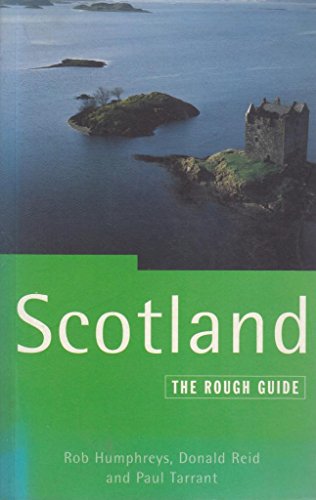
Revised and updated, this edition includes additional coverage of Edinburgh's museums and atrractions and detailed background information on devolution and the new Scottish Parliament.
Die Inhaltsangabe kann sich auf eine andere Ausgabe dieses Titels beziehen.
Über die Autorin bzw. den Autor
Rob Humphreys has been writing for Rough Guides since 1989. He has traveled extensively, writing Pocket Rough Guide London (with S. Cook), Pocket Rough Guide Prague, and The Rough Guide to London (with S. Cook). Rob is also the coauthor of The Rough Guide to Scotland, The Rough Guide to Scottish Highlands & Islands, and The Great Glen Rough Guides Snapshot Scotland.
Donald Reid was brought up in Glasgow, studied law in Edinburgh, and took to the high seas afterward to avoid the threat of an office. He worked on travel books and magazines in Cape Town, and has now settled back in Edinburgh, where he works as a freelance writer and editor. Reid is the author of The Rough Guide to Edinburgh and the coauthor of The Rough Guide to Scotland.
Auszug. © Genehmigter Nachdruck. Alle Rechte vorbehalten.
Where to go
If you're short of time, you can still sample a little of everything by starting at either - or both - of the country's great cities, Glasgow and Edinburgh, before moving on up the west coast, where stunning land and seascapes are studded with reminders of Scotland's long and fractious history.
Travelling around mainland Scotland is comparatively easy: the road network reaches almost every corner of the country, trains serve the major towns and an extensive bus system links all but the most remote villages. Hikers are well served, too: all of the country's parks and most of the wilderness areas are crisscrossed by popular walking trails. Without your own transport it's more difficult to move around the islands, where, especially on the Western Isles, bus services deteriorate and are often impossible to coordinate with ferry sailing times. Almost all of the ferries are operated by Caledonian MacBrayne, who provide a splendidly punctual and efficient service, along with various island-hopping discount tickets to reduce the substantial costs of ferry travel. Reasonably priced accommodation is available almost everywhere, at its least expensive in the youth hostels, and in hundreds of family-run B&Bs.
The majority of visitors begin their tour of Scotland in the capital, Edinburgh, a handsome and ancient city famous for its magnificent castle and the Palace of Holyroodhouse, as well as for the excellence of its museums - not to mention the Edinburgh International Festival, a world-acclaimed arts shindig held for three weeks in August and early September. From here it's just a short journey west to the capital's rival, lively Glasgow, a sprawling industrial metropolis that was once the second city of the British Empire. In recent years, though its industrial base remains in decline, Glasgow has done much to improve its image, aided in particular by the impressive architectural legacy of its late eighteenth- and nineteenth-century heyday.
Southern Scotland, often underrated, features some of the country's finest scenery, especially among the elevated river valleys surrounding Moffat and in the forests and flat-peaked hills of the Galloway Forest Park, close to the Solway coast. Away to the east lie the better-known ruins of the four medieval Border abbeys of Melrose, Dryburgh, Jedburgh and Kelso. Jedburgh is the pick of the bunch, but the trim town of Melrose, tucked into the one of the prettiest parts of the valley of the River Tweed, is the best peg on which to hang your visit, especially as it's close to Abbotsford, the intriguing, treasure-crammed mansion of Sir Walter Scott.
To the north of Edinburgh, across the Firth of Forth, Central Scotland's varied landscape embraces deep and shadowy glens, jagged-edged mountains and the well-walked hills of the Trossachs. It's here you'll find impressive Stirling castle and, on the coast, prosperous St Andrews, home of golf. Northeast Scotland may seem at first to have less to offer, but you could consider following the Speyside malt whisky trail, taking a walk in the tranquil and majestic valleys of the Angus glens, or making a visit to oil-rich Aberdeen, the nation's third largest city, or Deeside, home to Queen Victoria's "dear paradise", Balmoral.
Most visitors move on from the central belt to Argyll, a sparsely populated territory of sea lochs and mountains. Mainland Argyll points out towards the southernmost reaches of the Hebrides, the long chain of rocky islands necklacing Scotland's Atlantic shoreline. Arran, with its striking granite peaks, and popular Bute, are accessible by ferry from Ardrossan in Ayrshire. From Oban you can reach the gorgeous scenery of Mull, and the quieter islands of Islay and Jura, wonderful places for a walking holiday.
Up along the coast, reached by boat from Mallaig or Kyleakin, is Skye, the most visited of the Hebrides, made famous by the exploits of Flora MacDonald, who smuggled Bonnie Prince Charlie "over the sea to Skye" after his defeat at the Battle of Culloden. The harsh rocky promontories that make up the bulk of the island are serrated by scores of deep sea lochs, together creating some of the western coast's fiercest scenery. The island also boasts the snow-tipped Cuillin, whose clustered summits offer perhaps the most challenging climbing in the country, and the bizarre rock formations of the Quiraing ridge on the Trotternish peninsula. The only settlement of any size is Portree, draped around the cliffs of a narrow bay, but many visitors prefer to explore the isolated hotels, B&Bs and youth hostels scattered across the island.
From Uig, on the west coast of Skye, and from Oban and Ullapool, there are frequent boats across to the Western Isles, an elongated archipelago extending south from the single island of Lewis and Harris, to the uninhabited islets below Barra. The Isles are some of the last bastions of the Gaelic language, and you'll find most road signs in Gaelic only. Of the islands, Lewis is distinguished by the prehistoric standing stones of Calanais (Callanish), one of the best-preserved monuments of its type in Europe, while North Harris possesses a remarkably hostile landscape of forbiddingly bare mountains giving way to the wide sandy beaches and lunar-like hills of South Harris.
Back on the mainland, the Highlands, whose multitude of mountains, sea cliffs, glens and lochs cover the northern two-thirds of the country, is the region which best represents the tourist image of wild Scotland. Its great popularity belies its stark remoteness, despite a number of internationally known sights, not least Loch Ness, midway along the Great Glen and home to the eponymous monster. Inverness, near the site of the Battle of Culloden, is an obvious base for exploring the region, although Fort William, at the opposite end of the Great Glen close by Ben Nevis, Scotland's highest peak, is a possible alternative, especially if you're heading west.
In the far north, boats leave for the cluster of islands that make up the agricultural Orkney Islands. By far the most picturesque town is the port of Stromness, the main point of arrival for those coming by boat, while the capital, Kirkwall, boasts a magnificent medieval cathedral. Further on, 200 miles north of Aberdeen, are the much more rugged Shetland Islands, where the bustling and historic harbour at Lerwick shelters craft from every corner of the North Atlantic. Orkney and Shetland, both with a rich Norse heritage, differ not only from each other, but also quite distinctly, in dialect and culture, from mainland Scotland. These far-flung, sea- and wind-buffeted islands offer some of the country's wildest scenery, finest bird-watching and most fascinating archeological remains.
„Über diesen Titel“ kann sich auf eine andere Ausgabe dieses Titels beziehen.
Suchergebnisse für Scotland: The Rough Guide (Rough Guide Travel Guides)

Foto des Verkäufers
The Rough Guide to Scotland (4th Edition)
Anbieter: Kayleighbug Books, IOBA, Cedar Grove, WV, USA
Verkäuferbewertung 5 von 5 Sternen

Trade Paperback. Zustand: Very Good. No Stock Photos! We photograph every item. cover crease. From the cities of Glasgow and Edinburgh to the remote wilderness areas, this comprehensive guide explores Scotland's unique culture, history, music, and food, and points out the best pubs, bed and breakfasts, historical landmarks, and other places to visit. 32 maps. color photos. Bestandsnummer des Verkäufers 051180
Gebraucht kaufen
EUR 2,74
EUR 5,31 Versand
Versand innerhalb von USA
Versand innerhalb von USA
Anzahl: 1 verfügbar
Beispielbild für diese ISBN
Scotland: The Rough Guide (Rough Guide Travel Guides)
Anbieter: AwesomeBooks, Wallingford, Vereinigtes Königreich
Verkäuferbewertung 5 von 5 Sternen
Paperback. Zustand: Very Good. Scotland: The Rough Guide (Rough Guide Travel Guides) This book is in very good condition and will be shipped within 24 hours of ordering. The cover may have some limited signs of wear but the pages are clean, intact and the spine remains undamaged. This book has clearly been well maintained and looked after thus far. Money back guarantee if you are not satisfied. See all our books here, order more than 1 book and get discounted shipping. Bestandsnummer des Verkäufers 7719-9781858285085
Gebraucht kaufen
EUR 3,44
EUR 4,89 Versand
Versand von Vereinigtes Königreich nach USA
Versand von Vereinigtes Königreich nach USA
Anzahl: 2 verfügbar
Beispielbild für diese ISBN
The Rough Guide to Scotland
Verlag:
Penguin Publishing Group, 2000
ISBN 10: 1858285089
ISBN 13: 9781858285085
Gebraucht
Softcover
Anbieter: Better World Books, Mishawaka, IN, USA
Verkäuferbewertung 5 von 5 Sternen
Zustand: Good. Pages intact with minimal writing/highlighting. The binding may be loose and creased. Dust jackets/supplements are not included. Stock photo provided. Product includes identifying sticker. Better World Books: Buy Books. Do Good. Bestandsnummer des Verkäufers 51277731-20
Gebraucht kaufen
EUR 8,85
Versand gratis
Versand innerhalb von USA
Versand innerhalb von USA
Anzahl: 1 verfügbar
Beispielbild für diese ISBN
Scotland: The Rough Guide (Rough Guide Travel Guides)
Anbieter: WorldofBooks, Goring-By-Sea, WS, Vereinigtes Königreich
Verkäuferbewertung 5 von 5 Sternen
Paperback. Zustand: Very Good. The book has been read, but is in excellent condition. Pages are intact and not marred by notes or highlighting. The spine remains undamaged. Bestandsnummer des Verkäufers GOR002718645
Gebraucht kaufen
EUR 3,94
EUR 6,64 Versand
Versand von Vereinigtes Königreich nach USA
Versand von Vereinigtes Königreich nach USA
Anzahl: 2 verfügbar
Beispielbild für diese ISBN
The Rough Guide to Scotland
Verlag:
Penguin Publishing Group, 2000
ISBN 10: 1858285089
ISBN 13: 9781858285085
Gebraucht
Softcover
Anbieter: Better World Books Ltd, Dunfermline, Vereinigtes Königreich
Verkäuferbewertung 5 von 5 Sternen
Zustand: Good. Pages intact with minimal writing/highlighting. The binding may be loose and creased. Dust jackets/supplements are not included. Stock photo provided. Product includes identifying sticker. Better World Books: Buy Books. Do Good. Bestandsnummer des Verkäufers 51277731-20
Gebraucht kaufen
EUR 5,70
EUR 5,93 Versand
Versand von Vereinigtes Königreich nach USA
Versand von Vereinigtes Königreich nach USA
Anzahl: 1 verfügbar
Beispielbild für diese ISBN
Scotland: The Rough Guide (Rough Guide Travel Guides)
Verlag:
Rough Guides 27/01/2000, 2000
ISBN 10: 1858285089
ISBN 13: 9781858285085
Gebraucht
Softcover
Anbieter: Bahamut Media, Reading, Vereinigtes Königreich
Verkäuferbewertung 4 von 5 Sternen

Zustand: Very Good. Shipped within 24 hours from our UK warehouse. Clean, undamaged book with no damage to pages and minimal wear to the cover. Spine still tight, in very good condition. Remember if you are not happy, you are covered by our 100% money back guarantee. Bestandsnummer des Verkäufers 6545-9781858285085
Gebraucht kaufen
EUR 3,85
EUR 8,28 Versand
Versand von Vereinigtes Königreich nach USA
Versand von Vereinigtes Königreich nach USA
Anzahl: 3 verfügbar
Foto des Verkäufers
The Rough Guide to Scotland
Anbieter: Hamelyn, Madrid, M, Spanien
Verkäuferbewertung 5 von 5 Sternen
Zustand: Fair. : La cuarta edición de 'The Rough Guide to Scotland' es una guía de viaje completa que ofrece información detallada sobre Escocia. Cubre una amplia gama de temas, desde vuelos y alojamiento hasta lugares de interés y actividades. Escrita por expertos como Paul Tarrant, Rob Humphreys y Donald Reid, esta guía es ideal para aquellos que planean un viaje a Escocia y desean explorar todo lo que este hermoso país tiene para ofrecer. EAN: 9781858285085 Tipo: Libros Categoría: Otros Título: The Rough Guide to Scotland Autor: Paul Tarrant| Rob Humphreys| Donald Reid Idioma: eng Páginas: 720 Formato: tapa blanda. Bestandsnummer des Verkäufers Happ-2025-11-20-465a5ae2
Gebraucht kaufen
EUR 10,01
EUR 11,99 Versand
Versand von Spanien nach USA
Versand von Spanien nach USA
Anzahl: 1 verfügbar
Beispielbild für diese ISBN
Scotland: The Rough Guide (Rough Guide Travel Guides)
Anbieter: Brit Books, Milton Keynes, Vereinigtes Königreich
Verkäuferbewertung 4 von 5 Sternen
Paperback. Zustand: Used; Good. ***Simply Brit*** Welcome to our online used book store, where affordability meets great quality. Dive into a world of captivating reads without breaking the bank. We take pride in offering a wide selection of used books, from classics to hidden gems, ensuring there is something for every literary palate. All orders are shipped within 24 hours and our lightning fast-delivery within 48 hours coupled with our prompt customer service ensures a smooth journey from ordering to delivery. Discover the joy of reading with us, your trusted source for affordable books that do not compromise on quality. Bestandsnummer des Verkäufers mon0000031546
Gebraucht kaufen
EUR 4,48
EUR 18,96 Versand
Versand von Vereinigtes Königreich nach USA
Versand von Vereinigtes Königreich nach USA
Anzahl: 4 verfügbar
Beispielbild für diese ISBN
Scotland: The Rough Guide (Rough Guide Travel Guides)
Anbieter: Brit Books, Milton Keynes, Vereinigtes Königreich
Verkäuferbewertung 4 von 5 Sternen
Paperback. Zustand: Used; Very Good. ***Simply Brit*** Welcome to our online used book store, where affordability meets great quality. Dive into a world of captivating reads without breaking the bank. We take pride in offering a wide selection of used books, from classics to hidden gems, ensuring there is something for every literary palate. All orders are shipped within 24 hours and our lightning fast-delivery within 48 hours coupled with our prompt customer service ensures a smooth journey from ordering to delivery. Discover the joy of reading with us, your trusted source for affordable books that do not compromise on quality. Bestandsnummer des Verkäufers 3896896
Gebraucht kaufen
EUR 4,48
EUR 18,96 Versand
Versand von Vereinigtes Königreich nach USA
Versand von Vereinigtes Königreich nach USA
Anzahl: 7 verfügbar
Beispielbild für diese ISBN
Scotland: The Rough Guide (Rough Guide Travel Guides)
Anbieter: Greener Books, London, Vereinigtes Königreich
Verkäuferbewertung 4 von 5 Sternen
Paperback. Zustand: Used; Very Good. **SHIPPED FROM UK** We believe you will be completely satisfied with our quick and reliable service. All orders are dispatched as swiftly as possible! Buy with confidence! Greener Books. Bestandsnummer des Verkäufers 4960110
Gebraucht kaufen
EUR 4,48
EUR 23,72 Versand
Versand von Vereinigtes Königreich nach USA
Versand von Vereinigtes Königreich nach USA
Anzahl: 7 verfügbar