
Verwandte Artikel zu PRO LINUX PROG,
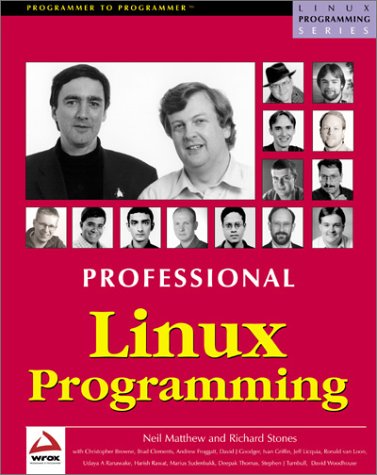
Inhaltsangabe
Da Linux seine Präsenz auf der ganzen Welt als Zielplattform für die professionelle Anwendungsentwicklung erhöht, ist sein Wachstum als leistungsstarkes, flexibles System mit vielen kostenlosen Entwicklungstools sichergestellt, dass er seinen Platz in der Zukunft bietet. Indem Sie einfachen Zugang zu diesem umfassenden Werkzeugsortiment bieten, unterstützt neue und naszente Technologien, zu wenig oder gar keinen Kosten, ermöglicht die Entwicklung mit Linux die Lösung, die für Sie richtige ist. In dieser Nachfolge der meistverkauften Beginning Linux Programming erfahren Sie vom realen Wissen und der Erfahrung der Entwicklung von Software für Linux. Sie werden durch die Entwicklung einer Beispiel-App "DVD Store" mit "Theme" Kapiteln mit verschiedenen Aspekten ihrer Implementierung. In den einzelnen Kapiteln "Take-a-break" wichtige Themen, die über die Grenzen des zentralen Themas hinausgehen. Alle konzentrieren sich auf die praktischen Aspekte der Programmierung, um zu zeigen, wie wichtig es ist, die richtigen Werkzeuge für den Job zu wählen, sie wie sie verwendet werden sollten, und Dinge beim ersten Mal richtig zu machen. Für wen ist dieses Buch? Erfahrene Linux-Programmierer und angehende Entwickler finden in diesem Buch zahlreiche praktische Informationen zu Bibliotheken, Techniken, Werkzeugen und Anwendungen. Sie sollten mit einem einfachen Linux-System vertraut sein, über gute Arbeitskenntnisse der Programmierung in C und ein grundlegendes Verständnis der objektorientierten Programmierung mit C++ für die Qt/KDE Kapitel kennen
Die Inhaltsangabe kann sich auf eine andere Ausgabe dieses Titels beziehen.
Über die Autorin bzw. den Autor
Richard Stones and Neil Matthew are the authors of the first edition of Beginning Linux Programming. They are both experienced software professionals with many years' experience using and programming UNIX and Linux. They are also co-authors of the Wrox Press title, Instant UNIX.
The other contributors are a multi-author Wrox writing team of professional developers.
Auszug. © Genehmigter Nachdruck. Alle Rechte vorbehalten.
CVS
One of the things you should do at an early phase in your project is to set up a way of tracking changes to your project. This might just be the source code, or you might have some documents you wish to track as well. You should be tracking these items for two reasons: firstly so that you can discover what a build or document looked liked at some point in time, and secondly so that you can identify changes over time.
Of course you could just copy items to duplicated directories, with names corresponding to the date, but such a simple solution quickly becomes unmanageable where multiple developers are involved, and the timescale is longer than a few weeks.
If you are a developer working on your own, you may be tempted to think that source code control doesn't offer you much; after all, no one else is going to change the code, so you have full control. However, even the best developers make mistakes occasionally and need to go back to previous versions. Users may report a bug introduced in a minor revision, and rather than just track it down in the traditional way, it might be much more productive to have a look at how the code has changed in the affected area since the last release before the bug appeared. A source code control system can be an invaluable aid in these circumstances, allowing the tracking of exactly when, and how, code was changed.
Where there are multiple developers, the case is even stronger. Not only are there all the reasons that exist for single developers, but new and important reasons relating to peoples' ability to see who has changed what and when - it's then much easier to wind back changes in the event that another developer has 'got it wrong'. Providing people properly comment their changes, it's also possible to discover why they changed things, which can sometimes be very enlightening.
In short, there are many very good reasons to use a source code control system, and very few excuses for not doing so, given the choice of quality free tools available on Linux.In this chapter we will:
set up CVS explore using CVS to manage a project network CVS to enable true collaborative projects
Tools for Linux
Initially there was only one mainstream choice for source code control on Linux, which was RCS (the Revision Control System) from the GNU software tool set. Whilst RCS was, and still is, a very good and reliable revision control system, a lot of people (particularly on projects with several developers or with distributed development environments) have moved to use a newer tool - CVS, the Concurrent Versions System.
CVS originated as a number of shell scripts in 1986. Today's CVS code is mostly based on the work of Brian Berliner since 1989. There are three principal features that have allowed CVS to displace RCS as the tool of choice for managing changes to source code:
Its ability to be configured easily to operate across networks, including the internet. Its ability to allow multiple developers to work on the same source file simultaneously, in many cases being able to merge changes made to a project by many different developers automatically. Its significant improvements, over RCS, in handling of collections of files.
Add to this the fact that CVS is completely free, and you have a winning tool that you should probably consider learning how to use. In the course of this chapter, we're going to have a look at:
setting up and using CVS for a single user on a local machine setting up and using CVS for multiple-users across a network useful features and extensions to CVS, including network configuration and graphical clients
CVS is a rather complex system, and we will not have the space in a single chapter to cover every last detail of its use. However, we hope to show sufficient details that 95% of your needs will be met. You should then be well placed to investigate some of the more obscure features of CVS, should your needs be more exacting than those we've had space to cover.
In this chapter we will be concentrating on using CVS to manage source code. However you should remember that it's just as effective at managing changes to test data, configuration files or the utility scripts that your project is using. Indeed all aspects of your project can be stored in CVS.
CVS can also store your specifications, which are often even more valuable than the source code. However, if any of these are written in binary format, then you must tell CVS that the file is binary, and CVS will not be able to automatically report differences between versions. We will talk more about managing binary files later in the chapter.
„Über diesen Titel“ kann sich auf eine andere Ausgabe dieses Titels beziehen.
Suchergebnisse für PRO LINUX PROG,

Beispielbild für diese ISBN
Linux Programming
Anbieter: Better World Books: West, Reno, NV, USA
Verkäuferbewertung 5 von 5 Sternen

Zustand: Very Good. Former library copy. Pages intact with possible writing/highlighting. Binding strong with minor wear. Dust jackets/supplements may not be included. Includes library markings. Stock photo provided. Product includes identifying sticker. Better World Books: Buy Books. Do Good. Bestandsnummer des Verkäufers 12404685-6
Gebraucht kaufen
EUR 22,83
Versand gratis
Versand innerhalb von USA
Versand innerhalb von USA
Anzahl: 1 verfügbar
Foto des Verkäufers
Professional Linux Programming
Anbieter: Goodwill of Silicon Valley, SAN JOSE, CA, USA
Verkäuferbewertung 4 von 5 Sternen

Zustand: good. Supports Goodwill of Silicon Valley job training programs. The cover and pages are in Good condition! Any other included accessories are also in Good condition showing use. Use can include some highlighting and writing, page and cover creases as well as other types visible wear. Bestandsnummer des Verkäufers GWSVV.1861003013.G
Gebraucht kaufen
EUR 30,58
EUR 3,49 Versand
Versand innerhalb von USA
Versand innerhalb von USA
Anzahl: 1 verfügbar
Beispielbild für diese ISBN
Professional Linux Programming
Anbieter: HPB-Red, Dallas, TX, USA
Verkäuferbewertung 5 von 5 Sternen
paperback. Zustand: Good. Connecting readers with great books since 1972! Used textbooks may not include companion materials such as access codes, etc. May have some wear or writing/highlighting. We ship orders daily and Customer Service is our top priority! Bestandsnummer des Verkäufers S_475940072
Gebraucht kaufen
EUR 50,38
EUR 3,28 Versand
Versand innerhalb von USA
Versand innerhalb von USA
Anzahl: 1 verfügbar
Beispielbild für diese ISBN
Professional Linux Programming
Verlag:
WROX Press Ltd 01/09/2000, 2000
ISBN 10: 1861003013
ISBN 13: 9781861003010
Gebraucht
Softcover
Anbieter: AwesomeBooks, Wallingford, Vereinigtes Königreich
Verkäuferbewertung 5 von 5 Sternen
Zustand: Very Good. This book is in very good condition and will be shipped within 24 hours of ordering. The cover may have some limited signs of wear but the pages are clean, intact and the spine remains undamaged. This book has clearly been well maintained and looked after thus far. Money back guarantee if you are not satisfied. See all our books here, order more than 1 book and get discounted shipping. . Bestandsnummer des Verkäufers 7719-9781861003010
Gebraucht kaufen
EUR 50,32
EUR 4,80 Versand
Versand von Vereinigtes Königreich nach USA
Versand von Vereinigtes Königreich nach USA
Anzahl: 2 verfügbar
Beispielbild für diese ISBN
Professional Linux Programming
Verlag:
WROX Press Ltd 01/09/2000, 2000
ISBN 10: 1861003013
ISBN 13: 9781861003010
Gebraucht
Softcover
Anbieter: Bahamut Media, Reading, Vereinigtes Königreich
Verkäuferbewertung 4 von 5 Sternen
Zustand: Very Good. Shipped within 24 hours from our UK warehouse. Clean, undamaged book with no damage to pages and minimal wear to the cover. Spine still tight, in very good condition. Remember if you are not happy, you are covered by our 100% money back guarantee. Bestandsnummer des Verkäufers 6545-9781861003010
Gebraucht kaufen
EUR 50,32
EUR 8,14 Versand
Versand von Vereinigtes Königreich nach USA
Versand von Vereinigtes Königreich nach USA
Anzahl: 2 verfügbar
Foto des Verkäufers
Professional Linux Programming
Anbieter: Optimon Books, Gravesend, KENT, Vereinigtes Königreich
Verkäuferbewertung 5 von 5 Sternen
Paperback. Zustand: Good. Linux is a free, UNIX-like operating system created by Linus Torvald in 1991 that is developed by a loosely knit team of programmers working from all over the world. It works from on almost every kind of computer in existence, and provides a robust platform for a wide variety of applications.;This book is for people who have Linux installed, are comfortable with it and have some knowledge of programming in general. Bestandsnummer des Verkäufers 438779
Gebraucht kaufen
EUR 44,41
EUR 20,98 Versand
Versand von Vereinigtes Königreich nach USA
Versand von Vereinigtes Königreich nach USA
Anzahl: 1 verfügbar
Beispielbild für diese ISBN
Professional Linux Programming
Anbieter: Greener Books, London, Vereinigtes Königreich
Verkäuferbewertung 4 von 5 Sternen
Paperback. Zustand: Used; Good. **SHIPPED FROM UK** We believe you will be completely satisfied with our quick and reliable service. All orders are dispatched as swiftly as possible! Buy with confidence! Greener Books. Bestandsnummer des Verkäufers mon0002224957
Gebraucht kaufen
EUR 52,81
EUR 23,31 Versand
Versand von Vereinigtes Königreich nach USA
Versand von Vereinigtes Königreich nach USA
Anzahl: 1 verfügbar
Beispielbild für diese ISBN
Professional Linux Programming
Anbieter: BennettBooksLtd, Los Angeles, CA, USA
Verkäuferbewertung 5 von 5 Sternen
Paperback. Zustand: New. In shrink wrap. Looks like an interesting title! Bestandsnummer des Verkäufers Q-1861003013
Neu kaufen
EUR 88,24
EUR 6,07 Versand
Versand innerhalb von USA
Versand innerhalb von USA
Anzahl: 1 verfügbar
Beispielbild für diese ISBN
PRO LINUX PROG,
Anbieter: Buchpark, Trebbin, Deutschland
Verkäuferbewertung 5 von 5 Sternen
Zustand: Gut. Zustand: Gut | Sprache: Englisch | Produktart: Bücher | Keine Beschreibung verfügbar. Bestandsnummer des Verkäufers 687645/203
Gebraucht kaufen
EUR 28,96
EUR 105,00 Versand
Versand von Deutschland nach USA
Versand von Deutschland nach USA
Anzahl: 1 verfügbar
Beispielbild für diese ISBN
PRO LINUX PROG,
Anbieter: Buchpark, Trebbin, Deutschland
Verkäuferbewertung 5 von 5 Sternen
Zustand: Sehr gut. Zustand: Sehr gut | Sprache: Englisch | Produktart: Bücher | Keine Beschreibung verfügbar. Bestandsnummer des Verkäufers 687645/202
Gebraucht kaufen
EUR 29,83
EUR 105,00 Versand
Versand von Deutschland nach USA
Versand von Deutschland nach USA
Anzahl: 1 verfügbar