
Verwandte Artikel zu Histological and Histochemical Methods: Theory and...
Inhaltsangabe
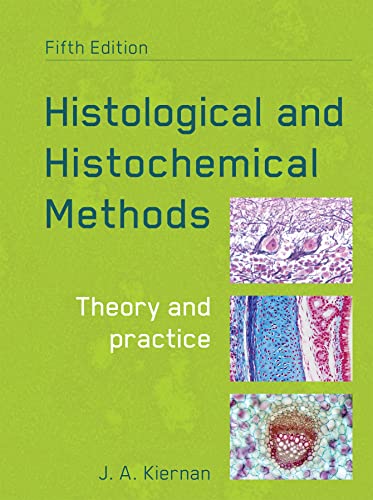
This fifth edition of Histological and Histochemical Methods continues to provide a clear and consistent introduction to the techniques, description and analysis of the chemical and physical principles of fixation, tissue processing, staining, enzyme location, immunohistochemistry and other key procedures.
The overall structure of the book remains unchanged, but the content has been heavily revised to update the techniques used in line with recent technological advances. Additionally, there are new sections on:
Artefacts and troubleshooting
Methods for microorganisms and fungi in sections
Methods for various pigments and mineral deposits in tissues
Methods for skeletal elements (bone, cartilage) in whole-mounts
Histological and Histochemical Methods 5e is essential reading for students, lecturers, researchers and professionals using histological and histochemical techniques.
Review of 4th edition: ‘In my opinion this should be a compulsory text in every Histology laboratory.’ Amazon reviewer
The overall structure of the book remains unchanged, but the content has been heavily revised to update the techniques used in line with recent technological advances. Additionally, there are new sections on:
Artefacts and troubleshooting
Methods for microorganisms and fungi in sections
Methods for various pigments and mineral deposits in tissues
Methods for skeletal elements (bone, cartilage) in whole-mounts
Histological and Histochemical Methods 5e is essential reading for students, lecturers, researchers and professionals using histological and histochemical techniques.
Review of 4th edition: ‘In my opinion this should be a compulsory text in every Histology laboratory.’ Amazon reviewer
Die Inhaltsangabe kann sich auf eine andere Ausgabe dieses Titels beziehen.
Auszug. © Genehmigter Nachdruck. Alle Rechte vorbehalten.
Histological and Histochemical Methods
Theory and Practice
By J. A. KiernanScion Publishing Limited
Copyright © 2015 Scion Publishing Ltd
All rights reserved.
ISBN: 978-1-907904-32-5All rights reserved.
Contents
Preface to the fifth edition, vii,
Acknowledgements, ix,
Conventions and abbreviations, xi,
1. Introduction to microtechnique, 1,
2. Fixation, 12,
3. Decalcification and other treatments for hard tissues, 45,
4. Processing and mounting, 52,
5. Dyes, 72,
6. Staining with dyes in one or two colours, 137,
7. Staining blood and other cell suspensions, 170,
8. Methods for connective tissue, 184,
9. Methods for nucleic acids, 206,
10. Organic functional groups and protein histochemistry, 231,
11. Carbohydrate histochemistry, 263,
12. Lipids, 293,
13. Methods for pigments and inorganic ions, 321,
14. Enzyme histochemistry: general considerations, 342,
15. Hydrolytic enzymes, 348,
16. Oxidoreductases, 371,
17. Methods for soluble organic compounds of low molecular weight, 406,
18. Metal reduction and precipitation methods, 419,
19 Immunohistochemistry, 454,
20. Miscellaneous data, 491,
Bibliography, 505,
Glossary, 549,
Index, 555,
CHAPTER 1
Introduction to microtechnique
1.1. Thickness and contrast 1
1.2. Staining and histochemistry 3
1.3. Some physical considerations 4
1.4. Properties of tissues 5
1.5. Books and journals 6
1.6. On carrying out instructions 6
1.6.1. De-waxing and hydration of paraffin sections 6
1.6.1.1. Solvent method 6
1.6.1.2. Emulsification method 7
1.6.2. Staining 8
1.6.3. Washing and rinsing 8
1.6.4. Dehydration and clearing 9
1.6.5. Staining through paraffin: an irrational method 9
1.6.6. Mechanization 10
1.7. Whole mounts and free cells 10
1.8. Understanding the methods 10
Many theoretical explanations and practical instructions are contained in this book. The present chapter concerns aspects of the making of microscopical preparations that are fundamental to all the techniques described in the later chapters. It cannot be over-emphasized that unless the student or technician understands the rationale of all that is to be done, he will not do it properly. Chapter 4 and Section 1.6 of this chapter contain some of the practical information relevant to the manipulations discussed in all parts of the book.
With an ordinary light microscope (LM) it is possible to see only limited structural detail in a living or freshly removed part of a large organism. For the resolution of finer structure within and around cells it is necessary to study fixed specimens. These are pieces of animal or plant material that have been structurally stabilized, usually by a chemical treatment. Fixation, which is reviewed in Chapter 2, arrests post-mortem decay and also gives a harder consistency to many tissues. Fixation introduces structural and chemical artifacts, but these are fairly well understood and for most purposes they outweigh the technical difficulties and artifacts encountered in the examination of unfixed specimens. Some naturally hard materials require softening treatments after fixation (Chapter 3); bone, for example, can be decalcified.
1.1. Thickness and contrast
In order to be examined with a microscope, a specimen must be thin enough to be transparent and must possess sufficient contrast to permit the resolution of structural detail. Thinness may be an intrinsic property of the object to be examined. Thus, small animals and plants, films or smears of cells, tissue cultures, macerated or teased tissues, and spread-out sheets of epithelium or connective tissue are all thin enough to mount on slides directly. In histology, histopathology and histochemistry, one is more often concerned with the internal structure of larger, solid specimens. These must be cut into thin slices or sections in order to make them suitable for microscopical examination. Methods also exist for examination of surfaces: notably scanning electron microscopy (Echlin, 2009), atomic force microscopy (Vesenka et al., 1995), and in vivo light microscopic examination of mucosal surfaces for clinical diagnosis (Bornhop et al. 1999; Goetz et al. 2013). Preparative methods for such techniques are outside the scope of this book.
Freehand sections, cut with a razor, are rarely used in animal histology but are still sometimes employed for botanical material. Though some expertise is necessary, sectioning in this way has the advantage of requiring little in the way of time or special equipment. In a variant of the freehand technique, single sections of animal tissues are obtained by fixing a specimen with cyanoacrylate glue to either a glass slide or a cellulose acetate sheet, and then shaving it off with an inclined razor blade (Troyer et al., 2002; Dobkin and Troyer, 2003). When sections of human or animal tissues are needed in a hurry, frozen sections are commonly used. The cryostat, a microtome mounted in a freezing cabinet, may be used for cutting thin (5–10 µm) sections of either fixed or unfixed tissue. Each frozen section is collected from the knife onto a glass slide or coverslip, and does not thaw until it is removed from the cryostat cabinet. A traditional freezing microtome, with which the sections thaw as they are being cut, is used when thick (50–100 µm) sections are needed, especially in neuroscience research. Another advantage of cutting frozen sections, aside from speed, is the preservation of lipids, most of which are dissolved out during the course of dehydration and embedding in paraffin or plastic. A vibrating microtome (Vibratome) can cut thick (50–100 µm) sections of unfixed, unfrozen specimens. The blade of this instrument passes with a sawing motion through a block of tissue immersed in an isotonic saline solution. The cutting process is much slower than with other types of microtome, so it is not feasible to prepare large numbers of sections. Vibratome sections of fixed material are similar to sections cut with a freezing microtome, but they do not contain holes or other artifacts associated with ice crystal formation.
When the preservation of lipids or of heat-labile substances such as enzymes is not important, fixed specimens are dehydrated, cleared (which means, in this context, equilibrated with a solvent that is miscible with paraffin), infiltrated with molten paraffin wax, and finally, embedded (blocked out) as the wax cools and solidifies. Paraffin sections are most commonly cut on a rotary microtome, though a rocking microtome or a sledge microtome may also be used. The sections come off the knife in ribbons, and with sufficient skill it is possible to obtain serial sections as little as 4 µm thick through the whole block of tissue. The traditional embedding medium for large specimens was cellulose nitrate. Materials sold for the purpose were commonly called nitrocellulose, celloidin or low-viscosity nitrocellulose (LVN); these embedding media are seldom used today (see Chapter 4, Sections 4.1.3, 4.1.4). Various synthetic resins (plastics) are also used as embedding media for light microscopy, though their main application is in the cutting of extremely thin sections for examination in the electron microscope (EM). Resin-embedded tissue is usually sectioned...
„Über diesen Titel“ kann sich auf eine andere Ausgabe dieses Titels beziehen.
Suchergebnisse für Histological and Histochemical Methods: Theory and...

Beispielbild für diese ISBN
Histological and Histochemical Methods, fifth edition: Theory and Practice
Anbieter: Phatpocket Limited, Waltham Abbey, HERTS, Vereinigtes Königreich
Verkäuferbewertung 5 von 5 Sternen

Zustand: Good. Your purchase helps support Sri Lankan Children's Charity 'The Rainbow Centre'. Ex-library, so some stamps and wear, but in good overall condition. Our donations to The Rainbow Centre have helped provide an education and a safe haven to hundreds of children who live in appalling conditions. Bestandsnummer des Verkäufers Z1-C-050-02585
Gebraucht kaufen
EUR 49,52
EUR 12,54 Versand
Versand von Vereinigtes Königreich nach USA
Versand von Vereinigtes Königreich nach USA
Anzahl: 1 verfügbar
Beispielbild für diese ISBN
Histological and Histochemical Methods : Theory and Practice
Verlag:
Scion Publishing Limited, 2015
ISBN 10: 1907904328
ISBN 13: 9781907904325
Gebraucht
Softcover
Anbieter: Better World Books, Mishawaka, IN, USA
Verkäuferbewertung 5 von 5 Sternen
Zustand: Good. Former library copy. Pages intact with minimal writing/highlighting. The binding may be loose and creased. Dust jackets/supplements are not included. Includes library markings. Stock photo provided. Product includes identifying sticker. Better World Books: Buy Books. Do Good. Bestandsnummer des Verkäufers 48389896-6
Gebraucht kaufen
EUR 74,09
Versand gratis
Versand innerhalb von USA
Versand innerhalb von USA
Anzahl: 1 verfügbar
Beispielbild für diese ISBN
Histological and Histochemical Methods, fifth edition
Anbieter: PBShop.store UK, Fairford, GLOS, Vereinigtes Königreich
Verkäuferbewertung 5 von 5 Sternen
PAP. Zustand: New. New Book. Shipped from UK. Established seller since 2000. Bestandsnummer des Verkäufers GB-9781907904325
Neu kaufen
EUR 79,01
EUR 8,99 Versand
Versand von Vereinigtes Königreich nach USA
Versand von Vereinigtes Königreich nach USA
Anzahl: 2 verfügbar
Beispielbild für diese ISBN
Histological and Histochemical Methods : Theory and Practice
Anbieter: GreatBookPricesUK, Woodford Green, Vereinigtes Königreich
Verkäuferbewertung 5 von 5 Sternen
Zustand: New. Bestandsnummer des Verkäufers 23747449-n
Neu kaufen
EUR 79,00
EUR 17,68 Versand
Versand von Vereinigtes Königreich nach USA
Versand von Vereinigtes Königreich nach USA
Anzahl: 1 verfügbar
Beispielbild für diese ISBN
Histological and Histochemical Methods, fifth edition: Theory and Practice
Verlag:
Scion Publishing Ltd 2015-06-08, 2015
ISBN 10: 1907904328
ISBN 13: 9781907904325
Neu
Paperback
Anbieter: Chiron Media, Wallingford, Vereinigtes Königreich
Verkäuferbewertung 5 von 5 Sternen
Paperback. Zustand: New. Bestandsnummer des Verkäufers 6666-GRD-9781907904325
Neu kaufen
EUR 79,88
EUR 18,25 Versand
Versand von Vereinigtes Königreich nach USA
Versand von Vereinigtes Königreich nach USA
Anzahl: 2 verfügbar
Foto des Verkäufers
Histological and Histochemical Methods : Theory and Practice
Anbieter: GreatBookPrices, Columbia, MD, USA
Verkäuferbewertung 5 von 5 Sternen
Zustand: As New. Unread book in perfect condition. Bestandsnummer des Verkäufers 23747449
Gebraucht kaufen
EUR 97,62
EUR 2,35 Versand
Versand innerhalb von USA
Versand innerhalb von USA
Anzahl: 1 verfügbar
Foto des Verkäufers
Histological and Histochemical Methods : Theory and Practice
Anbieter: GreatBookPrices, Columbia, MD, USA
Verkäuferbewertung 5 von 5 Sternen
Zustand: New. Bestandsnummer des Verkäufers 23747449-n
Neu kaufen
EUR 98,83
EUR 2,35 Versand
Versand innerhalb von USA
Versand innerhalb von USA
Anzahl: 1 verfügbar
Beispielbild für diese ISBN
Histological and Histochemical Methods, fifth edition: Theory and Practice
Anbieter: Kennys Bookshop and Art Galleries Ltd., Galway, GY, Irland
Verkäuferbewertung 5 von 5 Sternen
Zustand: New. . 2015. Fifth Edition. Paperback. . . . . Bestandsnummer des Verkäufers V9781907904325
Neu kaufen
EUR 92,95
EUR 9,50 Versand
Versand von Irland nach USA
Versand von Irland nach USA
Anzahl: 2 verfügbar
Beispielbild für diese ISBN
Histological and Histochemical Methods, fifth edition (Paperback)
Verlag:
Scion Publishing Ltd, Bloxham, 2015
ISBN 10: 1907904328
ISBN 13: 9781907904325
Neu
Paperback
Anbieter: Grand Eagle Retail, Bensenville, IL, USA
Verkäuferbewertung 5 von 5 Sternen
Paperback. Zustand: new. Paperback. From reviews: "Histological and Histochemical Methods is a tour de force wholly suited to the modern age of histology and Professor Kiernan has triumphed again. To cover so much ground clearly and concisely while including the justification of the underlying chemistry makes this book unique. There should not be a histology laboratory or an undergraduate library that does not own a copy." Biotechnic & Histochemistry 2016, 91(2): 145. "This book should be present on the bookshelves of every research or analysis laboratory where histology and histochemistry are routinely used, as an essential reference source of basic and practical information for scientists and technicians." European Journal of Histochemistry 2016, vol. 60. This fifth edition of Histological and Histochemical Methods continues to provide a clear and consistent introduction to the techniques, description and analysis of the chemical and physical principles of fixation, tissue processing, staining, enzyme location, immunohistochemistry and other key procedures. The overall structure of the book remains unchanged, but the content has been heavily revised to update the techniques used in line with recent technological advances. Additionally, there are new sections on: Artefacts and troubleshooting Methods for microorganisms and fungi in sections Methods for various pigments and mineral deposits in tissues Methods for skeletal elements (bone, cartilage) in whole-mounts Histological and Histochemical Methods 5e is essential reading for students, lecturers, researchers and professionals using histological and histochemical techniques. This fifth edition of Histological and Histochemical Methods provides a clear and consistent introduction to the subject for lab professionals and students. Shipping may be from multiple locations in the US or from the UK, depending on stock availability. Bestandsnummer des Verkäufers 9781907904325
Foto des Verkäufers
Histological and Histochemical Methods : Theory and Practice
Anbieter: GreatBookPricesUK, Woodford Green, Vereinigtes Königreich
Verkäuferbewertung 5 von 5 Sternen
Zustand: As New. Unread book in perfect condition. Bestandsnummer des Verkäufers 23747449
Gebraucht kaufen
EUR 88,05
EUR 17,68 Versand
Versand von Vereinigtes Königreich nach USA
Versand von Vereinigtes Königreich nach USA
Anzahl: 1 verfügbar