
Verwandte Artikel zu The Decision Loom: A Design for Interactive Decision-Making...
Inhaltsangabe
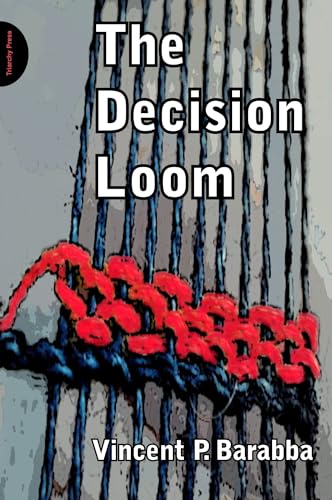
Decision-making has been one of the principal victims of 'modern' thinking. The 'analytical' approach has, of course, brought us vaccines, electricity and the internal combustion engine. But, in seeking to break things down into their component parts and improve the parts, governments and businesses continue to make some astonishingly bad decisions. What's more, many enterprises still pay close attention to 'decisions' and 'decision-making' whilst overlooking the bigger picture: the organizational system within which those decisions get made. This elegant book is a guide for any public, private, government or non-profit organization that needs a system for making better decisions. It sets out to change our 'analytical' habit and invites enterprises to consider the bigger picture. Author Vince Barabba presents an elegantly simple approach to making better decisions. He calls this approach 'The Decision Loom' and bases it on Systems Thinking, Design Thinking and Complexity Theory. He also describes the four core capabilities that any organization must put in place for this approach to work. What's more (because we're humans and prefer stories to instruction manuals) the tapestry of the book is embroidered with fascinating examples from the author's lifetime of experience at the head of American corporate and public decision-making.
Die Inhaltsangabe kann sich auf eine andere Ausgabe dieses Titels beziehen.
Über die Autorin bzw. den Autor
In an extraordinary career as political campaign survey researcher, business market researcher, intelligence gatherer, and knowledge developer, Vince Barabba has helped Governors, Congressmen and US Presidents - as well as the Boards of several of America's leading corporations - take some critically important decisions. In each role, he has taken plenty of those decisions himself. Co-founder and chairman of Market Insight Corporation, Vince serves as a Commissioner of the California Citizen Redistricting Commission, and he is chairman of The State of the USA, a nonprofit corporation providing quality information to the American public on key changing societal, economic, and environmental conditions. He was, until 2003, General Manager of Corporate Strategy and Knowledge Development at General Motors, where he conceived and devised OnStar and MyProductAdvisor. He is a Past President of the American Statistical Association. Mr. Barabba twice served as director of the Census Bureau and is the only person to have been appointed to that position by presidents of different political parties. Between his government service and GM assignments, he served as manager of market research for Xerox and director of market intelligence for Eastman Kodak. In recognition of his private and public sector performance, he was been awarded: Induction into the Market Research Council's Hall of Fame The American Marketing Association's Parlin Award for leadership in the application of science to marketing research The MIT/GM Buck Weaver Award for individuals who have contributed significantly to the advancement of theory and practice in marketing science The System Dynamics Society's Applications Award for the best "real world" application of system dynamics The American Marketing Association's Explor Award (through the Market Insight Corporation) granted to organizations who have demonstrated the most innovative uses of technology in applications that advance research, online or otherwise The Certificate of Distinguished Service for Contribution to the Federal Statistical System from the US Office of Management and Budget
„Über diesen Titel“ kann sich auf eine andere Ausgabe dieses Titels beziehen.
Suchergebnisse für The Decision Loom: A Design for Interactive Decision-Making...

Foto des Verkäufers
The Decision Loom: A Design for Interactive Decision-making in Organizations
Anbieter: Zoom Books Company, Lynden, WA, USA
Verkäuferbewertung 5 von 5 Sternen

Zustand: like_new. Bestandsnummer des Verkäufers ZBV.1908009446.LN
Gebraucht kaufen
EUR 10,11
Versand gratis
Versand innerhalb von USA
Versand innerhalb von USA
Anzahl: 1 verfügbar
Foto des Verkäufers
The Decision Loom: A Design for Interactive Decision-making in Organizations
Anbieter: Dream Books Co., Denver, CO, USA
Verkäuferbewertung 5 von 5 Sternen
Zustand: good. Gently used with minimal wear on the corners and cover. A few pages may contain light highlighting or writing, but the text remains fully legible. Dust jacket may be missing, and supplemental materials like CDs or codes may not be included. May be ex-library with library markings. Ships promptly! Bestandsnummer des Verkäufers DBV.1908009446.G
Gebraucht kaufen
EUR 10,61
Versand gratis
Versand innerhalb von USA
Versand innerhalb von USA
Anzahl: 1 verfügbar
Foto des Verkäufers
Decision Loom : A Design for Interactive Decision-making in Organizations
Anbieter: GreatBookPrices, Columbia, MD, USA
Verkäuferbewertung 5 von 5 Sternen
Zustand: New. Bestandsnummer des Verkäufers 14212980-n
Neu kaufen
EUR 28,02
EUR 2,36 Versand
Versand innerhalb von USA
Versand innerhalb von USA
Anzahl: Mehr als 20 verfügbar
Foto des Verkäufers
The Decision Loom
Anbieter: Rarewaves USA, HEBRON, KY, USA
Verkäuferbewertung 5 von 5 Sternen
Paperback. Zustand: New. Decision-making has been one of the principal victims of 'modern' thinking. The 'analytical' approach has, of course, brought us vaccines, electricity and the internal combustion engine. But, in seeking to break things down into their component parts and improve the parts, governments and businesses continue to make some astonishingly bad decisions. What's more, many enterprises still pay close attention to 'decisions' whilst overlooking the bigger picture: the organizational system within which those decisions get made. The book sets out to change our 'analytical' habit and invites enterprises to consider the bigger picture. Author Vince Barabba explains an elegantly simple approach to making better decisions. He calls this approach 'The Decision Loom' and bases it on Systems Thinking, Design Thinking and Complexity Theory. Drawing on a lifetime of experience, Vince Barabba sets out, in The Decision Loom, the four core capabilities that any organization needs to put in place to make his proposed approach to decision-making work.They cover 1) having an 'Enterprise Mindset that is open to change', 2) thinking and acting holistically, 3) having an adaptable business design and 4) using the right combination of problem-solving and decision-making methods. Part 1 of the book - The Journey - chronicles the author's professional life, focusing on more than 30 'Lessons Learned'. To name just one: 'Surface and make explicit the underlying assumptions that would have to be true for your particular problem-solving approach to prevail.' Each lesson is derived from - and illustrated by - his professional experience in major political campaigns and at Xerox, Kodak, GM, the U.S. Census Bureau and elsewhere. Part 2 describes an 'Interactive Decision Loom', sets out the capabilities required to make it work, and sketches an 'idealized design' for creating a Decision Loom in your own organization. It focuses on the process of inquiry (which must underpin decision-making), anticipating problems, and the four core organizational (not individual) capabilities needed in a dynamically complex organization (that is to say, all organizations).The four capabilities all draw on the lessons learned in Part 1 of the book and are illustrated by brief case studies from: LEGO, Xynteo, Patagonia Clothing, Nintendo, Cisco, and McDonald's. If you choose to create a Decision Loom yourself in your own organization, the outcome will be: Greater interaction across the enterprise leading to an enterprise that is greater than the sum of its parts. Bestandsnummer des Verkäufers LU-9781908009449
Foto des Verkäufers
Decision Loom : A Design for Interactive Decision-making in Organizations
Anbieter: GreatBookPrices, Columbia, MD, USA
Verkäuferbewertung 5 von 5 Sternen
Zustand: As New. Unread book in perfect condition. Bestandsnummer des Verkäufers 14212980
Gebraucht kaufen
EUR 28,25
EUR 2,36 Versand
Versand innerhalb von USA
Versand innerhalb von USA
Anzahl: Mehr als 20 verfügbar
Beispielbild für diese ISBN
The Decision Loom
Anbieter: PBShop.store US, Wood Dale, IL, USA
Verkäuferbewertung 5 von 5 Sternen
PAP. Zustand: New. New Book. Shipped from UK. Established seller since 2000. Bestandsnummer des Verkäufers GB-9781908009449
Beispielbild für diese ISBN
The Decision Loom: A Design for Interactive Decision-Making in Organizations
Anbieter: Chiron Media, Wallingford, Vereinigtes Königreich
Verkäuferbewertung 5 von 5 Sternen
Paperback. Zustand: New. Brand new book, sourced directly from publisher. Dispatch time is 24-48 hours from our warehouse. Book will be sent in robust, secure packaging to ensure it reaches you securely. Bestandsnummer des Verkäufers 6666-GRD-9781908009449
Neu kaufen
EUR 25,58
EUR 5,90 Versand
Versand von Vereinigtes Königreich nach USA
Versand von Vereinigtes Königreich nach USA
Anzahl: 9 verfügbar
Beispielbild für diese ISBN
The Decision Loom: A Design for Interactive Decision-making in Organizations
Anbieter: California Books, Miami, FL, USA
Verkäuferbewertung 5 von 5 Sternen
Zustand: New. Bestandsnummer des Verkäufers I-9781908009449
Neu kaufen
EUR 33,10
Versand gratis
Versand innerhalb von USA
Versand innerhalb von USA
Anzahl: Mehr als 20 verfügbar
Foto des Verkäufers
The Decision Loom
Anbieter: Rarewaves.com USA, London, LONDO, Vereinigtes Königreich
Verkäuferbewertung 5 von 5 Sternen
Paperback. Zustand: New. Decision-making has been one of the principal victims of 'modern' thinking. The 'analytical' approach has, of course, brought us vaccines, electricity and the internal combustion engine. But, in seeking to break things down into their component parts and improve the parts, governments and businesses continue to make some astonishingly bad decisions. What's more, many enterprises still pay close attention to 'decisions' whilst overlooking the bigger picture: the organizational system within which those decisions get made. The book sets out to change our 'analytical' habit and invites enterprises to consider the bigger picture. Author Vince Barabba explains an elegantly simple approach to making better decisions. He calls this approach 'The Decision Loom' and bases it on Systems Thinking, Design Thinking and Complexity Theory. Drawing on a lifetime of experience, Vince Barabba sets out, in The Decision Loom, the four core capabilities that any organization needs to put in place to make his proposed approach to decision-making work.They cover 1) having an 'Enterprise Mindset that is open to change', 2) thinking and acting holistically, 3) having an adaptable business design and 4) using the right combination of problem-solving and decision-making methods. Part 1 of the book - The Journey - chronicles the author's professional life, focusing on more than 30 'Lessons Learned'. To name just one: 'Surface and make explicit the underlying assumptions that would have to be true for your particular problem-solving approach to prevail.' Each lesson is derived from - and illustrated by - his professional experience in major political campaigns and at Xerox, Kodak, GM, the U.S. Census Bureau and elsewhere. Part 2 describes an 'Interactive Decision Loom', sets out the capabilities required to make it work, and sketches an 'idealized design' for creating a Decision Loom in your own organization. It focuses on the process of inquiry (which must underpin decision-making), anticipating problems, and the four core organizational (not individual) capabilities needed in a dynamically complex organization (that is to say, all organizations).The four capabilities all draw on the lessons learned in Part 1 of the book and are illustrated by brief case studies from: LEGO, Xynteo, Patagonia Clothing, Nintendo, Cisco, and McDonald's. If you choose to create a Decision Loom yourself in your own organization, the outcome will be: Greater interaction across the enterprise leading to an enterprise that is greater than the sum of its parts. Bestandsnummer des Verkäufers LU-9781908009449
Neu kaufen
EUR 33,82
Versand gratis
Versand von Vereinigtes Königreich nach USA
Versand von Vereinigtes Königreich nach USA
Anzahl: 4 verfügbar
Beispielbild für diese ISBN
The Decision Loom
Anbieter: PBShop.store UK, Fairford, GLOS, Vereinigtes Königreich
Verkäuferbewertung 5 von 5 Sternen
PAP. Zustand: New. New Book. Shipped from UK. Established seller since 2000. Bestandsnummer des Verkäufers GB-9781908009449
Neu kaufen
EUR 28,97
EUR 4,91 Versand
Versand von Vereinigtes Königreich nach USA
Versand von Vereinigtes Königreich nach USA
Anzahl: 9 verfügbar