
Verwandte Artikel zu Detroit Noir (Akashic Noir)
Inhaltsangabe
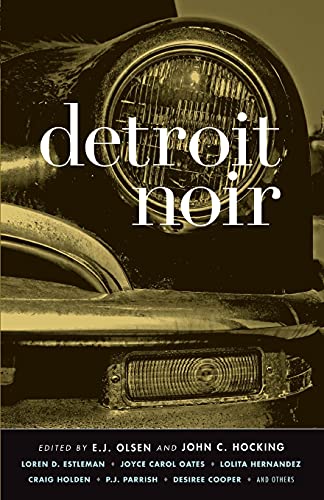
Akashic Books continues its groundbreaking series of original noir anthologies, launched in 2004 with Brooklyn Noir. Each story is set in a distinct neighborhood or location within the city of the book.
Brand-new stories by: Joyce Carol Oates, Loren D. Estleman, P.J. Parrish, Nisi Shawl, Craig Holden, Craig Bernier, Desiree Cooper, Melissa Preddy, E.J. Olsen, Joe Boland, Megan Abbott, Dorene O'Brien, Lolita Hernandez, Peter Markus, Roger K. Johnson, and Michael Zadoorian.
From the introduction by E.J. Olsen & John C. Hocking:
"Detroit is an old and wounded city, broken into wildly diverse splinters, but it is not dead, for it is possessed of a unique vitality rooted in its complex history and in its hardy people. Detroit is noir, shadowed and striving, grim and powerful. It is impossible to truly know the city and not respect it . . .
In Detroit Noir you will find noir in many forms, embodied by many characters. From a driven detective with a mystery to solve to a working man just trying to make it through another day, from a bemused outsider seeking a thrill to one so deeply inside the city as to see no outside at all. Urban professionals, night watchmen, tarot card readers, waitresses, caretakers, and criminals, all bound together by the city and by a dark dilemma that looms just ahead. A moment awaits each of them, a moment of truth or violence or epiphany or change. A noir moment."
Die Inhaltsangabe kann sich auf eine andere Ausgabe dieses Titels beziehen.
Über die Autorinnen und Autoren
E.J. OLSEN is a freelance writer and editor who grew up in the shadow of the Motor City. He reads everything, but his heart was stolen by noir fiction and film. He is the coeditor of Detroit Noir.
JOHN C. HOCKING grew up outside Detroit in the '60s and '70s. He is an obsessive reader, writer, and collector of pulp and noir fiction. He is the coeditor of Detroit Noir.
Auszug. © Genehmigter Nachdruck. Alle Rechte vorbehalten.
Detroit Noir
Akashic Books
Copyright © 2007 Akashic BooksAll right reserved.
ISBN: 978-1-933354-39-2
Contents
IntroductionPART I: ANIMAL FARM......................................................................21Loren D. Estleman Kill the Cat Rivertown...............................................43P.J. Parrish Pride Brush Park..........................................................62Joyce Carol Oates Panic Chrysler Freeway...............................................75Nisi Shawl Little Horses Belle IslePART II: FACTORY OF ONE..................................................................101Craig Holden Red Quarters Hamtramck....................................................110Craig Bernier Migration Rouge Foundry..................................................122Desiree Cooper Night Coming Palmer WoodsPART III: SILENCE OF THE CITY............................................................139Melissa Preddy The Coffee Break Grandmont-Rosedale.....................................159E.J. Olsen Snow Angel Grand Circus Park................................................179Joe Boland The Night Watchman Is Asleep Downtown.......................................200Megan Abbott Our Eyes Couldn't Stop Opening Alter Road.................................217Dorene O'Brien Honesty above All Else CorktownPART IV: EDGE OF THE PAST................................................................235Lolita Hernandez Over the Belle Isle Boundary East Grand Boulevard.....................250Peter Markus The Dead Man's Boat Delray................................................261Roger K. Johnson Hey Love New Center...................................................273Michael Zadoorian The Lost Tiki Palaces of Detroit Woodward Avenue.....................282About the Contributors
Introduction
Reflections from the Dark Side
Detroit.
The name comes from "les troits" (the narrows), for the river straits that flow between Lake St. Clair and Lake Erie. The city was founded as French wilderness outpost Fort Pontchartrain du Dtroit in 1701 by Antoine de la Mothe Cadillac. Memorialized in true Detroit fashion, his coat of arms was used as the logo of the Cadillac automobile. The past as viewed through the lens of the auto industry.
Despite the twentieth-century dominance by manufacturing, Detroit has been many things in its 300-year history. A young settlement in the face of an often hostile western wilderness, it was a frontier town where settlers fought for valuable property along the waterway, the only reliable connection with the cities to the east.
It was a city in dispute. In 1760, during the French-Indian War, the British took control of the region. In 1796, a treaty brought Detroit into the United States. During the War of 1812, Detroit was again captured by the British, and in 1813 it was retaken by the Americans, this time permanently.
Detroit was a Gilded Age boom town. By the late nineteenth century, the city had become a prosperous transportation hub, bolstered by the rise of shipping, shipbuilding, and manufacturing. During this period, Detroit was known as the Paris of the West for its beautiful architecture. In 1896, Henry Ford built his first automobile in a workshop on Mack Avenue, and the city became the birthplace of a transportation revolution which would change the face of Detroit, and America, forever.
It was a bootlegger's town, where the Purple Gang and their competitors might drive a car filled with Canadian alcohol across the frozen surface of the Detroit River. A prohibition city, where the forbidden liquor fl owed so freely that there were those who believed some of the city's more enterprising gangsters had laid, beneath the dark waters of the river, a pipe that stretched all the way across from Canada to furnish Detroiters with bootleg whiskey on tap.
It was the Motor City, Sugartown, the City of Basements, where a working man or woman from anywhere could find a steady job and the promise of the middle-class American Dream. But the dream always had a dark side.
Factory shifts were long and often dangerous. In 1935, the United Auto Workers was founded, and the union went on to fight a bitter, often bloody battle with General Motors and the notoriously brutal strikebreakers from the Ford Service Department.
During World War II, Detroit was the Arsenal of Democracy, and the auto plants retooled to manufacture munitions, planes, and tanks. Wartime also gave Detroiters a preview of the social strife to come when racial tensions, primarily among black and white migrant workers from the South, exploded into a full-scale riot in 1943.
By the '60s, Detroit had become Motown, the city with a pulsing beat where melodies that enchanted the world were born and endured. But this decade also saw the beginning of a long economic decline, and the city was often cited as a symbol of urban blight and "white flight" to the relatively homogenous suburbs across Eight Mile Road. In 1967, racial tensions again boiled over, and 12th Street erupted into riots that spread throughout the city. The rioting lasted five days and killed forty-three people. More than two thousand buildings were destroyed, and the city has never recovered from the exodus of fleeing residents and businesses.
In the economically depressed landscape of the 1970s, it finally became Murder City, where the dreams of industry and the working man collapsed into urban decay, crime, drugs, and desperation, where many would say it languishes to this day. The capital of the rust belt.
Detroit is an old and wounded city, broken into wildly diverse splinters, but it is not dead, for it is possessed of a unique vitality rooted in its complex history and in its hardy people.
Detroit is noir, shadowed and striving, grim and powerful. It is impossible to truly know the city and not respect it. This collection of stories is a rich reflection of Detroit's dark side, offering a variety of perspectives on both the city and noir style.
Here you will find noir in many forms, embodied by many characters. From a driven detective with a mystery to solve to a working man just trying to make it through another day, from a bemused outsider seeking a thrill to one so deeply inside the city as to see no outside at all. Urban professionals, night watchmen, tarot card readers, waitresses, caretakers, and criminals, all bound together by the city and by a dark dilemma that looms just ahead.
A moment awaits each of them, a moment of truth or violence or epiphany or change. A noir moment.
This is Detroit Noir.
E.J. Olsen & John C. Hocking Detroit, Michigan August 2007
(Continues...)
Excerpted from Detroit Noir Copyright © 2007 by Akashic Books. Excerpted by permission.
All rights reserved. No part of this excerpt may be reproduced or reprinted without permission in writing from the publisher.
Excerpts are provided by Dial-A-Book Inc. solely for the personal use of visitors to this web site.
„Über diesen Titel“ kann sich auf eine andere Ausgabe dieses Titels beziehen.
Suchergebnisse für Detroit Noir (Akashic Noir)

Beispielbild für diese ISBN
Detroit Noir (Akashic Noir)
Anbieter: Wonder Book, Frederick, MD, USA
Verkäuferbewertung 5 von 5 Sternen

Zustand: Good. Good condition. A copy that has been read but remains intact. May contain markings such as bookplates, stamps, limited notes and highlighting, or a few light stains. Bestandsnummer des Verkäufers B09B-01163
Gebraucht kaufen
EUR 6,43
Versand gratis
Versand innerhalb von USA
Versand innerhalb von USA
Anzahl: 1 verfügbar
Beispielbild für diese ISBN
Detroit Noir
Anbieter: ThriftBooks-Reno, Reno, NV, USA
Verkäuferbewertung 5 von 5 Sternen
Paperback. Zustand: Good. No Jacket. Pages can have notes/highlighting. Spine may show signs of wear. ~ ThriftBooks: Read More, Spend Less. Bestandsnummer des Verkäufers G1933354399I3N00
Gebraucht kaufen
EUR 7,53
Versand gratis
Versand innerhalb von USA
Versand innerhalb von USA
Anzahl: 1 verfügbar
Beispielbild für diese ISBN
Detroit Noir
Anbieter: ThriftBooks-Dallas, Dallas, TX, USA
Verkäuferbewertung 5 von 5 Sternen
Paperback. Zustand: Good. No Jacket. Pages can have notes/highlighting. Spine may show signs of wear. ~ ThriftBooks: Read More, Spend Less. Bestandsnummer des Verkäufers G1933354399I3N00
Gebraucht kaufen
EUR 7,53
Versand gratis
Versand innerhalb von USA
Versand innerhalb von USA
Anzahl: 1 verfügbar
Beispielbild für diese ISBN
Detroit Noir
Anbieter: ThriftBooks-Atlanta, AUSTELL, GA, USA
Verkäuferbewertung 5 von 5 Sternen
Paperback. Zustand: Good. No Jacket. Pages can have notes/highlighting. Spine may show signs of wear. ~ ThriftBooks: Read More, Spend Less. Bestandsnummer des Verkäufers G1933354399I3N00
Gebraucht kaufen
EUR 7,53
Versand gratis
Versand innerhalb von USA
Versand innerhalb von USA
Anzahl: 1 verfügbar
Beispielbild für diese ISBN
Detroit Noir
Anbieter: ThriftBooks-Atlanta, AUSTELL, GA, USA
Verkäuferbewertung 5 von 5 Sternen
Paperback. Zustand: Fair. No Jacket. Readable copy. Pages may have considerable notes/highlighting. ~ ThriftBooks: Read More, Spend Less. Bestandsnummer des Verkäufers G1933354399I5N00
Gebraucht kaufen
EUR 7,53
Versand gratis
Versand innerhalb von USA
Versand innerhalb von USA
Anzahl: 1 verfügbar
Beispielbild für diese ISBN
Detroit Noir (Akashic Noir)
Anbieter: HPB-Diamond, Dallas, TX, USA
Verkäuferbewertung 5 von 5 Sternen
Paperback. Zustand: Very Good. Connecting readers with great books since 1972! Used books may not include companion materials, and may have some shelf wear or limited writing. We ship orders daily and Customer Service is our top priority! Bestandsnummer des Verkäufers S_471238045
Gebraucht kaufen
EUR 4,36
EUR 3,35 Versand
Versand innerhalb von USA
Versand innerhalb von USA
Anzahl: 1 verfügbar
Beispielbild für diese ISBN
Detroit Noir
Anbieter: Better World Books: West, Reno, NV, USA
Verkäuferbewertung 5 von 5 Sternen
Zustand: Very Good. Pages intact with possible writing/highlighting. Binding strong with minor wear. Dust jackets/supplements may not be included. Stock photo provided. Product includes identifying sticker. Better World Books: Buy Books. Do Good. Bestandsnummer des Verkäufers 5740570-6
Gebraucht kaufen
EUR 8,35
Versand gratis
Versand innerhalb von USA
Versand innerhalb von USA
Anzahl: 1 verfügbar
Beispielbild für diese ISBN
Detroit Noir
Anbieter: Better World Books, Mishawaka, IN, USA
Verkäuferbewertung 5 von 5 Sternen
Zustand: Good. Former library copy. Pages intact with minimal writing/highlighting. The binding may be loose and creased. Dust jackets/supplements are not included. Includes library markings. Stock photo provided. Product includes identifying sticker. Better World Books: Buy Books. Do Good. Bestandsnummer des Verkäufers GRP18691195
Gebraucht kaufen
EUR 8,35
Versand gratis
Versand innerhalb von USA
Versand innerhalb von USA
Anzahl: 1 verfügbar
Beispielbild für diese ISBN
Detroit Noir
Anbieter: Better World Books, Mishawaka, IN, USA
Verkäuferbewertung 5 von 5 Sternen
Zustand: Good. Pages intact with minimal writing/highlighting. The binding may be loose and creased. Dust jackets/supplements are not included. Stock photo provided. Product includes identifying sticker. Better World Books: Buy Books. Do Good. Bestandsnummer des Verkäufers 4932355-6
Gebraucht kaufen
EUR 8,35
Versand gratis
Versand innerhalb von USA
Versand innerhalb von USA
Anzahl: 1 verfügbar
Beispielbild für diese ISBN
Detroit Noir (Akashic Noir)
Anbieter: St Vincent de Paul of Lane County, Eugene, OR, USA
Verkäuferbewertung 5 von 5 Sternen
Zustand: Acceptable. COVER SHOWS SOME GENERAL WEAR, SUCH AS SCRATCHES, RUBBING AND CREASES. PAGES ARE YELLOWED. paperback 100% of proceeds go to charity! Acceptable reading copy with obvious signs of use, wear, and/or cosmetic issues. Item is complete and remains readable despite notable condition issues. Bestandsnummer des Verkäufers 2BB-07-3642
Gebraucht kaufen
EUR 5,04
EUR 3,56 Versand
Versand innerhalb von USA
Versand innerhalb von USA
Anzahl: 1 verfügbar