
Verwandte Artikel zu Fueling the Teen Machine
Inhaltsangabe
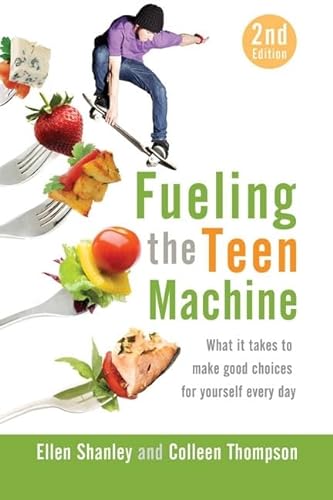
Addressing the growing trend of teenagers whose eating habits keep fast-food restaurants flourishing but do little to keep the kids themselves in shape, this guide presents parents with the tools to ensure the daily health of their children. Providing the latest information on a wide range of food topics, this handbook covers everything from carbohydrates to eating disorders and vitamins, discussing each aspect sensitively and suggesting the ultimate new frontier for busy teens&;cooking their meals themselves. This updated edition contains an expanded section on portion distortion, fitness for health, and how to read food labels, while outlining the latest studies, statistics, nutrition guidelines, and health information. New recipes, tips on creating shopping lists, and meal-planning ideas are included and vegetarian and vegan issues for teens are addressed. With sections on weight management, sports nutrition, and vital facts on fast food, this is the ideal companion for parents watching out for their kids&; diets.
Die Inhaltsangabe kann sich auf eine andere Ausgabe dieses Titels beziehen.
Über die Autorin bzw. den Autor
Ellen Shanley is a faculty member in the department of nutritional sciences at the University of Connecticut. She teaches courses in food-system management and directs a program in dietetics. She lives in Glastonbury, Connecticut. Colleen Thompson is a registered dietician and manages the Team Nutrition Training Grant in the department of nutritional sciences at the University of Connecticut. She lives in Wallingford, Connecticut. They are the coauthors of Overcoming Childhood Obesity.
Auszug. © Genehmigter Nachdruck. Alle Rechte vorbehalten.
Fueling the Teen Machine
By Ellen L. Shanley, Colleen ThompsonBull Publishing Company
Copyright © 2011 Bull Publishing Company
All rights reserved.
ISBN: 978-1-933503-37-0All rights reserved.
Contents
Preface,
Chapter 1: The Basics,
Chapter 2: Find Your Fuel,
Chapter 3: Vitamins and Minerals,
Chapter 4: Let's Move,
Chapter 5: Weight Management,
Chapter 6: Eating Disorders,
Chapter 7: Vegetarianism,
Chapter 8: Sports Nutrition,
Chapter 9: Funky Foods,
Chapter 10: Fast Facts on Fast Food,
Chapter 11: Meal Planning,
Chapter 12: Cook It,
Appendix A: Recommended Dietary Intakes,
Appendix B: Approximate Caloric Expenditure per Minute for Various Physical Activities,
References and Resources,
Index,
CHAPTER 1
The Basics
The teenage years are a busy time. You've got school, homework, after-school activities, things to do with friends and family, chores around the house, maybe even a job. Whew. With all there is to do, it's hard to find time to pay attention to what you eat. Yet, the one way to juggle all those responsibilities is to have enough energy to do them all (or at least as many as you want to.). How do you get that energy? Eat.
You're probably thinking, "Eat? That's easy. I already do that." You're right. It can be easy — if you have the right information to help you make choices. Eating is really all about choices. Nowadays there are so many choices that it can be hard to know where to start. The supermarkets seem to showcase new products every day. The labels use terms such as "lite," "lean," "low-fat," "nonfat," "organic," and "low-carb." The stores are full of new books on nutrition, the latest diets, supplements, sports nutrition, and a host of other topics. There's the Internet and infomercials for health and nutrition products. How can you sort through all the information out there and make any sense of it for yourself and for what you need? We're going to help you do that. The best place to start is with some basic nutrition guidance. The best source for that is the Dietary Guidelines for Americans.
Every five years or so, the U.S. Department of Agriculture and the Department of Health and Human Services issue the Dietary Guidelines for Americans. The latest guidelines were issued in 2005. Their mission is "to provide positive, simple and consistent messages to help consumers achieve healthy, active lifestyles." The guidelines are general in nature, allowing consumers (that includes you) choice and flexibility when it comes to their diet. As of this book going to press, the 2010 guidelines were not released. We do know that the emphasis will be similar to that in the 2005 guidelines, including whole grains, increased fruit and vegetable consumption, and balancing food intake with physical activity.
The Dietary Guidelines for Americans 2005 provide "science-based advice to promote health and to reduce risk for major chronic diseases through diet and physical activity." Unfortunately, the major causes of sickness and even death in the United States today are related to a poor diet and being physically inactive. These diseases include heart disease, diabetes, and certain cancers. In addition, poor diet and physical inactivity cause an energy imbalance. This means that we are eating more calories than we are using. This can cause overweight and obesity. So the newest Dietary Guidelines emphasize eating the right amount of calories and getting plenty of physical activity. For detailed information on the Dietary Guidelines you can visit the website at www.health.gov/dietaryguidelines/. Below is a summary of the guidelines and key recommendations.
ADEQUATE NUTRIENTS WITHIN CALORIE NEEDS
Key Recommendations
• Eat a variety of foods and beverages from all of the food groups.
• Choose foods that are lower in fat, saturated fat, trans fats, cholesterol, added sugars, and salt. Use "MyPyramid" to help you choose a balanced diet that has enough calories and nutrients from all of the food groups.
WEIGHT MANAGEMENT
Key Recommendations
• To maintain body weight in a healthy range, balance the calories that you eat from food and beverages with the calories that you use being active.
• To prevent gradual weight gain over time, make small decreases in food and beverage calories and increase your physical activity.
PHYSICAL ACTIVITY
Key Recommendations
• Get plenty of physical activity and reduce sedentary activities to promote health, psychological well-being, and a healthy body weight.
• Your physical activity should include some cardiovascular activity, such as running, playing basketball or soccer, or any activity that gets your heart rate going. Add some stretching for flexibility and resistance or strength exercises for muscle and bone strength and endurance.
• Teens should aim for at least 60 minutes of physical activity on most, preferably all, days of the week.
FOOD GROUPS TO ENCOURAGE
Key Recommendations
• Eat enough fruits and vegetables while staying within energy needs. Two cups of fruit and 2 ½ cups of vegetables per day are a good start for someone eating about 2,000 calories each day.
• Try to vary the fruits and vegetables that you eat each day. Choose from all five vegetable subgroups (dark green, orange, legumes, starchy vegetables, and other vegetables) several times a week.
• Eat at least three or more 1-ounce equivalents of whole-grain products per day, with the rest of the recommended grains coming from enriched or whole- grain products. In general, at least half of the grains should come from whole grains (more information on whole grains in Chapter 2).
• Eat or drink at least 3 cups per day of fat-free or low-fat milk or equivalent milk products, such as cheese or yogurt.
FATS
Key Recommendations
• Eat less than 10 percent of calories from saturated fatty acids and less than 300 mg/day of cholesterol, and keep trans fatty acids in your diet as low as possible.
• Keep total fat intake between 20 to 35 percent of calories, with most fats coming from sources of healthy fatty acids, such as fish, nuts, and vegetable oils.
• For children and teens aged 4--18, the recommendation is 25--35% of calories from fat.
• When selecting and preparing meat, poultry, dry beans, and milk or milk products, make choices that are lean, low-fat, or fat-free.
• Limit intake of fats and oils high in saturated and/or trans fatty acids, and choose products low in such fats and oils.
CARBOHYDRATES
Key Recommendations
• Choose fiber-rich fruits, vegetables, and whole grains often.
• Choose and prepare foods and beverages with little added sugars or caloric sweeteners.
• Reduce your incidence of cavities by practicing good oral hygiene and eating sugar- and starch- containing foods and beverages less frequently.
SODIUM AND POTASSIUM
Key Recommendations
• Consume less than 2,300 mg (approximately 1 teaspoon of salt) of sodium per day.
• Choose and prepare foods with little salt. At the same time, consume potassium-rich foods, such as fruits and vegetables.
FOOD SAFETY
Key Recommendations
• To avoid microbial foodborne illness, do the following:
- Clean hands, food contact surfaces, and fruits and vegetables. Meat and...
„Über diesen Titel“ kann sich auf eine andere Ausgabe dieses Titels beziehen.
Suchergebnisse für Fueling the Teen Machine

Beispielbild für diese ISBN
Fueling the Teen Machine
Verlag:
Bull Publishing Company, 2010
ISBN 10: 1933503378
ISBN 13: 9781933503370
Gebraucht
paperback
Anbieter: Gulf Coast Books, Cypress, TX, USA
Verkäuferbewertung 5 von 5 Sternen

paperback. Zustand: Good. Bestandsnummer des Verkäufers 1933503378-3-35429755
Gebraucht kaufen
EUR 3,80
Versand gratis
Versand innerhalb von USA
Versand innerhalb von USA
Anzahl: 1 verfügbar
Beispielbild für diese ISBN
Fueling the Teen Machine
Verlag:
Bull Publishing Company, 2010
ISBN 10: 1933503378
ISBN 13: 9781933503370
Gebraucht
Softcover
Anbieter: World of Books (was SecondSale), Montgomery, IL, USA
Verkäuferbewertung 5 von 5 Sternen
Zustand: Good. Item in good condition. Textbooks may not include supplemental items i.e. CDs, access codes etc. Bestandsnummer des Verkäufers 00058040151
Gebraucht kaufen
EUR 3,80
Versand gratis
Versand innerhalb von USA
Versand innerhalb von USA
Anzahl: 3 verfügbar
Foto des Verkäufers
Fueling the Teen Machine
Verlag:
Bull Publishing Company, 2010
ISBN 10: 1933503378
ISBN 13: 9781933503370
Gebraucht
Softcover
Anbieter: Zoom Books East, Glendale Heights, IL, USA
Verkäuferbewertung 5 von 5 Sternen
Zustand: good. Book is in good condition and may include underlining highlighting and minimal wear. The book can also include "From the library of" labels. May not contain miscellaneous items toys, dvds, etc. . We offer 100% money back guarantee and 24 7 customer service. Bestandsnummer des Verkäufers ZEV.1933503378.G
Gebraucht kaufen
EUR 3,96
Versand gratis
Versand innerhalb von USA
Versand innerhalb von USA
Anzahl: 1 verfügbar
Beispielbild für diese ISBN
Fueling the Teen Machine
ISBN 10: 1933503378
ISBN 13: 9781933503370
Gebraucht
Paperback
Anbieter: BooksRun, Philadelphia, PA, USA
Verkäuferbewertung 5 von 5 Sternen
Paperback. Zustand: Very Good. Second Edition, Second edition. It's a well-cared-for item that has seen limited use. The item may show minor signs of wear. All the text is legible, with all pages included. It may have slight markings and/or highlighting. Bestandsnummer des Verkäufers 1933503378-8-1
Gebraucht kaufen
EUR 4,48
Versand gratis
Versand innerhalb von USA
Versand innerhalb von USA
Anzahl: 1 verfügbar
Beispielbild für diese ISBN
Fueling the Teen Machine
ISBN 10: 1933503378
ISBN 13: 9781933503370
Gebraucht
Paperback
Anbieter: BooksRun, Philadelphia, PA, USA
Verkäuferbewertung 5 von 5 Sternen
Paperback. Zustand: Very Good. Second Edition, Second edition. It's a well-cared-for item that has seen limited use. The item may show minor signs of wear. All the text is legible, with all pages included. It may have slight markings and/or highlighting. Bestandsnummer des Verkäufers 1933503378-8-18
Gebraucht kaufen
EUR 5,46
Versand gratis
Versand innerhalb von USA
Versand innerhalb von USA
Anzahl: 1 verfügbar
Beispielbild für diese ISBN
Fueling the Teen Machine
Verlag:
Bull Publishing Company, 2010
ISBN 10: 1933503378
ISBN 13: 9781933503370
Gebraucht
Paperback
Anbieter: World of Books Inc, Montgomery, IL, USA
Verkäuferbewertung 2 von 5 Sternen

Paperback. Zustand: Good. Addressing the trend of teenagers whose eating habits keep fast-food restaurants flourishing but do little to keep the kids themselves in shape, this guide presents parents with the tools to ensure the daily health of their children. It provides the information on a wide range of food topics. Bestandsnummer des Verkäufers CIN1933503378G
Gebraucht kaufen
EUR 5,60
Versand gratis
Versand innerhalb von USA
Versand innerhalb von USA
Anzahl: 3 verfügbar
Beispielbild für diese ISBN
Fueling the Teen Machine
Verlag:
Bull Publishing Company, 2010
ISBN 10: 1933503378
ISBN 13: 9781933503370
Gebraucht
Softcover
Anbieter: Better World Books, Mishawaka, IN, USA
Verkäuferbewertung 5 von 5 Sternen
Zustand: Very Good. Second edition. Former library copy. Pages intact with possible writing/highlighting. Binding strong with minor wear. Dust jackets/supplements may not be included. Includes library markings. Stock photo provided. Product includes identifying sticker. Better World Books: Buy Books. Do Good. Bestandsnummer des Verkäufers 9256298-6
Gebraucht kaufen
EUR 6,03
Versand gratis
Versand innerhalb von USA
Versand innerhalb von USA
Anzahl: 1 verfügbar
Beispielbild für diese ISBN
Fueling the Teen Machine
Verlag:
Bull Publishing Company, 2010
ISBN 10: 1933503378
ISBN 13: 9781933503370
Gebraucht
Softcover
Anbieter: Better World Books, Mishawaka, IN, USA
Verkäuferbewertung 5 von 5 Sternen
Zustand: Good. Second edition. Pages intact with minimal writing/highlighting. The binding may be loose and creased. Dust jackets/supplements are not included. Stock photo provided. Product includes identifying sticker. Better World Books: Buy Books. Do Good. Bestandsnummer des Verkäufers 8852598-6
Gebraucht kaufen
EUR 6,03
Versand gratis
Versand innerhalb von USA
Versand innerhalb von USA
Anzahl: 1 verfügbar
Beispielbild für diese ISBN
Fueling the Teen Machine
Verlag:
Bull Publishing Company, 2010
ISBN 10: 1933503378
ISBN 13: 9781933503370
Gebraucht
Paperback
Anbieter: ThriftBooks-Dallas, Dallas, TX, USA
Verkäuferbewertung 5 von 5 Sternen
Paperback. Zustand: Good. No Jacket. Pages can have notes/highlighting. Spine may show signs of wear. ~ ThriftBooks: Read More, Spend Less. Bestandsnummer des Verkäufers G1933503378I3N00
Gebraucht kaufen
EUR 6,43
Versand gratis
Versand innerhalb von USA
Versand innerhalb von USA
Anzahl: 1 verfügbar
Beispielbild für diese ISBN
Fueling the Teen Machine
Verlag:
Bull Publishing Company, 2010
ISBN 10: 1933503378
ISBN 13: 9781933503370
Gebraucht
Paperback
Anbieter: ThriftBooks-Dallas, Dallas, TX, USA
Verkäuferbewertung 5 von 5 Sternen
Paperback. Zustand: Very Good. No Jacket. May have limited writing in cover pages. Pages are unmarked. ~ ThriftBooks: Read More, Spend Less. Bestandsnummer des Verkäufers G1933503378I4N00
Gebraucht kaufen
EUR 6,43
Versand gratis
Versand innerhalb von USA
Versand innerhalb von USA
Anzahl: 1 verfügbar