
Verwandte Artikel zu Lone Star Noir (Akashic Noir)
Inhaltsangabe
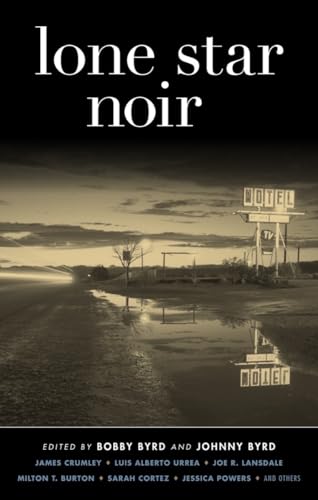
"What makes Texas noir different from any other noir? Is it just that the gumshoes wear cowboy boots? . . . Akashic Books finally turns its attention to the biggest state in the Lower 48, but all that land just means more places to bury the bodies. As father-son editing partnership Bobby and Johnny Byrd observe in their introduction, this isn't J.R. Ewing's Lone Star State. This is the Texas of chicken shit bingo, Enron scamsters, and a feeling that what happens in Mexico stays in Mexico . . . So what defines Texas noir? Who knows, but you better pray that blood doesn't stain your belt buckle." --Austin Chronicle
"Lone Star Noir's 14 hard-boiled short stories take readers into life's ragged edges . . . It reminds how humanity's darkest possibilities float just beneath everyday life's thin surface." --The Dallas Morning News
Akashic Books continues its groundbreaking series of original noir anthologies, launched in 2004 with Brooklyn Noir. Each story is set in a distinct neighborhood or location within the city of the book.
Brand-new stories by: James Crumley, Joe R. Lansdale, Claudia Smith, Ito Romo, Luis Alberto Urrea & David Corbett, George Wier, Sarah Cortez, Jesse Sublett, Dean James, Tim Tingle, Milton Burton, Lisa Sandlin, Jessica Powers, and Bobby Byrd.
From the introduction by Bobby Byrd:
"Seems like everybody who lives in Texas has a snotty attitude about the place where they live. Even if they hate it. Like the bumper sticker from the 1980s, Lucky me, I'm from Lubbock. That was popular the year after Lubbock almost got wiped off the map by a series of God's worst tornadoes. But what you learn from living in this state is that most of Texas is not Texas. It's not the stereotype that the rest of the nation carries around in the collective consciousness . . .
"The real Texas hides out in towns and cities like you'll find in Lone Star Noir, and in that very Texas reality, among the everyday good folks of Texas, you'll find the hard-boiled understanding of guns and dope and blood money and greed and hatred and delusion that makes these fourteen stories come alive on the page. Sure, you might catch a glimpse of J.R. and old Woodrow Call, like a shadow at the edge of your sight, feel their heat at your back, catch a whiff of the dead flowers which are their Texas dreams. This is basic foodstuff for a Texas writer telling a story, but the story must always stay true to its place and the people who live there. That's the strength of these stories in Lone Star Noir--the particular place they come from, the language that the characters speak. Yes, they are pieces of the larger puzzle that is Texas, but they are more true to the pieces of ground they reveal."
Die Inhaltsangabe kann sich auf eine andere Ausgabe dieses Titels beziehen.
Über die Autorinnen und Autoren
BOBBY BYRD (1942-2022)--publisher, poet, and essayist--was the copublisher of Cinco Puntos Press in El Paso, Texas. In 2005, for their work as publishers and for their involvement in the cultural communities of Mexico and the American Southwest, he and his wife Lee Merrill Byrd received the Lannan Fellowship for Cultural Freedom. As a poet Byrd was the recipient of an NEA Fellowship, the D.H. Lawrence Fellowship awarded by the University of New Mexico, and an International Residency Fellowship (NEA/Instituto de Belles Artes de Mexico). His book of poems, White Panties, Dead Friends and Other Bits and Pieces of Love, received the Southwest Book Award (2008). He was the coeditor, with his son Johnny Byrd, of Lone Star Noir and of the border nonfiction anthology Puro Border: Dispatches, Snapshots, & Graffiti from La Frontera.
JOHNNY BYRD was copublisher of Cinco Puntos Press in El Paso, Texas, and coeditor of Lone Star Noir. As a Spanish-to-English translator, his credits include The Festival of the Bones/El Festival de las Calaveras: The Little Bitty Book for the Day of the Dead by Luis San Martin, and the novel Out of Their Minds: The Incredible and (Sometimes) Sad Story of Ramon and Cornelio by Luis Humberto Crosthwaite. Byrd is also a freelance essayist, writing articles for online publications about culture and music.
Auszug. © Genehmigter Nachdruck. Alle Rechte vorbehalten.
Lone Star Noir
Akashic Books
Copyright © 2010 Akashic BooksAll right reserved.
ISBN: 978-1-936070-64-0
Contents
PART I: GULF COAST TEXAS..................................................................19Lisa Sandlin Beaumont Phelan's First Case...............................................41Claudia Smith Galveston Catgirl.........................................................65David Corbett & Luis Alberto Urrea Port Arthur Who Stole My Monkey?.....................94PART II: BACK ROADS TEXAS.................................................................115James Crumley Crumley, Texas Luck.......................................................121Jessica Powers Andrews Preacher's Kid...................................................140Joe R. Lansdale Gladewater Six-Finger Jack..............................................164George Wier Littlefield Duckweed........................................................186PART III: BIG CITY TEXAS..................................................................201Sarah Cortez Houston Montgomery Clift...................................................219Jesse Sublett Austin Moral Hazard.......................................................241Dean James Dallas Bottomed Out..........................................................256Ito Romo San Antonio Crank..............................................................267Bobby Byrd El Paso The Dead Man's Wife..................................................278
Introduction
What the Hell Is Texas, Anyway?
I dearly love the state of Texas, but I consider that a harmless perversion on my part, and discuss it only with consenting adults. —Molly Ivins
Forgive me, but I am a poet by trade. I don't come to noir fiction on the morning train in the bright sunlight. I come obliquely through the back roads of my poetics and love for the American idiom. I'm a member of the second generation of those notorious "New American Poets" anthologized by Donald Allen in 1960. Folks like Robert Creeley, Paul Blackburn, Philip Whalen, Jack Spicer, Ed Dorn, Gary Snyder, and, yes, Ginsberg and Jack Kerouac—radical workers of the language back in their day. Because of these roots, and like so many of my fellow travelers, I have always been drawn to noir fiction. Especially as it's practiced in America. My heroes from the beginning were Dashiell Hammett and Raymond Chandler, and later in the 1990s Elmore Leonard came along to feed my imagination when my writing needed an injection of hard-boiled storytelling and cutthroat dialogue.
But Texas? That was another journey. Growing up in Memphis and living for years in Arizona, Colorado, and New Mexico, I never would have guessed that I would move to Texas. Yet, here I am, a longtime Texan.
When my family and I moved south from Albuquerque thirty-something years ago, we asked our friends (the worse sort—writers, intellectuals, ex-hippies) from the so-called "land of enchantment" where we should move: Las Cruces, New Mexico, or El Paso. "Las Cruces," they all said without blinking. They sneered at anything Texas. That's common in New Mexico. Colorado too. Texans are the Ugly Americans of the American Southwest. That's the stereotype. Loud and arrogant. They buy a piece of land in the mountains, wanting to flee the flatlands and horrendous weather of Texas, and they bring Texas along with them.
So, taking our friends' advice, we moved to Las Cruces. It was a mistake of the first order. After a couple of years we got bored. We started sniffing around El Paso forty-five miles down the road. Life was different there, somehow weird, a taste of dark mystery even in the bright Chihuahuan desert sunlight—Spanish in the streets, goddamned real-life cowboys, Mennonites and Mormons from Mexico, a whole herd of Lebanese immigrants, the red-light district of Juárez a stone's throw from downtown, regular people who transformed themselves into strange gory tales in the newspaper, the hot dog vendor on the street with his little stash of cheap dope to pay the bills, the bloody smell of the 1910 Mexican Revolution still hanging in the air. The place actually echoes loudly in the American psyche. It pops up all over American literature—Ambrose Bierce, Jack Kerouac, Oscar Zeta Acosta, Carlos Fuentes, Dagoberto Gilb, Benjamin Alire Sáenz, James Crumley, Abraham Verghese, Cormac McCarthy, and so many more. The place felt like home.
So I got my feet Texas wet in El Paso. Why we didn't move here in the first place, I'll never know. But people in El Paso will tell you they don't live in Texas anyway. They live in El Paso.
Huh?
Seems like everybody who lives in Texas has a snotty attitude about the place where they live. Even if they hate it. Like the bumper sticker from the 1980s, Lucky me, I'm from Lubbock. That was popular the year after Lubbock almost got wiped off the map by a series of God's worst tornados. But what you learn from living in this state is that most of Texas is not Texas. It's not the stereotype that the rest of the nation carries around in the collective consciousness. During the 2008 Obama-versus-Hillary Democratic primary madness, the national press complained that Texas did not fit into the Red State cookie cutter they expected. Beaumont was nothing like Austin which was nothing like Odessa which was nothing like Houston. And Marfa, how did that happen? The talking heads were confused. One guy I saw on TV said, "Texas is not like any other state. It's huge, it's insanely diverse, it's more like a country."
Bingo!
I got a hunch the talking heads never got close to Chicken Shit Bingo. In Austin you can go play Chicken Shit Bingo. The rooster walks around a big board with all the numbers on it. And wherever the rooster takes a shit, that's the number that gets called out. That's Texas.
Chicken Shit Bingo is the Texas of Lone Star Noir.
But really, for the world at large, Texas is not so much a state or a country. It's popular legend pumped up on steroids to become mythos.
Back in the '70s and '80s, the American media gave us two hunks of the Texas legend. One was the prime-time soap opera Dallas. Millions of men and women from around the country—indeed, from around the world—scheduled their lives so they wouldn't miss Dallas. At its center was J.R. Ewing, the epitome of Texas cynicism and greed played ever so shrewdly by Larry Hagman. He wore his $5,000 suits, his top-dollar Stetson, and his elegant chocolate crocodile-hide cowboy boots. When was J.R. ever going to have to pay up for his sins and his silk underwear? The guy had enough money and power to buy Houston, but he'd screw his best friend to get more. And after lunch he'd screw the guy's wife. J.R. enjoyed those sins of his, and he very much enjoyed being a Texan. Indeed, he flaunted Texas. Big and rich Texas. And his public hated him and loved him at the same time.
The cowboy side of that Texas coin was embodied in Larry McMurtry's Lonesome Dove. The novel became a hugely popular television miniseries starring Robert Duvall and Tommy Lee Jones as ex–Texas Rangers Woodrow Call and Gus McCrae. The story is simple. Those old boys get tired of living the ranching life down on the Rio Grande so they go steal a herd of longhorns from the "Meskins," killing a few in the bargain. The series follows the heroes and their herd up through Texas to Wyoming with enough adventures and fights and evil to satisfy Ulysses fresh from...
„Über diesen Titel“ kann sich auf eine andere Ausgabe dieses Titels beziehen.
Suchergebnisse für Lone Star Noir (Akashic Noir)

Foto des Verkäufers
Lone Star Noir (Akashic Noir)
Anbieter: Greenworld Books, Arlington, TX, USA
Verkäuferbewertung 5 von 5 Sternen

Zustand: very_good. Fast Free Shipping â" Very Good condition book with a firm cover and clean pages. Shows normal use and some light wear or limited notes markings. A solid, nice copy to enjoy. Bestandsnummer des Verkäufers GWV.1936070642.VG
Gebraucht kaufen
EUR 4,69
Versand gratis
Versand innerhalb von USA
Versand innerhalb von USA
Anzahl: 1 verfügbar
Beispielbild für diese ISBN
Lone Star Noir
Anbieter: World of Books (was SecondSale), Montgomery, IL, USA
Verkäuferbewertung 5 von 5 Sternen
Paperback. Zustand: Good. One can drive around Texas for a long time and never meet J.R. Ewing or Woodrow McCall. The real Texas hides out in towns and cities like those that readers will find in these stories. In this very Texan reality, among the everyday good folks of the state, readers will find the hard-boiled understanding of guns, dope, blood money, greed, hatred and delusion that makes these 14 stories come alive on the page. Bestandsnummer des Verkäufers 00101130416
Gebraucht kaufen
EUR 4,80
Versand gratis
Versand innerhalb von USA
Versand innerhalb von USA
Anzahl: 1 verfügbar
Beispielbild für diese ISBN
Lone Star Noir (Akashic Noir)
Anbieter: HPB-Emerald, Dallas, TX, USA
Verkäuferbewertung 5 von 5 Sternen
Paperback. Zustand: Very Good. Connecting readers with great books since 1972! Used books may not include companion materials, and may have some shelf wear or limited writing. We ship orders daily and Customer Service is our top priority! Bestandsnummer des Verkäufers S_454776531
Gebraucht kaufen
EUR 2,98
EUR 3,34 Versand
Versand innerhalb von USA
Versand innerhalb von USA
Anzahl: 1 verfügbar
Beispielbild für diese ISBN
Lone Star Noir (Akashic Noir)
Anbieter: HPB-Diamond, Dallas, TX, USA
Verkäuferbewertung 5 von 5 Sternen
Paperback. Zustand: Very Good. Connecting readers with great books since 1972! Used books may not include companion materials, and may have some shelf wear or limited writing. We ship orders daily and Customer Service is our top priority! Bestandsnummer des Verkäufers S_477415933
Gebraucht kaufen
EUR 2,98
EUR 3,34 Versand
Versand innerhalb von USA
Versand innerhalb von USA
Anzahl: 1 verfügbar
Beispielbild für diese ISBN
Lone Star Noir
Anbieter: Better World Books, Mishawaka, IN, USA
Verkäuferbewertung 5 von 5 Sternen
Zustand: Good. Original. Former library copy. Pages intact with minimal writing/highlighting. The binding may be loose and creased. Dust jackets/supplements are not included. Includes library markings. Stock photo provided. Product includes identifying sticker. Better World Books: Buy Books. Do Good. Bestandsnummer des Verkäufers GRP104761903
Gebraucht kaufen
EUR 6,56
Versand gratis
Versand innerhalb von USA
Versand innerhalb von USA
Anzahl: 2 verfügbar
Beispielbild für diese ISBN
Lone Star Noir
Anbieter: Better World Books: West, Reno, NV, USA
Verkäuferbewertung 5 von 5 Sternen
Zustand: Good. Original. Former library copy. Pages intact with minimal writing/highlighting. The binding may be loose and creased. Dust jackets/supplements are not included. Includes library markings. Stock photo provided. Product includes identifying sticker. Better World Books: Buy Books. Do Good. Bestandsnummer des Verkäufers GRP104761903
Gebraucht kaufen
EUR 6,56
Versand gratis
Versand innerhalb von USA
Versand innerhalb von USA
Anzahl: 1 verfügbar
Beispielbild für diese ISBN
Lone Star Noir
Anbieter: Better World Books: West, Reno, NV, USA
Verkäuferbewertung 5 von 5 Sternen
Zustand: Good. Original. Pages intact with minimal writing/highlighting. The binding may be loose and creased. Dust jackets/supplements are not included. Stock photo provided. Product includes identifying sticker. Better World Books: Buy Books. Do Good. Bestandsnummer des Verkäufers 3963220-20
Gebraucht kaufen
EUR 6,56
Versand gratis
Versand innerhalb von USA
Versand innerhalb von USA
Anzahl: 1 verfügbar
Beispielbild für diese ISBN
Lone Star Noir
Anbieter: Better World Books, Mishawaka, IN, USA
Verkäuferbewertung 5 von 5 Sternen
Zustand: Fine. Original. Used book that is in almost brand-new condition. May contain a remainder mark. Better World Books: Buy Books. Do Good. Bestandsnummer des Verkäufers 18319329-6
Gebraucht kaufen
EUR 6,56
Versand gratis
Versand innerhalb von USA
Versand innerhalb von USA
Anzahl: 1 verfügbar
Beispielbild für diese ISBN
Lone Star Noir
Anbieter: World of Books Inc, Montgomery, IL, USA
Verkäuferbewertung 4 von 5 Sternen

Paperback. Zustand: Good. One can drive around Texas for a long time and never meet J.R. Ewing or Woodrow McCall. The real Texas hides out in towns and cities like those that readers will find in these stories. In this very Texan reality, among the everyday good folks of the state, readers will find the hard-boiled understanding of guns, dope, blood money, greed, hatred and delusion that makes these 14 stories come alive on the page. Bestandsnummer des Verkäufers CIN1936070642G
Gebraucht kaufen
EUR 6,63
Versand gratis
Versand innerhalb von USA
Versand innerhalb von USA
Anzahl: 1 verfügbar
Beispielbild für diese ISBN
Lone Star Noir
Anbieter: ThriftBooks-Atlanta, AUSTELL, GA, USA
Verkäuferbewertung 5 von 5 Sternen
Paperback. Zustand: Good. No Jacket. Pages can have notes/highlighting. Spine may show signs of wear. ~ ThriftBooks: Read More, Spend Less. Bestandsnummer des Verkäufers G1936070642I3N00
Gebraucht kaufen
EUR 6,70
Versand gratis
Versand innerhalb von USA
Versand innerhalb von USA
Anzahl: 1 verfügbar