
Verwandte Artikel zu Barcelona Noir (Akashic Noir)
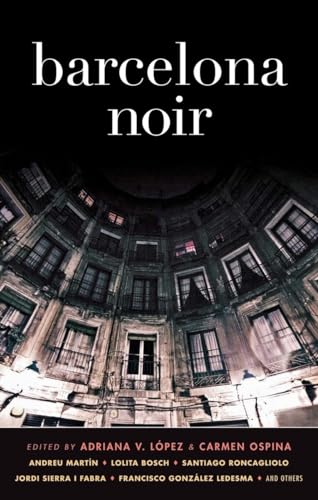
Inhaltsangabe
"The 14 stories in Akashic's Barcelona volume hew closely to the bleak spirit of the noir genre, whether reaching back to the 1920s [. . . ] or chronicling chaotic immigrant-infused present-day Barcelona." --Publishers Weekly
"Each [contributor] presents his or her own personal picture of the city, and as a whole, the anthology projects a many-hued sense of place. As portrayed here, Barcelona is a city that looks different from every angle." --Booklist
Akashic Books continues its groundbreaking series of original noir anthologies, launched in 2004 with Brooklyn Noir. Each story is set in a distinct neighborhood or location within the city of the book.
Brand-new stories by: Jordi Sierra i Fabra, Imma Monsó, Santiago Roncagliolo, Francisco González Ledesma, Valerie Miles, David Barba, Isabel Franc, Lolita Bosch, Eric Taylor-Aragón, Antonia Cortijos, Cristina Fallarás, Raúl Argemí, Teresa Solana, and Andreu Martín
From the introduction by Adriana V. López & Carmen Ospina:
"Its physical beauty alone, surrounded by mountains with a view of the sea, was cause enough for architect Antoni Gaudí to raise his version of Candy Land upon its soil; a daily impetus for the city's mimes and living statues to claim a spot along Las Ramblas and transform it into their stage. But don't be fooled: Barcelona, with all its illustrious color and exterior fineness, hasn't always been able to curb the darker yearnings of its Hyde to its Jekyll. Blame it on a bubbling, repressive concoction made with a pinch of Church, a touch of Crown, and a large dose of General Francisco Franco to stir up the insides of its very independent and anarchic Catalonian spirit. One that has allowed it to conserve its own language and modus operandi from the rest of Spain, and that has always attracted the vanguard to create under the sereneness of its palm trees and Mediterranean light . . .
"Repression, vice, immigration . . . the fourteen stories within will divert your eyes from Barcelona's lively Ramblas and Gaudi spires, opening them onto the city's tainted side. One that will never appear in any recommended walking tour."
Die Inhaltsangabe kann sich auf eine andere Ausgabe dieses Titels beziehen.
Über die Autorinnen und Autoren
ADRIANA V. LÓPEZ was the founding editor of Criticas magazine and is the coeditor of Barcelona Noir. Her journalism has appeared in the New York Times and the Washington Post, and she divides her time between New York and Madrid.
CARMEN OSPINA directs the digital program at Random House Mondadori in Barcelona. She is the coeditor of Barcelona Noir.
Achy Obejas is the author of the critically acclaimed novels Ruins, Days of Awe, and three other books of fiction. She edited and translated (into English) the anthology Havana Noir, and has since translated Junot Diaz, Rita Indiana, Wendy Guerra, and many others. In 2014, she was awarded a USA Ford Fellowship for her writing and translation. The Tower of the Antilles, a short story collection, is her latest work.
Auszug. © Genehmigter Nachdruck. Alle Rechte vorbehalten.
Barcelona Noir
Akashic Books
Copyright © 2011 Akashic BooksAll right reserved.
ISBN: 978-1-936070-95-4
Contents
PART I: FOLLOW ME IF YOU CAN.............................................................................................19Andreu Martín The Law of Escape Villa Olímpica...............................................................34Antonia Cortijos Brawner's Shadows El Born.............................................................................48Santiago Roncagliolo The Predator Barri Gòtic.....................................................................63Isabel Franc The Enigma of Her Voice Poble Nou.........................................................................79PART II: SHELTERED LIVES, SECRET CRIMES..................................................................................101David Barba Sweet Croquette El Carmel..................................................................................120Teresa Solana The Offering (Translated from Catalan by Peter Bush) Sant Antoni.........................................138Jordi Sierra i Fabra A High-End Neighborhood............................................................................156PART III: DAYS OF WINE (WHITE LINES) AND ROSES...........................................................................171Eric Taylor-Aragón Epiphany Barceloneta...........................................................................185Cristina Fallarás The Story of a Scar Nou Barris..................................................................199Valerie Miles Bringing Down the Moon Gràcia.......................................................................216Raúl Argemí The Slender Charm of Chinese Women Montjuic......................................................239Francisco González Ledesma The Police Inspector Who Loved Books El Raval..........................................242
Introduction
Bloody Ramblings
Its physical beauty alone, surrounded by mountains with a view of the sea, was cause enough for architect Antoni Gaudí to raise his version of Candy Land upon its soil; a daily impetus for the city's mimes and living statues to claim a spot along Las Ramblas and transform it into their stage.
But don't be fooled: Barcelona, with all its illustrious color and exterior fineness, hasn't always been able to curb the darker yearnings of its Hyde to its Jekyll. Blame it on a bubbling, repressive concoction made with a pinch of Church, a touch of Crown, and a large dose of General Francisco Franco to stir up the insides of its very independent and anarchic Catalonian spirit. One that has allowed it to conserve its own language and modus operandi from the rest of Spain, and that has always attracted the vanguard to create under the sereneness of its palm trees and Mediterranean light.
It may be hard to imagine, but Barcelona, presumably named after the Carthaginian general Hamilcar Barca in third century B.C., was once trapped behind the shadows of Roman walls, hidden within the largest concentrated labyrinth of Gothic architecture in all of Europe. Hundreds of years later, the thriving port city would open itself up to commerce, its industrial age, and with it came immigrants, workers, revolution, and vice. Then the city would endure the bloodshed of the Spanish Civil War (1936–1939), thirty-five years of Franco's iron fist, and, when that was finally over, its cobblestoned streets became breeding grounds of resentment.
If noir is the genre most apt to expressing unease and malice within a society, it took awhile for Barcelona to feel safe to do so. In fact, Spain didn't produce its first novela negra, with a police character and crimes of passion, until 1853, with the publication of Pedro Antonio de Alarcón's El Clavo (The Nail). But bear in mind that Spain, in general, was not the easiest of places to be an author. Those brave or crazy enough to question the orthodoxy through their writing faced torture, imprisonment, or worse: death. Just remember Federico García Lorca's tragic fate at the hands of the Nationalists in 1936.
Over time, more crime fiction was published, though it still faced heavy censorship. Francisco García Pavón's novelas policíacas featuring the police chief Manuel González, a.k.a. Plinio, garnered a following in the 1950s and were eventually adapted into a popular television series. This Plinio character—who could be described as a man of few words, with his right hip attached to his gun and a cigarette appended to the side of his mouth—was without a doubt a pioneer of his time. But a true noir fan would rate the series tepid in comparison to the brutality of Franco's very real hit men; the violence portrayed, well, a mere stroll in the park.
It wasn't until Franco's death in 1975 that grittier tales began pounding themselves out upon typewriter keys soiled with absinthe and cigarette ash. The bans had been lifted and a new era had emerged. But instead of your classic whodunit style of noir that was popular in the U.K., Spain's take on the genre stung with social criticism. Thanks to memorable protagonists created by Catalan novelists such as Francisco "Paco" González Ledesma, with his jaded inspector Ricardo Méndez (featured in this collection), as well as the great and late Manuel Vázquez Montalbán, with his bon vivant detective Pepe Carvalho, Barcelona began to be depicted as it actually was: a city riddled with violence, endemic corruption, and lack of social mobility.
While some of the stories in Barcelona Noir still capture a certain air of this former era, a strange if more sadistic mood lurks through this small postindustrial city of today. Smeared with the pleasure-seeking sheen of its rampant tourist industry, combined with a constant stream of immigration from Africa, Latin America, and Asia, and with the ever-growing tensions of Catalonian nationalism, the city has spawned a fresh new batch of resentments and culture clashes. Enter the underground world of Raúl Argemí's "The Slender Charm of Chinese Women," where drugs, xenophobia, and people trafficking manage to remain hidden in the city's darkest corners. In Eric Taylor-Aragón's "Epiphany," two heartbroken outsiders meet at a bar and make a horrid attempt to escape their existential pain together, while in Jordi Sierra i Fabra's "A High-End Neighborhood," the city's rich outright torture the foreign help.
There are portraits here of Catalans struggling with their own sense of identity, feeling suffocated in a conservative society, as depicted in Imma Monsó's mind-bending retail story "The Customer Is Always Right"; in Teresa Solana's "The Offering," where a respectable clinic becomes the setting for surgical terror; and in tiny clues scattered throughout Lolita Bosch's scandalous tale of crosscontinental hate crimes. This repression is also expressed in Santiago Roncagliolo's "The Predator," where a group of officemates partake in Carnival night's fun by putting on masks so they can take their real-life ones off; and in Valerie Miles's "Bringing Down the Moon," when the magic surrounding Saint John's festival becomes the perfect excuse to commit murder.
In the meantime, plots take us back in time in search of ghosts of the Second World War, such as in "Brawner's Shadows" by Antonia Cortijos. And even further back, to the era of the gangster anarchists running scared through the Ciutat Vella, in Andreu Martín's "The Law of Escape." Today, the detectives and...
„Über diesen Titel“ kann sich auf eine andere Ausgabe dieses Titels beziehen.
Suchergebnisse für Barcelona Noir (Akashic Noir)

Beispielbild für diese ISBN
Barcelona Noir
Anbieter: World of Books (was SecondSale), Montgomery, IL, USA
Verkäuferbewertung 5 von 5 Sternen

Paperback. Zustand: Good. Barcelona, with all its illustrious colour and exterior finery, hasn't always been able to curb its darker yearnings. Blame it on a bubbling, repressive concoction made with a pinch of Church, a touch of Crown and a large dose of General Franco to stir up the insides of its very independent and anarchic Catalonian spirit. Repression, vice, immigration - the 14 stories in Barcelona Noir will divert readers' eyes from Barcelona's lively Ramblas and Gaudi spires and open them to the city's tainted side; one that will never appear on any tour. Bestandsnummer des Verkäufers 00097951741
Gebraucht kaufen
EUR 4,69
Versand gratis
Versand innerhalb von USA
Versand innerhalb von USA
Anzahl: 1 verfügbar
Foto des Verkäufers
Barcelona Noir (Akashic Noir)
Anbieter: Greenworld Books, Arlington, TX, USA
Verkäuferbewertung 5 von 5 Sternen
Zustand: very_good. Fast Free Shipping â" Very Good condition book with a firm cover and clean pages. Shows normal use and some light wear or limited notes markings. A solid, nice copy to enjoy. Bestandsnummer des Verkäufers GWV.1936070952.VG
Gebraucht kaufen
EUR 4,70
Versand gratis
Versand innerhalb von USA
Versand innerhalb von USA
Anzahl: 1 verfügbar
Beispielbild für diese ISBN
Barcelona Noir
Verlag:
Akashic Books, 2011
ISBN 10: 1936070952
ISBN 13: 9781936070954
Gebraucht
Softcover
Erstausgabe
Anbieter: Better World Books, Mishawaka, IN, USA
Verkäuferbewertung 5 von 5 Sternen
Zustand: Good. 1st Edition. Pages intact with minimal writing/highlighting. The binding may be loose and creased. Dust jackets/supplements are not included. Stock photo provided. Product includes identifying sticker. Better World Books: Buy Books. Do Good. Bestandsnummer des Verkäufers 15378962-6
Gebraucht kaufen
EUR 6,18
Versand gratis
Versand innerhalb von USA
Versand innerhalb von USA
Anzahl: 1 verfügbar
Beispielbild für diese ISBN
Barcelona Noir
Anbieter: World of Books Inc, Montgomery, IL, USA
Verkäuferbewertung 4 von 5 Sternen

Paperback. Zustand: Good. Barcelona, with all its illustrious colour and exterior finery, hasn't always been able to curb its darker yearnings. Blame it on a bubbling, repressive concoction made with a pinch of Church, a touch of Crown and a large dose of General Franco to stir up the insides of its very independent and anarchic Catalonian spirit. Repression, vice, immigration - the 14 stories in Barcelona Noir will divert readers' eyes from Barcelona's lively Ramblas and Gaudi spires and open them to the city's tainted side; one that will never appear on any tour. Bestandsnummer des Verkäufers CIN1936070952G
Gebraucht kaufen
EUR 6,53
Versand gratis
Versand innerhalb von USA
Versand innerhalb von USA
Anzahl: 1 verfügbar
Beispielbild für diese ISBN
Barcelona Noir
Anbieter: ThriftBooks-Atlanta, AUSTELL, GA, USA
Verkäuferbewertung 5 von 5 Sternen
Paperback. Zustand: As New. No Jacket. Pages are clean and are not marred by notes or folds of any kind. ~ ThriftBooks: Read More, Spend Less. Bestandsnummer des Verkäufers G1936070952I2N00
Gebraucht kaufen
EUR 8,91
Versand gratis
Versand innerhalb von USA
Versand innerhalb von USA
Anzahl: 1 verfügbar
Beispielbild für diese ISBN
Barcelona Noir
Anbieter: ThriftBooks-Dallas, Dallas, TX, USA
Verkäuferbewertung 5 von 5 Sternen
Paperback. Zustand: Good. No Jacket. Former library book; Pages can have notes/highlighting. Spine may show signs of wear. ~ ThriftBooks: Read More, Spend Less. Bestandsnummer des Verkäufers G1936070952I3N10
Gebraucht kaufen
EUR 8,91
Versand gratis
Versand innerhalb von USA
Versand innerhalb von USA
Anzahl: 1 verfügbar
Beispielbild für diese ISBN
Barcelona Noir (Akashic Noir Series)
Anbieter: WorldofBooks, Goring-By-Sea, WS, Vereinigtes Königreich
Verkäuferbewertung 5 von 5 Sternen
Paperback. Zustand: Very Good. The book has been read, but is in excellent condition. Pages are intact and not marred by notes or highlighting. The spine remains undamaged. Bestandsnummer des Verkäufers GOR005671710
Gebraucht kaufen
EUR 3,60
EUR 6,65 Versand
Versand von Vereinigtes Königreich nach USA
Versand von Vereinigtes Königreich nach USA
Anzahl: 1 verfügbar
Beispielbild für diese ISBN
Barcelona Noir (Akashic Noir)
Anbieter: HPB-Emerald, Dallas, TX, USA
Verkäuferbewertung 5 von 5 Sternen
paperback. Zustand: Very Good. Connecting readers with great books since 1972! Used books may not include companion materials, and may have some shelf wear or limited writing. We ship orders daily and Customer Service is our top priority! Bestandsnummer des Verkäufers S_487860383
Gebraucht kaufen
EUR 7,34
EUR 3,34 Versand
Versand innerhalb von USA
Versand innerhalb von USA
Anzahl: 1 verfügbar
Beispielbild für diese ISBN
Barcelona Noir
Verlag:
Akashic Books, 2011
ISBN 10: 1936070952
ISBN 13: 9781936070954
Gebraucht
Softcover
Erstausgabe
Anbieter: Better World Books Ltd, Dunfermline, Vereinigtes Königreich
Verkäuferbewertung 5 von 5 Sternen
Zustand: Very Good. 1st Edition. Former library copy. Pages intact with possible writing/highlighting. Binding strong with minor wear. Dust jackets/supplements may not be included. Includes library markings. Stock photo provided. Product includes identifying sticker. Better World Books: Buy Books. Do Good. Bestandsnummer des Verkäufers 3836330-75
Gebraucht kaufen
EUR 5,73
EUR 5,93 Versand
Versand von Vereinigtes Königreich nach USA
Versand von Vereinigtes Königreich nach USA
Anzahl: 1 verfügbar
Beispielbild für diese ISBN
Barcelona Noir Format: Paperback
Anbieter: INDOO, Avenel, NJ, USA
Verkäuferbewertung 5 von 5 Sternen
Zustand: New. Brand New. Bestandsnummer des Verkäufers 9781936070954
Neu kaufen
EUR 14,74
Versand gratis
Versand innerhalb von USA
Versand innerhalb von USA
Anzahl: Mehr als 20 verfügbar