
Verwandte Artikel zu Land of Second Chances: The Impossible Rise of Rwanda's...
Inhaltsangabe
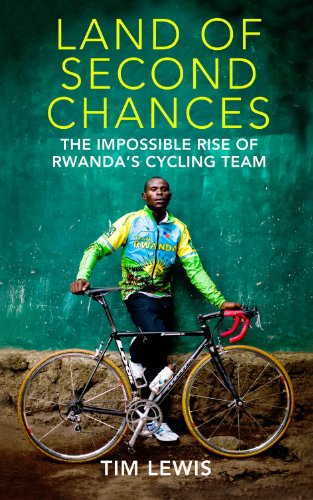
Hailed as "the sports book of the year," Land of Second Chances is the inspiring true story of four men who found a new hope for Rwanda. Meet Adrien Niyonshuti, Tom Ritchey, Jonathan Boyer, and Paul Kagame. In a land clamoring for heroes, they confront impossible odds as they struggle to put an upstart cycling team on the map--and find redemption in the eyes of the world. Land of Second Chances is an inspirational story of hope and victory for Africa.
Though Rwanda is a tiny, landlocked country dropped like a pebble on the equator, it is a lush and beautiful land fertile with hope and searching for a new identity. So when its best young bike racer, Adrien Niyonshuti, becomes obsessed with earning a slot to compete in the London Olympic Games, all eyes turn to him. Supporting Adrien is his coach, Jonathan Boyer, the first American to race in the Tour de France.
Also present: Tom Ritchey, an inventor of the mountain bike who comes to Rwanda with money and a vision to help coffee farmers raise their standard of living with a new breed of bike. And there is Paul Kagame, the president of Rwanda, a man piecing together an egalitarian future for his country but who is all too susceptible to the corruption of power.
Land of Second Chances is the incredible true story of struggle, hope, and the life-giving promise of redemption through the unifying power of sport.
"Land of Second Chances is a tale that quite brilliantly portrays the power of sport to effect change. Superb, a must-read." -- Huffington Post
"Lewis is a reporter of rare skill and he writes with wit and verve. Land of Second Chances is" ¦the sports book of the year by a backcountry mile." -- Esquire UK
"The best sports book of the year." -- Podium Cafà ©
"Tim Lewis's fascinating story of Rwandan cycling isn't a typical rags to riches, triumph against adversity tale" ¦ This is also a story about the potential of African cycling and its undoubted capacity to change lives." -- The Guardian
"Land of Second Chances transcends most sports books." -- Boston Globe
"Well sourced, with encyclopedic references to those in the cycling world, Land of Second Chances is set on the cusp of an extraordinary moment in the sport, with Africa poised to start producing contenders." --Booklist of the American Library Association
"Lewis places cycling at the heart of Rwanda's changing fortunes by stitching together various stories and providing excellent, cogent synopses of the political and social history of the country" ¦[An] intelligent, thoughtful social history" ¦" -- Library Journal Books for Dudes
"Team Rwanda's story could have been edited into an uplifting tale of unlikely success, with Niyonshuti's Olympic appearance as the rousing finale. Instead this is a more complicated, darker, account." -- Financial Times
Die Inhaltsangabe kann sich auf eine andere Ausgabe dieses Titels beziehen.
Über die Autorin bzw. den Autor
Tim Lewis is a staff writer for the Guardian and the Observer, and contributing editor for Esquire UK. He has previously been editor of Observer magazine, Observer Sport Monthly, and the Independent’s Sunday Review. He lives in London.
Von der hinteren Coverseite
RECONCILIATION.
REDEMPTION.
A NEW PLACE IN THE WORLD.
Two decades after the bloody genocide that tore Rwanda apart, this tiny African nation remains haunted by its dark past. Yet modern Rwanda, a landlocked country dropped like a pebble on the equator, is a lush and beautiful land fertile with hope and desperate for heroes who can help it forge a new identity.
“Hero” is a heavy burden to lay on the slim shoulders of Adrien Niyonshuti, who lost six members of his family to the genocide when he was seven years old. But the young cyclist now carries the weight of his country’s expectations as he competes for a slot at the London Olympics. Supporting Adrien is his coach, Jonathan Boyer, the first American to race in the Tour de France and a controversial figure whose plans for a reborn Rwanda may lie second to his own need for a new start.
Also present: Tom Ritchey, a mountain bike pioneer who comes to Rwanda with a vision but who is bedeviled by a personal crisis that threatens to undo his good work. And President Paul Kagame, piecing together an egalitarian future for his country but all too susceptible to the corruption of power.
Startling, humorous, sobering, enchanting—Land of Second Chances is a brilliantly told chronicle of struggle, hope, and difficult moral choices for a country in search of the life-giving promise of redemption.
REDEMPTION.
A NEW PLACE IN THE WORLD.
Two decades after the bloody genocide that tore Rwanda apart, this tiny African nation remains haunted by its dark past. Yet modern Rwanda, a landlocked country dropped like a pebble on the equator, is a lush and beautiful land fertile with hope and desperate for heroes who can help it forge a new identity.
“Hero” is a heavy burden to lay on the slim shoulders of Adrien Niyonshuti, who lost six members of his family to the genocide when he was seven years old. But the young cyclist now carries the weight of his country’s expectations as he competes for a slot at the London Olympics. Supporting Adrien is his coach, Jonathan Boyer, the first American to race in the Tour de France and a controversial figure whose plans for a reborn Rwanda may lie second to his own need for a new start.
Also present: Tom Ritchey, a mountain bike pioneer who comes to Rwanda with a vision but who is bedeviled by a personal crisis that threatens to undo his good work. And President Paul Kagame, piecing together an egalitarian future for his country but all too susceptible to the corruption of power.
Startling, humorous, sobering, enchanting—Land of Second Chances is a brilliantly told chronicle of struggle, hope, and difficult moral choices for a country in search of the life-giving promise of redemption.
Auszug. © Genehmigter Nachdruck. Alle Rechte vorbehalten.
Prologue: A Long Ride
You can’t know where you’re going unless you know where you’ve come from. —Rwandan proverb
There had been a lot of odd moments in Adrien Niyonshuti’s life recently. Most of them had started when a group of Americans had arrived in Rwanda in 2006 and put on a bicycle race in September. Adrien had won, and, as his prize, he had been allowed to keep the mountain bike he had borrowed from the visitors for the event. It was a Schwinn, nothing special by Western standards, but it was exponentially more advanced than anything that little, landlocked Rwanda—about the size of Massachusetts but with twice as many inhabitants—had ever seen. Adrien actually didn’t ride it very much. He was nineteen years old, and no one else in the country had a mountain bike, so it was dull on his own. But the bike was definitely the start of something.
From this point on, new experiences started arriving rapidly for Adrien. Not long after, he flew on an airplane for the first time. In South Africa, he slept on a bed between sheets, after a couple of nights of just lying on the top because he did not dare to disturb them. He learned to use flush toilets, again after some initial confusion. He raced on his road bike against Lance Armstrong. He saw snow for the first time, high in the Colorado Rockies.
But for those who have followed Adrien’s life for a few years, one Friday lunchtime in London in August 2012 set a new bar for incongruity. The Criterion Theatre, a Victorian-era West End playhouse that usually hosts a long-running production of The 39 Steps, had been commandeered for a salon called “When Clive Met Adrien.” Adrien was Adrien, who in exactly forty-eight hours would become the first Rwandan to compete in the men’s mountain bike event at the Olympic Games. Clive was Clive Owen, the glowering British film star who had a Golden Globe and a BAFTA award on his shelves at home.
Adrien knew next to nothing about Clive, but it quickly emerged that Clive knew pretty much everything about Adrien. The actor strode on stage wearing a crisp slate-gray suit and open-necked shirt, and immediately broached the question we’d all been chewing on: What was the guy from Closer and Children of Men doing hosting a talk with a Rwandan cyclist? He was, he explained, an ambassador for the Aegis Trust, a UK-based charity that raises awareness of genocide and has particularly strong links with Rwanda. More than that, though, Clive was a sports fan.
“There are thousands of athletes who have come here to compete in the Olympic Games, and all of them will have extraordinary stories of dedication and commitment to their sport,” he said, glancing at diligently prepared notes. “But I really think that Adrien Niyonshuti’s story is one of the most extraordinary.”
Adrien was seven years old during the Rwandan genocide in 1994, when at least 800,000 of his compatriots—one in ten of the population—were slaughtered in a hundred days. He escaped death only by running and hiding from the Hutu mobs that were assigned to kill every last Tutsi. Sixty members of his family, including six of his siblings, were brutally hacked down in those three months.
But now, just two days before the biggest moment of Adrien’s life, wasn’t a time to dwell on those tales of horror. The week before, Adrien had carried his country’s flag at the London 2012 Olympics opening ceremony, nervously but proudly leading a delegation of seven athletes. And, as he often said, one of his dreams was that cycling would finally give the world a reference point for Rwanda that was not the genocide.
At this moment, Adrien joined Clive on the stage. He was a quiet, gentle presence, and he walked stiffly, as though he had forgotten to remove the coat hanger from his clothes. He was not quite five and a half feet tall and slim, full of sharp angles. His hair was shaved to a stubble, as Rwandan men invariably have it, and he had finely drawn features with precipitous cheekbones. He wore a Team Rwanda sleeveless jacket in the national colors of sky blue, green, and yellow, black track-suit trousers, and running shoes. He didn’t look out at the audience once as he took his seat.
Adrien’s voice was soft, and he spoke rapidly; the audience leaned forward as one to catch what he said. He ran through the creation of Team Rwanda, the racing squad that had been formed not long after he won that first race in 2006. It started with five riders but in five years had grown to nearly twenty; the country now had its own professional road race, the weeklong Tour of Rwanda, and had become one of the strongest cycling nations in all of Africa. The inspiration for the project initially had come from a Californian named Tom Ritchey, one of the inventors of the mountain bike back in the late 1970s. It had then been taken on and knocked into shape by a former professional road racer named Jonathan Boyer—“Jock” to all who knew him—who in 1981 had become the first American to ride the Tour de France. Both men had complicated—some would say compromised— reasons for becoming involved in Rwanda.
Adrien first heard of the Olympics in 2007, when he was twenty years old and just starting out as a bike racer. “I asked Jock, ‘What means the Olympics?’” he said. Few Rwandans had a television, and there was only one station, but the following year he managed to find a screen and watched the opening ceremony in Beijing along with some of the events. Adrien half smiled. “I say, ‘One day I’d like to be there.’”
He spent two years training, pushing, fixating on his goal. He found out that there were three cycling events for which he could qualify: the men’s individual time trial, the road race, and the crosscountry mountain bike race. His first opportunity came in the African Continental Championships in November 2010, which doubled as a selection competition for the Olympics. By coincidence, the event was being staged in Kigali, the capital city of Rwanda, and the time trial course was an undulating twenty-mile loop around streets that Adrien used to ride to get to his secondary school. He was competing against the best riders in Africa—the top guys from South Africa, the champion from the unlikely cycling powerhouse of Eritrea, a Namibian contracted to a team in Europe—riders from twenty countries in all. The racers set off one by one, riding alone against the stopwatch. Adrien knew that a top-three finish would send him to London. He came in fourth. He shrugged. “The rider from Algeria beat me by one second.” Adrien was exaggerating: In fact, it was only 0.11 of a second.
The next opportunity came in the road race qualification two days later. Over one hundred African riders lined up in Kigali, the range of abilities and equipment quite something to behold, from the sleek carbon-fiber bicycles of the leading contenders to the jalopies from Burundi, which were held together by wire, tape, and the prayers of the riders. Before the start, a minute’s silence was observed to commemorate the death of a Rwandan boy who had wandered onto the road in front of the Ivory Coast team car a few days earlier. Then the competitors took off for fourteen laps of a seven-mile circuit, knowing again that the top three riders would book their tickets to London.
Everyone knew this was Adrien’s best chance. Weighing just 68 kilograms—about 150 pounds—he was not really built for a sustained power effort like the time trial, and his inexperience on a mountain bike would be a daunting handicap in that discipline. On a road bike, however, he was smooth and powerful, and his...
You can’t know where you’re going unless you know where you’ve come from. —Rwandan proverb
There had been a lot of odd moments in Adrien Niyonshuti’s life recently. Most of them had started when a group of Americans had arrived in Rwanda in 2006 and put on a bicycle race in September. Adrien had won, and, as his prize, he had been allowed to keep the mountain bike he had borrowed from the visitors for the event. It was a Schwinn, nothing special by Western standards, but it was exponentially more advanced than anything that little, landlocked Rwanda—about the size of Massachusetts but with twice as many inhabitants—had ever seen. Adrien actually didn’t ride it very much. He was nineteen years old, and no one else in the country had a mountain bike, so it was dull on his own. But the bike was definitely the start of something.
From this point on, new experiences started arriving rapidly for Adrien. Not long after, he flew on an airplane for the first time. In South Africa, he slept on a bed between sheets, after a couple of nights of just lying on the top because he did not dare to disturb them. He learned to use flush toilets, again after some initial confusion. He raced on his road bike against Lance Armstrong. He saw snow for the first time, high in the Colorado Rockies.
But for those who have followed Adrien’s life for a few years, one Friday lunchtime in London in August 2012 set a new bar for incongruity. The Criterion Theatre, a Victorian-era West End playhouse that usually hosts a long-running production of The 39 Steps, had been commandeered for a salon called “When Clive Met Adrien.” Adrien was Adrien, who in exactly forty-eight hours would become the first Rwandan to compete in the men’s mountain bike event at the Olympic Games. Clive was Clive Owen, the glowering British film star who had a Golden Globe and a BAFTA award on his shelves at home.
Adrien knew next to nothing about Clive, but it quickly emerged that Clive knew pretty much everything about Adrien. The actor strode on stage wearing a crisp slate-gray suit and open-necked shirt, and immediately broached the question we’d all been chewing on: What was the guy from Closer and Children of Men doing hosting a talk with a Rwandan cyclist? He was, he explained, an ambassador for the Aegis Trust, a UK-based charity that raises awareness of genocide and has particularly strong links with Rwanda. More than that, though, Clive was a sports fan.
“There are thousands of athletes who have come here to compete in the Olympic Games, and all of them will have extraordinary stories of dedication and commitment to their sport,” he said, glancing at diligently prepared notes. “But I really think that Adrien Niyonshuti’s story is one of the most extraordinary.”
Adrien was seven years old during the Rwandan genocide in 1994, when at least 800,000 of his compatriots—one in ten of the population—were slaughtered in a hundred days. He escaped death only by running and hiding from the Hutu mobs that were assigned to kill every last Tutsi. Sixty members of his family, including six of his siblings, were brutally hacked down in those three months.
But now, just two days before the biggest moment of Adrien’s life, wasn’t a time to dwell on those tales of horror. The week before, Adrien had carried his country’s flag at the London 2012 Olympics opening ceremony, nervously but proudly leading a delegation of seven athletes. And, as he often said, one of his dreams was that cycling would finally give the world a reference point for Rwanda that was not the genocide.
At this moment, Adrien joined Clive on the stage. He was a quiet, gentle presence, and he walked stiffly, as though he had forgotten to remove the coat hanger from his clothes. He was not quite five and a half feet tall and slim, full of sharp angles. His hair was shaved to a stubble, as Rwandan men invariably have it, and he had finely drawn features with precipitous cheekbones. He wore a Team Rwanda sleeveless jacket in the national colors of sky blue, green, and yellow, black track-suit trousers, and running shoes. He didn’t look out at the audience once as he took his seat.
Adrien’s voice was soft, and he spoke rapidly; the audience leaned forward as one to catch what he said. He ran through the creation of Team Rwanda, the racing squad that had been formed not long after he won that first race in 2006. It started with five riders but in five years had grown to nearly twenty; the country now had its own professional road race, the weeklong Tour of Rwanda, and had become one of the strongest cycling nations in all of Africa. The inspiration for the project initially had come from a Californian named Tom Ritchey, one of the inventors of the mountain bike back in the late 1970s. It had then been taken on and knocked into shape by a former professional road racer named Jonathan Boyer—“Jock” to all who knew him—who in 1981 had become the first American to ride the Tour de France. Both men had complicated—some would say compromised— reasons for becoming involved in Rwanda.
Adrien first heard of the Olympics in 2007, when he was twenty years old and just starting out as a bike racer. “I asked Jock, ‘What means the Olympics?’” he said. Few Rwandans had a television, and there was only one station, but the following year he managed to find a screen and watched the opening ceremony in Beijing along with some of the events. Adrien half smiled. “I say, ‘One day I’d like to be there.’”
He spent two years training, pushing, fixating on his goal. He found out that there were three cycling events for which he could qualify: the men’s individual time trial, the road race, and the crosscountry mountain bike race. His first opportunity came in the African Continental Championships in November 2010, which doubled as a selection competition for the Olympics. By coincidence, the event was being staged in Kigali, the capital city of Rwanda, and the time trial course was an undulating twenty-mile loop around streets that Adrien used to ride to get to his secondary school. He was competing against the best riders in Africa—the top guys from South Africa, the champion from the unlikely cycling powerhouse of Eritrea, a Namibian contracted to a team in Europe—riders from twenty countries in all. The racers set off one by one, riding alone against the stopwatch. Adrien knew that a top-three finish would send him to London. He came in fourth. He shrugged. “The rider from Algeria beat me by one second.” Adrien was exaggerating: In fact, it was only 0.11 of a second.
The next opportunity came in the road race qualification two days later. Over one hundred African riders lined up in Kigali, the range of abilities and equipment quite something to behold, from the sleek carbon-fiber bicycles of the leading contenders to the jalopies from Burundi, which were held together by wire, tape, and the prayers of the riders. Before the start, a minute’s silence was observed to commemorate the death of a Rwandan boy who had wandered onto the road in front of the Ivory Coast team car a few days earlier. Then the competitors took off for fourteen laps of a seven-mile circuit, knowing again that the top three riders would book their tickets to London.
Everyone knew this was Adrien’s best chance. Weighing just 68 kilograms—about 150 pounds—he was not really built for a sustained power effort like the time trial, and his inexperience on a mountain bike would be a daunting handicap in that discipline. On a road bike, however, he was smooth and powerful, and his...
„Über diesen Titel“ kann sich auf eine andere Ausgabe dieses Titels beziehen.
Suchergebnisse für Land of Second Chances: The Impossible Rise of Rwanda's...

Beispielbild für diese ISBN
Land of Second Chances: The Impossible Rise of Rwanda's Cycling Team
Anbieter: World of Books (was SecondSale), Montgomery, IL, USA
Verkäuferbewertung 5 von 5 Sternen

Zustand: Good. Item in good condition. Textbooks may not include supplemental items i.e. CDs, access codes etc. Bestandsnummer des Verkäufers 00104975743
Gebraucht kaufen
EUR 5,90
Versand gratis
Versand innerhalb von USA
Versand innerhalb von USA
Anzahl: 2 verfügbar
Beispielbild für diese ISBN
Land of Second Chances: The Impossible Rise of Rwanda's Cycling Team
Anbieter: World of Books (was SecondSale), Montgomery, IL, USA
Verkäuferbewertung 5 von 5 Sternen
Zustand: Very Good. Item in very good condition! Textbooks may not include supplemental items i.e. CDs, access codes etc. Bestandsnummer des Verkäufers 00106860508
Gebraucht kaufen
EUR 5,90
Versand gratis
Versand innerhalb von USA
Versand innerhalb von USA
Anzahl: 1 verfügbar
Beispielbild für diese ISBN
Land of Second Chances : The Impossible Rise of Rwanda's Cycling Team
Anbieter: Better World Books, Mishawaka, IN, USA
Verkäuferbewertung 5 von 5 Sternen
Zustand: Very Good. Former library copy. Pages intact with possible writing/highlighting. Binding strong with minor wear. Dust jackets/supplements may not be included. Includes library markings. Stock photo provided. Product includes identifying sticker. Better World Books: Buy Books. Do Good. Bestandsnummer des Verkäufers 7218578-6
Gebraucht kaufen
EUR 6,08
Versand gratis
Versand innerhalb von USA
Versand innerhalb von USA
Anzahl: 2 verfügbar
Beispielbild für diese ISBN
Land of Second Chances : The Impossible Rise of Rwanda's Cycling Team
Anbieter: Better World Books: West, Reno, NV, USA
Verkäuferbewertung 5 von 5 Sternen
Zustand: Good. Former library copy. Pages intact with minimal writing/highlighting. The binding may be loose and creased. Dust jackets/supplements are not included. Includes library markings. Stock photo provided. Product includes identifying sticker. Better World Books: Buy Books. Do Good. Bestandsnummer des Verkäufers 8732079-75
Gebraucht kaufen
EUR 6,08
Versand gratis
Versand innerhalb von USA
Versand innerhalb von USA
Anzahl: 1 verfügbar
Beispielbild für diese ISBN
Land of Second Chances: The Impossible Rise of Rwanda's Cycling Team
Anbieter: Half Price Books Inc., Dallas, TX, USA
Verkäuferbewertung 5 von 5 Sternen
hardcover. Zustand: Very Good. Connecting readers with great books since 1972! Used books may not include companion materials, and may have some shelf wear or limited writing. We ship orders daily and Customer Service is our top priority! Bestandsnummer des Verkäufers S_451044220
Gebraucht kaufen
EUR 3,29
EUR 3,29 Versand
Versand innerhalb von USA
Versand innerhalb von USA
Anzahl: 1 verfügbar
Foto des Verkäufers
Land of Second Chances: The Impossible Rise of Rwanda's Cycling Team
Anbieter: Goodwill Books, Hillsboro, OR, USA
Verkäuferbewertung 5 von 5 Sternen
Zustand: good. Signs of wear and consistent use. Bestandsnummer des Verkäufers GICWV.1937715205.G
Gebraucht kaufen
EUR 3,29
EUR 3,50 Versand
Versand innerhalb von USA
Versand innerhalb von USA
Anzahl: 1 verfügbar
Beispielbild für diese ISBN
Land of Second Chances: The Impossible Rise of Rwanda's Cycling Team
Anbieter: HPB-Ruby, Dallas, TX, USA
Verkäuferbewertung 5 von 5 Sternen
hardcover. Zustand: Very Good. Connecting readers with great books since 1972! Used books may not include companion materials, and may have some shelf wear or limited writing. We ship orders daily and Customer Service is our top priority! Bestandsnummer des Verkäufers S_459421604
Gebraucht kaufen
EUR 3,51
EUR 3,29 Versand
Versand innerhalb von USA
Versand innerhalb von USA
Anzahl: 1 verfügbar
Beispielbild für diese ISBN
Land of Second Chances: The Impossible Rise of Rwanda's Cycling Team
Anbieter: ThriftBooks-Dallas, Dallas, TX, USA
Verkäuferbewertung 5 von 5 Sternen
Hardcover. Zustand: Very Good. No Jacket. May have limited writing in cover pages. Pages are unmarked. ~ ThriftBooks: Read More, Spend Less. Bestandsnummer des Verkäufers G1937715205I4N00
Gebraucht kaufen
EUR 6,89
Versand gratis
Versand innerhalb von USA
Versand innerhalb von USA
Anzahl: 1 verfügbar
Beispielbild für diese ISBN
Land of Second Chances: The Impossible Rise of Rwanda's Cycling Team
Anbieter: ThriftBooks-Atlanta, AUSTELL, GA, USA
Verkäuferbewertung 5 von 5 Sternen
Hardcover. Zustand: Very Good. No Jacket. May have limited writing in cover pages. Pages are unmarked. ~ ThriftBooks: Read More, Spend Less. Bestandsnummer des Verkäufers G1937715205I4N00
Gebraucht kaufen
EUR 6,89
Versand gratis
Versand innerhalb von USA
Versand innerhalb von USA
Anzahl: 1 verfügbar
Beispielbild für diese ISBN
Land of Second Chances: The Impossible Rise of Rwanda's Cycling Team
Anbieter: World of Books Inc, Montgomery, IL, USA
Verkäuferbewertung 4 von 5 Sternen

Hardback. Zustand: Good. Hailed as the sports book of the year,  Land of Second Chances is the inspiring true story of four men who found a new hope for Rwanda. Meet Adrien Niyonshuti, Tom Ritchey, Jonathan Boyer, and Paul Kagame. In a land clamoring for heroes, they confront impossible odds as they struggle to put an upstart cycling team on the map--and find redemption in the eyes of the world. Land of Second Chances is an inspirational story of hope and victory for Africa.Though Rwanda is a tiny, landlocked country dropped like a pebble on the equator, it is a lush and beautiful land fertile with hope and searching for a new identity. So when its best young bike racer, Adrien Niyonshuti, becomes obsessed with earning a slot to compete in the London Olympic Games, all eyes turn to him. Supporting Adrien is his coach, Jonathan Boyer, the first American to race in the Tour de France. Also present: Tom Ritchey, an inventor of the mountain bike who comes to Rwanda with money and a vision to help coffee farmers raise their standard of living with a new breed of bike. And there is Paul Kagame, the president of Rwanda, a man piecing together an egalitarian future for his country but who is all too susceptible to the corruption of power. Land of Second Chances is the incredible true story of struggle, hope, and the life-giving promise of redemption through the unifying power of sport.Land of Second Chances is a tale that quite brilliantly portrays the power of sport to effect change. Superb, a must-read.  -- Huffington Post Lewis is a reporter of rare skill and he writes with wit and verve. Land of Second Chances is ]the sports book of the year by a backcountry mile.  -- Esquire UK The best sports book of the year.  -- Podium CafAƒ (c) Tim Lewis's fascinating story of Rwandan cycling isn't a typical rags to riches, triumph against adversity tale ] This is also a story about the potential of African cycling and its undoubted capacity to change lives.  -- The Guardian Land of Second Chances transcends most sports books.  -- Boston Globe Well sourced, with encyclopedic references to those in the cycling world, Land of Second Chances is set on the cusp of an extraordinary moment in the sport, with Africa poised to start producing contenders.  --Booklist of the American Library Association Lewis places cycling at the heart of Rwanda's changing fortunes by stitching together various stories and providing excellent, cogent synopses of the political and social history of the country ] An] intelligent, thoughtful social history ]  -- Library Journal Books for Dudes Team Rwanda's story could have been edited into an uplifting tale of unlikely success, with Niyonshuti's Olympic appearance as the rousing finale. Instead this is a more complicated, darker, account.  -- Financial Times. Bestandsnummer des Verkäufers CIN1937715205G
Gebraucht kaufen
EUR 7,71
Versand gratis
Versand innerhalb von USA
Versand innerhalb von USA
Anzahl: 2 verfügbar