
Verwandte Artikel zu Urban Trauma: A Legacy of Racism
Inhaltsangabe
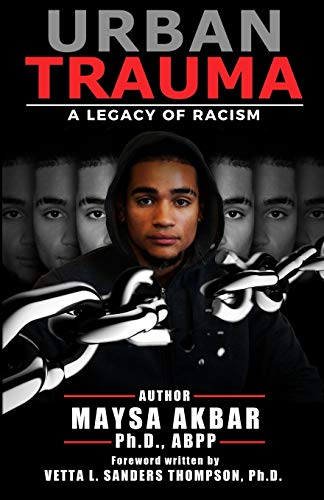
Survived physical abuse.Witnessed community violence.Conquered the streets.Saved by education.This is Dr. Maysa Akbar’s story. A story of overcoming Urban Trauma.It’s easy to look down at urban communities and wonder why economic and social disparities still exist when so many people of color, despite facing severe adversity, have done better. They have broken the “cycle.” Yet there are those in urban communities who continue to be plagued by what Dr. Maysa Akbar has defined as Urban Trauma – a set of conditions that sustain modern day oppression.In Urban Trauma: A Legacy of Racism, Dr. Akbar makes the case that since the time of slavery, systemic trauma in our urban centers is a result of poverty, overcrowded housing, poor physical and mental health, despair, violence, crime, and drug abuse.Drawing from historical events, intergenerational biology, and psychology she expertly illustrates that not only is Urban Trauma real, but that by denying it’s existence we deny our communities of color the chance to heal and break their cycle.
Die Inhaltsangabe kann sich auf eine andere Ausgabe dieses Titels beziehen.
Über die Autorin bzw. den Autor
Maysa Akbar, Ph.D, ABPP, author of Urban Trauma: A Legacy of Racism, is the Founder and CEO of the Integrated Wellness Group, a multidisciplinary psychotherapy practice in New Haven which focuses on at-risk urban children, adults, and families. In addition to her private practice, she is an Assistant Clinical Professor at the Yale School of Medicine, Child Study Center. Dr. Akbar is a graduate of State University of New York at Albany, Florida Agricultural & Mechanical University, and Saint Louis University. She completed both her pre and-post doctoral training at the Yale Child Study Center. Active in her community, Dr. Akbar serves on the Board of Directors of The Community Foundation for Greater New Haven. A triathlete, she lives in New Haven with her husband and two children. Dr. Akbar is available for speaking, training, and consulting engagements. Visit MaysaAkbar.com to learn more.
„Über diesen Titel“ kann sich auf eine andere Ausgabe dieses Titels beziehen.
Suchergebnisse für Urban Trauma: A Legacy of Racism

Beispielbild für diese ISBN
Urban Trauma: A Legacy of Racism
Verlag:
Publish Your Purpose Press, 2017
ISBN 10: 1946384240
ISBN 13: 9781946384249
Gebraucht
Paperback
Anbieter: World of Books (was SecondSale), Montgomery, IL, USA
Verkäuferbewertung 5 von 5 Sternen

Paperback. Zustand: Very Good. Survived physical abuse. Witnessed community violence. Conquered the streets. Saved by education. This is Dr. Maysa Akbar's story. A story of overcoming Urban Trauma. It's easy to look down at urban communities and wonder why economic and social disparities still exist when so many people of color, despite facing severe adversity, have done better. They have broken the cycle. Yet there are those in urban communities who continue to be plagued by what Dr. Maysa Akbar has defined as Urban Trauma - a set of conditions that sustain modern day oppression. In Urban Trauma: A Legacy of Racism, Dr. Akbar makes the case that since the time of slavery, systemic trauma in our urban centers is a result of poverty, overcrowded housing, poor physical and mental health, despair, violence, crime, and drug abuse. Drawing from historical events, intergenerational biology, and psychology she expertly illustrates that not only is Urban Trauma real, but that by denying it's existence we deny our communities of color the chance to heal and break their cycle. Bestandsnummer des Verkäufers 00101280701
Gebraucht kaufen
EUR 3,98
Versand gratis
Versand innerhalb von USA
Versand innerhalb von USA
Anzahl: 2 verfügbar
Beispielbild für diese ISBN
Urban Trauma: A Legacy of Racism
Verlag:
Publish Your Purpose Press, 2017
ISBN 10: 1946384240
ISBN 13: 9781946384249
Gebraucht
Paperback
Anbieter: World of Books (was SecondSale), Montgomery, IL, USA
Verkäuferbewertung 5 von 5 Sternen
Paperback. Zustand: Good. Survived physical abuse. Witnessed community violence. Conquered the streets. Saved by education. This is Dr. Maysa Akbar's story. A story of overcoming Urban Trauma. It's easy to look down at urban communities and wonder why economic and social disparities still exist when so many people of color, despite facing severe adversity, have done better. They have broken the cycle. Yet there are those in urban communities who continue to be plagued by what Dr. Maysa Akbar has defined as Urban Trauma - a set of conditions that sustain modern day oppression. In Urban Trauma: A Legacy of Racism, Dr. Akbar makes the case that since the time of slavery, systemic trauma in our urban centers is a result of poverty, overcrowded housing, poor physical and mental health, despair, violence, crime, and drug abuse. Drawing from historical events, intergenerational biology, and psychology she expertly illustrates that not only is Urban Trauma real, but that by denying it's existence we deny our communities of color the chance to heal and break their cycle. Bestandsnummer des Verkäufers 00102983573
Gebraucht kaufen
EUR 3,98
Versand gratis
Versand innerhalb von USA
Versand innerhalb von USA
Anzahl: 2 verfügbar
Beispielbild für diese ISBN
Urban Trauma: A Legacy of Racism
Verlag:
Publish Your Purpose Press, 2017
ISBN 10: 1946384240
ISBN 13: 9781946384249
Gebraucht
paperback
Anbieter: Orion Tech, Kingwood, TX, USA
Verkäuferbewertung 5 von 5 Sternen
paperback. Zustand: Fair. Bestandsnummer des Verkäufers 1946384240-4-34839695
Gebraucht kaufen
EUR 3,99
Versand gratis
Versand innerhalb von USA
Versand innerhalb von USA
Anzahl: 1 verfügbar
Beispielbild für diese ISBN
Urban Trauma: A Legacy of Racism
Verlag:
Publish Your Purpose Press (edition ), 2017
ISBN 10: 1946384240
ISBN 13: 9781946384249
Gebraucht
Paperback
Anbieter: BooksRun, Philadelphia, PA, USA
Verkäuferbewertung 5 von 5 Sternen
Paperback. Zustand: Very Good. It's a well-cared-for item that has seen limited use. The item may show minor signs of wear. All the text is legible, with all pages included. It may have slight markings and/or highlighting. Bestandsnummer des Verkäufers 1946384240-11-1
Gebraucht kaufen
EUR 4,39
Versand gratis
Versand innerhalb von USA
Versand innerhalb von USA
Anzahl: 1 verfügbar
Foto des Verkäufers
Urban Trauma: A Legacy of Racism
Verlag:
Publish Your Purpose Press, 2017
ISBN 10: 1946384240
ISBN 13: 9781946384249
Gebraucht
Softcover
Anbieter: ZBK Books, Carlstadt, NJ, USA
Verkäuferbewertung 5 von 5 Sternen
Zustand: good. Fast & Free Shipping â" Good condition. It may show normal signs of use, such as light writing, highlighting, or library markings, but all pages are intact and the book is fully readable. A solid, complete copy that's ready to enjoy. Bestandsnummer des Verkäufers ZWV.1946384240.G
Gebraucht kaufen
EUR 4,51
Versand gratis
Versand innerhalb von USA
Versand innerhalb von USA
Anzahl: 1 verfügbar
Foto des Verkäufers
Urban Trauma: A Legacy of Racism
Verlag:
Publish Your Purpose Press, 2017
ISBN 10: 1946384240
ISBN 13: 9781946384249
Gebraucht
Softcover
Anbieter: ZBK Books, Carlstadt, NJ, USA
Verkäuferbewertung 5 von 5 Sternen
Zustand: very_good. Fast & Free Shipping â" Very Good condition book with a firm cover and clean pages. Shows normal use and some light wear or limited notes markings. A solid, nice copy to enjoy. Bestandsnummer des Verkäufers ZWV.1946384240.VG
Gebraucht kaufen
EUR 4,51
Versand gratis
Versand innerhalb von USA
Versand innerhalb von USA
Anzahl: 1 verfügbar
Beispielbild für diese ISBN
Urban Trauma: A Legacy of Racism
Verlag:
Publish Your Purpose Press (edition ), 2017
ISBN 10: 1946384240
ISBN 13: 9781946384249
Gebraucht
Paperback
Anbieter: BooksRun, Philadelphia, PA, USA
Verkäuferbewertung 5 von 5 Sternen
Paperback. Zustand: Very Good. It's a well-cared-for item that has seen limited use. The item may show minor signs of wear. All the text is legible, with all pages included. It may have slight markings and/or highlighting. Bestandsnummer des Verkäufers 1946384240-8-18
Gebraucht kaufen
EUR 5,56
Versand gratis
Versand innerhalb von USA
Versand innerhalb von USA
Anzahl: 1 verfügbar
Beispielbild für diese ISBN
Urban Trauma: A Legacy of Racism
Verlag:
Publish Your Purpose Press, 2017
ISBN 10: 1946384240
ISBN 13: 9781946384249
Gebraucht
Paperback
Anbieter: World of Books Inc, Montgomery, IL, USA
Verkäuferbewertung 4 von 5 Sternen

Paperback. Zustand: Very Good. Survived physical abuse. Witnessed community violence. Conquered the streets. Saved by education. This is Dr. Maysa Akbar's story. A story of overcoming Urban Trauma. It's easy to look down at urban communities and wonder why economic and social disparities still exist when so many people of color, despite facing severe adversity, have done better. They have broken the cycle. Yet there are those in urban communities who continue to be plagued by what Dr. Maysa Akbar has defined as Urban Trauma - a set of conditions that sustain modern day oppression. In Urban Trauma: A Legacy of Racism, Dr. Akbar makes the case that since the time of slavery, systemic trauma in our urban centers is a result of poverty, overcrowded housing, poor physical and mental health, despair, violence, crime, and drug abuse. Drawing from historical events, intergenerational biology, and psychology she expertly illustrates that not only is Urban Trauma real, but that by denying it's existence we deny our communities of color the chance to heal and break their cycle. Bestandsnummer des Verkäufers CIN1946384240VG
Gebraucht kaufen
EUR 5,81
Versand gratis
Versand innerhalb von USA
Versand innerhalb von USA
Anzahl: 2 verfügbar
Beispielbild für diese ISBN
Urban Trauma: A Legacy of Racism
Verlag:
Publish Your Purpose Press, 2017
ISBN 10: 1946384240
ISBN 13: 9781946384249
Gebraucht
Paperback
Anbieter: World of Books Inc, Montgomery, IL, USA
Verkäuferbewertung 4 von 5 Sternen
Paperback. Zustand: Good. Survived physical abuse. Witnessed community violence. Conquered the streets. Saved by education. This is Dr. Maysa Akbar's story. A story of overcoming Urban Trauma. It's easy to look down at urban communities and wonder why economic and social disparities still exist when so many people of color, despite facing severe adversity, have done better. They have broken the cycle. Yet there are those in urban communities who continue to be plagued by what Dr. Maysa Akbar has defined as Urban Trauma - a set of conditions that sustain modern day oppression. In Urban Trauma: A Legacy of Racism, Dr. Akbar makes the case that since the time of slavery, systemic trauma in our urban centers is a result of poverty, overcrowded housing, poor physical and mental health, despair, violence, crime, and drug abuse. Drawing from historical events, intergenerational biology, and psychology she expertly illustrates that not only is Urban Trauma real, but that by denying it's existence we deny our communities of color the chance to heal and break their cycle. Bestandsnummer des Verkäufers CIN1946384240G
Gebraucht kaufen
EUR 5,81
Versand gratis
Versand innerhalb von USA
Versand innerhalb von USA
Anzahl: 2 verfügbar
Beispielbild für diese ISBN
Urban Trauma: A Legacy of Racism
Verlag:
Publish Your Purpose Press, 2017
ISBN 10: 1946384240
ISBN 13: 9781946384249
Gebraucht
Paperback
Anbieter: ThriftBooks-Atlanta, AUSTELL, GA, USA
Verkäuferbewertung 5 von 5 Sternen
Paperback. Zustand: Very Good. No Jacket. May have limited writing in cover pages. Pages are unmarked. ~ ThriftBooks: Read More, Spend Less. Bestandsnummer des Verkäufers G1946384240I4N00
Gebraucht kaufen
EUR 6,38
Versand gratis
Versand innerhalb von USA
Versand innerhalb von USA
Anzahl: 1 verfügbar