
Verwandte Artikel zu Charlie Chaplin vs. America: When Art, Sex, and Politics...
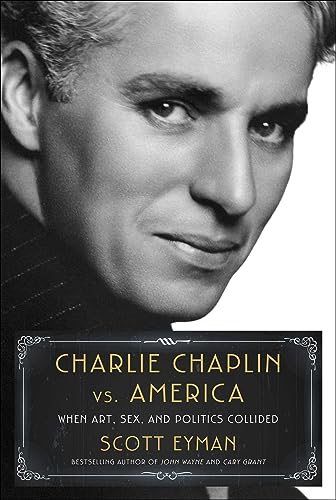
Inhaltsangabe
The “shocking” (The Wall Street Journal), must-read story of Charlie Chaplin’s years of exile from the United States during the postwar Red Scare, and how it ruined his film career, from bestselling biographer Scott Eyman.
Bestselling Hollywood biographer and film historian Scott Eyman tells the story of Charlie Chaplin’s fall from grace. In the aftermath of World War II, Chaplin was criticized for being politically liberal and internationalist in outlook. He had never become a US citizen, something that would be held against him as xenophobia set in when the postwar Red Scare took hold.
Politics aside, Chaplin had another problem: his sexual interest in young women. He had been married three times and had had numerous affairs. In the 1940s, he was the subject of a paternity suit, which he lost, despite blood tests that proved he was not the father. His sexuality became a convenient way for those who opposed his politics to condemn him. Refused permission to return to the US after a trip abroad, he settled in Switzerland and made his last two films in London.
In Charlie Chaplin vs. America, Scott Eyman explores the life and times of the movie genius who brought us such masterpieces as City Lights and Modern Times. “One of the finest surveys of the man and the artist ever written” (Leonard Maltin) this book is “a sobering account of cancel culture in action.” (The Economist).
Die Inhaltsangabe kann sich auf eine andere Ausgabe dieses Titels beziehen.
Über die Autorin bzw. den Autor
Scott Eyman is the author or coauthor of eighteen books, including the bestseller John Wayne and Pieces of My Heart and You Must Remember This with actor Robert Wagner. Eyman, formerly the literary critic at The Palm Beach Post, also writes book reviews for The Wall Street Journal, and has written for The New York Times, The Washington Post, and the Chicago Tribune. He and his wife, Lynn, live in West Palm Beach.
Auszug. © Genehmigter Nachdruck. Alle Rechte vorbehalten.
Prologue PROLOGUE
In those days, nothing important happened on the weekends.
Movie people went to parties, to Palm Springs, or to clubs on the Sunset Strip. Occasionally they paired off in a way they couldn’t during the week, when they had to get up before dawn in order to get to the studio by 8 a.m. And sometimes they just rested.
What this meant in practice was that a Monday gossip column was typically filled with soft items saved for a slow news day. Hedda Hopper’s column for Monday, May 19, 1952, was a case in point: “Ava had a party of 10 to put Frankie in the groove at the Grove. And [photographer] Hymie Fink covered him from every angle.… Phil Yordan’s ‘Edgar’ for the Detective Story screenplay was stolen from the detective bringing it to him by train. So Phil’s hiring a detective to find it.”
Hopper’s lead item seemed to fit right in: “Charlie Chaplin has his return visa and he’s all set for Europe in September for the preems of Limelight in London and Paris. Oona goes along, but the kids stay behind in Beverly.”
In fact, the item was not a space-filler so much as one of those barely perceptible tremors that precedes an earthquake. A day or two after the item ran, Hopper sent a clipping in a letter addressed to California Senator Richard M. Nixon:
My dear Dick,
The enclosed about Charlie Chaplin is very distressing. He tried to leave the country a year or so ago and was told he couldn’t get back in. I hope that situation has not changed. And if it has been changed and he has finagled through the State Department and has obtained a passport with re-entry, I believe it is the duty of each Senator to know about it.
Personally, I hope he goes and never comes back in. He is as bad a citizen as we have in this country, as you well know.
I hope you will look into this matter and do what you can about it.
For Nixon—or anybody else—Hopper was categorized as High Maintenance. She wrote Nixon dozens of letters of approval, as well as occasional scoldings when she felt that he came up short in attending to her needs. This invariably involved Nixon failing to placate her with a soothing “Dear Hedda” letter of reassurance about her vital contributions to their shared priorities.
On May 29, Nixon replied: “I agree with you that the way the Chaplin case has been handled has been a disgrace for years. Unfortunately, we aren’t able to do too much about it when the top decisions are made by the likes of [Secretary of State Dean] Acheson and [Attorney General James] McGranery. You can be sure, however, that I will keep my eye on the case and possibly after January we will be able to work with an Administration which will apply the same rules to Chaplin as they do to ordinary citizens.”
That paragraph aside, it’s a chatty letter between old friends. Nixon discusses the upcoming Republican convention and the tactics being deployed by Robert Taft and Dwight Eisenhower, the two main candidates for the nomination. Hopper was ardently for Taft, and Nixon didn’t disabuse her of the notion that he was as well, even though he would happily accept the vice presidential nomination from Eisenhower. Nixon had a hunch that the convention would not devolve into a destructive food fight. “I still think that we are going to come out of the Convention united behind a good candidate.
“Pat joins me in sending our best to you.”
Nixon had been a member of the House Un-American Activities Committee whose hearings had shaken Hollywood to its core in 1947, with Hopper serving as a primary cheerleader. They were devout coreligionists in the fight against the social decay represented by Communism, not to mention unchecked sexuality, and they believed Chaplin embodied both.
Hopper in particular had long regarded Chaplin as an affront to both her country and her movie industry—Hopper personalized all relationships. She had furiously sniped at Chaplin’s plans to make The Great Dictator and greeted its great success with sullen silence. In April 1947, when Chaplin’s film Monsieur Verdoux was meeting with critical contempt and public indifference, she wrote J. Edgar Hoover: “I’d like to run every one of those [Communist] rats out of the country and start with Charlie Chaplin.… It’s about time we stood up and be counted.”
Chaplin gave no indication that he was aware of the storm clouds forming on the horizon. On August 2, a few months after Hopper’s column item, Chaplin hosted a preview of Limelight at the Paramount studio. The guest list amounted to about two hundred people, including Humphrey Bogart, David Selznick, Ronald Colman, and Sylvia Fairbanks Gable—the elite of old Hollywood.
The only journalist invited was Sidney Skolsky. He reported that as the end titles faded, the audience stood up en masse and shouted “Bravo.” Chaplin stepped in front of the screen and said, “I thank you. I was very afraid. You are the first ones in the world to see my film, which lasts two hours and a half. I don’t want to keep you long, but I care to say ‘Thank You.’?”
A woman stopped him by shouting “No!! No! Thanks to you!” and the rest of the crowd started shouting “Thank You.”
The tumultuous response was soon confirmed by the response of the novelist Lion Feuchtwanger, who wrote Chaplin on August 8: “The film… arouses emotions much like Dickens’ novels. It moves without ever becoming corny, and, at the right moment, the legitimate emotion is mingled with a good, sound, legitimate laugh. Your picture is deeply human and in the best sense popular. So it accomplishes the mission which Molière requires of a real work of art; it satisfies and pleases the professor as well as the cook.”
The response to the preview must have assuaged some of Chaplin’s fears of obsolescence. After The Great Dictator, he had endured years of public castigation for his support for opening a second front to aid Russia during World War II while simultaneously enduring a definitively ugly, trumped-up paternity suit. After that, Monsieur Verdoux had been his first critical flop and, in America, a commercial disaster.
On the night of September 5, Chaplin was having a cup of coffee at Googie’s, a small café on Sunset Boulevard. Across from him sat his assistant Jerry Epstein. Some pictures turned out to be less than Chaplin had hoped (The Circus), and some turned out to be better than he had dreamed (City Lights) but he was calmly confident about Limelight. He was sixty-three years old, madly in love with his wife, Oona, the mother of four of his six children. He believed that his third act would be his richest, and he believed he knew why.
It was all about America.
“I could never have found such success in England,” he told Epstein that night. “This is really the land of opportunity.”
The next day, Saturday the 6th, he made a few last-minute trims in Limelight. As he left the editing room Chaplin insisted that Oona come with him to the Bank of America. He wanted her signature on a joint account. He explained that in case anything happened to him, she would have instant access to his cash and securities. Oona thought he was being silly. What could possibly happen? Chaplin insisted, and Oona did as he asked.
Later that day, Chaplin, Oona, and Harry Crocker, an old friend who had served, variously, as costar (The Circus), assistant director (City Lights), and publicity director (Limelight) left...
„Über diesen Titel“ kann sich auf eine andere Ausgabe dieses Titels beziehen.
Suchergebnisse für Charlie Chaplin vs. America: When Art, Sex, and Politics...

Beispielbild für diese ISBN
Charlie Chaplin vs. America: When Art, Sex, and Politics Collided
Anbieter: World of Books (was SecondSale), Montgomery, IL, USA
Verkäuferbewertung 5 von 5 Sternen

Zustand: Good. Item in good condition. Textbooks may not include supplemental items i.e. CDs, access codes etc. Bestandsnummer des Verkäufers 00110540696
Gebraucht kaufen
EUR 5,39
Versand gratis
Versand innerhalb von USA
Versand innerhalb von USA
Anzahl: 2 verfügbar
Beispielbild für diese ISBN
Charlie Chaplin vs. America: When Art, Sex, and Politics Collided
Verlag:
Simon & Schuster (edition ), 2023
ISBN 10: 1982176350
ISBN 13: 9781982176358
Gebraucht
Hardcover
Anbieter: BooksRun, Philadelphia, PA, USA
Verkäuferbewertung 5 von 5 Sternen
Hardcover. Zustand: Very Good. With dust jacket. It's a well-cared-for item that has seen limited use. The item may show minor signs of wear. All the text is legible, with all pages included. It may have slight markings and/or highlighting. Bestandsnummer des Verkäufers 1982176350-8-1-29
Gebraucht kaufen
EUR 6,10
Versand gratis
Versand innerhalb von USA
Versand innerhalb von USA
Anzahl: 1 verfügbar
Beispielbild für diese ISBN
Charlie Chaplin vs. America: When Art, Sex, and Politics Collided
Anbieter: ThriftBooks-Reno, Reno, NV, USA
Verkäuferbewertung 5 von 5 Sternen
Hardcover. Zustand: Good. No Jacket. Pages can have notes/highlighting. Spine may show signs of wear. ~ ThriftBooks: Read More, Spend Less. Bestandsnummer des Verkäufers G1982176350I3N00
Gebraucht kaufen
EUR 6,91
Versand gratis
Versand innerhalb von USA
Versand innerhalb von USA
Anzahl: 1 verfügbar
Beispielbild für diese ISBN
Charlie Chaplin vs. America: When Art, Sex, and Politics Collided
Anbieter: ThriftBooks-Reno, Reno, NV, USA
Verkäuferbewertung 5 von 5 Sternen
Hardcover. Zustand: Very Good. No Jacket. Former library book; May have limited writing in cover pages. Pages are unmarked. ~ ThriftBooks: Read More, Spend Less. Bestandsnummer des Verkäufers G1982176350I4N10
Gebraucht kaufen
EUR 6,91
Versand gratis
Versand innerhalb von USA
Versand innerhalb von USA
Anzahl: 1 verfügbar
Beispielbild für diese ISBN
Charlie Chaplin vs. America: When Art, Sex, and Politics Collided
Anbieter: ThriftBooks-Reno, Reno, NV, USA
Verkäuferbewertung 5 von 5 Sternen
Hardcover. Zustand: Fair. No Jacket. Former library book; Readable copy. Pages may have considerable notes/highlighting. ~ ThriftBooks: Read More, Spend Less. Bestandsnummer des Verkäufers G1982176350I5N10
Gebraucht kaufen
EUR 6,91
Versand gratis
Versand innerhalb von USA
Versand innerhalb von USA
Anzahl: 1 verfügbar
Beispielbild für diese ISBN
Charlie Chaplin vs. America: When Art, Sex, and Politics Collided
Anbieter: ThriftBooks-Phoenix, Phoenix, AZ, USA
Verkäuferbewertung 5 von 5 Sternen
Hardcover. Zustand: Very Good. No Jacket. Former library book; May have limited writing in cover pages. Pages are unmarked. ~ ThriftBooks: Read More, Spend Less. Bestandsnummer des Verkäufers G1982176350I4N10
Gebraucht kaufen
EUR 6,91
Versand gratis
Versand innerhalb von USA
Versand innerhalb von USA
Anzahl: 1 verfügbar
Beispielbild für diese ISBN
Charlie Chaplin vs. America: When Art, Sex, and Politics Collided
Anbieter: ThriftBooks-Phoenix, Phoenix, AZ, USA
Verkäuferbewertung 5 von 5 Sternen
Hardcover. Zustand: Good. No Jacket. Pages can have notes/highlighting. Spine may show signs of wear. ~ ThriftBooks: Read More, Spend Less. Bestandsnummer des Verkäufers G1982176350I3N00
Gebraucht kaufen
EUR 6,91
Versand gratis
Versand innerhalb von USA
Versand innerhalb von USA
Anzahl: 1 verfügbar
Beispielbild für diese ISBN
Charlie Chaplin vs. America: When Art, Sex, and Politics Collided
Anbieter: ThriftBooks-Phoenix, Phoenix, AZ, USA
Verkäuferbewertung 5 von 5 Sternen
Hardcover. Zustand: Very Good. No Jacket. May have limited writing in cover pages. Pages are unmarked. ~ ThriftBooks: Read More, Spend Less. Bestandsnummer des Verkäufers G1982176350I4N00
Gebraucht kaufen
EUR 6,91
Versand gratis
Versand innerhalb von USA
Versand innerhalb von USA
Anzahl: 1 verfügbar
Beispielbild für diese ISBN
Charlie Chaplin vs. America: When Art, Sex, and Politics Collided
Anbieter: ThriftBooks-Atlanta, AUSTELL, GA, USA
Verkäuferbewertung 5 von 5 Sternen
Hardcover. Zustand: Very Good. No Jacket. Former library book; May have limited writing in cover pages. Pages are unmarked. ~ ThriftBooks: Read More, Spend Less. Bestandsnummer des Verkäufers G1982176350I4N10
Gebraucht kaufen
EUR 6,93
Versand gratis
Versand innerhalb von USA
Versand innerhalb von USA
Anzahl: 1 verfügbar
Beispielbild für diese ISBN
Charlie Chaplin vs. America: When Art, Sex, and Politics Collided
Anbieter: ThriftBooks-Atlanta, AUSTELL, GA, USA
Verkäuferbewertung 5 von 5 Sternen
Hardcover. Zustand: Very Good. No Jacket. May have limited writing in cover pages. Pages are unmarked. ~ ThriftBooks: Read More, Spend Less. Bestandsnummer des Verkäufers G1982176350I4N00
Gebraucht kaufen
EUR 6,93
Versand gratis
Versand innerhalb von USA
Versand innerhalb von USA
Anzahl: 1 verfügbar